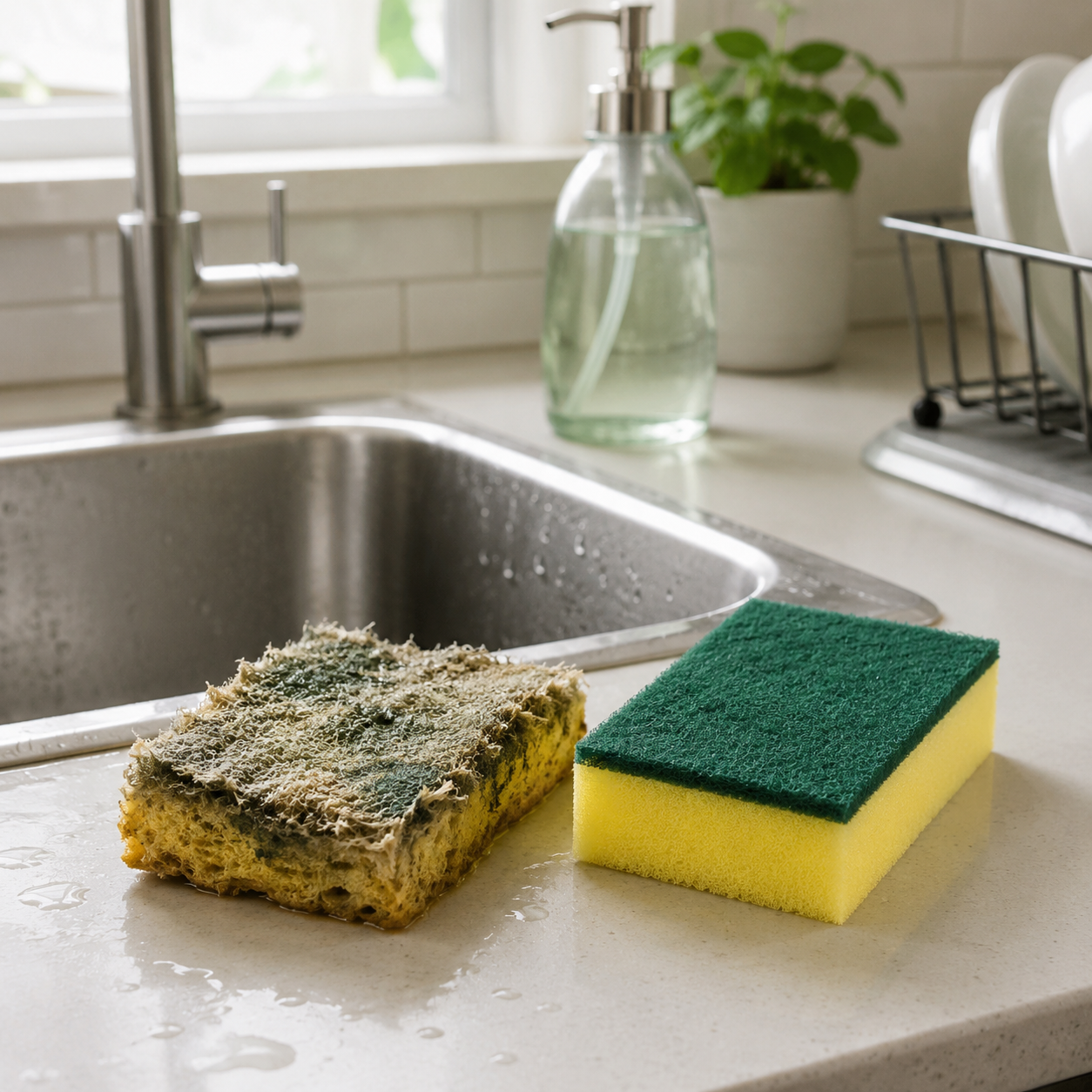

Not sure when to replace your dish sponge? Learn the signs your kitchen sponge is past its prime, how often to change it, and simple habits to keep your sink area cleaner.
Why Your Dish Sponge Deserves More Attention
A dish sponge is one of those small kitchen items most of us use without thinking much about it. We grab it after breakfast, wipe a plate, scrub a pan, rinse it quickly, and leave it by the sink until the next round of dishes.
It seems harmless enough.
But because a sponge touches food residue, moisture, soap, countertops, cutting boards, and dirty dishes, it can become one of the hardest-working—and messiest—tools in the kitchen. That does not mean you need to panic or throw away your sponge every single day. It simply means your sponge needs a little more attention than it usually gets.
Knowing when to replace your dish sponge is a simple household habit that can make your kitchen feel cleaner, smell fresher, and work better. The good news is that the signs are usually easy to spot once you know what to look for.
The Simple Answer: How Often Should You Replace a Dish Sponge?
For most homes, replacing a dish sponge about once a week is a practical rule of thumb.
That may sound often, especially if the sponge still looks “okay,” but appearance can be misleading. Sponges are designed to hold water, which is exactly why they are useful for cleaning. Unfortunately, that same moisture can also help odors and buildup develop if the sponge is used heavily and left wet for long periods.
Some households may need to replace sponges more often. Others may be able to stretch them a little longer with careful rinsing and drying. The best timing depends on how you use it.
Replace Your Sponge More Often If You Cook Frequently
If you cook most meals at home, your sponge is probably working hard every day. It may touch greasy pans, sauce-covered plates, egg residue, crumbs, and food scraps. In that case, changing it every few days to once a week is a smart habit.
A sponge used only for light coffee mugs and cereal bowls will usually stay fresher longer than one used after raw meat prep, oily dinners, and heavy family meals.
Replace It Sooner If You Use It on Many Surfaces
Some people use the same sponge for dishes, counters, stovetops, sink edges, and even small spills on the floor. That is one of the fastest ways to wear it out and make it unpleasant.
A dish sponge should ideally stay focused on dishes. If it becomes a general-purpose cleaning tool, it will usually need to be replaced sooner.
Why Old Sponges Can Become a Problem
A sponge is soft, porous, and almost always damp. Tiny food particles can get trapped inside, especially when the sponge is used to scrub plates, wipe pans, or clean around the sink drain.
Over time, that trapped residue can cause odor, discoloration, sliminess, and poor cleaning performance. Even if you use plenty of dish soap, an old sponge may not feel truly fresh anymore.
This matters in everyday life because kitchens are where we prepare food, feed family members, pack lunches, and clean up after busy days. A sponge that smells bad or looks worn out can make the whole sink area feel less clean.
The goal is not to be fearful. It is simply to avoid using a tool long after it has stopped doing its job well.
Warning Signs Your Dish Sponge Needs to Be Replaced
You do not need a special test to know when a sponge is ready for the trash. In most cases, your senses will tell you.
It Has a Sour or Musty Smell
Smell is one of the clearest signs. If your sponge smells sour, musty, or “off” even after rinsing it, it is time to replace it.
A fresh sponge should not make your hands, sink, or dishes smell unpleasant. If you catch yourself thinking, “Why does my sink smell weird?” check the sponge first.
A common mistake is trying to cover the smell with more dish soap. Soap may temporarily mask the odor, but it does not always solve the problem hiding inside the sponge.
It Feels Slimy
A sponge that feels slippery or slimy after rinsing is past its best point. That texture usually means buildup has formed inside or on the surface.
This is especially common when sponges are left sitting flat in a puddle of water. The bottom stays wet for hours, sometimes all day. Once the texture changes, replacing the sponge is usually better than trying to rescue it.
It Looks Discolored or Stained
Some staining is normal, especially if you wash tomato sauce, curry, coffee, or greasy pans. But if the sponge has dark spots, patchy discoloration, or looks dirty no matter how much you rinse it, that is a sign it should go.
A sponge does not have to look brand new forever. But it should still look like something you want touching your dishes.
It Is Falling Apart
When the sponge starts tearing, crumbling, flattening, or separating from the scrubber side, it is no longer working well.
Pieces of worn sponge can break off into the sink or cling to dishes. A ragged sponge also tends to trap food more easily. At that point, replacing it is less about cleanliness and more about basic usefulness.
It Leaves Grease or Residue Behind
A good sponge should help remove grease, not spread it around.
If you wipe a plate and it still feels greasy, or if your sponge seems to smear residue across the surface, it may be overloaded with oil and food particles. You can try washing it thoroughly once, but if it keeps happening, replace it.
It Has Been Used After Raw Meat Cleanup
If you used a sponge to wipe up juices from raw chicken, meat, or seafood, it is safest to replace it or avoid using it on dishes afterward.
A better habit is to use disposable paper towels or washable cloths for those messes, then clean the surface properly. Keeping your dish sponge away from raw meat cleanup is a simple way to reduce unnecessary kitchen risk.
Common Mistakes That Make Sponges Wear Out Faster
Most sponge problems come from a few everyday habits. They are easy to fix once you notice them.
Leaving the Sponge Wet in the Sink
This is probably the most common mistake. After washing dishes, many people toss the sponge into the sink or leave it beside the faucet in a puddle.
A wet sponge that cannot dry between uses will smell bad much faster. Instead, rinse it well, squeeze out as much water as possible, and place it somewhere with airflow.
A small sponge holder, rack, or raised soap dish can help a lot.
Using One Sponge for Everything
One sponge for dishes, counters, appliances, pet bowls, and spills may seem convenient, but it can quickly become unpleasant.
Try separating tasks. Use one sponge only for dishes. Use a different cloth, scrub brush, or cleaning pad for counters and sink cleanup. This small separation helps your dish sponge stay fresher.
Scrubbing Food Chunks Without Rinsing First
A sponge is not a garbage disposal. If plates have rice, sauce, noodles, or stuck-on food, scrape them into the trash or compost first. Then rinse the plate before using the sponge.
This prevents large food particles from getting buried deep inside the sponge.
Storing It in a Closed Container
A sponge kept inside a closed plastic container, under a sink, or in a dark damp spot may not dry properly. It might look tidy, but poor airflow makes odor more likely.
Sponges need air. A simple open holder near the sink is usually better than hiding it away while wet.
Assuming Sanitizing Makes It Last Forever
Some people microwave sponges, boil them, or run them through the dishwasher. These methods may reduce some buildup temporarily, but they do not make an old sponge new again.
If a sponge smells bad, feels slimy, or is falling apart, it should be replaced. Cleaning can help maintain a sponge for a short time, but it should not become an excuse to keep using one for weeks and weeks.
How to Make Your Dish Sponge Last a Little Longer
Replacing your sponge regularly is important, but good daily habits can help it stay fresher between replacements.
Rinse It Thoroughly After Each Use
After washing dishes, hold the sponge under running water and squeeze it several times. The goal is to flush out soap, grease, and food particles.
Do not just give it a quick splash. A few extra seconds can make a real difference.
Squeeze Out Excess Water
Once the sponge is rinsed, squeeze it firmly. A sponge left dripping wet will take much longer to dry.
This is one of the simplest habits, but it is also one of the most effective.
Let It Dry Upright
Place the sponge in a holder that allows airflow. Upright storage is better than leaving it flat on the counter or sink ledge.
If the sponge is touching a wet surface all day, one side may never dry properly.
Rotate Between Two Sponges
Some households like keeping two sponges in rotation. One is used while the other dries completely.
This can be helpful if you wash dishes often or live in a humid area. Just remember that both sponges still need to be replaced regularly.
Use the Right Tool for the Job
A sponge is not always the best tool for every kitchen mess.
For cast iron, baked-on pans, sink scrubbing, or sticky spills, a brush, scraper, or dedicated cleaning cloth may work better. The less abuse your dish sponge takes, the longer it stays useful.
Should You Use a Sponge, Dishcloth, or Brush?
There is no perfect tool for every household. Each option has pros and cons.
Sponges
Sponges are soft, affordable, and easy to use. They work well for plates, bowls, glasses, and gentle scrubbing. But because they hold moisture, they need careful drying and regular replacement.
Dishcloths
Dishcloths can be washed and reused, which many people like. However, they should be changed frequently and laundered properly. A damp dishcloth left by the sink can develop odor just like a sponge.
Brushes
Dish brushes often dry faster than sponges because they do not hold as much water. They can be a good choice for people who dislike replacing sponges often. Still, brushes need rinsing, drying, and occasional replacement too.
Many homes use a combination: a sponge for general dishes, a brush for pans, and a cloth for counters.
Practical Replacement Schedule for Busy Homes
A simple schedule can make sponge care easier.
For Light Use
If you live alone, cook lightly, and mostly wash cups, bowls, and simple dishes, replacing your sponge every one to two weeks may be reasonable—unless it smells or looks worn sooner.
For Average Use
For a typical household that cooks several times a week, once a week is a good routine. For example, you might replace the sponge every Sunday night after cleaning up from the weekend.
This turns sponge replacement into a habit instead of a decision.
For Heavy Use
If you cook daily, have a large family, wash many dishes by hand, or often clean greasy pans, replace your sponge every few days or whenever it starts to smell.
Heavy-use kitchens go through sponges faster. That is normal.
A Simple End-of-Day Sponge Routine
You do not need a complicated system. A quick routine after dinner can help keep your kitchen fresher.
First, scrape and rinse dishes before scrubbing them.
Second, after washing, rinse the sponge thoroughly under warm running water.
Third, squeeze out the water until it is not dripping.
Fourth, place it upright in a holder where air can reach it.
Finally, check for odor, sliminess, or tearing every few days.
This routine takes less than a minute, but it can prevent many of the common sponge problems people notice around the sink.
What About “Natural” or Eco-Friendly Sponges?
Natural sponges, cellulose sponges, compostable sponges, and plant-based scrubbers are popular choices. They can be useful, but they still need the same basic care.
Natural does not mean maintenance-free.
If the sponge holds water and touches food residue, it should be rinsed, dried, and replaced when it smells, breaks down, or looks dirty. Always follow the product instructions, especially if the sponge is designed to be composted or washed in a specific way.
Eco-friendly habits work best when paired with realistic hygiene habits.
Small Signs Your Kitchen Sponge Habit Is Working
A good sponge routine is not dramatic. You will simply notice that your sink area feels better.
Your sponge dries faster. It does not smell sour. Your hands do not smell unpleasant after washing dishes. The sink area looks tidier. Dishes feel cleaner after washing.
These little improvements matter because they make the kitchen easier to maintain. A clean-feeling sink often encourages other good habits too, like wiping counters, rinsing the drain area, and staying on top of dishes before they pile up.
When in Doubt, Replace It
A dish sponge is inexpensive compared with the amount of work it does. If you are unsure whether it is still okay, replacing it is usually the simplest choice.
You do not need to overthink it. A sponge that smells bad, feels slimy, looks worn, or has been used for questionable messes has done its job. Let it go.
Keeping a few spare sponges under the sink can make this easier. When replacement is convenient, you are less likely to keep using an old one just because you forgot to buy more.
A Simple Habit That Keeps Your Kitchen Fresher
Replacing your dish sponge is not about being perfect. It is about noticing a small household item that plays a big role in everyday kitchen cleanup.
For most homes, a weekly replacement schedule works well. Replace it sooner if it smells, feels slimy, falls apart, looks stained, or has been used for messy cleanup that should not touch dishes afterward.
Between replacements, rinse it well, squeeze it dry, and store it where air can circulate.
A fresh sponge will not solve every kitchen cleaning problem, but it can make your sink area feel cleaner and more pleasant. And sometimes, that one small habit is enough to make the whole kitchen feel a little easier to manage.
Leave a Reply