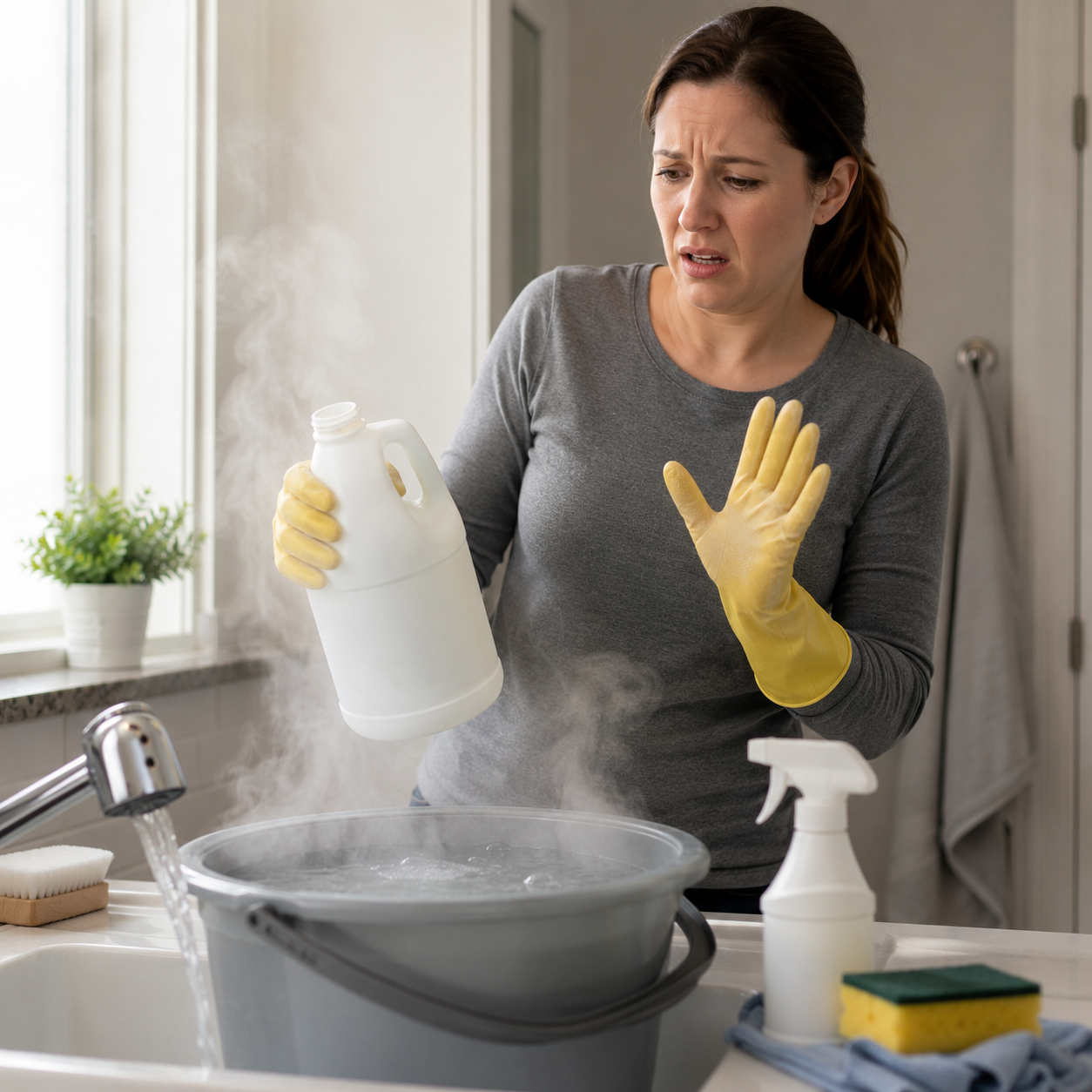
Why Mixing Bleach With Hot Water Can Be Risky: Simple Cleaning Safety Tips for Home
Minjin Park
·
Bleach is a useful household disinfectant, but mixing it with hot water or using it the wrong way can increase fumes, irritation, and cleaning mistakes. Learn safer bleach habits for everyday home cleaning.
Bleach is one of those household products many people keep under the sink “just in case.” It is used for bathrooms, laundry, trash cans, cutting boards, and other messy jobs where people want things to feel truly clean.
So when a surface looks especially dirty, it is easy to think stronger is better. More bleach. Hotter water. A closed bathroom door so the smell does not spread. Maybe a little extra cleaner added in because the stain looks stubborn.
That is where problems can start.
Bleach can be useful, but it needs to be treated with respect. One common mistake is mixing bleach with hot water. It may feel like hot water would make bleach work better, but it can actually increase fumes, make the smell stronger, irritate your eyes or throat, and make cleaning less comfortable.
The bigger issue is that hot water often shows up with other risky habits: using too much bleach, cleaning in a small room without airflow, mixing products, or leaning close to a strong-smelling bucket.
This does not mean you should be afraid of bleach. It means bleach should be used carefully, calmly, and exactly as the label directs.
Why Bleach and Hot Water Can Be a Bad Combination
Hot Water Can Make Fumes More Noticeable
Bleach already has a strong smell. When it is mixed with hot water, that smell may become more intense because heat can make vapors rise more quickly.
In a small bathroom, laundry room, or kitchen corner, that stronger smell can become uncomfortable fast. You may notice watery eyes, throat irritation, coughing, or a headache-like feeling.
That is your sign to stop and get fresh air.
Many people assume a stronger bleach smell means stronger cleaning. That is not a safe way to think about it. A strong smell is not proof that a surface is cleaner. It may simply mean you are breathing more fumes than necessary.
Hot Water Does Not Automatically Make Bleach Work Better
With many cleaning tasks, hot water helps loosen grease or grime. That is why we use warm water for dishes, laundry, and sticky spills.
But bleach is not ordinary soap. It is a chemical disinfectant, and it should be used according to its label directions. More heat does not always mean better results.
In fact, using bleach incorrectly can make your cleaning routine less effective. If the product breaks down faster, evaporates more strongly, or is used on a dirty surface without proper cleaning first, you may not get the result you expect.
For many household bleach uses, cool or room-temperature water is the safer, more practical choice.
Heat Can Encourage Rushed, Risky Cleaning
Hot water also changes how people behave. A steaming bucket feels intense. A hot bathroom feels stuffy. A hot bleach smell makes people hurry.
When people rush, they may skip gloves, forget ventilation, mix products, or splash the solution.
Good cleaning should not feel like holding your breath and powering through. If a cleaning method makes your eyes sting or your throat feel scratchy, it is time to step back.
The Bigger Danger: Mixing Bleach With Other Products
While hot water can make bleach fumes more irritating, the most serious household bleach danger usually comes from mixing bleach with other cleaners.
Bleach should not be mixed with ammonia, vinegar, toilet bowl cleaners, drain cleaners, rubbing alcohol, or other household cleaning products.
This matters because many cleaning products contain acids or ammonia-like ingredients, even if the front label does not make that obvious. A person may think they are just “boosting” cleaning power, but the mixture can release harmful fumes.
Common Products People Accidentally Combine
Bathroom cleaners.
Toilet bowl cleaners.
Glass cleaners.
Vinegar sprays.
Drain cleaners.
Mold and mildew removers.
Laundry products.
All-purpose cleaners.
This is why the safest rule is very simple: use one cleaning product at a time.
If you used another cleaner first, rinse the surface well and wait before using bleach. Do not layer products together.
Why This Matters in Everyday Homes
Small Bathrooms Trap Fumes
Bathrooms are one of the most common places people use bleach. They are also often small, enclosed, and poorly ventilated.
If you mix bleach with hot water in a bathroom, then close the door, fumes can build up quickly. Add a hot shower, steam, or another bathroom cleaner, and the air may become irritating.
A safer approach is to open a window if possible, run the exhaust fan, keep the door open, and avoid hot water when diluting bleach.
Kitchen Cleaning Can Lead to Cross-Mixing
In the kitchen, people may use dish soap, degreaser, vinegar spray, and bleach in the same cleaning session.
For example, someone might spray vinegar on a sink for mineral stains, rinse quickly, then pour bleach nearby to disinfect. Or they may use hot water and bleach in a bucket after cleaning with another product.
The safer routine is to separate cleaning steps. Clean first with soap and water. Rinse. Then use a disinfectant only if needed, following the label.
Laundry Rooms Can Be Confusing
Bleach is also common in laundry rooms, and this is where people may mix products without thinking. Detergent, stain removers, fabric treatments, and bleach may all sit on the same shelf.
If you use bleach in laundry, follow the washing machine and product instructions. Do not add random cleaning products to the same load.
Also, avoid leaning over the washer while adding bleach, especially if hot water is running and the smell feels strong.
It may seem like “extra disinfecting,” but it can increase fumes and make the process more uncomfortable. If the cleaning label says to dilute, use the water temperature recommended by the product. When unsure, cool or room-temperature water is the safer everyday choice.
Thinking More Bleach Means More Safety
More bleach is not automatically better. Too much can leave strong odors, irritate skin and lungs, damage surfaces, and make cleaning less safe.
Bleach works best when used correctly, not excessively.
Follow the label instead of guessing. The label is there because different products can have different strengths and instructions.
Cleaning Without Ventilation
Bleach should not be used in a closed, stuffy room. Fresh air matters.
Open a window when you can. Turn on the exhaust fan. Keep the door open. Take breaks if the smell feels strong.
You should not feel like you have to hold your breath to clean a bathroom.
Mixing Bleach in Random Containers
Avoid mixing bleach solutions in food containers, cups, or unlabeled bottles. Someone else in the home may not know what is inside.
Use a clean container meant for cleaning, label it if needed, and never store homemade bleach mixtures for long periods unless the product instructions specifically allow it.
Using Bleach on Every Surface
Bleach is not right for everything. It can discolor fabrics, damage some metals, dull finishes, irritate skin, and harm certain surfaces.
For many everyday messes, soap and water are enough. Bleach should be used when it is appropriate, not as an automatic answer to every stain.
Warning Signs You Should Stop Cleaning
The Smell Feels Overwhelming
Bleach has a recognizable odor, but it should not feel overpowering. If the smell suddenly becomes sharp, intense, or hard to tolerate, stop cleaning and move to fresh air.
Do not continue because you want to “finish quickly.”
Your Eyes or Throat Feel Irritated
Watery eyes, throat burning, coughing, or chest discomfort are signs that the air may not be safe or comfortable.
Leave the area, increase ventilation if you can do so safely, and avoid going back in until the air clears.
You Accidentally Mixed Products
If bleach was mixed with another cleaner, do not lean over the bucket, toilet, sink, or tub to inspect it.
Move away from the area. Get fresh air. Keep others away, especially children and pets. Follow poison control or emergency guidance if anyone has symptoms or if the situation feels serious.
The Surface Changes Color or Texture
Bleach can damage some materials. If a surface changes color, becomes rough, stains, or gives off an unusual smell, stop using bleach there.
Next time, check the product label and the surface manufacturer’s instructions before applying bleach.
Safer Ways to Use Bleach at Home
Read the Label First
This sounds simple, but it is one of the most important steps. Different bleach products may have different strengths, uses, and dilution instructions.
Look for directions about where the product can be used, how to dilute it, how long it should stay on the surface, and whether rinsing is needed afterward.
Do not rely on memory or online shortcuts when the label is right there.
Clean Before You Disinfect
Bleach is not a magic eraser. Dirt, grease, soap scum, and food residue can get in the way of disinfecting.
For many surfaces, the better routine is:
Clean with soap and water.
Rinse if needed.
Apply bleach solution only if appropriate.
Let it sit for the label’s recommended contact time.
Rinse or air-dry according to directions.
This approach is calmer and more effective than pouring bleach onto a dirty surface and hoping for the best.
Use Cool or Room-Temperature Water
When diluting household bleach, cool or room-temperature water is usually the safer choice for everyday cleaning.
It helps reduce strong fumes and makes the process easier to control.
Avoid steaming hot water, boiling water, or mixing bleach in a hot enclosed bathroom.
Wear Basic Protection
Gloves can help protect your skin from irritation. Eye protection may be helpful for splash-prone jobs, such as cleaning a toilet, trash can, or shower area.
Wear clothes you do not mind staining, because bleach can permanently discolor fabric.
Keep Kids and Pets Away
Children and pets should not be near open bleach bottles, buckets, wet floors, or freshly treated surfaces.
Store bleach in its original container, with the cap closed tightly, away from children and pets.
Do not leave a bleach bucket unattended while you answer the door or take a phone call.
Practical Examples of Safer Cleaning
Cleaning a Bathroom Sink
Start with regular soap or a bathroom cleaner appropriate for the surface. Scrub away toothpaste, soap scum, and grime. Rinse well.
If disinfecting is needed, use bleach only according to the product label. Keep the room ventilated and avoid hot water.
Do not use bleach right after vinegar, toilet cleaner, or another chemical cleaner unless the surface has been thoroughly rinsed.
Cleaning a Trash Can
Trash cans can smell bad, so people often reach for bleach. First, remove debris and wash the inside with soap and water. Rinse it.
Then use a properly diluted bleach solution if the material allows it. Keep the trash can in a ventilated area while cleaning, and do not mix bleach with deodorizing sprays or other cleaners.
Let it dry completely before putting in a new bag.
Cleaning After Raw Meat Prep
For kitchen surfaces that touched raw meat juices, first clean visible residue with soap and water. Then disinfect according to product directions if the surface is bleach-safe.
Keep bleach away from food, dishes, and utensils unless the label says the product is appropriate for that use and gives specific directions.
Do not mix bleach with dish soap unless the label specifically says it is safe.
A Simple Bleach Safety Routine
Here is an easy routine for everyday homes:
Use bleach only when it is needed.
Read the label every time.
Use cool or room-temperature water for dilution unless the label says otherwise.
Never mix bleach with other cleaners.
Open windows or run fans when using bleach indoors.
Wear gloves for splashy jobs.
Keep children and pets away.
Do not use bleach on surfaces that can be damaged by it.
Store bleach in the original container.
Stop immediately if the smell feels too strong or your eyes or throat feel irritated.
These habits are not complicated, but they prevent many common cleaning mistakes.
The Calm Takeaway
Bleach can be helpful, but it is not a product to use casually with hot water, closed doors, or extra cleaning chemicals.
Hot water can make bleach fumes stronger and more irritating. It does not automatically make bleach work better. The safest approach is to follow the product label, use cool or room-temperature water when diluting, ventilate the area, and never mix bleach with other cleaners.
Most bleach problems at home come from small mistakes: adding vinegar, using hot water in a tiny bathroom, pouring too much, skipping ventilation, or trying to make cleaning “stronger” than it needs to be.
You do not need harsh habits to have a clean home.
Use bleach carefully, use it only where appropriate, and let the label guide you. A slower, simpler cleaning routine is often the safer one.
Hi, I’m the creator and editor behind ZestyHabit. I research everyday safety, first aid, and practical wellness topics using official guidance and reliable public sources, then turn that information into clear, realistic steps for daily life.
My goal is to help readers make safer, better-informed choices at home and beyond.