
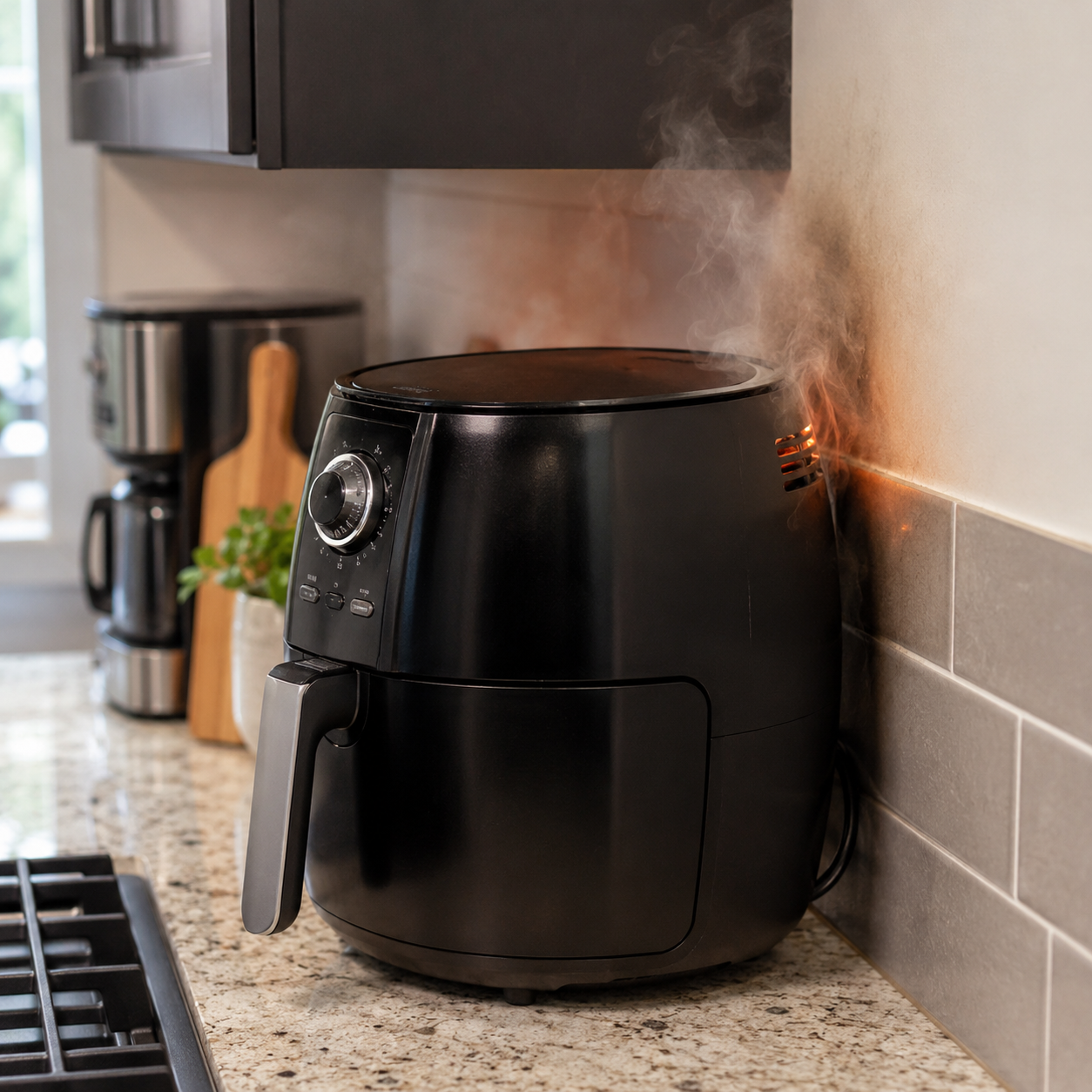

Air fryers are convenient, but poor placement can trap heat and raise fire risks. Learn why wall clearance matters and how to use your air fryer more safely at home.
Why Air Fryer Placement Matters More Than People Think
Air fryers have become one of the most loved kitchen appliances in American homes. They are fast, convenient, and perfect for everything from frozen fries to salmon, chicken tenders, roasted vegetables, and reheated leftovers.
Because they are small, many people treat them like a toaster or coffee maker. They push the air fryer into a corner, tuck it under cabinets, or place it right against the backsplash to save counter space.
That seems harmless until you remember what an air fryer actually does.
An air fryer is a compact countertop oven with a heating element and a powerful fan. It gets hot, moves hot air quickly, and releases heat and steam through vents. When the appliance is too close to a wall, cabinet, curtain, paper towel roll, or other item, heat has fewer places to escape.
That does not mean air fryers are unsafe when used correctly. It simply means they need breathing room.
A few inches of clearance can make a real difference in everyday kitchen safety.
How an Air Fryer Creates Heat
An air fryer cooks by circulating hot air around food. This is why it can crisp the outside of fries or chicken without deep frying.
Inside the appliance, a heating element warms the air. A fan moves that hot air around the basket or cooking chamber. During cooking, excess heat, steam, and air need to leave through vents, often located at the back, side, or top of the unit.
That airflow is not just part of cooking. It is also part of safe operation.
When vents are blocked or crowded, heat can build up around the appliance. The air fryer may work harder, nearby surfaces may become warmer, and grease or food residue inside the unit may be exposed to more heat than expected.
This is why many air fryer manuals tell users to leave open space around the appliance.
Why the Wall Behind the Air Fryer Can Become a Problem
The back of an air fryer is often where hot air exits. If the appliance is pressed close to a wall, that hot air can hit the wall and bounce back toward the unit.
This creates a small pocket of trapped heat.
At first, nothing dramatic may happen. You might only notice that the backsplash feels warm. Over time, though, repeated heat exposure can discolor paint, damage finishes, warp certain materials, or make nearby items hotter than they should be.
The bigger concern is when heat collects near something that can catch fire or melt.
That might be a paper towel roll, plastic container, wooden cutting board, cookbook, mail, food packaging, dish towel, or curtain. In many kitchens, these items sit close to the counter without much thought.
An air fryer needs a clear zone around it, not because it is dangerous by default, but because it is a high-heat appliance.
The Role of Ventilation
Ventilation is one of the most important reasons not to place an air fryer against the wall.
Air Needs Room to Move
The fan inside the air fryer pushes hot air through the cooking chamber. The appliance also needs space around its vents so that heat can escape.
When the air fryer is boxed in, the airflow becomes less effective. That can lead to overheating, uneven cooking, and unnecessary strain on the appliance.
A good way to think about it is this: if you would not cover a laptop fan, space heater vent, or oven vent, you should not crowd an air fryer vent either.
Steam Can Damage Nearby Surfaces
Air fryers also release steam, especially when cooking foods with moisture, such as frozen vegetables, chicken, fish, or leftover rice dishes.
If the steam blows directly onto a wall or cabinet, it can leave moisture marks, soften finishes, or create sticky grease buildup. Over time, the area behind the appliance may start to feel grimy even if the rest of the counter looks clean.
That greasy film can attract dust and food particles, making the space harder to clean.
Why Grease and Food Crumbs Add to the Risk
Air fryers use less oil than deep fryers, but they are not grease-free.
Chicken wings, bacon, sausage, frozen snacks, breaded foods, cheese-filled items, and oily leftovers can release fat as they cook. Small crumbs can also collect in the basket, tray, or bottom of the drawer.
If the air fryer is not cleaned regularly, grease and food bits can build up. When that residue is exposed to high heat again and again, it can smoke, smell bad, or increase fire risk.
Now add poor placement to the situation. If the appliance is too close to the wall and heat cannot escape well, you have a less forgiving setup.
The safer habit is simple: give the appliance space and keep it clean.
Common Placement Mistakes People Make
Most air fryer safety problems begin with ordinary kitchen habits. These mistakes are easy to make, especially in small kitchens.
Pushing the Air Fryer Against the Backsplash
This is probably the most common mistake. People push the air fryer back to save counter space, then pull out the basket from the front.
But the back and sides often need open space too. If the rear vent is close to the wall, hot air has nowhere to go.
A better habit is to pull the air fryer forward before using it, then move it back after it has cooled.
Using It Under Cabinets
An air fryer under upper cabinets may fit nicely, but it can trap heat and steam. The underside of the cabinet may become warm, sticky, or discolored over time.
If your kitchen has limited counter space, choose an open area while cooking, even if you store the appliance somewhere else afterward.
Placing It Near Paper Towels or Curtains
Paper towels, napkins, food packaging, paper plates, dish towels, and curtains should be kept away from heat-producing appliances.
These items are common in kitchens because they are useful. But they do not belong right next to an air fryer while it is running.
Setting It on a Towel or Plastic Mat
Some people place an air fryer on a dish towel to protect the counter or reduce noise. Others use plastic placemats or thin cutting boards.
That can be risky. Air fryers should sit on a stable, flat, heat-resistant surface. Soft or flammable materials can interfere with airflow and may not handle heat well.
Crowding It Between Other Appliances
An air fryer squeezed between a coffee maker, toaster, blender, and wall may not have enough airflow.
It also increases the chance that cords, plastic parts, or nearby surfaces get too warm. Give the appliance its own open cooking space whenever possible.
Warning Signs Your Air Fryer Setup Needs Attention
You do not need to wait for a serious problem to make changes. Small warning signs can tell you that your air fryer placement is not ideal.
The Wall or Cabinet Feels Very Warm
A little warmth nearby may happen during cooking, but if the wall, backsplash, or cabinet feels noticeably hot, the air fryer may be too close.
Move it farther away before the next use.
You Notice Steam Marks or Greasy Film
If the wall behind your air fryer is sticky, stained, or collecting residue, the appliance may be venting directly onto that surface.
This is both a cleaning issue and a placement issue.
The Air Fryer Smells Like Burning
A burning smell can come from food residue, grease buildup, packaging left inside, or an overheated surface nearby.
Stop using the appliance until it has cooled, then inspect and clean it. If the smell continues or you see damage, do not ignore it.
The Cord or Plug Feels Hot
The cord and plug should not feel unusually hot during normal use. Warmth around electrical parts deserves attention.
Check that the cord is not trapped behind the appliance, touching hot surfaces, or stretched tightly across the counter.
Smoke Appears During Normal Cooking
A little steam is normal. Smoke is different.
Smoke often means food residue, too much oil, or grease buildup is getting too hot. Clean the appliance and avoid overcrowding oily foods.
How Much Space Should You Leave Around an Air Fryer?
The best answer is always: check your specific manual.
Different brands and models have different vent locations and clearance recommendations. Some manuals recommend at least 4 inches. Others recommend 5 inches or more around the sides, back, and top.
As a practical everyday rule, leave several inches of open space around the air fryer while it is operating. More space is better than less, especially behind the unit and above it.
Avoid placing anything on top of the air fryer. Do not block vents. Do not operate it inside a cabinet, pantry, appliance garage, or tight corner.
If your kitchen is small, you can store the air fryer against the wall when it is off and cool. Just pull it forward into an open, heat-safe area when cooking.
A Simple Safe Setup Routine
Here is an easy routine you can follow before turning on your air fryer.
First, place the air fryer on a flat, stable, heat-resistant surface.
Next, pull it away from the wall. Make sure the back, sides, and top have open space.
Then, move paper towels, mail, food packaging, dish towels, curtains, and plastic containers away from the appliance.
Check that the basket or tray is clean and properly inserted. Make sure there is no leftover packaging, parchment paper without food holding it down, or loose crumbs from the last use.
Finally, plug the appliance directly into a suitable outlet if your manual recommends it, and keep the cord away from hot surfaces.
This quick check takes less than a minute, but it prevents many common problems.
Cleaning Helps Reduce Fire Risk Too
Placement matters, but cleaning is just as important.
Grease and crumbs can collect inside the basket, tray, crisper plate, and bottom of the appliance. If they stay there, they can smoke the next time you cook.
After Each Use
Let the air fryer cool. Remove the basket or tray and wash away grease and crumbs. Wipe visible residue from the inside according to the manual.
Do not put the electrical housing in water. Follow the care instructions for your specific model.
After Cooking Greasy Foods
Foods like bacon, chicken wings, burgers, sausage, and breaded frozen snacks may leave more residue than vegetables or toast.
After cooking greasy foods, check the bottom of the basket and drawer carefully. Grease can pool in corners and become sticky.
When You Smell Old Grease
If the air fryer smells smoky before food is even done, old grease may be the reason.
A deeper clean may be needed. Clean removable parts, wipe the interior once cool, and make sure vents are not blocked by residue.
Smart Habits for Small Kitchens
Small kitchens make appliance safety harder. Counter space is limited, and every inch matters.
Still, there are ways to use an air fryer safely without giving up convenience.
Store the air fryer in a corner, but cook with it pulled forward.
Use a heat-resistant open counter area during cooking.
Keep a small “clear zone” around the appliance.
Move paper towels and food packaging before turning it on.
Let the air fryer cool before sliding it back against the wall.
Avoid using it under low cabinets if steam and heat collect there.
The key is separating storage placement from cooking placement. Where the air fryer sits when it is off does not have to be where it sits while running.
What About Air Fryer Liners and Parchment Paper?
Air fryer liners can make cleanup easier, but they should be used carefully.
Loose parchment paper can lift into the heating element if there is not enough food weighing it down. That can create a burning smell or a fire risk.
Only use liners that are suitable for your air fryer model, and never preheat with empty parchment paper inside unless the manufacturer specifically says it is safe.
Also, do not let liners block airflow. Air fryers depend on moving air. Blocking the basket too much can affect cooking and heat circulation.
Why This Matters for Everyday Family Safety
Air fryers are often used during busy moments: after school, late at night, during lunch breaks, or while cooking several things at once.
That is exactly when small safety habits matter most.
A parent may start chicken nuggets for the kids and walk away to answer a message. A college student may heat frozen snacks in a tight apartment kitchen. Someone may use the air fryer under cabinets because the counter is crowded with groceries.
These are normal situations, not careless ones.
The goal is to make the safer choice easy: open space, clean basket, clear counter, proper ventilation.
When your setup is right, you can use the air fryer with more confidence.
Final Takeaway: Give Your Air Fryer Room to Breathe
An air fryer may be small, but it produces serious heat. When it is pushed too close to a wall, tucked under cabinets, or surrounded by clutter, heat and steam can become trapped.
That can warm nearby surfaces, damage finishes, block airflow, and increase fire risk—especially if grease or crumbs have built up inside the appliance.
The fix is simple. Use your air fryer on a flat, heat-resistant surface. Pull it away from the wall while cooking. Keep the vents clear. Move flammable items out of the way. Clean grease and crumbs regularly. Let the appliance cool before storing it.
You do not need to be afraid of your air fryer. Just treat it like the hot cooking appliance it is.
A little breathing room on the counter can help keep your kitchen safer, cleaner, and more comfortable every time you cook.

Hi, I’m the creator and editor behind ZestyHabit. I research everyday safety, first aid, and practical wellness topics using official guidance and reliable public sources, then turn that information into clear, realistic steps for daily life.
My goal is to help readers make safer, better-informed choices at home and beyond.


