
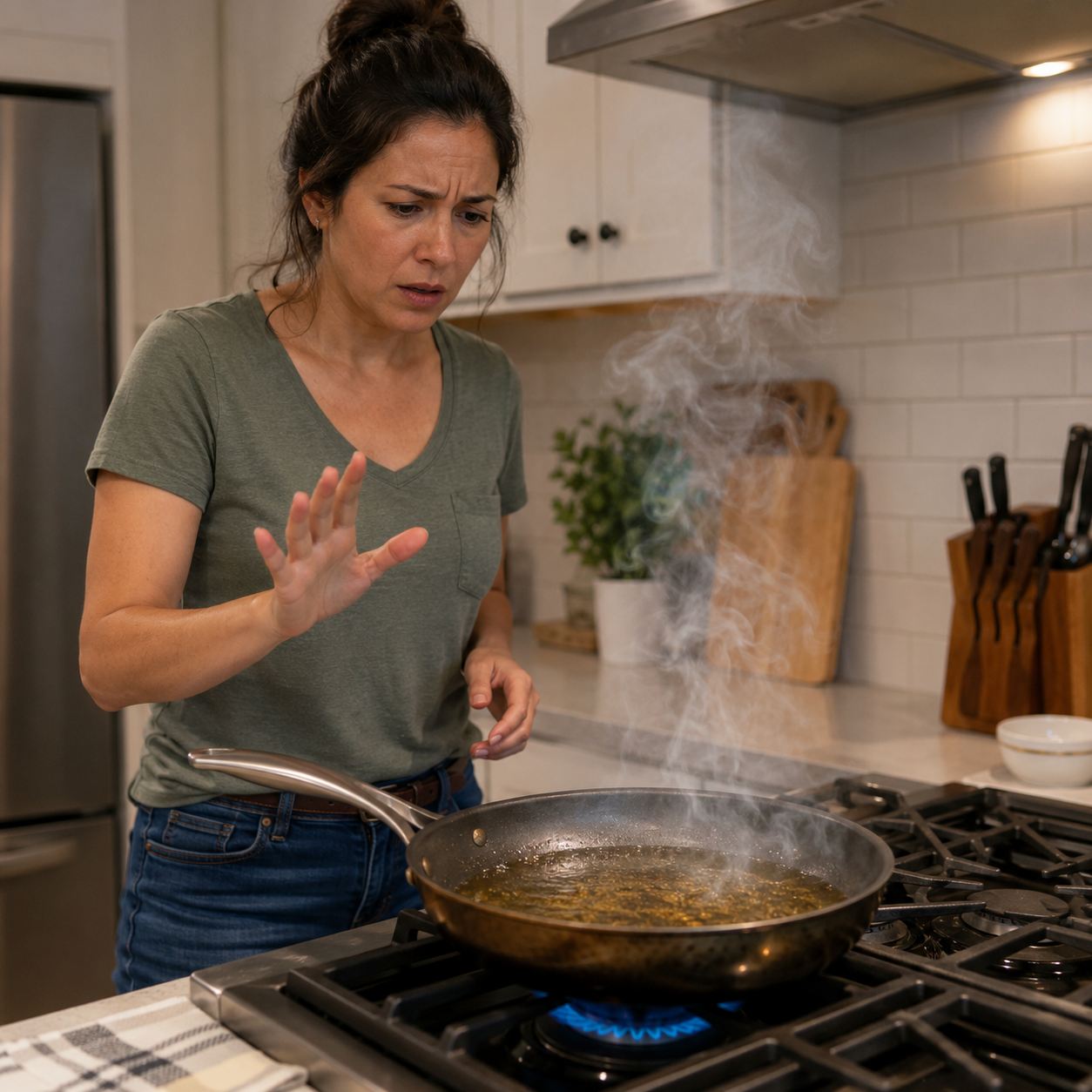

Learn why cooking oil that starts smoking can become risky, what smoke point means, how overheating affects flavor and safety, and simple steps to prevent kitchen fires and ruined meals.
Why Smoking Oil Should Get Your Attention
A little smoke from a hot pan may not seem like a big deal at first.
You turn on the stove, pour in some oil, get distracted for a moment, and suddenly a thin gray haze rises from the pan. Maybe the kitchen smells sharp or bitter. Maybe the smoke alarm starts chirping. Maybe you rush to toss in the onions, chicken, or vegetables because you think adding food will “calm it down.”
Most home cooks have been there.
Cooking with oil is normal, and high heat is part of many delicious meals. Searing meat, stir-frying vegetables, frying eggs, and crisping potatoes all need heat. But when oil starts smoking, it is a sign that the oil has gotten too hot and is beginning to break down.
That moment matters.
Smoking oil can affect the taste of your food, irritate your eyes and throat, create a smoky kitchen, and increase the risk of flare-ups or grease fires if the situation gets worse. It does not mean you need to panic, but it does mean you should stop and respond calmly.
The good news is that preventing smoking oil is mostly about paying attention, choosing the right oil, controlling heat, and knowing what to do when the pan gets too hot.
What Does It Mean When Oil Starts Smoking?
Cooking oil starts smoking when it reaches a temperature where it begins to break down. This is often called the oil’s smoke point.
Different oils have different smoke points. Some oils can handle higher heat, while others are better for low-heat cooking, dressings, or finishing dishes.
When oil reaches its smoke point, it may give off visible smoke and a strong smell. The oil can also begin to taste bitter or burnt. If heating continues, the situation can become more serious.
Smoke Is a Warning Sign
Think of smoke as a warning light on your stove.
It is telling you that the pan is too hot for the oil you are using, or that the oil has been heating too long without food in the pan.
At this point, the best response is not to ignore it or keep cooking as usual. The safest response is to reduce the heat, move the pan away from the burner if needed, and let things cool down.
Why Smoking Oil Can Affect Food Quality
One of the first problems with smoking oil is flavor.
Oil that has overheated can taste bitter, harsh, or stale. That flavor can cling to food quickly. If you add delicate ingredients to smoking oil, they may pick up a burnt taste before they even cook properly.
This is especially noticeable with eggs, garlic, onions, fish, butter-based dishes, and lightly seasoned vegetables. Instead of tasting toasted or savory, the food may taste acrid.
The “Burnt Before It Cooks” Problem
Sometimes the outside of food burns quickly while the inside stays undercooked. This happens when the pan and oil are too hot.
For example, if you place chicken into smoking oil, the outside may brown too fast while the center still needs time. You may end up lowering the heat anyway, but now the oil has already smoked and the food may carry that burnt flavor.
Good browning is controlled. Smoking oil is often a sign that the heat has gone beyond what the recipe needs.
Smoking Oil Can Fill the Kitchen Quickly
Another everyday issue is indoor air quality.
Smoking oil can spread through the kitchen faster than people expect. Even a small pan can create a haze that lingers in curtains, cabinets, clothing, and open living spaces.
The smell can be unpleasant and may irritate your eyes, nose, or throat. People with asthma, allergies, respiratory sensitivity, or young children in the home may be more bothered by it.
Ventilation Helps, But Prevention Is Better
Turning on the range hood, opening a window, or using a fan can help clear smoke. But ventilation should not be your main strategy.
It is better to prevent the oil from smoking in the first place by heating the pan gradually and staying near the stove.
If the kitchen is already smoky, turn off the heat and let the pan cool before deciding what to do next.
The Fire Risk: Why Overheated Oil Deserves Respect
The most serious concern with overheated oil is fire risk.
Cooking oil does not need a large flame to become dangerous. If oil gets hot enough, it can ignite. A pan of smoking oil is not automatically on fire, but it is moving in the wrong direction.
Grease fires can spread quickly because oil is hot, liquid, and difficult to handle safely once flames appear. That is why it is so important to respond early, before smoke becomes a bigger problem.
Do Not Wait to “See What Happens”
If oil is smoking heavily, do not keep cooking as if it is normal. Turn off the burner. Carefully move the pan off the heat if you can do so safely. Let it cool.
A calm early response is much easier than dealing with a pan that has gone from smoking to flaming.
Never Add Water to Smoking or Burning Oil
This is one of the most important kitchen safety habits.
Do not add water to hot oil.
Water and hot oil react badly together. Water can sink below the oil, rapidly turn to steam, and splatter hot oil out of the pan. If the oil is burning, water can spread the fire instead of putting it out.
This is why people are often warned never to pour water on a grease fire.
What to Do Instead if Oil Is Smoking
If the oil is smoking but not on fire, turn off the heat and let the pan cool. Keep your face and hands away from the smoke. Use ventilation if needed.
If flames appear, the safest response depends on the situation, but general home safety awareness includes turning off the heat if it is safe, covering the pan with a metal lid or baking sheet to smother small flames, and leaving the area if the fire is not immediately controlled. Do not try to carry a burning pan.
This article is not a substitute for emergency training, but the everyday rule is simple: water does not belong on hot oil.
Common Reasons Oil Starts Smoking
Smoking oil usually happens for a few predictable reasons.
The Burner Is Too High
Many home stoves are powerful enough to overheat a pan quickly, especially if the pan is empty or only has a thin layer of oil.
High heat is not always better. For many foods, medium or medium-high heat is enough.
The Pan Was Left Empty Too Long
A dry pan can become very hot. When oil is added to an overheated pan, it may smoke almost immediately.
This often happens when someone preheats a skillet and gets distracted.
The Oil Is Not Suited for High Heat
Some oils are better for lower temperatures. Extra-virgin olive oil, butter, and some unrefined oils may smoke sooner than oils designed for high-heat cooking.
This does not mean they are bad oils. It means they have better uses.
Old Oil Was Reused Too Many Times
Oil that has already been used for frying can break down faster the next time it is heated. It may smoke at a lower temperature, smell stale, or darken quickly.
Food Bits Are Burning in the Pan
Sometimes the oil is not the only thing smoking. Tiny food crumbs, breading, garlic, spices, or sauce residue can burn in hot oil and create smoke.
This is common when frying multiple batches without cleaning out burnt bits.
Different Oils Handle Heat Differently
Choosing the right oil can prevent many smoking problems.
For high-heat cooking, many home cooks choose oils that are commonly used for sautéing, searing, or frying. For lower-heat cooking, dressings, or finishing, flavorful oils can be wonderful.
The key is matching the oil to the job.
High-Heat Cooking
For searing, stir-frying, or frying, use an oil meant for higher heat. These oils are often more neutral in flavor and more stable during hotter cooking.
Medium-Heat Cooking
For everyday sautéing, many oils work fine as long as the pan is not overheated. Medium heat is often enough for vegetables, eggs, and simple skillet meals.
Low-Heat or Finishing
Some oils are best used for flavor after cooking or in dressings. If an oil has a strong flavor, is unrefined, or is labeled as a finishing oil, avoid using it in a smoking-hot pan.
How to Heat Oil Without Smoking It
A simple heating routine can make cooking easier and safer.
Start With Moderate Heat
Instead of turning the burner to the highest setting, start with medium or medium-high heat. Let the pan warm gradually.
If a recipe calls for high heat, stay close and watch carefully.
Add Oil When You Are Ready to Cook
Do not pour oil into a pan and walk away. Add the oil when your ingredients are already prepared and nearby.
This is especially helpful for stir-fries, where everything cooks quickly.
Watch for Shimmering
Oil often begins to shimmer or move more easily when it is hot enough for cooking. That is usually a better sign than waiting for smoke.
If the oil is smoking, it is already too hot.
Test With a Small Piece of Food
For some foods, you can test the oil by adding a small piece. It should sizzle gently or steadily, depending on the recipe. If it burns instantly, the pan is too hot.
What to Do When Oil Starts Smoking
If your oil starts smoking, do not rush.
Step 1: Turn Off the Heat
The first move is to stop adding more heat.
Step 2: Move the Pan Carefully if Safe
If the pan is not flaming and you can move it safely, slide it to a cool burner. Use a dry oven mitt if the handle is hot.
Do not carry it across the kitchen.
Step 3: Let It Cool
Give the oil time to cool down. Do not pour it into the sink while it is hot. Do not add water.
Step 4: Ventilate
Turn on the range hood or open a window if needed.
Step 5: Decide Whether to Keep Cooking
If the oil smoked heavily or smells burnt, it is usually better to discard it once cooled, wipe the pan, and start again.
Trying to save a few tablespoons of oil can ruin the flavor of the whole meal.
When to Throw Away Overheated Oil
Not every tiny wisp of smoke means the entire dish is ruined. But oil that has smoked heavily is usually not worth keeping.
Throw away the oil after it cools if:
- It smells burnt, bitter, or sharp
- It has turned very dark
- It is thick or sticky
- It contains burnt food bits
- It smoked heavily for more than a brief moment
- It makes the kitchen smell unpleasant
- You are unsure whether it overheated badly
Let the oil cool completely, then dispose of it properly. Do not pour cooking oil down the drain, as it can clog pipes over time.
How to Prevent Oil Smoke While Frying
Frying can be especially tricky because oil temperature matters so much.
Use a Heavy Pot or Pan
Thin pans can heat unevenly and quickly. A heavy pot or skillet helps maintain a steadier temperature.
Do Not Overfill the Pot
Too much oil can be dangerous if it bubbles up when food is added. Leave plenty of space at the top.
Dry Food Before Adding It
Water on food can cause splattering. Pat ingredients dry when appropriate, especially potatoes, meat, tofu, or vegetables.
Avoid Crowding the Pan
Adding too much food at once lowers the oil temperature, which can make food greasy. Then people often turn up the heat too high, and the oil may overheat between batches.
Remove Burnt Bits
If crumbs or batter pieces are burning in the oil, remove them carefully between batches. Burnt bits can smoke and make the oil taste bitter.
Be Careful With Garlic, Spices, and Butter
Some ingredients burn quickly in hot oil.
Garlic can go from fragrant to bitter in seconds. Ground spices can scorch. Butter can brown and then burn if the heat is too high.
If you are cooking with these ingredients, moderate heat is usually better.
Add Delicate Ingredients Later
For many dishes, it helps to heat the pan, cook the main ingredients, then add garlic, spices, or butter once the heat is under control.
This gives you flavor without smoke.
Do Not Leave the Stove Unattended
The simplest safety habit is also the most important: stay near the stove when heating oil.
Oil can go from warm to smoking faster than expected, especially on a high burner. If you need to answer the door, help a child, take a phone call, or step away, turn off the burner first.
Distraction Is the Real Problem
Most kitchen problems do not happen because someone does not know how to cook. They happen because real life interrupts cooking.
A text message, a pet, a delivery, or a quick trip to another room can be enough time for oil to overheat.
When oil is on the stove, treat it as something that needs your attention.
Keep the Cooking Area Clear
A smoky pan is stressful enough. It becomes more dangerous if the area around the stove is crowded.
Keep paper towels, dish towels, food packaging, wooden utensils, plastic bags, and oven mitts away from active burners.
If oil splatters or smokes, clutter gives you less room to respond calmly.
Create a Clear Zone
Before frying or searing, take ten seconds to clear the stovetop area. Move anything flammable away from the burners. Keep a lid or baking sheet nearby when cooking with more oil than usual.
This small step makes a big difference.
Know the Difference Between Steam and Smoke
Sometimes people confuse steam with smoke.
Steam is usually white, moist-looking, and comes from water evaporating from food. Smoke is often grayish or bluish, smells sharper, and may come from the oil or pan itself.
If you add vegetables to a hot pan, you may see steam because the food contains water. That is normal.
If the empty oil is smoking before food goes in, that is a sign the oil is too hot.
Common Mistakes to Avoid
Here are the mistakes that cause many smoking-oil moments:
- Turning the burner to high and walking away
- Waiting for oil to smoke before adding food
- Using delicate oil for high-heat cooking
- Reusing old frying oil too many times
- Leaving burnt crumbs in the pan
- Adding wet food to hot oil
- Pouring water into hot oil
- Carrying a smoking or burning pan
- Crowding the stovetop with towels or packaging
- Ignoring smoke because “it always happens”
These habits are easy to fix once you notice them.
A Simple Safe Cooking Routine
Here is a practical routine for cooking with oil:
1. Choose the right oil
Use an oil that fits the heat level of your recipe.
2. Prepare ingredients first
Have food chopped, dried, seasoned, and ready before heating oil.
3. Heat gradually
Start with moderate heat instead of automatically using the highest setting.
4. Stay nearby
Do not leave oil heating unattended.
5. Watch for shimmer, not smoke
Shimmering oil is often ready. Smoking oil is too hot.
6. Lower heat if needed
If the pan seems too hot, reduce the heat early.
7. Respond calmly to smoke
Turn off the heat, move the pan if safe, ventilate, and let the oil cool.
8. Start over if the oil smells burnt
Fresh oil is better than a ruined meal or a smoky kitchen.
Final Thoughts: Smoke Is a Signal to Slow Down
Cooking oil is useful, familiar, and part of everyday meals. There is no need to be afraid of it. But when oil starts smoking, it is trying to tell you something important: the pan is too hot, the oil is breaking down, and it is time to slow down.
Smoking oil can ruin flavor, irritate the kitchen air, and increase the risk of a more serious stovetop problem if ignored. The best response is calm and simple. Turn off the heat, let the pan cool, ventilate the kitchen, and avoid adding water.
Most smoking-oil moments can be prevented with a few steady habits: choose the right oil, prepare ingredients before heating the pan, use moderate heat, stay near the stove, and watch for shimmering instead of smoke.
A good meal does not need a smoky kitchen. With a little attention, you can cook confidently, keep the flavor clean, and make your kitchen safer at the same time.

Hi, I’m the creator and editor behind ZestyHabit. I research everyday safety, first aid, and practical wellness topics using official guidance and reliable public sources, then turn that information into clear, realistic steps for daily life.
My goal is to help readers make safer, better-informed choices at home and beyond.


