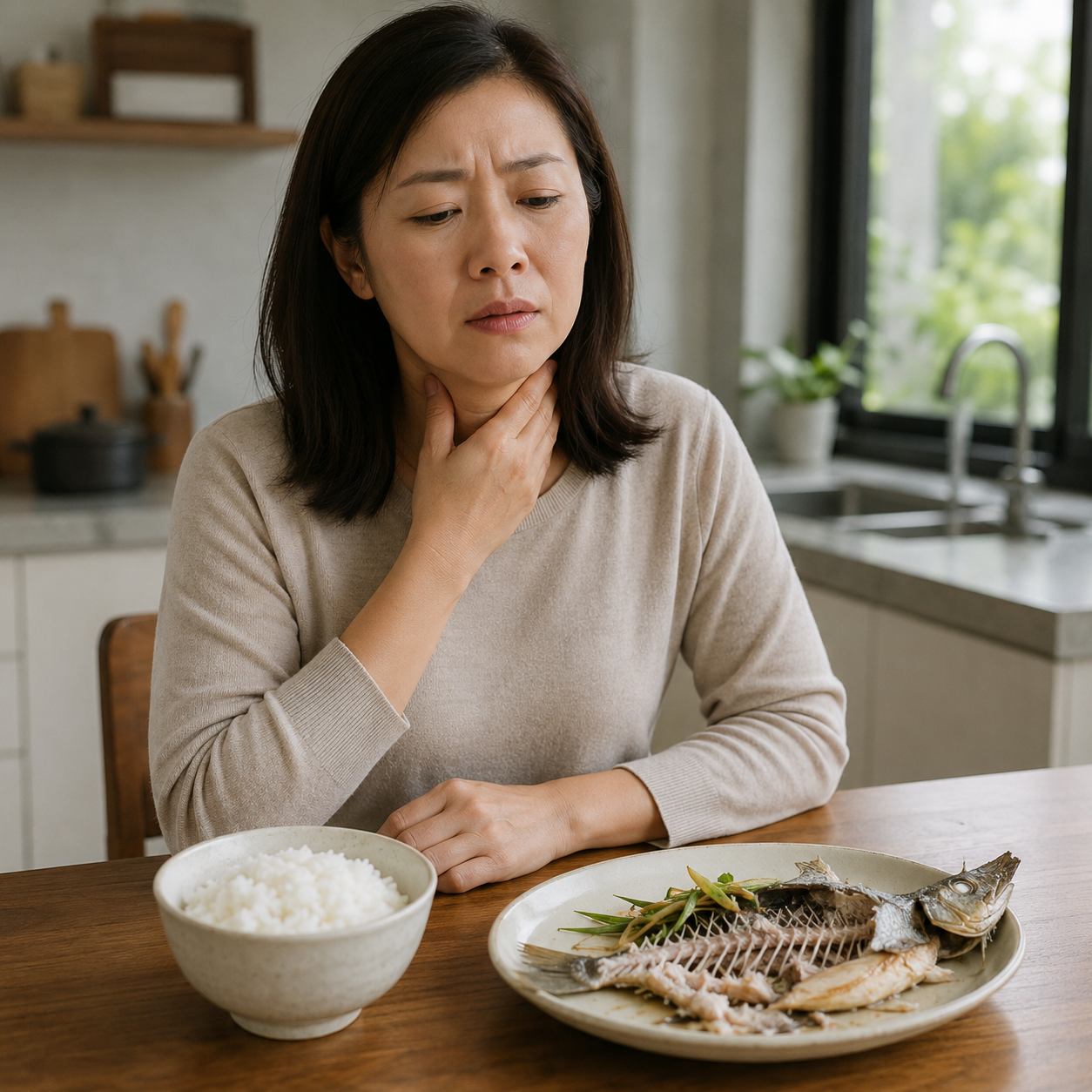
Why You Shouldn’t Swallow Rice to Push Down a Fish Bone: A Calm Safety Guide
Minjin Park
·
Swallowing rice to push down a stuck fish bone may make things worse. Learn why this old home remedy can be risky, what warning signs to watch for, and safer habits for eating fish at home.
The Common Fish Bone Habit Many Families Still Believe
Fish is a regular part of many home meals. It can be grilled, baked, pan-fried, added to soups, or served whole at the table. For many families, eating fish is normal, comforting, and healthy.
When a tiny bone catches in the throat, the first reaction is usually panic. It may feel sharp, scratchy, or stuck every time you swallow. Someone at the table may quickly say, “Swallow a big bite of rice,” or “Eat bread to push it down.”
This advice is common in many households. It sounds simple and practical. The idea is that a sticky ball of rice will grab the bone and carry it into the stomach.
But this is not always safe.
If a fish bone is truly stuck, forcing rice, bread, or another large bite down your throat can push the bone deeper, scratch the throat, make the pain worse, or turn a small problem into a more serious one. In some cases, the feeling may not even be a loose bone anymore. It may be a scratch left behind after the bone has already moved.
That is why it helps to understand what may be happening before trying old home remedies.
Why Fish Bones Get Stuck So Easily
Fish Bones Are Thin and Sharp
Fish bones are different from many other food pieces. They are thin, pointed, and sometimes nearly invisible when mixed with soft fish meat.
A small bone can hide inside a bite even when the fish looks carefully prepared. It may not be noticed until it touches the back of the throat or causes a sharp sensation while swallowing.
Because fish bones are narrow and pointed, they may catch on soft tissue instead of sliding down smoothly.
Some Fish Are Bonier Than Others
Certain fish are naturally full of fine bones. Whole fish, small fish, and fish served with the skeleton still in place can be harder to eat safely, especially for children, older adults, or anyone who eats quickly.
Even fillets can contain small bones. “Boneless” does not always mean every tiny bone has been removed.
This is why fish should be eaten slowly, with attention. Rushing through a fish meal increases the chance of swallowing a bone.
The Throat Is Sensitive
The throat has many sensitive areas. A tiny scratch can feel much bigger than it is. That is part of why fish bone incidents are confusing.
Sometimes a bone is still stuck. Other times, the bone may have passed, but it left a small scratch that continues to feel like something is there.
Because both situations can feel similar, forcing food down is not a reliable way to solve the problem.
Why Swallowing Rice Can Be Risky
Rice Can Push the Bone Deeper
The main concern with swallowing a large bite of rice is pressure.
If the bone is lightly sitting near the surface, a forceful swallow may move it. But if the bone is already lodged in the tissue, rice may press against it and push it deeper.
That can make the bone harder to remove and may increase irritation.
This is the opposite of what people are trying to do. The goal is to remove or dislodge the bone safely, not drive it farther into the throat.
It Can Scratch the Throat More
A fish bone can act like a tiny needle. If a large bite of rice or bread pushes it at the wrong angle, the bone may scrape nearby tissue.
This can leave more pain, swelling, or the feeling that the bone is still there even after it moves.
That lingering “something is stuck” sensation can be very uncomfortable and stressful.
Rice May Make Swallowing More Difficult
When someone already feels pain or fear while swallowing, taking a large bite of rice is not always easy. The person may gag, cough, or struggle.
If the throat is irritated, dry rice or a large sticky clump may make swallowing feel worse.
This is especially concerning for children, older adults, or anyone who already has swallowing difficulties.
It Can Delay Getting Help
Another problem is time. When people keep trying rice, bread, bananas, or other home tricks, they may wait too long before getting checked.
If the bone is still stuck, waiting can make the situation more uncomfortable. It may also allow irritation to increase.
A calm, timely decision is better than repeated attempts to “force it down.”
Common Mistakes People Make
Taking Bigger and Bigger Bites
One of the most common mistakes is starting with a small bite, then trying a larger one when it does not work.
This can be risky. Bigger bites create more pressure and may increase choking risk.
If swallowing already hurts, forcing more food is not a safe direction.
Drinking Large Amounts Quickly
Some people try to wash the bone down by gulping water. Small sips may feel soothing for irritation, but forceful gulping is not a guaranteed fix.
If swallowing is painful or difficult, drinking too quickly may make the person cough or panic.
The key is not to force anything.
Using Fingers or Utensils to Dig Around
It may be tempting to reach into the throat with fingers, tweezers, chopsticks, or a spoon. This can cause more injury, trigger gagging, or push the bone farther back.
Unless a bone is clearly visible and can be safely handled by a trained professional, digging around is not a good idea.
For home safety, avoid turning the situation into a rough search mission.
Assuming the Pain Means the Bone Is Definitely There
A scratch can feel like a stuck bone. This is why people may keep swallowing rice even after the bone has already moved.
If the pain is mild and improving, it may be irritation. If the pain is sharp, persistent, worsening, or linked with trouble swallowing, it deserves more attention.
The important point is that guessing is not always reliable.
Warning Signs That Need Prompt Attention
This article is for general safety awareness, not medical diagnosis. Still, certain signs should not be ignored.
Trouble Breathing
If someone has trouble breathing, cannot speak normally, or appears to be choking, that is urgent.
This is different from a scratchy feeling. Breathing difficulty should be treated seriously.
Drooling or Inability to Swallow
If the person cannot swallow saliva, keeps drooling, or feels like nothing can go down, they should not be given more food to “push it through.”
This can be a sign that something is blocking or irritating the throat or esophagus.
Severe or Worsening Pain
A small scratch may improve gradually. Severe pain, pain that gets worse, or pain that is very localized may suggest the bone is still stuck.
Forcing more food in this situation is not a good plan.
Blood, Fever, Neck Swelling, or Chest Pain
These symptoms are not typical of a simple mild scratch. They should be taken seriously and checked by a healthcare professional.
Symptoms That Do Not Go Away
If the sensation remains, swallowing continues to hurt, or the person cannot eat normally, it is better to get medical advice than keep trying home remedies.
What to Do Instead of Swallowing Rice
Stay Calm and Stop Eating
The first step is to pause. Put down the food and avoid taking more bites.
Panic often leads to fast swallowing, coughing, or rough attempts to fix the problem. A calm pause helps prevent making it worse.
Avoid Forcing Food Down
Do not use rice, bread, bananas, or large food pieces as a tool to push the bone down.
Even if someone in the family says it worked before, it is not a reliable or risk-free method.
Notice What the Person Is Feeling
Is the person breathing normally? Can they swallow saliva? Is the pain mild or severe? Is it getting better or worse?
These simple observations help decide whether the situation seems minor or needs prompt medical attention.
Seek Medical Help When Symptoms Are Concerning
If the bone feels stuck, pain is sharp, swallowing is difficult, or symptoms are not improving, it is safer to contact a healthcare professional or visit an urgent care or emergency facility.
Doctors have proper tools to look for and remove a fish bone if needed. That is much safer than pushing blindly with food.
How Doctors May Handle a Fish Bone
Many people avoid getting help because they imagine the process will be dramatic. Often, evaluation starts with a careful look at the throat and questions about what happened.
Depending on where the bone may be, a clinician may use a light, special instruments, imaging, or an endoscope to locate it.
If a bone is found, it can often be removed with proper tools.
The important point is that medical removal is controlled and visible. Swallowing rice is not.
How to Prevent Fish Bones From Becoming a Problem
Eat Fish Slowly
This sounds simple, but it matters. Fish is not a food to rush through while distracted.
Take smaller bites. Chew carefully. Pay attention to texture before swallowing.
This is especially important when eating whole fish, fish soup, or fish with many small bones.
Check the Fish Before Serving
Before serving fish to children or older adults, check carefully for bones. Use a fork or clean fingers to separate pieces and look for thin bones hidden in the meat.
For fillets, run your fingers gently over the surface to feel for pin bones before cooking.
Use Good Lighting
Fish bones can be hard to see, especially in dim lighting. A well-lit table makes it easier to spot small bones.
This is a small detail, but it can help during family meals.
Be Extra Careful With Children
Children may not chew carefully or recognize a fish bone before swallowing. Serve them small, checked pieces.
Avoid giving young children bony fish without close supervision.
Also, teach them to stop eating and tell an adult if something feels sharp.
Do Not Talk or Laugh With Fish in Your Mouth
Many fish bone incidents happen during relaxed meals when people are talking, laughing, or eating quickly.
Enjoy the meal, but chew and swallow before speaking.
Safer Habits for Serving Fish at Home
Choose Fish Cuts That Match the Meal
If you are cooking for kids, guests, or anyone who is uncomfortable with bones, choose boneless fillets when possible. Even then, inspect them.
Whole fish can be delicious, but it requires more attention at the table.
Separate Bones as You Eat
Keep a small plate or side area for bones. Do not mix removed bones with edible pieces.
This reduces the chance of accidentally picking up a bone again.
Teach a Family Rule
A simple rule helps: if you feel a bone, stop eating.
Do not swallow more food to push it down. Do not keep chewing the same bite. Do not panic.
Stop, spit out what is in your mouth if needed, and check carefully.
Keep Meals Calm for High-Risk Foods
Fish with bones, grapes, cherry tomatoes, hard candies, and similar foods deserve a little extra attention, especially with kids.
You do not need to make mealtime scary. Just avoid rushing.
A Calm Note About Old Home Remedies
Many families pass down home remedies because someone tried them once and felt better. Rice, bread, and bananas are common examples for fish bones.
Sometimes a small, loose bone may move on its own around the same time someone eats something soft. That can make the remedy seem proven.
But the problem is that you cannot easily know whether the bone is loose, embedded, already gone, or scratching tissue. That uncertainty is why forcing food can be risky.
A safer mindset is this: do not push sharp objects deeper into the body.
A fish bone is sharp. Treat it that way.
The Calm Takeaway
Swallowing rice to push down a fish bone may sound like a harmless old trick, but it can make the situation worse. A large bite can push the bone deeper, scratch the throat, make swallowing harder, or delay proper help.
If someone feels a fish bone in the throat, the safest first step is to stop eating and stay calm. Do not force rice, bread, or other foods down. Watch for concerning signs like trouble breathing, inability to swallow, severe pain, blood, fever, swelling, or symptoms that do not improve.
Fish can still be a safe and enjoyable part of home meals. The best prevention is simple: eat slowly, check fish carefully, serve children small bone-checked pieces, and pay attention while chewing.
With fish bones, that moment is pausing before trying to force anything down. A calm pause can prevent a small accident from becoming a bigger problem.
Hi, I’m the creator and editor behind ZestyHabit. I research everyday safety, first aid, and practical wellness topics using official guidance and reliable public sources, then turn that information into clear, realistic steps for daily life.
My goal is to help readers make safer, better-informed choices at home and beyond.