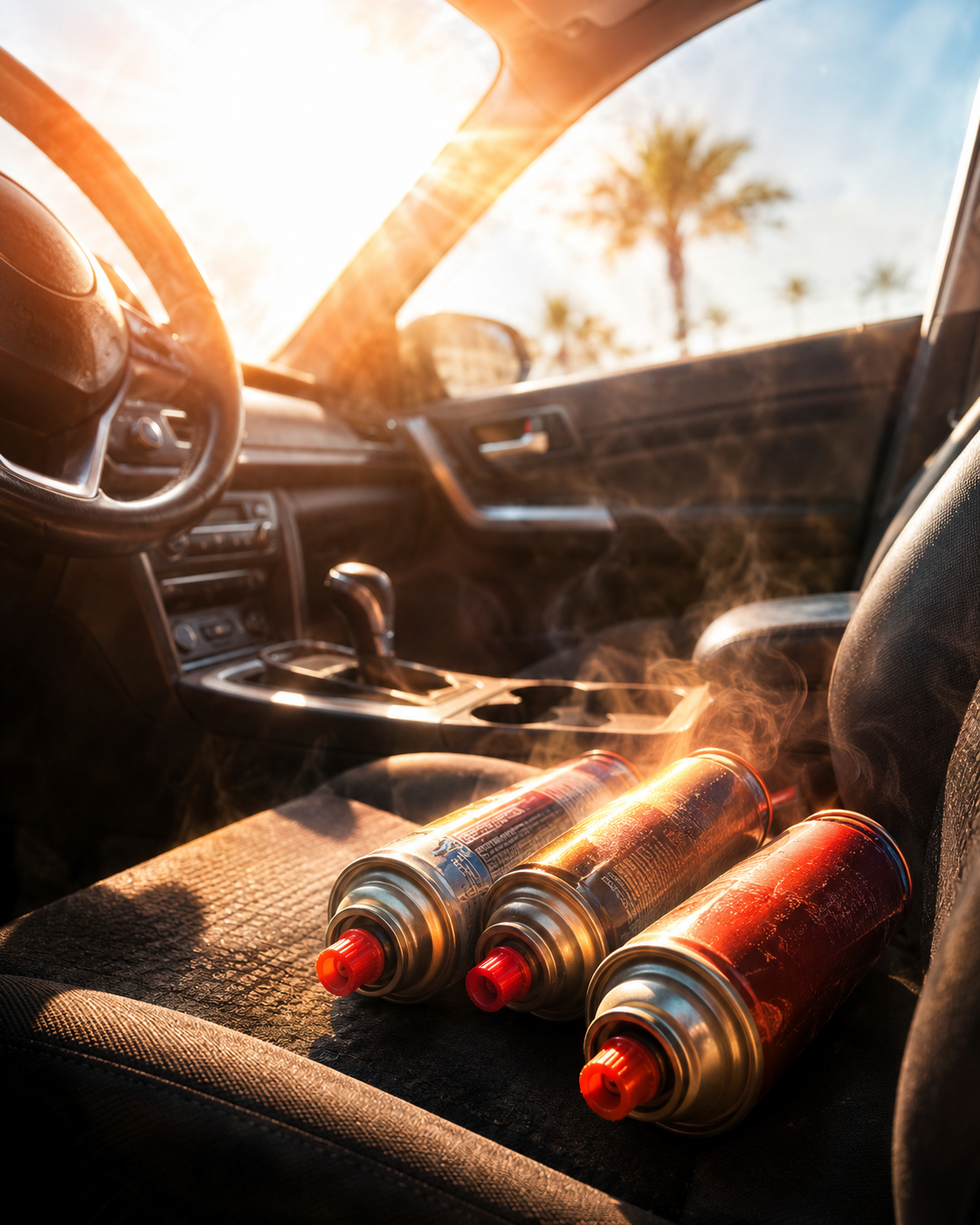
Why Leaving Butane Canisters in a Hot Car During Summer Can Be Dangerous
Minjin Park
·
Butane canisters are useful for camping stoves and portable burners, but leaving them inside a hot car can create avoidable safety risks. Learn why heat matters and how to store them more safely.
You buy a few for a camping trip, backyard cookout, picnic, fishing day, or emergency cooking kit. After the trip, one or two cans stay in the trunk. Maybe they roll under a seat. Maybe they sit in a storage bin with flashlights, paper plates, and a portable stove.
At first, it does not seem like a big deal. The canister is sealed. It is small. It is not being used. It feels like just another camping supply.
But summer changes the situation.
A parked car can become much hotter than the outdoor temperature, especially in direct sunlight. The dashboard, trunk, glove box, and closed storage areas can trap heat for hours. For ordinary items, that may only cause inconvenience. Snacks melt. plastic bottles warp. sunscreen separates. Electronics get sluggish.
For a pressurized fuel canister, heat is more serious.
Butane canisters are designed to hold fuel under pressure. When they are stored correctly, they are useful and convenient. When they are left in a hot vehicle, the pressure inside may increase. That is why storing butane in a car during summer is not a good habit.
You do not need to be afraid of butane. You just need to treat it like the fuel container it is.
What Butane Is Used For
Butane is a common fuel for portable stoves, small burners, camping equipment, some lighters, and certain outdoor cooking setups. Many people keep it around because it is compact and easy to use.
It is especially popular for:
Camping stoves Portable indoor-outdoor burners Picnic cooking Fishing trips Hot pot burners Emergency cooking kits Tailgating setups Backyard food prep
Because the canisters are small, people often store them casually. They may toss them into a trunk organizer or leave them with camping gear year-round.
That casual storage is where problems can begin.
A butane canister is not the same as a water bottle or flashlight. It contains flammable fuel in a pressurized container. That means temperature, damage, and storage location matter.
Why Heat Is the Main Concern
The biggest issue with leaving butane in a car during summer is heat.
When a pressurized container gets hot, the pressure inside can rise. Butane canisters are made to handle normal storage and use, but they are not meant to sit in extreme heat for long periods.
A car parked in the sun can heat up quickly. Even if the outside temperature feels manageable, the inside of the vehicle may become much hotter. Closed compartments can feel like small ovens.
The Trunk Is Not Always Cool
Many people assume the trunk is safer because it is away from direct sunlight. It may be better than the dashboard, but it can still become very hot.
The trunk also has another problem: items shift around. A butane canister may roll, get crushed by heavy gear, or sit near sharp tools. If it is packed under camping chairs, coolers, luggage, or sports equipment, the can may be stressed or damaged.
So while the trunk may seem out of sight and out of mind, it is not a good long-term summer storage place for butane.
Direct Sunlight Makes Things Worse
Leaving a butane canister on a seat, dashboard, rear shelf, or floor area where sunlight hits is especially risky.
Sunlight can heat the metal can quickly. Dark car interiors may increase the heat around it. A canister that was fine when you parked may become much hotter after several hours.
For a fuel canister, that kind of heat exposure is not something to ignore.
Why Pressurized Containers Need Care
Butane canisters are pressurized so the fuel can be stored compactly and released when used with the proper device. That pressure is part of normal design.
However, pressurized containers should be protected from heat, punctures, dents, and rough handling.
If a canister becomes damaged or overheated, it may leak, deform, or fail. While serious incidents are not something most people experience in daily life, the risk is avoidable enough that proper storage matters.
A Small Can Still Holds Real Fuel
Because butane cans are small, people sometimes underestimate them. But the size does not make them harmless.
A small canister still contains flammable gas. It should be stored with the same mindset you would use for other fuel products: cool place, good ventilation, away from heat, away from flames, and away from anything that could damage the container.
Everyday Situations That Create Risk
Most risky storage habits happen after normal activities, not extreme behavior.
After a Camping Trip
You come home tired. The tent, chairs, cooler, and bags all stay in the car “just for tonight.” Then one night becomes a week.
If butane canisters are mixed in with the camping gear, they may sit in a hot vehicle for days.
A simple post-trip routine helps: remove fuel canisters from the car first, along with food, electronics, and anything heat-sensitive.
During a Summer Road Trip
Many families pack fuel canisters for cooking at campsites, beaches, or picnic areas. That can be practical, but the canisters should not be left loose in the car all day while everyone is hiking, swimming, or sightseeing.
If you bring butane on a trip, store it according to the product instructions and keep it away from direct sunlight and excessive heat.
Keeping an Emergency Cooking Kit in the Car
Some people like to keep emergency supplies in the vehicle. That can be useful for blankets, water, flashlights, first aid supplies, and basic tools.
But fuel canisters are not ideal for long-term car storage, especially during hot months.
If your emergency plan includes portable cooking fuel, consider storing it at home and adding it to the car only when needed for a specific trip. If you do keep supplies in a vehicle, inspect them regularly and remove fuel during heat waves or long periods of parking.
Leaving Cans Under the Seat
A canister under the seat may be forgotten completely. It can roll, get kicked, or sit close to floor heat. It may also be hard to notice if it becomes dented or begins to leak.
Fuel canisters should never be treated as loose car clutter.
Warning Signs a Butane Canister Should Not Be Used
Before using a butane canister, take a moment to inspect it. This is especially important if it has been stored in a car, garage, shed, or outdoor area.
Dents or Rust
A canister with dents, rust, deep scratches, or damaged seams should not be used. Physical damage can weaken the container.
Even if the can seems full and functional, visible damage is a reason to handle it cautiously and follow local disposal guidance.
Bulging or Deformation
If the canister looks swollen, warped, or misshapen, do not use it. A normal canister should keep its original shape.
Bulging can be a sign that the container has been stressed.
Hissing or Fuel Smell
A hissing sound or fuel-like odor may indicate a leak. Do not test the canister near a flame, stove, cigarette, or spark.
If something smells unusual, move away from ignition sources and follow the safety instructions on the product label.
Damaged Nozzle or Cap
The connection point matters. If the nozzle, valve area, or cap looks broken, bent, dirty, or loose, the canister may not connect properly to the stove or burner.
A poor connection can cause leaks during use.
Common Mistakes People Make With Butane in Cars
Many people make these mistakes simply because they do not think of butane as a sensitive item.
Treating It Like Regular Camping Gear
Camping chairs, tarps, and plastic plates can stay in the trunk with little concern. Butane should not be treated the same way.
Fuel should be separated, checked, and stored with more care.
Leaving It in the Car Between Trips
This is one of the easiest habits to fall into. If you camp often, it may feel convenient to keep everything packed.
But summer heat makes permanent car storage a poor choice for fuel canisters.
Storing It With Sharp or Heavy Objects
Tools, tent stakes, fishing gear, grills, folding tables, and metal cookware can damage a canister if they shift during driving.
Fuel cans should not be loose in a bin full of hard objects.
Ignoring the Label
Most fuel canisters include storage warnings and temperature guidance on the label. Many people never read them.
It is worth taking a minute to check the manufacturer’s instructions. The label is the most direct guidance for that specific product.
Safer Ways to Store Butane
Good storage is simple. Butane should generally be kept in a cool, dry, well-ventilated place, away from direct sunlight, heat sources, flames, sparks, and physical damage.
Bring It Indoors After the Trip
The easiest habit is to remove butane canisters from the vehicle as soon as you get home.
Place them in an appropriate storage area according to the label instructions. Do not leave them in the car just because the next trip is coming soon.
Keep It Upright and Protected
If you are transporting butane for a trip, keep the canisters upright when possible and prevent them from rolling around.
A sturdy storage box can help, as long as it does not trap them in excessive heat for long periods. Avoid packing heavy items on top of them.
Keep It Away From Children and Pets
Fuel canisters should be stored where children and pets cannot play with them, puncture them, shake them, or remove caps.
This is especially important after a trip when everyone is unloading and distracted.
Avoid Long-Term Vehicle Storage
A car is not a stable storage environment. It gets hot, cold, humid, and shaky. It is easy for items to be forgotten.
Butane is better stored somewhere more controlled.
What to Do When Transporting Butane in Summer
Sometimes you need to bring butane in the car. That is normal for camping, outdoor cooking, or certain travel plans.
The goal is to transport it thoughtfully.
Buy Only What You Need
Do not carry extra canisters “just in case” unless you truly need them. The fewer fuel canisters in the car, the easier they are to manage.
Pack It Last and Unload It First
For summer trips, pack butane close to departure time instead of leaving it in the car overnight.
When you arrive home, unload it early. Do not let it sit in the trunk for days.
Keep It Out of Direct Sun
Do not place canisters on seats, dashboards, rear shelves, or exposed cargo areas where sunlight can hit them directly.
Even during a drive, keep them shaded and secured.
Do Not Leave It in a Parked Car All Day
If you are stopping for a long lunch, hike, beach day, or sightseeing visit, remember that the car may heat up while parked.
Plan your packing so butane is not sitting in a hot vehicle longer than necessary.
Why This Matters for Families
Families often carry more gear than anyone else. A simple day trip can involve snacks, chairs, toys, coolers, bags, sports equipment, and cooking supplies.
In that clutter, fuel canisters can be forgotten.
A parent may load the car in the morning, spend the whole day outside, come home tired, and leave everything in the trunk. The next day is hot, and the butane is still there.
A safer family habit is to create a fuel check. When unloading, ask: “Did we bring fuel?” If yes, remove it before anything else gets forgotten.
This is also a good habit to teach older kids. Camping fuel is useful, but it is not a toy and not ordinary clutter.
What About Portable Stoves?
Butane canisters are often stored with portable stoves. That makes sense for convenience, but it is still important to separate fuel safety from stove storage.
The stove itself may be fine in a trunk or garage, depending on the product. The fuel canister needs more attention.
Before packing, check that the canister is disconnected from the stove unless the product instructions specifically say otherwise. Many portable stove instructions recommend removing the canister after use.
Also make sure the stove and canister are fully cool before packing them away.
Check the label for product-specific instructions.
Do not use damaged, rusted, leaking, or swollen canisters.
This routine is not complicated. It simply treats butane as fuel instead of random car gear.
Final Thoughts: Keep Fuel Out of Hot Cars
Butane canisters are useful for camping, outdoor cooking, and emergency preparation, but they need proper storage. A hot summer car is not a good place for them.
Heat can increase pressure inside the container. Direct sunlight can make the canister hotter. Trunks and glove boxes can trap heat. Loose storage can lead to dents, leaks, or damage.
The safest habit is simple: bring butane only when you need it, keep it shaded and secure during transport, and remove it from the car as soon as possible.
You do not need to overthink it. Just remember that butane is a pressurized fuel, not ordinary clutter. A few careful storage habits can make summer trips, camping days, and family outings safer and much more relaxed.
Hi, I’m the creator and editor behind ZestyHabit. I research everyday safety, first aid, and practical wellness topics using official guidance and reliable public sources, then turn that information into clear, realistic steps for daily life.
My goal is to help readers make safer, better-informed choices at home and beyond.