How to Reduce Face Injuries During Dodgeball and Soccer Games
Minjin Park
·
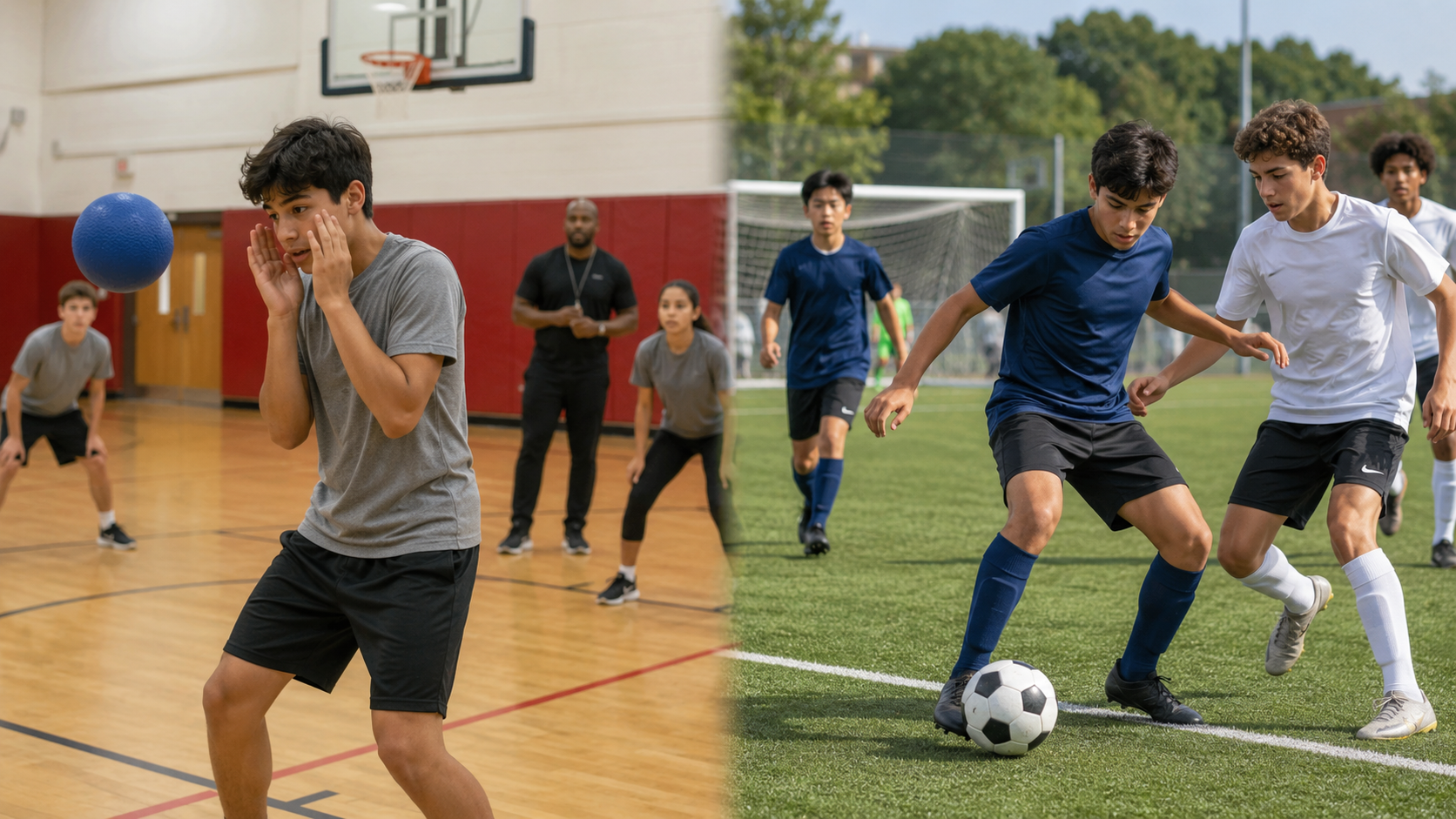
Face injuries can happen during dodgeball and soccer, especially when kids react quickly, crowd the ball, or play too aggressively. Learn simple safety habits that help reduce risk during everyday games.
Dodgeball and soccer are fun because they are fast, energetic, and social. Kids run, dodge, kick, pass, laugh, compete, and react in the moment. For many families, these games are part of school gym class, recess, after-school programs, weekend leagues, summer camps, and neighborhood play.
But because the games move quickly, face injuries can happen.
A ball can hit a child in the nose. Two players can bump heads while chasing the same pass. A soccer ball can be kicked from close range. A dodgeball throw can land higher than intended. A child may fall forward without enough time to protect their face.
Most bumps and minor hits are not serious, but they can still be painful and upsetting. They can also make kids nervous about playing again.
The goal is not to remove all fun or turn every game into a long list of rules. The goal is to help kids play with better awareness, safer habits, and clearer boundaries. When adults set the tone early, kids can still enjoy the game while lowering the chance of avoidable face injuries.
Why the Face Is Easy to Injure During Play
The face is exposed during most sports. Unlike the chest, arms, or legs, it is harder to protect with natural padding or quick movement. The nose, mouth, eyes, cheekbones, and jaw are all vulnerable when a ball or another player comes in unexpectedly.
In dodgeball, players often look in one direction while a ball comes from another. In soccer, players may focus on the ball at their feet and fail to notice another player approaching. During both games, kids may turn suddenly, duck, jump, or reach without seeing what is around them.
Young players are still learning body control, timing, distance, and safe reactions. That is normal. But it also means adults should help create a playing environment where kids are less likely to take a hard hit to the face.
Dodgeball Risks: What Usually Goes Wrong
Dodgeball face injuries often happen when throws are too hard, too close, or aimed too high. Even when a player does not mean to hit someone in the face, quick throws can rise above the target.
High Throws
One of the most common problems is throwing near the head. A child may aim for the chest but release the ball late, causing it to fly upward. Another player may crouch at the same moment, turning a body-level throw into a face-level hit.
Clear rules about keeping throws below the shoulders can help. It is also important to remind kids that a throw does not need to be powerful to count.
Close-Range Throws
A ball thrown from a few feet away gives the other player very little time to react. Close-range throws can feel more aggressive, even when they are part of the game.
Adding a minimum throwing distance, especially for younger children, can reduce hard face hits. If a player is too close, they can be asked to step back, pass, or roll the ball instead.
Overcrowded Courts
When too many kids play in a small space, balls come from every angle. Players may turn into a throw, trip over each other, or collide while trying to avoid being hit.
Smaller teams, more space, or rotating players in groups can make the game feel less chaotic.
Using the Wrong Ball
Not all balls are good for dodgeball. A hard rubber ball can create more risk than a soft foam or cloth-covered ball. For school and family play, softer balls are usually a better choice.
A ball should be easy to grip, light enough for safe throws, and soft enough that a body hit does not feel punishing.
Soccer Risks: Common Face Injury Situations
Soccer face injuries usually happen from close-range kicks, headers, player collisions, falls, or accidental contact from elbows and knees.
Close-Range Kicks
A soccer ball kicked hard from a short distance can hit the face before a player has time to react. This often happens during crowded plays near the goal or when players all rush toward the ball at once.
Teaching kids not to swing wildly in a crowd can help. Players should learn to look before kicking and avoid kicking high when another player is directly in front of them.
Ball Crowding
Younger children often cluster around the ball. This creates a tangle of feet, elbows, shoulders, and sudden movements. When everyone crowds the same spot, falls and face bumps become more likely.
Coaches and parents can help by teaching spacing, passing, and field awareness. Even simple phrases like “spread out” and “give space” can make a difference.
Head-to-Head Contact
Two players may both go for the ball and collide. This can happen during headers, loose balls, or quick changes in direction.
For younger children, limiting or avoiding heading during casual play is a practical safety step. In many youth settings, heading is already restricted or discouraged depending on age group and league rules.
Falls Onto Hard Surfaces
Soccer is usually played on grass or turf, but kids sometimes play on asphalt, concrete, gym floors, driveways, or uneven ground. A fall on a hard surface can lead to facial cuts, dental injuries, or bruises.
Choosing the right play area matters. A soft, open field is much safer than a crowded driveway or parking lot.
Choose the Right Equipment for the Game
Equipment does not solve everything, but it can reduce risk.
Use Softer Balls for Dodgeball
For dodgeball, soft foam balls are usually the safest choice for casual games, school play, and younger children. They are easier on the body and less likely to cause a painful face hit.
Avoid balls that are too hard, too heavy, or overinflated. A ball that stings when it hits the arm is probably not a good choice for a children’s dodgeball game.
Use Age-Appropriate Soccer Balls
Soccer balls come in different sizes. Younger children should use smaller, lighter balls that match their age group. A full-size adult ball may be too heavy or fast for younger players.
Also check inflation. An overinflated soccer ball can feel much harder on impact. The ball should be properly inflated according to its use, not pumped until it feels rock solid.
Consider Mouthguards for Organized Play
For some kids, especially those in regular sports programs, a mouthguard may be worth considering. It can help protect teeth and lips during contact sports or fast play.
Parents can ask a coach, dentist, or sports program what is commonly recommended for the child’s age and level of play.
Eyewear Matters
Children who wear glasses may need extra care during active games. Regular glasses can break or shift during a hit or fall. Sports goggles or impact-resistant eyewear may be a better option for frequent players.
This is especially worth thinking about for gym class, soccer practice, and games where balls move quickly near the face.
Set Clear Rules Before the Game Starts
Safety rules work best when they are explained before anyone starts playing. Once kids are excited and running, it is harder to slow things down.
For dodgeball, helpful rules may include:
Throws stay below the shoulders.
No close-range blasting.
No head shots on purpose.
Players stop when someone is hurt.
Use only approved soft balls.
Keep enough space between players.
For soccer, helpful rules may include:
No wild high kicks.
No pushing or body checking.
Look before kicking.
Give space near the ball.
Stop play when someone goes down.
Avoid headers for younger or casual players.
Rules should be simple and repeatable. Kids do not need a lecture. They need clear expectations that adults consistently enforce.
A good rule is only useful if everyone follows it, including the strongest and most competitive players.
Teach Kids How to React Safely
Many face injuries happen because kids react in panic. They turn away without looking, throw their hands up too late, duck into the ball, or run backward into another player.
A few basic skills can help.
Keep Eyes on the Ball
This sounds obvious, but it is not always natural. Kids may close their eyes when a ball comes toward them. They may also look away while running.
Encourage players to keep their eyes open and track the ball. Seeing the ball gives them a better chance to move, catch, block, or step away safely.
Use Hands Carefully
In dodgeball, players may use their hands to catch or block soft throws, depending on the rules. In soccer, players usually cannot use hands during play unless they are the goalkeeper, but they still need to protect themselves if a ball unexpectedly comes toward the face.
Children should not be taught to take a face hit just to follow a rule. In casual play, safety comes first. If a ball is headed directly toward a child’s face, turning away or shielding is a normal protective reaction.
Avoid Turning Blindly
Turning suddenly without checking surroundings can lead to collisions. This happens often in soccer when a child changes direction quickly or in dodgeball when a player dodges one ball and steps into another player’s path.
Teaching kids to glance around and avoid backing up blindly can reduce bumps.
Slow Down in Crowded Moments
Not every play needs maximum speed. When several players are near the ball, slowing slightly can prevent kicks to the face, trips, and collisions.
Coaches can praise smart play, not just aggressive play. A child who pulls back instead of kicking wildly in a crowd made a good choice.
Adult Supervision Makes a Big Difference
Adults do not need to control every second of play, but they should watch for patterns.
Is one child throwing too hard?
Are players aiming too high?
Is the game space too crowded?
Are kids getting frustrated?
Is the ball too hard?
Are players ignoring someone who is hurt?
These signs tell you the game needs adjustment. Sometimes a simple pause and reset is enough.
For school staff, camp counselors, coaches, and parents, the goal is to keep the game fun without letting it become reckless. Children often match the energy adults allow. If adults ignore rough play, it usually escalates. If adults calmly correct it early, the game stays safer.
Create a Safer Playing Space
The environment matters as much as the rules.
A good play area should be open, clear, and appropriate for the game. Remove loose equipment, bags, water bottles, cones, rocks, sticks, or obstacles near the playing space.
For dodgeball, avoid playing too close to walls, bleachers, tables, or hard furniture. Indoor gyms are common, but boundaries should leave enough room so players do not crash into walls while dodging.
For soccer, grass or turf is usually better than pavement. If children are playing casually in a yard, check for holes, sprinkler heads, uneven ground, tree roots, or sharp objects.
Good lighting also matters. Kids are more likely to misjudge distance or miss a fast-moving ball when the area is dim.
Watch for Fatigue and Frustration
Face injuries are more likely when kids are tired, distracted, or upset. A tired player reacts more slowly. A frustrated player may throw or kick harder than usual. A child trying to impress others may take risks they normally would not take.
Adults can reduce risk by building in breaks, especially during hot weather or long games. Water breaks also help calm the pace.
If a game becomes too competitive, pause it. Remind players that the point is to play, not to hurt or embarrass anyone.
This matters especially in dodgeball, where kids may feel targeted. A game that starts friendly can become uncomfortable if stronger players repeatedly throw hard at weaker players. Adjusting teams, changing rules, or switching activities can help.
Common Mistakes Parents and Coaches Overlook
Some mistakes are easy to miss because they seem small.
Letting Older and Younger Kids Play the Same Way
A 12-year-old and a 7-year-old do not throw, kick, or react with the same strength or skill. Mixed-age games need softer rules, softer balls, and closer supervision.
Ignoring “Almost” Accidents
If a ball barely misses a child’s face several times, that is a warning sign. Do not wait for an injury before changing the rules.
Using Adult-Level Intensity With Children
Children may copy competitive sports they see on TV, but casual play should not feel like a professional match. Keep the level appropriate for the age and setting.
Allowing Teasing After Someone Gets Hit
If a child is embarrassed after being hit in the face, they may pretend they are fine or keep playing when they need a break. A calm, respectful response helps kids speak up when something hurts.
Not Checking the Ball
A ball that was fine last year may not be safe now. Old foam can harden. Soccer balls can be overinflated. Gym equipment can wear out. Check before play starts.
Simple Steps After a Face Hit
This article is not a medical guide, but it is important to respond calmly when a child gets hit in the face.
Stop the game.
Check whether the child is alert and able to respond normally.
Move them away from active play.
Look for obvious bleeding, swelling, broken glasses, loose teeth, or signs they need adult help.
Let the child rest and avoid rushing them back into the game.
If anything seems concerning or the child does not feel right, a parent, guardian, school nurse, coach, or appropriate professional should be involved.
The main point is simple: do not brush off face hits just because the game is casual. A short pause shows kids that safety matters more than finishing the round.
Helping Kids Feel Confident Again
After a painful hit, some kids become nervous. They may flinch, avoid the ball, or say they do not want to play anymore. That reaction is understandable.
Do not force them to jump right back in.
Instead, rebuild confidence slowly. Use a softer ball. Practice gentle passing. Let them choose a less intense role for a while. Praise safe movement and smart decisions.
The goal is not to make kids fearless. The goal is to help them feel capable and protected.
A child who trusts the rules and adults around them is more likely to enjoy sports again.
A Practical Safety Checklist Before Play
Before a dodgeball or soccer game, run through a quick checklist:
Is the ball soft and age-appropriate?
Is the play area clear?
Are teams balanced by size and skill?
Are the rules clear?
Are players reminded not to aim for the face?
Is there enough space?
Are kids wearing suitable shoes?
Are glasses or loose accessories addressed?
Is an adult watching for rough play?
Can the game be paused quickly if someone gets hurt?
This kind of checklist does not need to be formal. It can be a quick mental habit before recess, gym class, practice, or backyard play.
Conclusion: Safer Play Still Feels Like Play
Dodgeball and soccer do not need to be scary, and kids do not need to stop playing them just because face injuries can happen. These games can build coordination, teamwork, confidence, and joy.
But fast-moving balls, crowded spaces, and excited players do create real opportunities for accidental face hits.
The best prevention comes from simple choices: use softer and age-appropriate balls, keep throws and kicks controlled, avoid aiming high, teach spacing, supervise rough play, and pause when the game gets too intense.
Small adjustments can make a big difference. A safer game is not a boring game. It is a game where kids can run, laugh, compete, and learn without unnecessary risks getting in the way.
Before the next dodgeball round or soccer scrimmage, take a moment to check the ball, the space, and the rules. That little pause can help protect faces, build better habits, and keep the fun going.
Hi, I’m the creator and editor behind ZestyHabit. I research everyday safety, first aid, and practical wellness topics using official guidance and reliable public sources, then turn that information into clear, realistic steps for daily life.
My goal is to help readers make safer, better-informed choices at home and beyond.