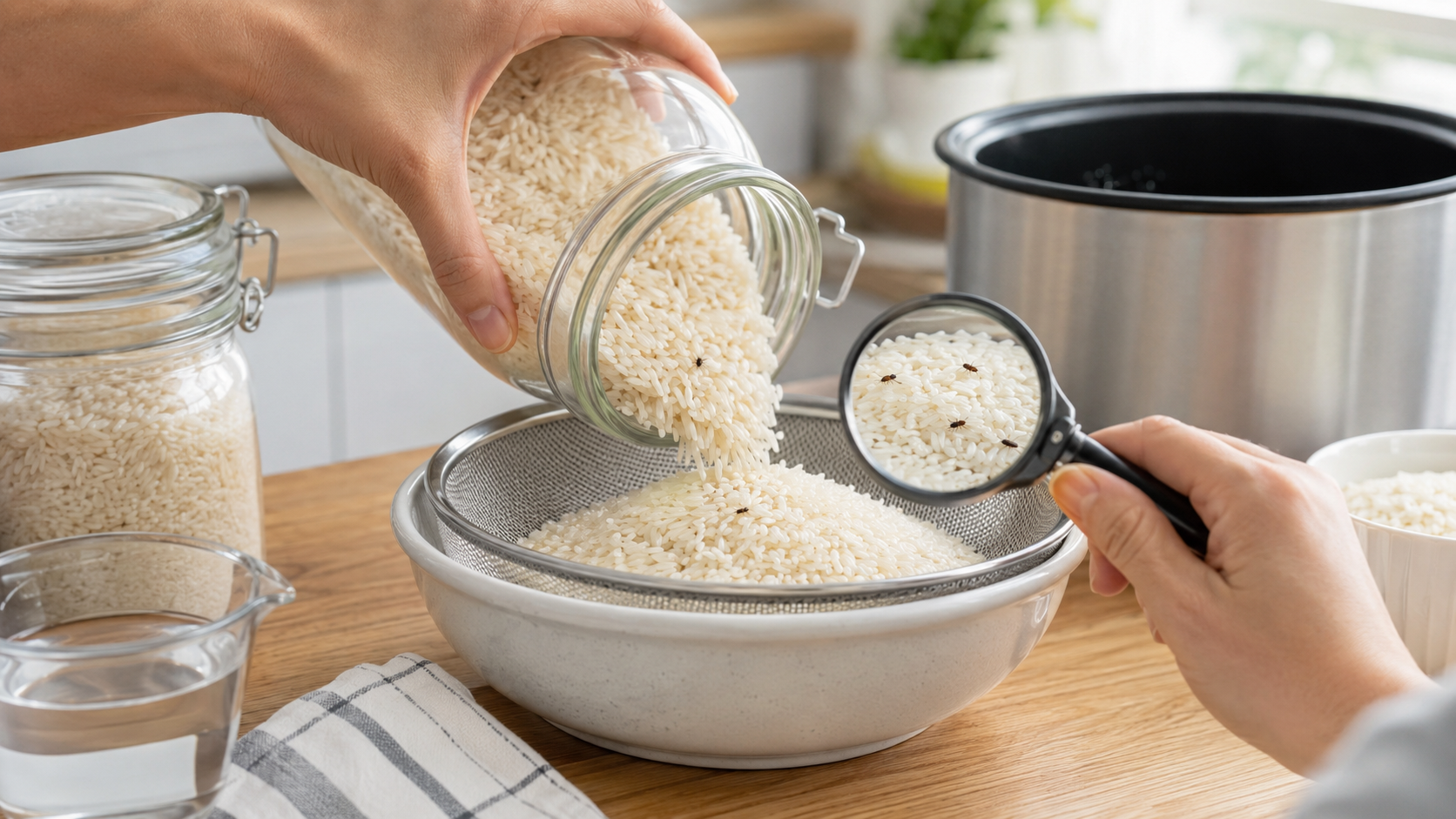
That Uncomfortable Moment When You Open the Rice Container
There are few kitchen surprises more unpleasant than opening a bag of rice and seeing tiny bugs moving around inside.
Maybe you were about to make dinner. Maybe you had already scooped rice into the pot before noticing something odd. At first, you might think it is a speck of bran, a dark grain, or a tiny seed. Then it moves.
Most people’s first reaction is disgust, followed quickly by the same question: Can I still eat rice that has rice bugs in it?
The calm answer is: sometimes, yes, but it depends on the condition of the rice. Rice weevils and other pantry insects are not the same as mold, spoiled meat, or chemical contamination. In many cases, people choose to clean the rice thoroughly and cook it. But there are also times when throwing it away is the smarter and safer choice.
This is not about being overly dramatic or wasting food. It is about knowing what to look for, using common sense, and preventing a small pantry problem from spreading to other dry goods.
Let’s walk through what rice weevils are, how they get into rice, when the rice may still be usable, and how to store rice more safely going forward.
What Are Rice Weevils?
Rice weevils are small pantry insects that commonly infest stored grains. They are usually dark brown or black and may look like tiny beetles. They are especially associated with rice, but they can also show up in wheat, corn, oats, flour, pasta, cereal, birdseed, and other dry pantry foods.
The frustrating part is that rice weevils do not always enter your kitchen after you bring the rice home. Sometimes the eggs are already present in the grain before purchase. They are tiny enough that you may not notice anything wrong when you buy the bag.
Then, after a few weeks in a warm pantry, the eggs hatch. Suddenly, the rice that looked normal last month has small insects crawling through it.
This is why rice bugs are not always a sign of a dirty kitchen. Even a clean home can deal with pantry pests. Warmth, time, and access to dry food are enough.
Can You Eat Rice That Has Rice Weevils?
In many everyday situations, rice with a small number of rice weevils can be cleaned and cooked, especially if the rice is otherwise dry, smells normal, and shows no signs of mold or spoilage.
That said, not everyone will feel comfortable eating it. And that is okay.
Food safety is not only about whether something is technically dangerous. It is also about comfort, cleanliness, and your own household standards. If seeing bugs in rice makes you feel sick or anxious, throwing it away may be the better choice for you.
From a practical kitchen safety perspective, the bigger concern is not usually the individual rice weevil. The concern is the overall condition of the rice.
Ask yourself:
Does the rice smell normal?
Is it dry and loose, not damp or clumpy?
Are there only a few insects, or is the infestation heavy?
Do you see webbing, dust-like debris, larvae, or many dead bugs?
Has the rice been stored for a long time in a warm or humid place?
If the rice looks heavily infested, smells musty, feels damp, or has signs of mold, it is best to discard it.
When You Should Throw the Rice Away
There are times when cleaning rice is not worth the risk or effort. Toss the rice if it has signs that go beyond a few pantry insects.
Throw It Away If the Rice Smells Bad
Fresh dry rice has a mild, neutral smell. Brown rice may have a slightly nutty smell because it contains more natural oils. But rice should not smell sour, rancid, musty, moldy, or stale in a strong way.
A bad smell can mean the rice has absorbed moisture, gone stale, or started to spoil. In that case, removing the bugs does not fix the bigger problem.
If the rice feels damp, sticks together in unusual clumps, or has hardened patches, do not try to rescue it. Moisture can encourage mold growth, and mold is not something you can reliably remove by rinsing.
This is especially important in humid homes, garages, basements, or kitchens where rice is stored near heat, steam, or water.
Throw It Away If You See Mold
Mold may appear as fuzzy spots, dark patches, greenish areas, or an unusual powdery coating. Sometimes it is obvious. Sometimes it is subtle.
If you suspect mold, discard the rice. Do not sniff closely, taste it, or try to cook it “just in case.” Cooking does not make moldy food automatically safe.
Throw It Away If the Infestation Is Heavy
A few bugs near the top of the container are one thing. A container full of insects, larvae, husks, powdery debris, or moving clusters is another.
At that point, the rice may be too contaminated with insect fragments and waste to feel clean or practical to use. Even if it is not an emergency, it is usually better to remove it from your kitchen and prevent the infestation from spreading.
How to Clean Rice with a Small Weevil Problem
If the rice looks dry, smells normal, and has only a small number of insects, you may decide to clean it.
Start by pouring the rice into a large bowl or tray. This makes it easier to inspect. Rice weevils are usually darker than white rice, so they may be easier to spot on a light-colored surface.
Pick out visible bugs, clumps, or odd-looking grains. Some people sift the rice through a fine colander or spread it out in batches.
Then rinse the rice several times with clean water. Many insects and light debris may float to the top. Pour off the floating bits carefully, refill the bowl, swirl the rice, and repeat until the water looks clearer.
After that, cook the rice thoroughly as usual.
This process is more realistic for white rice than for large, heavily infested bags. If you feel like you are fighting the rice more than cleaning it, that is a sign to let it go.
Should You Wash Rice More Than Usual?
If you found rice weevils, washing the rice well is a good idea. But washing does not solve every problem.
Rinsing helps remove surface dust, loose debris, and some insects. It can make the rice feel more acceptable to cook. But it will not reverse mold, rancidity, dampness, or long-term poor storage.
Think of washing as a cleaning step, not a magic reset button.
A good habit is to rinse rice in a bowl rather than only under running water. When you swirl rice in a bowl, lightweight debris is easier to see and pour away. This also helps you inspect the rice calmly instead of rushing through the process.
What If You Accidentally Cooked Rice with Bugs?
This happens more often than people admit.
You cook rice, open the pot, and notice a tiny dark bug. Or you see one floating while rinsing after the rice has already been soaking.
If the rice was otherwise normal, fully cooked, and there were only one or two insects, it is usually not a reason to panic. Many people would simply remove the bug and decide whether they are comfortable eating the rice.
However, if you notice many bugs after cooking, or the rice smells off, tastes strange, or has an unusual texture, discard it.
Also, if someone in your home has a known insect allergy, a very sensitive stomach, or a weakened immune system, it is reasonable to be more cautious. When health concerns are involved, it is always better to ask a qualified medical professional for personal guidance instead of guessing.
Why Rice Weevils Spread So Easily
Rice weevils are not polite houseguests. Once they find food, they can spread to nearby pantry items.
They may move from rice into flour, oats, cereal, dry pasta, crackers, cake mix, pet food, or birdseed. Sometimes people throw away the rice but forget to check the shelf around it. A few weeks later, the bugs appear again.
That is why dealing with rice weevils should include both the rice and the pantry space.
Remove the affected rice from the cabinet. Check nearby dry foods, especially anything opened or stored in thin plastic bags. Look along shelf corners, seams, and under containers. Wipe the shelf with a damp cloth and let it dry completely before putting food back.
Avoid using strong pesticides around food storage areas. If the infestation is large or keeps returning, consider contacting a pest control professional for safe advice.
How to Store Rice to Prevent Weevils
The best way to deal with rice bugs is to make your pantry less inviting in the first place.
Rice weevils like warmth, time, and easy access to dry grains. You cannot control everything that happened before the rice reached your home, but you can control how you store it afterward.
Use Airtight Containers
Do not rely on the original rice bag once it has been opened. Paper and thin plastic packaging are easy for pantry pests to enter or escape from.
Transfer rice to an airtight container with a secure lid. Hard plastic, glass, or metal containers are better than loose bags. A sealed container also helps keep one problem from spreading to the whole pantry.
If bugs hatch inside one container, they stay mostly contained. That is much easier to handle than bugs traveling across several shelves.
Buy Rice in Amounts You Can Use
Bulk rice can save money, but it is not always the best choice if you do not use rice often.
A 25-pound bag may be practical for a large family that cooks rice every day. But for a small household, it may sit for months in a warm pantry. The longer rice sits, the more time pantry pests have to appear.
A simple safety habit is to buy rice in an amount you can realistically use within a reasonable time. For many homes, smaller bags are easier to rotate and inspect.
Keep Rice Cool and Dry
Heat and humidity make pantry problems worse. Store rice away from the stove, dishwasher, sink, sunny windows, and any area that gets warm.
A cool, dry cabinet is usually fine for everyday storage. In humid climates or during summer, refrigeration or freezing can help extend storage quality, especially for brown rice or larger amounts.
If you store rice in the refrigerator or freezer, keep it sealed tightly so it does not absorb odors or moisture.
Freeze New Rice Before Storing
One practical prevention trick is to freeze newly purchased rice for a few days before placing it in the pantry. This may help reduce the chance of insect eggs developing later.
After freezing, let the container come back to room temperature before opening it, especially if condensation forms on the outside. You do not want moisture getting into the rice.
This step is especially useful if you have had pantry bugs before or if you buy rice in larger bags.
White Rice vs. Brown Rice: Does It Matter?
Rice weevils can affect different types of rice, but storage quality varies.
White rice generally stores longer because the bran and germ have been removed. Brown rice contains natural oils, which means it can go rancid faster, especially in warm storage.
This does not mean brown rice is unsafe. It just needs a little more care. If you buy brown rice, avoid letting it sit forgotten in the pantry for months. Store it in an airtight container, keep it cool, and smell it before cooking.
If brown rice smells oily, bitter, waxy, or stale, it may be rancid. In that case, do not rely on rinsing to fix it.
Common Mistakes That Make Rice Bugs More Likely
Most pantry pest problems are not caused by one dramatic mistake. They usually come from small habits that seem harmless.
One common mistake is leaving rice in the opened original bag. The top gets folded over, maybe clipped with a clothespin, and pushed to the back of the cabinet. That works for a few days, but it is not ideal for long-term storage.
Another mistake is mixing old rice with new rice. If the old rice has hidden insects or eggs, the new rice becomes part of the same problem. Finish and clean the container before refilling it.
People also forget to inspect nearby foods. Rice bugs may start in one bag but spread to pancake mix, oats, or cereal. If you only deal with the rice, you may miss the real source.
And finally, many people store rice in warm places because it is convenient. A cabinet above the stove may seem like a good use of space, but heat can shorten the quality of dry foods and encourage pest activity.
How to Clean the Pantry After Finding Rice Weevils
Once you find rice bugs, take a slow and practical approach.
First, remove the affected rice from the kitchen. Seal it in a bag before placing it in the trash, especially if there are live insects. This helps prevent them from crawling out.
Next, check nearby foods. Pay attention to opened packages, cardboard boxes, and bags with small folds or corners. If you find bugs in multiple items, discard the affected foods.
Then empty the shelf and vacuum crumbs, grain dust, and loose debris. Pantry insects can hide in tiny bits of spilled food. After vacuuming, wipe the shelf with warm soapy water or a mild cleaning solution suitable for kitchen surfaces.
Let everything dry before restocking. Dryness matters. Putting containers back on a damp shelf creates another problem.
Finally, transfer safe dry goods into sealed containers. Labeling containers with purchase dates can help you rotate food more easily.
Should You Use Bay Leaves, Garlic, or Other Home Remedies?
You may have heard that bay leaves, garlic cloves, dried chilies, or other strong-smelling ingredients keep bugs away from rice.
Some people like these traditional methods, and they may make a pantry feel fresher. But they should not replace proper storage.
A bay leaf in a rice container is not as reliable as an airtight lid. Garlic will not fix damp rice. A chili pepper will not stop bugs from spreading through open bags.
If you enjoy using these methods, think of them as optional extras. The real prevention comes from sealed containers, cool storage, dry conditions, and regular inspection.
What About Rice That Has Tiny Holes or Powder?
Tiny holes in grains can be a sign that insects developed inside the rice and emerged later. Powdery material at the bottom of the bag can come from broken grains, normal rice dust, or insect activity.
A little rice dust is normal. But if you see a lot of powder, insect shells, larvae, or many hollow grains, treat the rice as heavily infested.
This is where comfort and judgment matter. You do not need to examine every grain like a science project. If the rice looks unpleasant and contaminated, throwing it away is reasonable.
Simple Rice Storage Routine for Everyday Homes
A good rice storage routine does not need to be complicated.
When you bring rice home, inspect the bag for tears, dampness, or strange odors. If you have time, freeze it for a few days. Then transfer it to a clean, dry, airtight container.
Keep the container in a cool cabinet away from steam and heat. Do not mix old and new rice unless the old rice is clearly fresh and the container is clean. Once in a while, look at the rice before scooping. A quick glance can catch a problem early.
If you live in a humid area, cook rice often, or buy in bulk, consider dividing rice into smaller containers. That way, one problem does not affect the entire supply.
This routine is simple, but it makes a big difference.
How to Decide Without Overthinking It
When people ask, “Can I eat rice with rice weevils?” they often want a clear yes or no. Real kitchens are a little messier than that.
Here is the practical way to think about it:
If the rice has a few bugs, smells normal, is dry, and you are comfortable cleaning it, you may choose to rinse and cook it well.
If the rice smells bad, feels damp, shows mold, has a heavy infestation, or makes you uncomfortable, throw it away.
That is not wasteful. That is sensible food safety.
Also remember that the rice itself is only part of the issue. After finding weevils, check your pantry, clean the shelf, and improve storage. Otherwise, the same problem may return.
A Calm Final Word from the Kitchen
Finding bugs in rice is unpleasant, but it does not mean your whole kitchen is unsafe or that you did something wrong. Pantry pests happen, even in clean homes.
The best response is calm and practical. Inspect the rice. Trust your senses. Toss it when there are signs of moisture, mold, bad odor, or heavy infestation. If it is only a small issue and the rice is otherwise in good condition, clean it carefully and cook it thoroughly.
Then take the lesson forward: airtight containers, cool dry storage, smaller amounts, and the occasional pantry check.
A little prevention makes the next bag of rice much less stressful to open.
Hi, I’m the creator and editor behind ZestyHabit. I research everyday safety, first aid, and practical wellness topics using official guidance and reliable public sources, then turn that information into clear, realistic steps for daily life.
My goal is to help readers make safer, better-informed choices at home and beyond.