
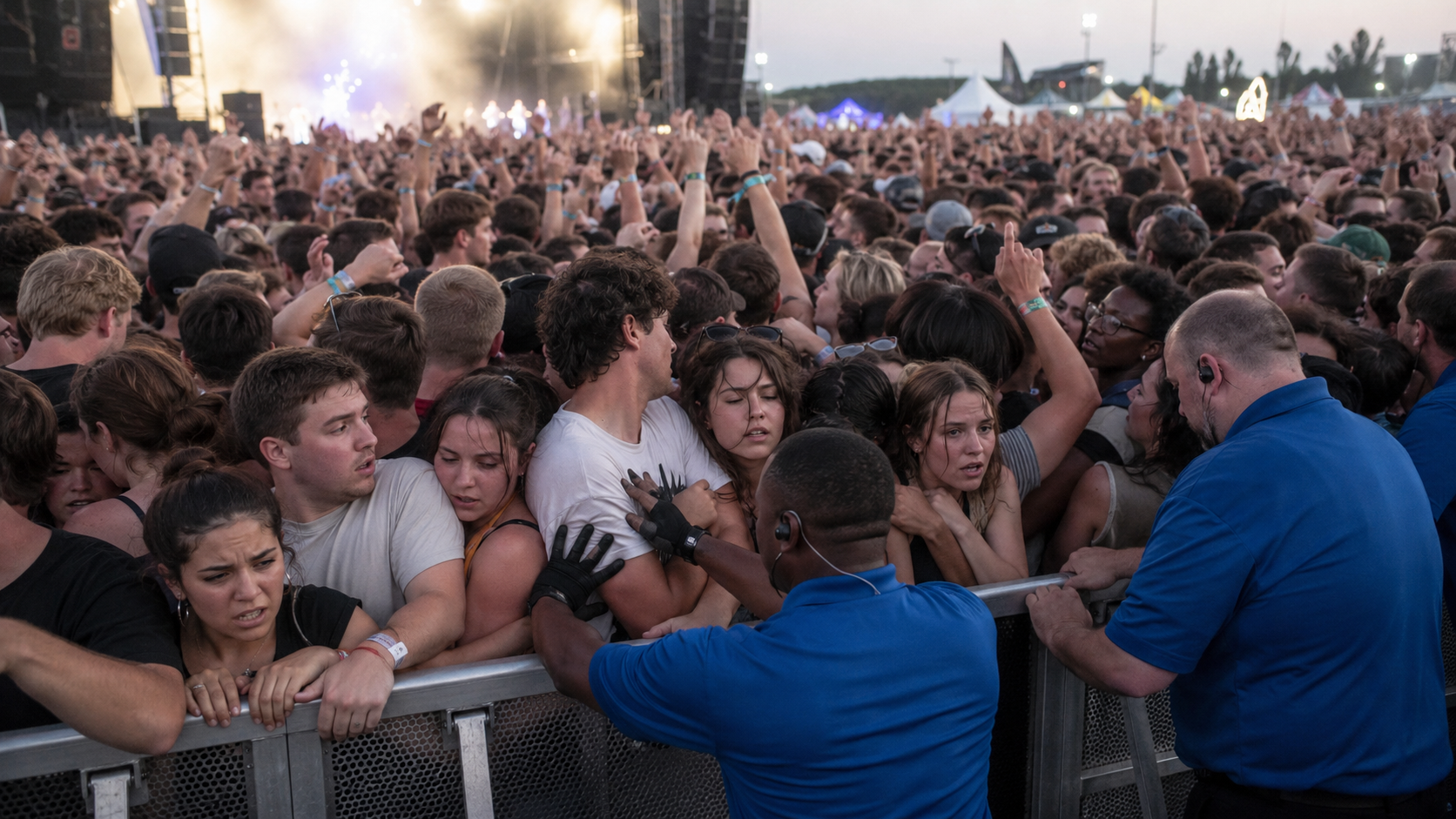

Crowded concerts and events can become risky when people are packed too tightly, movement is blocked, or the crowd surges. Learn why crowd pressure happens and simple safety habits that help.
Why Crowd Pressure Matters at Concerts
Concerts, festivals, sporting events, parades, and live shows are meant to feel exciting. The lights come up, the music starts, people cheer, and everyone wants to get closer to the stage or the best view.
Most of the time, large crowds are simply energetic. People bump shoulders, move with the music, and squeeze through lines without anything serious happening.
But when too many people are packed into one area and movement becomes difficult, a crowd can change quickly. What felt like a normal busy event can begin to feel uncomfortable, then unsafe.
Crowd crush accidents happen when people are compressed so tightly that they cannot move freely, breathe comfortably, or control where their body goes. This is different from simple crowding. In a true crush situation, individual choice becomes limited because the force of the crowd is stronger than one person’s ability to step away.
For everyday eventgoers, the goal is not to be afraid of concerts or avoid public events. The goal is to understand the warning signs, make thoughtful choices before and during the event, and know when it is time to move to a less crowded area.
What Is a Crowd Crush?
A crowd crush can happen when many people are pushed together in a confined space. The pressure may come from people moving forward, people behind not realizing the front is blocked, or a crowd surge caused by excitement, fear, confusion, or poor crowd flow.
The important thing to understand is that crowd crush injuries are not usually caused by one rude person pushing. They are often caused by crowd movement as a whole.
When people are packed shoulder to shoulder, even a small movement can ripple through the group. Someone at the back may push forward without knowing that people at the front have nowhere to go. People in the middle may be carried along without choosing to move. If exits, barriers, fences, walls, or narrow walkways block movement, pressure can build.
This can happen at concerts near the stage, at festival entrances, in packed hallways, at stairways, around gates, near merchandise booths, or anywhere crowds merge into a smaller space.
Why Concerts Can Create Crowd Pressure
Concerts have a few features that make crowding more likely.
First, people naturally move toward the stage. The closer the performance feels, the more exciting it can be. Fans may want a better view, a closer photo, or a chance to be near the artist.
Second, sound and lighting can make it harder to communicate. If someone says “stop pushing” or “I need to get out,” the people around them may not hear clearly.
Third, crowds often move in waves. When a performer comes onstage, plays a popular song, throws something to the audience, or moves toward one side of the stage, people may surge in that direction.
Fourth, standing-room areas can become dense because there are no assigned seats keeping people spaced. A general admission floor may feel fine early in the night, then become packed as more people arrive.
None of this means concerts are unsafe by default. It simply means crowd flow matters. The more people gather in one place, the more important space, exits, and awareness become.
The Difference Between a Busy Crowd and a Dangerous Crowd
A busy crowd can be uncomfortable without being immediately dangerous. You may brush shoulders, wait in long lines, or move slowly. You still have the ability to turn, step back, lift your arms, and choose where to go.
A dangerous crowd feels different.
You may feel pressure on your chest or back. You may be unable to lower your arms. Your feet may be moved by the crowd instead of your own choice. You may not be able to turn around. People may be stumbling, shouting, or asking to leave but not getting through.
A key warning sign is loss of personal control. If you cannot decide your own direction, the crowd is too dense.
Another warning sign is pressure that does not let up. A brief bump is normal at many events. Constant squeezing is not. If you feel like the crowd is carrying you, compressing you, or trapping you, it is time to move toward a safer area as soon as there is a chance.
Why Pressure Can Affect Breathing
One reason crowd crush is so serious is that strong pressure around the chest can make breathing difficult.
People often think danger only comes from falling. Falls can be dangerous, but standing compression can also be a problem. When bodies are pressed tightly together, the chest may not expand normally. A person may feel short of breath, dizzy, panicked, or unable to get enough air.
This is why it is important not to dismiss someone who says they cannot breathe or needs to get out. In a dense crowd, that can be a real warning sign.
Even calm people can become frightened if they feel trapped. Panic is not the main cause of crowd crush, but fear can spread when people feel they have no control. Creating more space, moving calmly, and helping people exit can reduce pressure.
Common Places Where Crowd Crush Risk Increases
Crowd pressure is more likely in certain areas of a venue or event space.
Near the Front of the Stage
The front area may be the most exciting, but it can also become the most crowded. Barriers, security rails, and the stage itself may prevent forward movement, while people from behind continue pushing closer.
If you are near the front and pressure starts building, do not ignore it just because the view is good. A great view is not worth feeling trapped.
Entrances and Gates
Crowds can build at entrances when everyone wants to get in at the same time. Ticket scanning, bag checks, metal detectors, or narrow gates can slow movement.
If people behind do not realize the front is stopped, pressure can build from the back.
Exits After the Show
When an event ends, many people leave at once. Stairwells, escalators, parking shuttles, and narrow doors can become bottlenecks.
Leaving a few minutes later or using a less crowded exit can sometimes make the experience calmer.
Hallways, Tunnels, and Stairs
Any narrow passage can become risky when too many people try to move through it at once. Stairs add another concern because a stumble can affect people nearby.
Avoid rushing on stairs, and be cautious if the crowd stops suddenly.
Merchandise, Food, and Restroom Areas
Crowds do not only gather near the stage. Long lines and crossing foot traffic can create pressure in concourses and vendor areas, especially during breaks or right after the event.
Why Bottlenecks Are a Big Problem
A bottleneck happens when a wide flow of people is forced into a narrow space. Imagine a large crowd trying to pass through one doorway, one gate, or one staircase.
The people at the front slow down because the space narrows. The people behind may continue moving forward because they cannot see the blockage. This creates pressure in the middle.
Bottlenecks are common around:
Security checkpoints
Ticket gates
Narrow doors
Stairways
Escalators
Hallway turns
Fenced walkways
Temporary barriers
Restroom entrances
Shuttle loading areas
For event organizers, managing bottlenecks is a major part of crowd safety. For visitors, noticing bottlenecks early can help you choose a calmer route.
If an area looks jammed and people are no longer moving smoothly, do not push into it. Wait, step aside, or find another path when possible.
Common Mistakes Eventgoers Make
Most people do not mean to create danger. They are simply excited, distracted, or trying to stay with friends. Still, a few common habits can increase risk.
Pushing Forward for a Better View
It is natural to want to get closer, but pushing into an already packed area makes conditions worse for everyone. If there is no clear space ahead, do not force your way in.
Ignoring Early Discomfort
Many people stay in a crowded spot because they do not want to lose their place. They may think, “It’s probably fine,” even when they already feel squeezed.
Leaving early is easier than leaving after pressure builds.
Standing Near Barriers Without an Exit Plan
Barriers can feel secure, but they can also limit movement. If you stand near a rail, fence, wall, or stage barrier, know how you would move away if the crowd gets tighter.
Trying to Move Against the Crowd
When a crowd is moving strongly in one direction, forcing your way directly against it can be difficult and may increase pressure. A safer approach is often to move diagonally toward the edge when space opens.
Picking Up Dropped Items Immediately
If a phone, hat, or bag falls in a dense moving crowd, bending down can be risky. People around you may not see you, and you may be knocked off balance. Wait until it is safe or ask for help from nearby staff if needed.
Warning Signs to Take Seriously
Crowd problems often build gradually. Paying attention early gives you more options.
Watch for these warning signs:
You cannot move your arms freely.
Your chest or ribs feel compressed.
You cannot turn around.
The crowd moves you without your choice.
People are falling or stumbling.
People are shouting that they need to get out.
Movement stops but pressure from behind continues.
You see a narrow exit or gate getting overloaded.
You feel anxious because there is no clear way out.
Friends are getting separated and pulled by the crowd.
These signs do not mean you should panic. They mean you should calmly look for space, move toward the edge when possible, and avoid going deeper into the dense area.
Simple Safety Habits Before You Go
A little planning can make a big event easier to enjoy.
Look at the Venue Layout
Before the event, check the venue map if one is available. Notice entrances, exits, restrooms, first aid stations, and less crowded seating or standing areas.
You do not need to memorize everything. Just having a general sense of the space helps.
Choose a Meeting Spot
Cell service can be unreliable at crowded events. Choose a meeting spot outside the densest area in case your group gets separated.
For families with teens, this is especially helpful. A clear plan can reduce stress if someone’s phone battery dies.
Wear Practical Shoes
Concerts and festivals often involve standing for hours. Comfortable shoes with good traction help you stay balanced if the crowd shifts.
Avoid footwear that makes it hard to walk quickly or stand steadily.
Keep Bags Simple
Large bags can catch on people, make it harder to move, and take up space. Bring only what you need, and follow the venue’s bag rules.
A crossbody bag or small clear bag may be easier to manage than a bulky backpack in a dense crowd.
Stay Aware of Your Energy
Heat, dehydration, hunger, and fatigue can make crowded situations feel worse. Drink water when available, eat before long events, and take breaks if you need them.
What to Do If the Crowd Gets Too Dense
If you start feeling uncomfortable in a crowd, act early and calmly.
Move toward the edge before the area becomes packed. The sides of a crowd are often easier to exit than the center. Avoid pushing or forcing your way through people. Instead, look for natural gaps and move steadily.
Keep your arms in front of your chest if pressure builds. This can help create a little breathing space. Stay on your feet, keep your balance, and avoid bending down in a dense crowd.
If you are with friends, communicate clearly. Short phrases work best: “Move left,” “Step back,” “I need space,” or “Let’s get out.”
If someone near you says they need help, take it seriously. Alert event staff if you can do so safely.
What Parents Should Teach Kids and Teens
Crowd safety is especially important for kids and teens who attend concerts, school events, fairs, sports games, or festivals.
Teach them that it is okay to leave a crowded area, even if their friends want to stay. They should not feel embarrassed for saying, “I need space.”
A few simple rules help:
Stay with the group when entering or leaving.
Do not push toward the stage.
Move away if breathing feels difficult.
Find staff if separated or worried.
Do not bend down for dropped items in a moving crowd.
Choose a meeting place before the event starts.
You can explain it without making it scary: “Crowds are usually fine, but if it feels too tight, we move to the side and take a break.”
That message gives kids permission to trust their instincts.
How Event Staff and Organizers Help Reduce Risk
While this article is written for everyday readers, it is worth understanding that crowd safety is also a planning responsibility.
Good event management includes clear entrances and exits, trained staff, visible signage, crowd monitoring, emergency communication, and barriers that guide movement without trapping people.
Staff may pause entry, open additional gates, redirect lines, or stop a performance if conditions become unsafe. These decisions can be frustrating in the moment, especially when people are excited, but they are often made to reduce crowd pressure.
As an attendee, listen to staff instructions. If they ask people to move back, clear a walkway, or stop pushing forward, they are trying to protect the whole crowd.
After the Event: Leaving Safely
Crowd pressure can happen after the show too. Everyone is tired, excited, checking phones, looking for rides, and trying to leave at once.
If the exit area looks packed, consider waiting a few minutes in a safe spot. Let the first wave of people move through. Use a less crowded exit if allowed.
Keep your group together before entering a stairwell, parking garage, shuttle line, or public transit station. These areas can become bottlenecks quickly.
Do not rush. A calm exit is usually safer and less stressful than fighting through the thickest part of the crowd.
A Practical Crowd Safety Checklist
Before and during a concert or large event, keep these simple questions in mind:
Do I know where the exits are?
Is this area getting too packed?
Can I move my arms and turn around?
Do I have a clear path out?
Is my group still together?
Are people pushing from behind?
Is there a bottleneck ahead?
Would moving to the side be safer?
Do I feel comfortable staying here?
These questions take only a moment, but they can help you make better decisions before crowd pressure becomes serious.
Conclusion: Enjoy the Event, But Respect the Crowd
Concerts and live events are some of the most memorable experiences people can have. The music, energy, and shared excitement are part of what makes them special.
But crowds deserve respect.
Crowd crush accidents can happen when too many people are packed into a space, movement is blocked, pressure builds from behind, or people surge toward the same point. The danger is not always obvious at first, which is why early awareness matters.
The practical takeaway is simple: avoid forcing your way into dense areas, notice exits and bottlenecks, move toward the edge if pressure builds, and take discomfort seriously. For parents, teaching kids and teens to speak up and step away from tight crowds is a valuable safety habit.
You do not have to avoid concerts or large events. Just go in with a little awareness. A safer spot with room to breathe is always better than a perfect view that leaves you feeling trapped.
When the crowd feels manageable, the experience is more enjoyable for everyone.

Hi, I’m the creator and editor behind ZestyHabit. I research everyday safety, first aid, and practical wellness topics using official guidance and reliable public sources, then turn that information into clear, realistic steps for daily life.
My goal is to help readers make safer, better-informed choices at home and beyond.


