
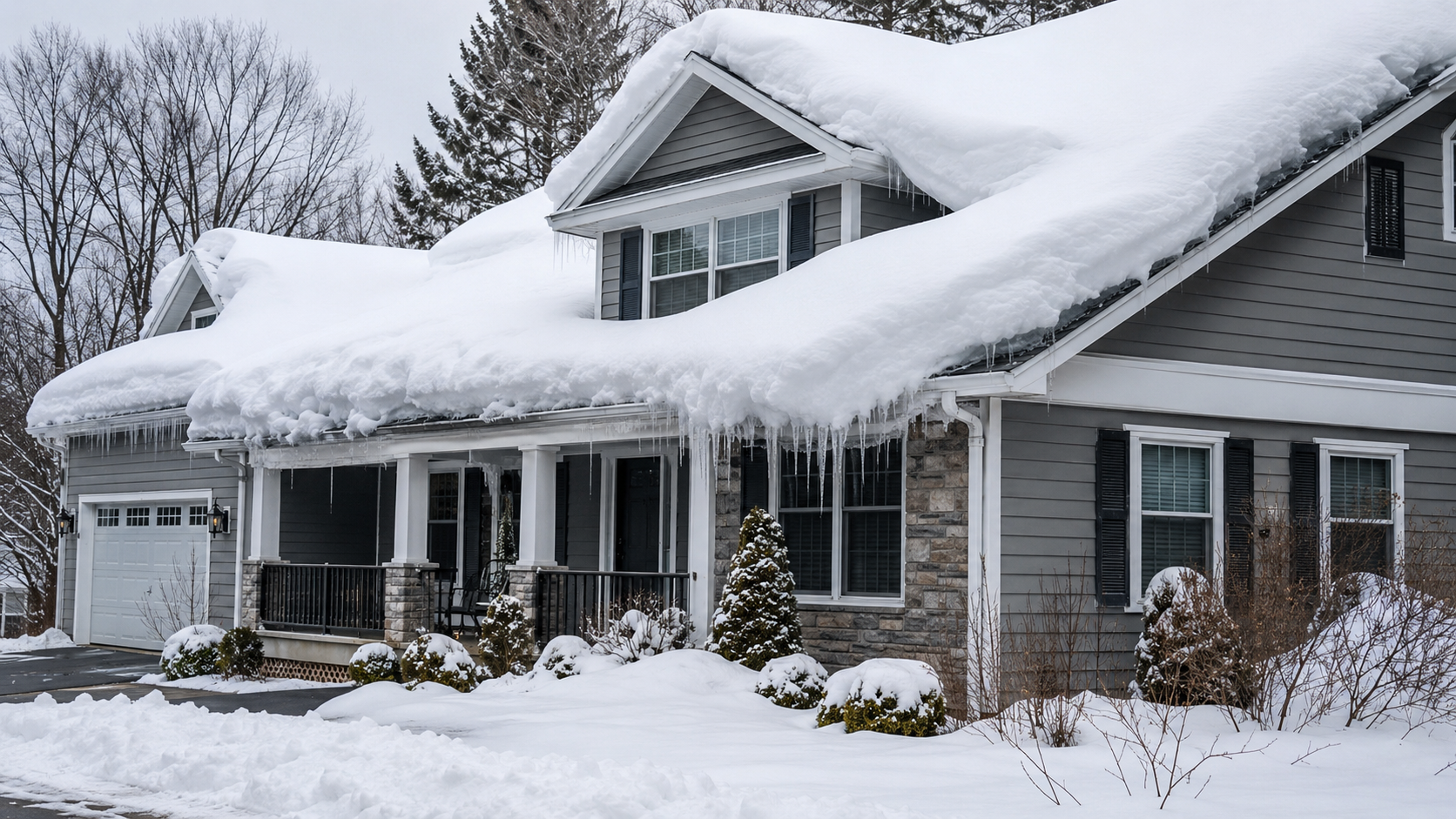
Snow on the roof may seem harmless, but heavy buildup can lead to leaks, ice dams, structural stress, and safety hazards. Learn the warning signs and simple prevention tips.

When Roof Snow Becomes More Than a Winter Nuisance
A fresh layer of snow on the roof can make a home look peaceful, almost like a postcard. For many families, it is just part of winter: the driveway gets shoveled, the sidewalks get cleared, and the roof is left alone.
Most of the time, a small amount of light snow is not a big concern. Roofs are built to handle weather. But when snow keeps piling up, melts and refreezes, or sits for days after a storm, it can quietly create problems that homeowners do not notice right away.
The danger is not only that snow is “heavy.” It is also what that weight does over time, how melting snow moves, where ice forms, and what happens when chunks of snow or ice slide off suddenly.
For everyday homeowners, the key is not to panic every time it snows. The goal is to know when roof snow deserves attention, what warning signs to watch for, and how to respond without putting yourself at risk.
Why Snow on a Roof Can Become So Heavy
Snow may look soft and fluffy, but it can hold a surprising amount of weight.
Light, powdery snow is usually much less dense than wet, heavy snow. But once snow absorbs rain, partially melts, refreezes, or gets packed down by repeated storms, the weight can increase quickly.
A few inches of dry snow may not be a big deal. Several layers of wet snow and ice are different.
This is especially important after a weather pattern like this:
Snow falls overnight.
Temperatures rise during the day.
The snow begins to melt.
Temperatures drop again at night.
The melted water refreezes into ice.
Another storm adds more snow on top.
That cycle can turn a light-looking roof into a heavy, layered mix of snow and ice. From the ground, it may still look like “just snow,” but the roof is carrying much more than it appears.
Structural Stress Is One of the Biggest Concerns
Your roof is designed to support weight, including snow loads common for your region. A home in Minnesota, Maine, Colorado, or upstate New York is typically built with winter conditions in mind. A home in a milder area may not be designed for the same snow burden.
But even in cold-weather states, extreme storms can push things further than usual.
When snow builds up on a roof, the weight presses down on rafters, trusses, walls, and other structural parts of the home. If the snow is unevenly distributed, one section of the roof may carry more weight than another.
Flat and low-slope roofs tend to be more vulnerable because snow does not slide off as easily. Porches, garages, additions, sheds, and older roofs may also need closer attention.
This does not mean every snowy roof is about to collapse. Most are not. But heavy roof snow is worth respecting, especially when it stays there for a long time or becomes wet and compacted.
Ice Dams Can Lead to Hidden Water Damage
One of the most common problems caused by roof snow is an ice dam.
An ice dam forms when heat escaping from the house warms the roof. Snow melts on the warmer upper parts of the roof and runs down toward the colder edge. When that water reaches the eaves, it refreezes. Over time, a ridge of ice builds up along the roof edge.
Once the ice dam forms, more melting snow can get trapped behind it. Instead of draining properly into the gutters, water may back up under shingles and find its way into the home.
That can lead to water stains on ceilings, damp insulation, peeling paint, moldy smells, and damaged walls.
The frustrating part is that ice dam damage may not show up right away. You might only notice it after several freeze-thaw cycles or after the next warm day. By then, water may have already seeped into places where it does not belong.
Snow and Ice Can Fall Without Warning
Another reason roof snow matters is simple: what is on the roof can come down.
When temperatures rise, roof snow can loosen and slide off in sheets. Icicles can break. Heavy chunks of packed snow and ice can fall near doorways, driveways, decks, walkways, and garage entrances.
This can be especially risky around:
Front steps
Sidewalks under rooflines
Children’s play areas
Pet areas
Driveways
Porch entrances
Outdoor HVAC units
Trash and recycling bins
A person walking out the door may not think to look up. A child playing below the roof edge may not recognize the danger. A pet tied near the house may not be able to move away.
Even if the roof itself is fine, falling snow and ice can still create a real safety concern.
Gutters and Downspouts Can Take a Beating
Snow sitting on the roof can also stress gutters, especially when ice forms along the edge.
Gutters are meant to move water away from your home. They are not meant to hold heavy ice for long periods. When snow melts and refreezes inside the gutter, the added weight can pull gutters loose, bend brackets, or create sagging sections.
Clogged gutters make the problem worse. If leaves, pine needles, and debris were never cleared before winter, melting snow may not drain well. Water gets trapped, freezes, expands, and adds more strain.
Damaged gutters may not seem urgent in the middle of winter, but they can cause bigger issues later. Poor drainage can send water down exterior walls, around windows, or toward the foundation once thawing begins.
Everyday Warning Signs to Watch For
Most homeowners are not climbing into the attic with a flashlight every morning after it snows. And they should not have to. But there are simple signs that roof snow may be becoming a problem.
Indoors
Watch for new ceiling stains, damp spots, peeling paint, dripping near windows, or a musty smell after snow begins melting. Doors that suddenly stick or cracks that appear around interior walls can also be worth noting, especially after a major snow event.
Unusual creaking or popping sounds during heavy snow should not be ignored. Homes make noises in winter, but loud, new, or concerning structural sounds deserve attention.
Outdoors
Look for deep snow buildup that remains on the roof after nearby homes have cleared naturally. Pay attention to thick ice along the eaves, large icicles, sagging gutters, or snow that has drifted heavily onto one side of the roof.
Also notice where falling snow would land. If a large snow shelf sits above a main entrance or walkway, it may be time to block off that area until it is safer.
Common Mistakes Homeowners Make
Winter weather can make people rush into bad decisions. Roof snow is one of those situations where trying to solve the problem quickly can create a different danger.
Climbing Onto the Roof
Getting on a snowy or icy roof is extremely risky. Even a low roof can be slick, and snow can hide weak spots, skylights, vents, or uneven surfaces.
For most homeowners, climbing onto the roof is not the right solution. The risk of falling is often greater than the problem you are trying to fix.
Using Sharp Tools
Some people try to chip away at ice dams with axes, hammers, metal shovels, or other sharp tools. This can damage shingles, gutters, flashing, and roof edges.
It may remove some ice in the moment, but it can also create expensive repair problems once the snow melts.
Ignoring the First Signs of Leaks
A small stain on the ceiling may not seem like a big deal, especially during a busy winter week. But water intrusion usually gets worse if the cause is not addressed.
It is easier to deal with a small leak early than to wait until insulation, drywall, or electrical areas are affected.
Assuming Newer Homes Are Immune
A newer home can still have ice dams, poor attic insulation, blocked vents, clogged gutters, or design features that collect snow. Age is only one factor.
Roof shape, ventilation, insulation, drainage, tree cover, and storm conditions all matter.
Prevention Starts Before the First Big Snow
The best time to think about roof snow is before winter gets serious.
Clean Gutters in the Fall
Clean gutters help melting snow drain away from the roofline. They do not prevent every winter problem, but they reduce one common cause of ice buildup.
If cleaning gutters is difficult or unsafe, hiring someone before winter can be a practical investment.
Check Attic Insulation and Ventilation
Ice dams are often connected to heat escaping into the attic. When warm indoor air reaches the underside of the roof, it can cause snow to melt unevenly.
Good insulation helps keep heat inside the living space. Proper ventilation helps keep the roof deck colder and more consistent. Together, they reduce the melt-and-refreeze pattern that creates ice dams.
A homeowner does not need to become a building science expert. The simple takeaway is this: if your roof often forms ice dams, the long-term fix may involve insulation, air sealing, and ventilation, not just removing snow.
Trim Overhanging Branches
Trees can drop extra snow, ice, and debris onto the roof. Branches can also shade certain areas, slowing melting and creating uneven snow buildup.
Keeping branches trimmed away from the roof can reduce debris in gutters and limit some winter roof stress.
Know Your Problem Areas
Every home has patterns. Maybe snow always collects above the garage. Maybe ice forms over the front steps. Maybe one side of the house gets heavy drifting after wind.
Noticing those patterns helps you respond earlier the next time.
Simple Steps During and After a Snowstorm
After a storm, take a slow walk around your home from a safe distance. Look at the roofline, gutters, downspouts, vents, walkways, and entrances.
Do not stand directly under heavy snow overhangs or icicles. Use binoculars or your phone camera zoom if you want a closer look from the ground.
If snow is piled above a doorway, move people and pets away from that area. Use another entrance if available. If needed, mark the area so family members do not walk beneath it without thinking.
For reachable snow near roof edges, some homeowners use a roof rake from the ground. A roof rake can help remove snow from the lower portion of the roof without climbing. However, it must be used carefully. Pulling too hard can damage shingles or gutters, and standing directly under falling snow is not safe.
For high roofs, steep roofs, heavy ice, or major buildup, it is usually better to call a qualified professional. Roof snow removal is not worth a fall or an injury.
What About Flat Roofs, Garages, and Sheds?
Flat roofs deserve special attention because snow may not slide off naturally. Garages, carports, sheds, and patio covers may also be built differently from the main house.
A small shed roof may not handle heavy wet snow as well as a home built to local code. Patio covers and older detached garages can be vulnerable during unusual storms.
If you store vehicles, tools, or supplies in these spaces, keep an eye on the roof after repeated snowfall. Watch for sagging, bending, water leaks, or doors that suddenly become hard to open or close.
Again, do not climb up to inspect or clear it yourself if conditions are slippery or uncertain. A ground-level check can still tell you a lot.
When Professional Help Makes Sense
Calling for help does not mean you overreacted. It may be the safest and most practical choice.
Professional help may make sense if snow is very deep, the roof is steep, ice dams are already causing leaks, gutters are sagging, or you see signs of structural stress. It is also wise if you are physically unable to use a roof rake safely from the ground.
A roofing contractor, snow removal service, or home inspector familiar with winter conditions can help you decide what is needed. In some cases, the immediate issue is snow removal. In others, the bigger solution may be insulation, ventilation, gutter repair, or roof maintenance before next winter.
A Practical Winter Habit for Homeowners
Roof snow is easy to ignore because it is above eye level. You clear the driveway because you have to use it. You salt the steps because you walk on them. The roof, meanwhile, quietly collects snow until a problem shows up.
A good winter habit is to include the roof in your normal storm check.
After heavy snow, ask a few simple questions:
Is snow building up unevenly?
Are large icicles forming?
Are gutters sagging?
Is snow hanging over a doorway?
Are there any new water stains inside?
Are family members walking under areas where snow could slide?
These questions take only a few minutes, but they can help you catch small problems early.
Conclusion: Respect Roof Snow Without Overreacting
Snow on the roof is not automatically an emergency. Homes in snowy regions are built with winter in mind, and many snowfalls pass without any trouble.
But roof snow should not be ignored completely.
Heavy buildup can stress the structure, contribute to ice dams, damage gutters, cause leaks, and create falling snow or ice hazards around the home. The risks are usually manageable when you notice them early and respond calmly.
The safest approach is simple: check your roof from the ground after major storms, keep gutters and attic conditions in good shape, avoid standing under heavy snow or icicles, and do not climb onto a slippery roof to fix the problem yourself.
Winter already gives homeowners plenty to manage. A little attention to roof snow can prevent bigger headaches and help keep your home safer until spring arrives.

Hi, I’m the creator and editor behind ZestyHabit. I research everyday safety, first aid, and practical wellness topics using official guidance and reliable public sources, then turn that information into clear, realistic steps for daily life.
My goal is to help readers make safer, better-informed choices at home and beyond.


