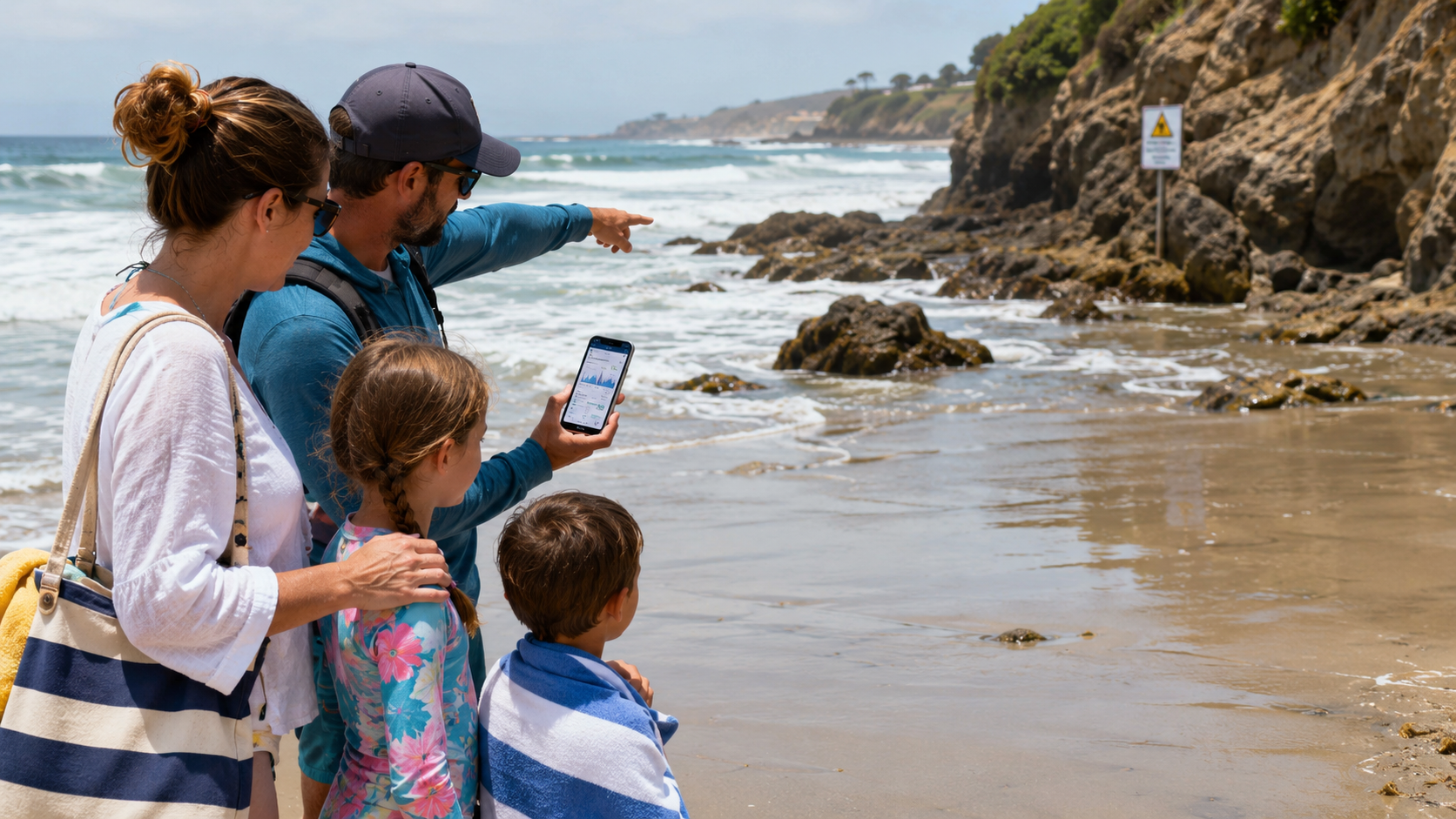
Why You Should Check High and Low Tide Times Before Going to the Beach
Minjin Park
·
Before a beach day, checking tide times can help you avoid getting cut off by rising water, slippery rocks, stronger currents, stranded gear, and other everyday coastal hazards.
Why Tide Times Matter More Than Many Beachgoers Realize
A beach can look calm, wide, and easy to explore when you first arrive. There may be plenty of dry sand for a blanket, a beautiful stretch of shoreline for walking, and exposed rocks that seem perfect for photos or tidepooling.
Then, a couple of hours later, the same beach can look completely different.
The ocean does not stay in one place. It rises and falls throughout the day, and that regular movement can change where it is safe to walk, sit, swim, fish, or park your gear. NOAA explains that tides are long-period waves caused by the gravitational forces of the moon and sun, showing up along coastlines as the regular rise and fall of the sea surface. High tide is when the water reaches its higher point, and low tide is when it reaches its lower point.
For a casual beach day, that may sound like science trivia. In real life, it can decide whether your family has a safe route back from a rocky point, whether your picnic blanket stays dry, whether a tidepool walk is enjoyable, and whether a narrow beach becomes too tight to use comfortably.
One of the most practical reasons to check tide times is simple: the beach may get smaller.
At low tide, some beaches look huge. The waterline sits far away. There is room to walk, play, set up umbrellas, and explore. But as the tide comes in, water moves back toward shore. That wide sandy area may narrow quickly, especially near cliffs, rocks, seawalls, dunes, or coves.
This matters if you set up too close to the water or in a low, flat area. A towel that seemed far from the waves at noon may be wet by mid-afternoon. A sandcastle may disappear. Shoes, bags, toys, phones, and coolers can get soaked or washed around.
That is annoying, but the bigger issue is movement. If the rising tide reaches a rocky wall, cliff base, or narrow trail before you leave, your easy walk back may become much harder.
Rising Tide Can Cut Off Your Exit
Some of the most beautiful beach areas are also the easiest places to get cut off by tide.
Think about sea caves, rocky points, tidepool shelves, sandbars, hidden coves, or beaches backed by cliffs. At low tide, you may be able to walk around a headland or across exposed sand. At high tide, that same path may be underwater.
This is one of the most common tide-related mistakes: people walk out when the beach is wide and assume they can return the same way later. But the ocean may not leave that path open.
The National Park Service gives tidepool visitors a very practical reminder: watch closely for the returning tide and sneaker waves. It also warns that algae and seaweed can make rocks extremely slippery, and that children should be kept close because rocks and waves can be unpredictable.
A good beach walk should include a return plan. Before you explore beyond the main beach, ask yourself: “Will this path still be dry in two hours?”
Low Tide Is Great for Exploring, But Timing Still Matters
Low tide is often the best time for tidepooling, shell hunting, beach photography, and walking along rocky stretches. It exposes areas that are normally underwater and gives you a better view of marine life, rock formations, and hidden patches of sand.
But “low tide” is not one fixed experience.
The National Park Service notes that tides change every day and that not all low tides are equally good for tidepooling. At Olympic National Park, for example, it recommends choosing the right time and explains that lower-than-normal “minus tides” can create better tidepooling conditions.
For everyday beachgoers, the lesson is broader: do not just show up and hope. Check the tide chart before you go. If your main goal is tidepooling or exploring exposed rocks, plan to arrive before low tide, not after it has already started rising.
A common approach is to arrive 30 to 60 minutes before low tide, explore during the lowest part, and leave before the water begins noticeably returning.
Tidal Currents Can Affect Swimmers and Waders
Tides are not only about how high the water is. They also involve moving water.
NOAA explains that the rising tide is called a flood current and the outgoing tide is called an ebb current. It also notes that the strongest flood and ebb currents usually occur before or near high and low tides, while the weakest currents happen around slack water.
That matters for swimmers, waders, paddleboarders, kayakers, and anyone near inlets, bays, channels, estuaries, or narrow passages. A beach that feels gentle at one time of day may feel more active later as water moves in or out.
This does not mean every tide change is dangerous. Many beaches are perfectly manageable when conditions are calm. But it does mean swimmers should pay attention to local warnings, lifeguards, posted signs, and beach forecasts rather than judging the water only by how it looks.
Tides Can Interact With Rip Currents and Surf Conditions
Tides are only one part of beach safety. Wind, waves, storms, underwater sandbars, beach shape, and surf conditions all matter too. But tide level can influence where waves break, how currents form, and how water moves near the shore.
The National Weather Service recommends checking local beach forecasts before going into the water and talking to the lifeguard at the beach. It also warns that nice weather does not automatically mean safe water, because rip currents can form even on calm, sunny days.
This is a helpful reminder for vacation days. Blue sky, warm sand, and pretty water do not tell the whole story.
Before swimming, check both the tide and the surf forecast. When you arrive, look for flags, signs, and lifeguard instructions. If the beach has no lifeguard and conditions look uncertain, staying on dry sand is often the better choice.
Families With Kids Need Extra Tide Awareness
Children often focus on what is directly in front of them: shells, waves, sand toys, tidepools, and snacks. They may not notice that the waterline has moved closer or that the route back around a rock has disappeared.
That is why adults should keep track of tide timing for the whole group.
If kids are playing near tidepools, stay close and watch both the ocean and the clock. If they are building sandcastles, choose a spot well above the current wet-sand line. If you are walking along a narrow beach, decide ahead of time when to turn around.
The National Park Service advises keeping children close near tidepools because rocks and waves can be unpredictable. That advice applies to many beach settings, especially when the tide is coming in.
A simple family rule works well: “We explore as the tide goes out, and we head back before it comes in.”
Warning Signs That the Tide Is Becoming a Problem
You do not need to be a tide expert to notice when it is time to move.
Watch for waves reaching places that were dry when you arrived. Notice if the wet sand line is creeping toward your towel, cooler, or beach chairs. Pay attention if a path around rocks is getting narrower. Be cautious if water starts filling channels, pools, or low spots behind you.
If you are standing on rocks, watch for waves washing farther across the surface. Algae, seaweed, and wet rock can become slippery, and a wave does not need to be huge to knock someone off balance.
Also watch the behavior of other beachgoers. If experienced locals, lifeguards, or park staff are moving people away from a certain area, take that seriously.
Common Mistake: Trusting the Beach You Saw at Arrival
A beach is not a parking lot. It changes while you are there.
The biggest mistake is assuming that the beach you saw at 10 a.m. will be the same beach at 2 p.m. This is especially easy to forget on vacation, when everyone is relaxing, taking photos, or focused on kids.
If you arrive near low tide, the beach may look unusually spacious. If you arrive near high tide, you may wonder where all the sand went. Neither view tells you what the beach will look like later.
Before settling in, check whether the tide is rising or falling. If it is rising, set up farther back than you think you need to. If there are cliffs, rocks, or seawalls behind you, be extra conservative.
Common Mistake: Exploring “Just a Little Farther”
Another common mistake is continuing around one more bend, one more rock, or one more tidepool area without checking the time.
This is how people end up with water between them and the main beach. The walk out may feel easy because the tide is low and the weather is pleasant. But the return can become uncomfortable if water rises over slippery rocks or cuts across the sand.
If you are exploring, choose a clear turnaround time. You can even set a phone alarm for 30 minutes before the tide begins rising strongly. That small reminder can keep a relaxed walk from becoming stressful.
Common Mistake: Leaving Gear Too Close to the Water
Tide timing is not only about personal safety. It also protects your belongings.
Phones, car keys, shoes, wallets, books, towels, and food can all be damaged by an incoming tide. Beach wagons and coolers may be heavier to move than expected once sand gets wet around them.
When you choose a spot, look for signs of the previous high tide. Seaweed lines, driftwood, shells, and damp sand can show how far the water recently reached. Set up above that line when possible, and leave extra space if waves are building.
If you are unsure, ask a lifeguard or local staff where it is reasonable to set up for the day.
Common Mistake: Turning Your Back on the Ocean
Even when you know the tide time, the ocean can still surprise you.
The National Park Service warns visitors not to turn their back to the ocean while in or around the water. It notes that sneaker waves and rip currents can pull a person into deep water quickly.
This is especially important on rocky beaches, near jetties, around tidepools, and along steep shorelines. A wave that reaches farther than the others can catch someone off guard, especially if they are taking photos or helping a child.
Tide awareness and wave awareness go together. The tide tells you the overall water movement. The waves tell you what is happening right now.
How to Check Tide Times Before a Beach Trip
Checking tide times is easier than ever.
Use NOAA tide predictions, local beach websites, park pages, tide apps, surf reports, marina boards, or posted signs near the beach. Many U.S. coastal areas have tide stations, and NOAA’s tide prediction tools cover thousands of locations along the U.S. coastline.
Make sure you check the tide for the specific beach or nearby area, not just the closest big city. Tides can vary by location, especially around bays, inlets, islands, and estuaries.
Look for three simple things: the time of low tide, the time of high tide, and whether the tide will be rising or falling during your visit.
If you are doing something tide-sensitive, such as tidepooling, beach driving, fishing from rocks, or walking to a cove, check more carefully. A casual sunbathing trip may only need basic awareness. A rocky coastal walk needs better timing.
A Simple Tide-Safety Plan for a Beach Day
Before you leave home, check the day’s tide times and surf conditions. Note whether your visit overlaps with a rising tide or falling tide.
When you arrive, look for posted signs, flags, and lifeguard stands. Ask about local hazards if a lifeguard or ranger is available. The National Weather Service also recommends asking lifeguards about rip currents and other dangerous water conditions expected for the day.
Choose a spot above the wet-sand and seaweed line when possible. Keep bags and shoes farther back than your towel. Watch children near rocks, tidepools, and water channels.
If you explore, set a turnaround time. If the tide is coming in, leave narrow areas early. If waves are reaching higher than before, move back.
Before you relax completely, take one more look behind you. Make sure you are not sitting against a cliff, seawall, or rock barrier with no easy way out if the water rises.
Special Situations Where Tide Checks Matter Even More
Tidepooling
Tidepooling is best planned around low tide. Arrive early, wear sturdy shoes, and keep an eye on the returning water. Wet rocks and seaweed can be very slippery.
Beach Driving
On beaches where driving is allowed, tides can affect how much firm sand is available. A rising tide can narrow the drivable area and make exits harder to reach. Always follow local rules and posted closures.
Fishing From Rocks or Jetties
Fishing spots can become hazardous when waves and tide rise together. Keep distance from slippery edges, avoid turning your back to the ocean, and leave before water covers your return route.
Sandbars and Inlets
Sandbars may look like fun places to walk, but they can become surrounded by water. Inlets and channels can have stronger currents as tides move in and out.
Beach Camping
If beach camping is allowed, tide awareness is essential. Set up well above the high tide line and follow local camping rules. A tent placed on a beautiful flat patch of sand may not stay dry overnight.
Conclusion: Tide Checks Are a Small Habit With Big Benefits
Checking high and low tide times before going to the beach is one of those simple habits that makes the whole day easier. It helps you choose a safer place to sit, plan a better walk, enjoy tidepools at the right time, avoid being cut off by rising water, and keep kids and belongings away from unnecessary trouble.
You do not need to become an ocean expert. You just need to know whether the water is coming in or going out, when high and low tide happen, and how that affects the specific beach you are visiting.
The beach is more enjoyable when you are not surprised by it. Check the tide, watch the water, listen to local guidance, and give yourself plenty of room to move. A little planning before your beach day can keep the focus where it belongs: fresh air, beautiful views, and a calm, safe time by the ocean.
Hi, I’m the creator and editor behind ZestyHabit. I research everyday safety, first aid, and practical wellness topics using official guidance and reliable public sources, then turn that information into clear, realistic steps for daily life.
My goal is to help readers make safer, better-informed choices at home and beyond.