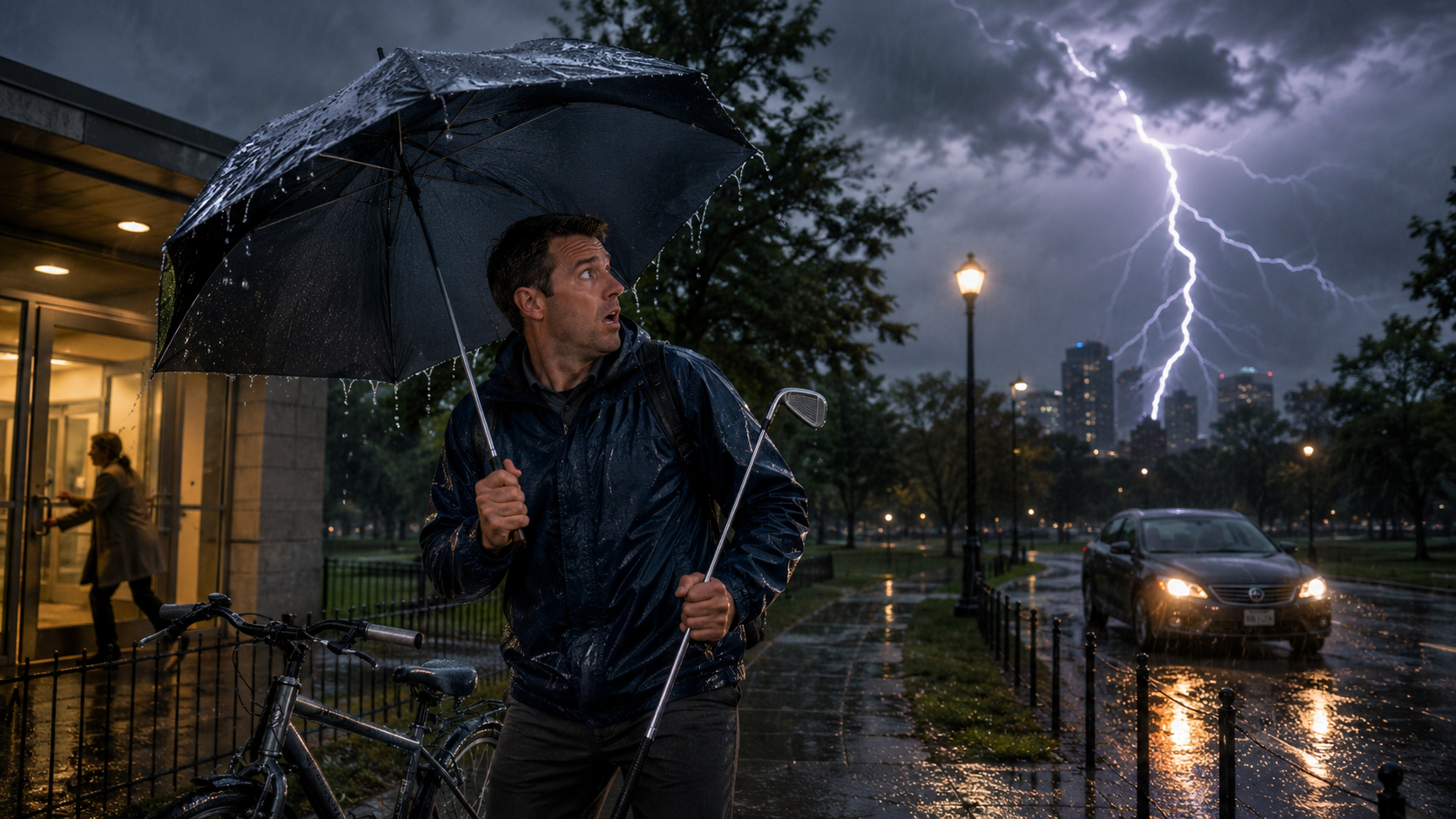
Lightning Safety: Why You Should Be Careful With Umbrellas and Metal Objects During a Storm
Minjin Park
·
Learn why umbrellas and metal objects can increase risk during lightning storms, what warning signs to watch for, and simple safety habits that help protect you outdoors.
Why Umbrellas and Metal Objects Matter During Lightning
Most of us have been caught in a thunderstorm at least once.
Maybe you were walking across a parking lot with an umbrella, sitting on metal bleachers at a school game, carrying golf clubs, or hurrying from your car to a store while rain poured down. In those moments, it is easy to focus on staying dry and forget that the bigger concern may not be the rain at all.
Lightning is one of those everyday weather hazards that can feel distant until it is suddenly close. A storm does not have to look dramatic to be dangerous. You may not see a bright bolt right away. You may only hear a low rumble in the distance. But if you can hear thunder, lightning is close enough that you should start thinking about safety.
Umbrellas and metal objects get attention during lightning storms because they can change how exposed you are. Metal does not “attract” lightning like a magnet, but it is an excellent conductor of electricity. Tall objects, pointed objects, and objects held above your head can also make you more exposed in an open area.
The goal is not to panic every time you see a dark cloud. The goal is to recognize when a normal outdoor activity has quietly become risky, then make a calm, practical decision to get somewhere safer.
Lightning Does Not Need a Direct Hit to Cause Harm
One common misunderstanding is that lightning is only dangerous if it strikes a person directly. In reality, lightning can injure people in several ways.
A direct strike is possible, but many lightning injuries happen because electricity travels through the ground, jumps from a nearby object, or moves through something a person is touching.
For example, lightning may strike a tree, fence, pole, or metal structure nearby. The electrical current can spread through the ground or travel along conductive materials. Someone standing close to that object, holding onto it, or touching something connected to it may be affected even without being the tallest object in the area.
This is one reason metal items matter. A metal object can conduct electrical current very well. If lightning hits nearby and electricity travels through a fence, railing, umbrella frame, bike, fishing rod, or metal tool, that current may pass into a person’s body.
Lightning is unpredictable. You cannot look at an object and know exactly where a bolt will go. But you can reduce risk by avoiding certain objects and behaviors when a thunderstorm is nearby.
Metal by itself does not pull lightning out of the sky. A small metal item like a watch, phone, zipper, or ring is not usually the reason lightning chooses a path.
The bigger concern is usually the situation around the metal object. Is it tall? Is it raised above your head? Is it connected to the ground? Are you in an open space? Are you holding it? Are you standing near other tall or conductive objects?
A metal-framed umbrella, for example, may be a problem not just because it contains metal, but because you are holding it above your head during a storm. A golf club is similar. A fishing rod may be long and raised. A bicycle has a metal frame and puts you outdoors, often away from immediate shelter. Metal bleachers, fences, and railings can become risky because they may conduct current if lightning strikes nearby.
So the simple rule is not “metal magically attracts lightning.” A better rule is: during lightning, avoid holding, standing near, or leaning on objects that could conduct electricity, especially if they are tall, exposed, or connected to the ground.
Why Umbrellas Can Be Risky in a Thunderstorm
An umbrella feels like the most natural thing to grab when rain starts. It keeps your clothes dry, protects your face, and makes a quick walk feel more manageable.
But during lightning, an umbrella can create a few problems.
It Raises Your Profile
When you hold an umbrella above your head, you make yourself slightly taller. In a city surrounded by taller buildings, this may not matter as much. But in an open parking lot, field, beach, golf course, or hiking trail, every bit of exposure matters.
Lightning often seeks a path between cloud and ground. Tall, isolated objects in open areas are more vulnerable. Holding an umbrella high above you does not guarantee danger, but it is not a habit you want during a thunderstorm.
It May Have a Metal Frame or Tip
Many umbrellas have metal ribs, shafts, springs, or tips. If lightning strikes nearby and current reaches the umbrella, the metal parts can conduct electricity.
Even umbrellas with plastic handles may have metal inside. You may not always know how much metal is in the structure, especially with compact travel umbrellas.
It Can Give a False Sense of Safety
The most practical problem with umbrellas is psychological. Because you feel protected from rain, you may stay outside longer than you should.
You might think, “I just need to get across the lot,” or “I’ll wait under this umbrella until the rain slows.” But lightning risk is not about how wet you are. It is about whether a storm is close enough to threaten the area.
An umbrella can help with rain, but it is not lightning protection.
Common Metal Objects to Be Careful With
Everyday life is full of metal objects. You do not need to fear all of them, but during a storm, it helps to notice which ones could put you in a bad position.
Golf Clubs and Sports Equipment
Golf courses are one of the classic examples of lightning danger because they are open, wide, and often have few safe shelters nearby. Golf clubs are metal, long, and frequently raised into the air.
Metal baseball bats, lacrosse sticks, tennis court fences, and metal goal posts can also be risky around storms. If thunder is heard during a game or practice, it is smart to pause and move indoors rather than trying to “finish one more play.”
Fishing Rods and Boats
Fishing rods can be long and conductive, especially when held upright. Water also adds another layer of risk because lakes, rivers, ponds, and beaches are exposed areas.
A person fishing from a dock, shoreline, or boat may not have quick access to safe shelter. That is why checking the weather before fishing is such a practical habit.
Bicycles, Scooters, and Motorcycles
Bicycles and motorcycles do not protect you the way a fully enclosed vehicle can. They also have metal parts and leave you exposed to the open air.
If a storm is moving in, it is better to stop and seek a sturdy building when possible, instead of trying to outrun the storm in heavy rain.
Metal Fences, Railings, and Bleachers
Metal fences and railings are easy to overlook because they feel harmless. People lean on them during sports games, hold them while walking down steps, or stand beside them while waiting out rain.
During lightning, avoid leaning against metal fences, railings, gates, poles, and bleachers. If lightning strikes nearby, current can travel along connected metal surfaces.
Tools, Ladders, and Yard Equipment
Yard work can quickly become unsafe when a thunderstorm arrives. Metal rakes, shovels, ladders, wheelbarrows, and lawn equipment should be put down when thunder is heard.
A metal ladder is especially concerning because it makes a person taller and may conduct electricity. Roof work, gutter cleaning, tree trimming, and fence repair should wait until the storm has fully passed.
Everyday Situations Where People Make Mistakes
Lightning safety is not only for hikers and golfers. It comes up in normal routines.
Walking From the Car With an Umbrella
A common mistake is thinking, “It’s only a short walk.” Short walks still matter if lightning is close. Parking lots are open, wet, and full of metal vehicles, light poles, carts, and signs.
If thunder is nearby, it may be better to wait inside the car or inside a building rather than crossing an open lot with an umbrella.
Waiting Under a Tree
This is one of the most dangerous habits during a storm. A tree may keep some rain off you, but it can become a lightning target. If lightning strikes the tree, current can travel down the trunk and spread through the ground.
Standing under a tree with an umbrella does not make the situation safer. It may actually combine two risky choices: being near a tall object and holding something above your head.
Staying on a Sports Field
Parents, coaches, and players sometimes hesitate to stop a game because the rain has not become heavy yet. But lightning can occur before the worst rain arrives.
A useful habit is to take thunder seriously even if the sky is only partly dark. Weather can shift quickly, especially during warm months.
Trying to Finish Yard Work
Many people keep mowing, trimming, or cleaning gutters because they are “almost done.” Lightning safety is one area where almost done is not worth it.
Put down tools, step away from metal equipment, and move inside a sturdy building.
Standing Near Water
Pools, lakes, beaches, docks, and wet open areas should be cleared when thunder is heard. Water and open space do not mix well with lightning risk.
Even if you are not swimming, standing near the shoreline with an umbrella, fishing rod, or metal chair can increase exposure.
Warning Signs That It Is Time to Move
The most obvious warning sign is thunder. If you hear it, the storm is close enough to matter.
Other signs include darkening skies, sudden wind changes, distant flashes, fast-moving clouds, or alerts on a weather app. You may also notice people around you starting to pack up equipment or leave a field.
Do not wait until rain is pouring. Lightning can strike before heavy rain begins, and storms can move faster than they look.
A simple rule for everyday life is this: when thunder starts, outdoor plans pause.
That may mean stepping inside a store, returning to your car if it is fully enclosed, leaving the pool, getting off the field, or postponing yard work.
Safer Places to Go During Lightning
The safest everyday place during a thunderstorm is a substantial building with wiring and plumbing, such as a home, school, office, store, or community center.
A fully enclosed hard-top vehicle can also provide protection during lightning. This does not mean a convertible with the top down, a golf cart, a motorcycle, or a bicycle. The protection comes from the enclosed metal frame of the vehicle, not from the rubber tires.
Once inside, avoid touching metal surfaces connected to the outside, such as door frames or certain vehicle parts. In a building, it is also smart to avoid plumbing, corded electronics, and windows until the storm passes.
Small outdoor shelters, picnic pavilions, dugouts, tents, and open gazebos are not reliable lightning protection. They may protect you from rain, but they do not offer the same safety as a sturdy enclosed structure.
What to Do With Umbrellas and Metal Items When a Storm Starts
If you are outside and thunder begins, keep your response simple.
First, lower the umbrella and move toward a safer place. Do not hold it high above your head while crossing an open area if you have another option.
Second, put down or stop using long metal objects such as golf clubs, fishing rods, tripods, or metal tools.
Third, move away from fences, railings, poles, isolated trees, open fields, water, and high ground.
Fourth, get into a sturdy building or fully enclosed vehicle as soon as practical.
The key is not to spend time perfectly organizing your things. Safety comes first. Golf clubs, bikes, chairs, umbrellas, and tools can wait.
Prevention Tips Before You Leave Home
The easiest lightning safety decisions happen before you are already stuck outside.
Check the weather before activities like hiking, fishing, golfing, boating, outdoor sports, yard work, beach trips, and long walks. A quick look at the hourly forecast can help you plan around stormy windows.
Carry rain gear that does not encourage you to stay outside during thunder. A rain jacket may be more practical than relying on an umbrella in storm-prone weather, especially during outdoor activities.
Know where shelter is located. At a park, look for restrooms or visitor centers. At a sports field, know whether the school, gym, or car is closest. At the beach, identify the route back to the car before the sky changes.
For family outings, talk through the plan calmly. Children may not understand why everyone has to leave the pool or field when it is only sprinkling. A simple explanation helps: “Thunder means lightning is close, so we go inside.”
What About Phones, Keys, and Jewelry?
People often ask whether small metal items like keys, phones, watches, rings, and belt buckles are dangerous during lightning.
These items are not usually the main concern. You do not need to waste time removing jewelry or throwing your keys away. The bigger concern is where you are and what you are doing.
Are you standing in an open field? Holding an umbrella? Leaning on a metal fence? Carrying a long fishing rod? Standing under a tree? Waiting beside water?
Focus on moving to safer shelter rather than worrying about small items in your pocket.
That said, avoid using corded electronics indoors during lightning, and avoid holding metal objects above your head or staying connected to large metal structures outdoors.
A Calm Way to Think About Lightning Safety
Lightning safety does not have to feel complicated. You do not need to become a weather expert or live in fear of summer storms.
Think of it as a simple pause habit.
When thunder begins, pause the walk, pause the game, pause the yard work, pause the fishing, pause the bike ride. Get to a safer place and wait until the storm has moved on.
Umbrellas and metal objects matter because they can make a person more exposed, provide a path for electricity, or encourage people to stay outside longer than they should. The safest choice is usually not about one object. It is about the whole situation.
Open space, high ground, water, metal, tall objects, and thunder are a combination worth respecting.
Final Thoughts: Stay Dry, But Stay Safer First
An umbrella is useful in ordinary rain. Metal tools, bikes, fences, and sports equipment are part of everyday life. None of these things are automatically dangerous on a clear day.
But during a lightning storm, the situation changes.
The rain may be annoying, but lightning is the real safety concern. Holding an umbrella high, carrying metal equipment, standing near railings, or waiting under trees can add unnecessary risk when a better option is available.
The practical takeaway is simple: if you hear thunder, head indoors or into a fully enclosed vehicle. Put down long metal objects, step away from fences and water, and do not let an umbrella convince you to stay outside.
A few calm choices made early can make a stormy day much safer.
Hi, I’m the creator and editor behind ZestyHabit. I research everyday safety, first aid, and practical wellness topics using official guidance and reliable public sources, then turn that information into clear, realistic steps for daily life.
My goal is to help readers make safer, better-informed choices at home and beyond.