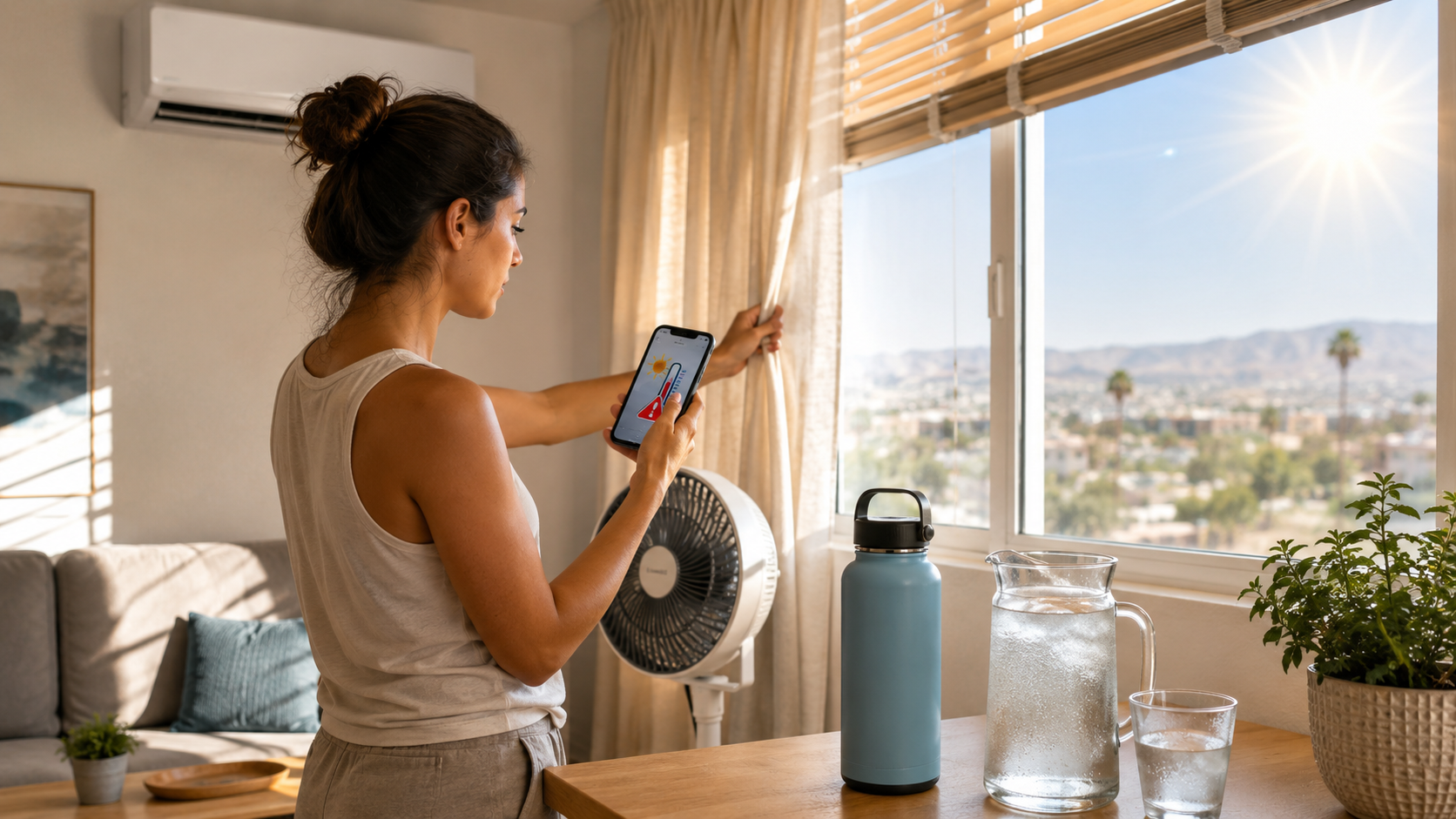
A heat advisory can affect your health, home, pets, and daily routine. Learn the first practical steps to take when extreme heat is expected, plus simple ways to stay safer.
A heat advisory can be easy to brush off, especially if you live somewhere that gets hot every summer. You may think, “It’s just another hot day,” or “I’ll be fine as long as I stay inside.” But a heat advisory is more than a weather app notification. It is a sign that the heat may be high enough, long enough, or humid enough to make normal daily activities more stressful on the body.
This matters because heat affects people quietly at first. You may not notice a problem right away. You might feel a little tired, thirsty, cranky, or lightheaded and blame it on a busy day. Children may become unusually fussy. Older adults may not feel thirsty even when they need fluids. Pets may slow down or pant more than usual.
The goal is not to panic. The goal is to adjust early.
When a heat advisory is issued, the smartest thing you can do is pause and make a simple plan for the next 24 to 48 hours. A few small changes can make a hot day much easier and safer for your family.
That may sound obvious, but many people skip this step. They assume the air conditioner will work, the house will stay comfortable, or they can simply “deal with it.” Then the afternoon arrives, the indoor temperature climbs, and everything becomes harder.
Start by asking yourself a few questions:
Do you have working air conditioning or fans? Is your home staying cool enough during afternoon heat? Do you have a backup place to go if your home gets too warm? Are there people in your household who need extra help staying cool? Do you have pets that need a cooler room or more water?
This quick check helps you move from reacting to preparing.
If your home has air conditioning, make sure it is running properly before the hottest hours. If you rely on fans, remember that fans can help with comfort, but they may not be enough during very high heat, especially when indoor air is already hot. If your home tends to trap heat, identify a cooler place you can go, such as a library, community center, shopping mall, shaded public building, or a trusted friend or family member’s home.
Understand What a Heat Advisory Means in Real Life
A heat advisory usually means weather conditions may be hot enough to increase the risk of heat-related problems, especially for people who are more sensitive to heat. The exact threshold can vary by area because heat that is normal in one region may be unusual in another.
In everyday life, it means you should take heat seriously before it becomes uncomfortable.
It may affect your commute, outdoor work, errands, exercise, children’s activities, pet walks, yard work, and even how your home feels by late afternoon. It can also increase demand on electricity, which may matter if your area experiences power strain during heat waves.
A heat advisory does not mean you have to cancel everything. It means you should plan more carefully.
Check on People Who May Need Extra Help
Older Adults
Older adults are often more vulnerable during extreme heat. Some may not notice temperature changes as quickly, and some may live alone without someone checking in regularly.
If you have an older neighbor, parent, grandparent, or friend, a simple call or text can make a difference. Ask if their home is staying cool, whether they have enough water, and whether they need help getting to a cooler place.
You do not need to make it dramatic. A gentle message works well: “It’s going to be really hot today. Just checking that your AC is working and you’re doing okay.”
Babies and Young Children
Children can overheat faster than adults, and they may not always explain what they are feeling. They may just become tired, irritable, flushed, or unusually quiet.
When a heat advisory is in effect, plan indoor activities during the hottest hours. Dress children in lightweight clothing, offer fluids regularly, and avoid leaving them in parked cars even for a very short time.
Also be careful with strollers. Some covers can trap heat around a child, even if they create shade. Shade is helpful, but airflow matters too.
People Who Work Outdoors
If someone in your household works outside, the heat advisory should be part of the day’s planning. Outdoor workers may need more breaks, more water, sun protection, and a realistic schedule.
Even simple tasks like mowing, moving boxes, roofing, landscaping, or working at an outdoor event can become much harder in extreme heat.
If possible, heavier work should be done early in the morning or later in the evening, not during the hottest part of the day.
Pets
Pets feel heat too, and they cannot tell us when they are getting overwhelmed. Dogs may pant heavily, slow down, seek shade, or refuse to keep walking. Some pets are more sensitive, especially older animals, overweight pets, flat-faced breeds, and animals with thick coats.
When a heat advisory is issued, move walks to early morning or late evening. Keep pets indoors during peak heat. Make sure water bowls are full, and avoid hot pavement that can burn paws.
A simple pavement test can help: place the back of your hand on the pavement for a few seconds. If it feels too hot for your hand, it is too hot for paws.
If you need groceries, gas, prescriptions, or pet supplies, try to run errands in the morning. If you need to water plants, take out trash, or do yard work, do it before the strongest afternoon heat.
This is especially useful in the United States during summer, when temperatures often peak later than people expect. The hottest part of the day may not be noon. It may be mid-afternoon or early evening, depending on your area and how heat builds around pavement and buildings.
Small schedule changes can prevent a lot of discomfort.
For example, instead of walking the dog at 2 p.m., go at 7 a.m. Instead of mowing the lawn after lunch, wait until evening or choose another day. Instead of taking kids to a playground during peak sun, choose an indoor activity or a shaded splash pad when conditions are safer.
Prepare Your Home to Stay Cooler
Close Blinds and Curtains
Sunlight pouring through windows can heat a room quickly. Close blinds, curtains, or shades on sun-facing windows before the hottest part of the day. This is especially helpful for west-facing windows that get strong afternoon sun.
It may feel like a small step, but it can reduce how hard your cooling system has to work.
Use Fans Wisely
Fans can help circulate air and make a room feel more comfortable. Ceiling fans should be set to push air downward in summer. Portable fans can help move cooler air from one room to another.
However, fans do not actually lower the air temperature. During very high heat, especially in a hot room, they may not be enough by themselves. Pay attention to how you feel and how warm the room is getting.
Avoid Adding Extra Heat Indoors
On heat advisory days, avoid using the oven if you can. Cooking with an oven can make the kitchen and nearby rooms much warmer. Choose simple meals, stovetop cooking, microwave meals, salads, sandwiches, or leftovers.
Laundry machines, dishwashers, and other appliances can also add heat. Running them in the evening may help keep the house more comfortable.
Cool One Main Room
If cooling the entire home is difficult, focus on one main room. Close doors to rooms you are not using. Spend the hottest hours in the coolest part of the house, often a lower level or shaded room.
This can be especially helpful for families trying to reduce energy use while still staying comfortable.
Drink Water Before You Feel Very Thirsty
Hydration is one of the simplest steps, but it is also one of the easiest to forget.
During hot weather, keep water nearby and sip throughout the day. You do not need to force huge amounts at once. Regular small drinks are usually easier to manage.
If you are sweating more than usual, spending time outdoors, or doing physical work, you may need more fluids than on a normal day. Some people also like adding water-rich foods such as watermelon, oranges, cucumbers, soups, or smoothies.
Try not to rely only on coffee, soda, or alcoholic drinks when it is extremely hot. They may be enjoyable, but plain water should still be part of the day.
A helpful habit is to fill a water bottle in the morning and keep it where you can see it. Visibility makes it easier to remember.
Dress for Heat, Not Just for Style
Clothing can make a noticeable difference during a heat advisory. Lightweight, loose-fitting, breathable clothes are usually more comfortable than tight or heavy fabrics.
Light-colored clothing may feel cooler in direct sun. A wide-brimmed hat, sunglasses, and sunscreen can help when you need to be outside.
Footwear matters too. Sandals may feel cool, but they may not be safe for every activity. If you are walking on hot pavement, doing errands, or working outside, choose shoes that protect your feet and help you move safely.
The goal is comfort plus practicality.
Watch for Early Warning Signs of Heat Stress
You do not need to diagnose yourself or others, but it is helpful to notice when heat may be affecting someone.
Early signs can include unusual tiredness, dizziness, headache, heavy sweating, muscle cramps, nausea, flushed skin, fast heartbeat, or feeling weak. In children, signs may look like fussiness, sleepiness, or acting “not like themselves.”
If someone seems affected by heat, the general first step is to move to a cooler place, rest, and drink water if they are able to do so comfortably. If symptoms seem severe, confusing, or do not improve, seek appropriate medical help.
For everyday prevention, the key is not waiting until someone feels awful. Adjust early.
Common Mistakes People Make During Heat Advisories
Waiting Until the House Is Already Hot
Many homes heat up gradually. By the time the indoor temperature feels uncomfortable, it may take hours to cool down again.
Close curtains early. Start cooling early. Move to cooler rooms before the afternoon heat builds.
Exercising at the Usual Time
A daily walk or run may feel normal, but a heat advisory changes the equation. Exercise that feels easy in mild weather can feel much harder in heat and humidity.
Move workouts indoors, shorten them, slow the pace, or shift them to early morning.
Forgetting About the Car
Cars heat up quickly in summer. Never leave children, pets, or anyone vulnerable in a parked car. Also be careful with items like electronics, medications, aerosol cans, and groceries that can be affected by heat.
Before sitting down, check hot seat belts, buckles, and car seats, especially for children.
Assuming Shade Is Enough
Shade helps, but it does not remove all risk. Hot air, humidity, warm pavement, and poor airflow can still make shaded areas uncomfortable or unsafe.
If you are outside, combine shade with water, breaks, light clothing, and limited time.
Ignoring Nighttime Heat
Heat can be harder on the body when nights do not cool down. If your home stays hot overnight, sleep quality can suffer, and people may start the next day already tired.
Use fans, light bedding, cool showers, or a cooler sleeping area when possible. If your home remains too hot, consider spending time in a cooler location.
Make a Quick Heat Advisory Checklist
When a heat advisory appears on your phone or local news, use this simple checklist:
Check that your cooling system is working. Close blinds or curtains before peak sun. Fill water bottles and encourage regular drinking. Move errands, exercise, and pet walks to cooler hours. Check on older adults, neighbors, and anyone living alone. Keep children and pets out of parked cars. Prepare simple meals that do not heat the kitchen. Know where you can go if your home becomes too warm. Charge your phone in case you need updates or help. Watch for early signs that heat is affecting someone.
This list does not take long, but it covers the basics that many people forget.
What to Do If You Do Not Have Air Conditioning
Not everyone has reliable air conditioning, and some people avoid using it because of cost. If that is your situation, planning ahead matters even more.
Spend the hottest hours in the coolest part of your home. Use curtains to block sun. Open windows only when outside air is cooler than inside air. Use fans to improve airflow, but pay attention to whether the room is still becoming too hot.
Look for public cooling options in your area. Libraries, community centers, malls, and public buildings may offer relief during extreme heat. Some cities open cooling centers during heat events.
If transportation is an issue, reach out early to family, friends, neighbors, or local community resources.
Planning for Power Outages During Heat
Heat advisories can sometimes come with high electricity demand. A power outage during extreme heat is uncomfortable and can be more serious for vulnerable people.
Keep phones charged. Have battery-powered fans or power banks if you use them. Know how to manually open garage doors if needed. Keep flashlights ready so you are not searching in the dark.
If the power goes out, keep refrigerator and freezer doors closed as much as possible. Move to the coolest part of the home, reduce activity, and consider going to a cooler public place if the indoor temperature becomes too uncomfortable.
Again, the point is not fear. It is simply easier to make decisions when you have thought about them before the house gets hot.
A Heat Advisory Is Also a Community Reminder
One of the kindest things you can do during extreme heat is check on others.
A neighbor who lives alone may need help. A parent with young kids may appreciate a reminder about indoor activities. A friend who works outdoors may need encouragement to take breaks. Someone without reliable transportation may need a ride to a cooler place.
Heat safety is partly personal, but it is also community-based. Small acts of attention can reduce risk for people around you.
Final Thoughts
When a heat advisory is issued, the first thing to do is simple: check your cooling plan. Make sure you know how you, your family, and your pets will stay cool during the hottest part of the day.
From there, focus on practical habits. Drink water before you feel very thirsty. Shift errands and exercise to cooler hours. Close blinds early. Keep children and pets out of parked cars. Check on older adults and neighbors. Watch for early signs that heat is becoming too much.
You do not have to be scared of hot weather to respect it. A heat advisory is just a useful reminder to slow down, plan ahead, and make the day easier on your body.
A few calm choices in the morning can make the rest of a hot day safer, more comfortable, and much less stressful.
Hi, I’m the creator and editor behind ZestyHabit. I research everyday safety, first aid, and practical wellness topics using official guidance and reliable public sources, then turn that information into clear, realistic steps for daily life.
My goal is to help readers make safer, better-informed choices at home and beyond.