Why Rice Cooker Steam Can Burn You: Everyday Kitchen Safety Tips for Busy Homes
Minjin Park
·
Rice cooker steam can cause painful burns faster than many people expect. Learn why it happens, common mistakes, warning signs, and simple safety habits for everyday cooking.
A rice cooker feels like one of the safest appliances in the kitchen. You add rice, pour in water, press a button, and walk away. Compared with frying oil, sharp knives, or a hot oven, it seems pretty harmless.
But there is one part of a rice cooker that deserves more attention: the steam.
That little stream of vapor coming out of the vent may look soft and harmless, but it can be hot enough to burn your skin quickly. Many everyday burns happen not because someone is being careless, but because steam is easy to underestimate. It is quiet, almost invisible at times, and often appears right where your hands or face naturally go when checking food.
This is especially important in busy homes, small apartments, family kitchens, dorm rooms, and anywhere kids or pets may be nearby. Rice cookers are convenient, but like any appliance that creates heat and pressure, they need a few simple safety habits.
The good news is that preventing rice cooker steam burns does not require complicated rules. A little awareness can make a big difference.
Why Rice Cooker Steam Can Burn Skin
Steam is hotter than it looks
When water inside a rice cooker boils, it turns into steam. That steam travels upward and escapes through the steam vent. Even though it may look like a gentle cloud, it carries a lot of heat.
Steam can be deceptive because it does not look as dangerous as a flame or a red-hot pan. You may not feel the heat until your hand, wrist, or face gets close to the vent. By then, the hot vapor can already irritate or burn the skin.
This is one reason rice cooker burns often happen during simple moments, such as opening the lid, wiping the counter, moving the cooker, or checking whether the rice is done.
Moist heat transfers quickly
Steam burns can feel intense because moist heat transfers energy very efficiently. Dry heat, like the air around a warm oven, may give you a little warning as you get closer. Steam can make contact with the skin and release heat quickly.
This is why a small puff of steam from a rice cooker lid can feel surprisingly sharp. The burn may happen in a second or two, especially on sensitive areas like fingers, wrists, arms, neck, or the face.
The vent directs steam in one concentrated spot
Most electric rice cookers have a steam vent on the lid. During cooking, the vent allows steam to escape so pressure does not build up inside the cooker.
The problem is that the steam does not always spread evenly into the room. It may come out in a focused stream. If your hand happens to be above the vent, or if your face is close while you look into the cooker, the steam can hit one area directly.
This is why even a small appliance can cause a painful burn if someone reaches over it at the wrong moment.
Why This Matters in Everyday Life
Rice cookers are often used in the background of daily life. They sit on the counter while people pack lunches, wash dishes, make soup, prepare baby food, or help kids with homework.
Because they are so familiar, people may stop noticing the risks.
In many homes, the rice cooker is placed wherever there is space. That might be under a cabinet, beside paper towels, near a wall, close to the edge of the counter, or next to other appliances. These everyday setups can make steam exposure more likely.
For example, you may reach over the cooker to grab a mug. A child may stand on tiptoe to see what is cooking. Someone may open the lid quickly because dinner is running late. A pet may jump onto a counter near the appliance. None of these situations are unusual, but they can create the perfect moment for a steam burn.
Kitchen safety is not about being nervous every time you cook rice. It is about noticing small habits that protect you before something painful happens.
Common Ways Rice Cooker Steam Burns Happen
Opening the lid too quickly
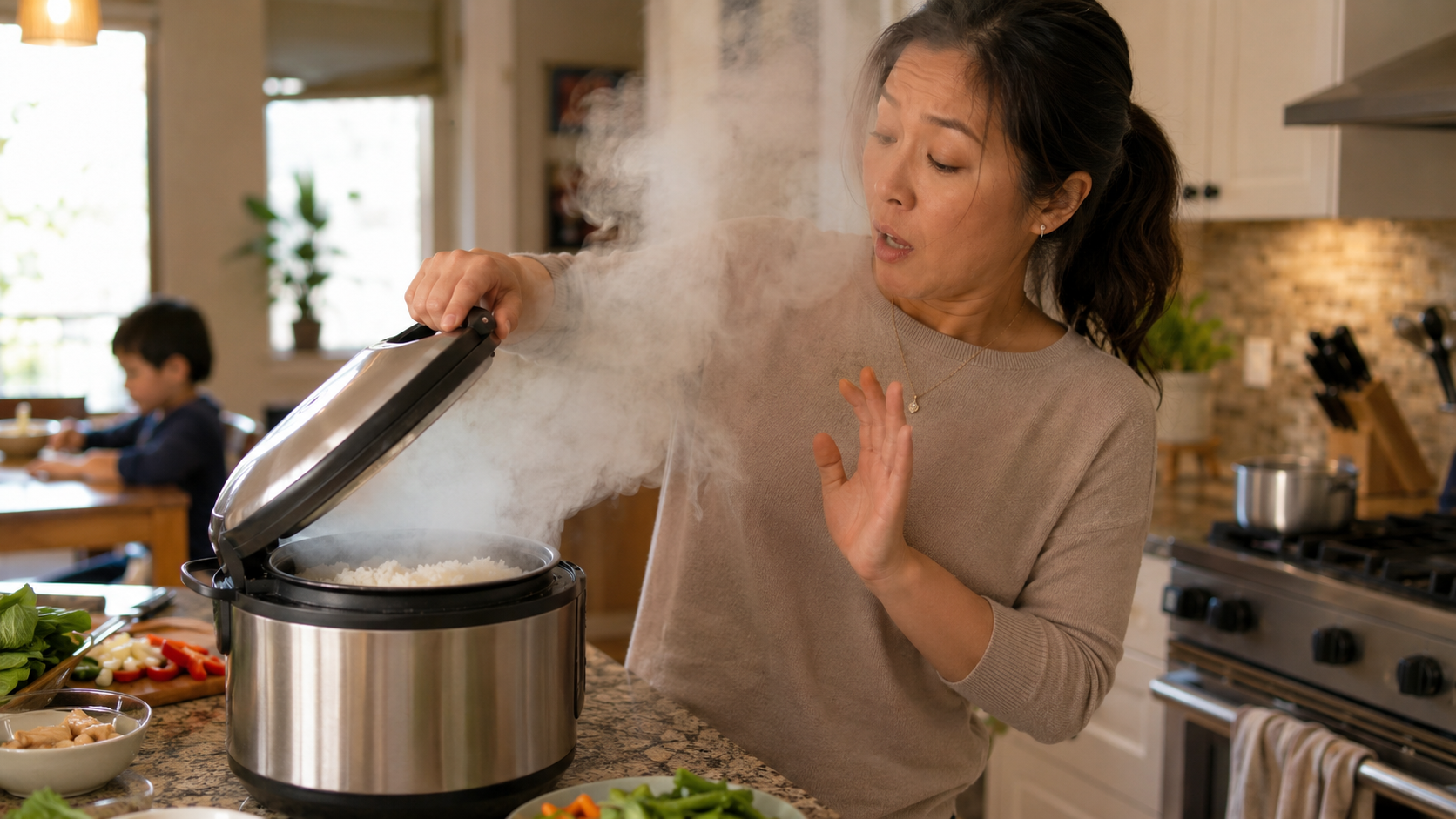
One of the most common mistakes is opening the lid immediately after the cooking cycle ends. When the lid lifts, trapped steam rushes out. If your hand, wrist, or face is directly above the opening, the hot vapor can hit you.
A safer habit is to stand slightly to the side and open the lid away from your face. Give the steam a moment to escape before leaning over or stirring the rice.
Reaching over the steam vent
People often reach over a rice cooker without thinking. Maybe the appliance is sitting near the coffee maker, a spice rack, or a dish towel. If the cooker is actively steaming, your arm can pass directly over the vent.
This type of burn may happen fast because your skin is exposed to a concentrated stream of hot vapor.
Try to keep the area above and around the rice cooker clear. Treat the steam vent like a “hot zone” while the appliance is running.
Letting children get too close
Children are naturally curious. A rice cooker may bubble, click, release steam, or smell like dinner. Kids may want to look inside or press buttons.
The steam vent is often right at a child’s eye or face level if the cooker is placed on a low table, cart, or floor. That makes placement especially important.
During cooking, keep the rice cooker on a stable surface where children cannot easily reach the lid, cord, or steam vent. Explain in simple words that the “cloud” from the cooker is hot and should not be touched.
Using the cooker under low cabinets
Steam rises. If a rice cooker is placed directly under a cabinet, the hot vapor may collect against the cabinet surface and spread sideways. This can make the area above the cooker hotter and more humid than expected.
Over time, frequent steam exposure may also affect cabinet finishes. More importantly, it may encourage someone to reach into a warm, steamy space when opening the lid.
Whenever possible, use the rice cooker in an open area with enough space above the steam vent.
Moving the cooker while it is hot
A full rice cooker can be heavy, and moving it while hot can be risky. Steam may escape unexpectedly, hot water may shift inside, and the cord may get caught.
If the cooker needs to be moved, wait until it has cooled enough to handle safely. Make sure the cord is unplugged and out of the way before lifting.
Covering or blocking the steam vent
Some people accidentally block the vent with a towel, plastic wrap, a lid cover, or another object. Others may try to reduce steam by placing something over the vent.
This is not a good idea.
The steam vent is designed to let hot vapor escape. Blocking it can interfere with normal operation, create extra mess, or cause steam to escape from unexpected places. It may also increase the chance that someone gets burned when the object is removed.
Always keep the steam vent clear.
Warning Signs to Notice While Cooking
A rice cooker does not need to look dramatic to deserve attention. Small signs can tell you that hot steam is active and the area should be treated carefully.
You may notice a steady stream of vapor from the vent. You may hear bubbling, hissing, clicking, or sputtering sounds. The lid may look wet with condensation. The counter near the cooker may feel damp. The area under a cabinet may become warm or cloudy.
Foamy water may also bubble near the vent, especially if the rice was not rinsed or if the cooker is overfilled. This can create hot splatter along with steam.
These signs do not always mean something is wrong. Rice cookers normally release steam. But they do mean you should avoid placing your hands, face, towels, paper products, or loose sleeves near the vent.
Simple Prevention Tips for Rice Cooker Steam Burns
Place the rice cooker in a safe spot
Before pressing start, take a moment to check the location.
Use a flat, stable surface. Keep the cooker away from the counter edge. Leave open space above the steam vent. Avoid placing it directly under low cabinets if possible. Keep it away from curtains, paper towels, plastic bags, and anything that could block airflow.
Also think about traffic flow. If people are constantly reaching over the cooker to get cups, plates, or snacks, it may be better to move it to a quieter part of the counter.
Keep the steam vent clear
The vent should stay uncovered during cooking and warming. Do not place towels, foil, plastic wrap, plates, or utensils over it.
If the steam cap or vent cover is removable, clean it according to the manufacturer’s instructions. Food starch can build up over time and make steam release less predictable.
Open the lid away from your face
When the rice is done, pause before opening the lid. Stand slightly back. Use the handle if your model has one. Open the lid slowly and angle it so steam escapes away from your face and hands.
If you need to touch a hot part of the cooker, use a dry oven mitt or potholder. Wet fabric can transfer heat more quickly, so avoid using a damp towel.
Be careful not to let the mitt or towel hang over the steam vent. The goal is to protect your hand, not trap hot vapor.
Let the cooker rest before serving
After cooking, many rice cookers automatically switch to “warm.” Even then, steam may still be inside.
Letting the rice sit for a few minutes can reduce the rush of steam when you open the lid. It can also improve the texture of the rice, which is a nice bonus.
Teach kids a simple kitchen rule
A helpful rule is: “Do not touch appliances that make steam.”
This applies to rice cookers, kettles, pressure cookers, slow cookers, and some microwaved foods. Children do not need a complicated explanation. They just need a clear boundary and repeated reminders.
You can also create a small “no hands zone” around the cooker while it is running.
Watch loose clothing and long sleeves
Loose sleeves, robe ties, and dangling dish towels can drift near the vent. When cooking in a hurry, it is easy to forget what is hanging from your arm or shoulder.
Roll up loose sleeves before working around hot appliances. Keep dish towels on a hook or away from the cooker.
Common Mistakes That Make Steam Burns More Likely
Assuming the cooker is safe because it is automatic
Automatic does not mean risk-free. A rice cooker controls cooking temperature and timing, but it still creates boiling water and steam. Treat it with the same respect you would give any hot kitchen appliance.
Leaning in to smell or check the rice
It is tempting to lean over and smell the rice when it finishes cooking. The problem is that steam may still be escaping from the vent or under the lid.
Instead, open the lid slowly, let the first wave of steam clear, and then check the rice from a safe distance.
Overfilling the cooker
Too much rice or water can lead to bubbling, foaming, or messy overflow. That overflow may carry hot water and starch through the vent area.
Follow the fill lines and instructions for your specific model. If your rice frequently bubbles over, try rinsing the rice more thoroughly, using the correct water ratio, or cooking a smaller batch.
Ignoring buildup around the vent
Dried starch, food residue, and mineral deposits can collect around the steam vent. If the vent is partly blocked, steam may escape unevenly or push out around the lid.
Regular cleaning helps the cooker work as intended. Let the appliance cool first, then clean removable parts according to the manual.
Placing the cooker on the floor
In some homes, especially during gatherings or holidays, appliances get moved to the floor because counter space is limited. This can be risky with a rice cooker because children, pets, and bare feet may be nearby.
A rice cooker should sit on a stable, raised surface where it will not be kicked, bumped, or easily reached by young children.
What to Do If Steam Contact Happens
If someone gets a minor steam burn, stay calm and move away from the heat source. For general safety awareness, cooling the area with clean, cool running water is commonly recommended for minor burns. Avoid applying random kitchen remedies such as butter, oils, toothpaste, or sauces.
If a burn looks serious, affects the face or a large area, blisters badly, or involves a child, it is best to contact a qualified medical professional or follow local urgent care guidance.
The main point is not to panic, but also not to ignore a burn that seems more than mild.
Rice Cooker Safety Checklist
Before cooking, place the cooker on a stable counter with open space above it. Make sure the steam vent is clean and uncovered. Keep children and pets away from the appliance while it is running.
During cooking, avoid reaching over the vent. Keep paper towels, plastic items, loose sleeves, and dish towels away from steam. Watch for bubbling or foaming if the cooker is full.
After cooking, let the cooker rest for a few minutes. Open the lid slowly and away from your face. Use dry oven mitts if needed. Allow removable parts to cool before cleaning.
These small habits are easy to build into your normal cooking routine.
A Few Real-Life Examples
Picture a parent making dinner while helping a child with homework. The rice cooker is on the counter, steaming quietly. The parent reaches over it to grab a bowl from the cabinet and feels a sudden sting on the wrist. Nothing dramatic happened, but the steam vent was directly below the arm.
Or imagine a college student in a small apartment. The rice cooker sits under a shelf because there is limited counter space. When the lid opens, steam hits the shelf and rolls forward toward the student’s face.
Another common situation is a family gathering. The rice cooker is moved to a low table so there is more kitchen space. A young child walks over to look at it just as steam is escaping.
These examples are simple, ordinary, and preventable. That is why awareness matters.
Conclusion
Electric rice cookers are useful, reliable appliances, and most people use them for years without a problem. But the steam they produce can be hot enough to cause painful burns, especially when hands, faces, children, or pets get too close to the vent.
The safest approach is practical, not fearful. Give the rice cooker enough space. Keep the steam vent clear. Open the lid slowly and away from your face. Avoid reaching over the appliance while it is cooking. Teach children that steam is hot, even when it looks like a harmless cloud.
A rice cooker should make dinner easier, not add stress to the kitchen. With a few calm safety habits, you can enjoy the convenience while keeping everyday cooking safer for everyone at home.
Hi, I’m the creator and editor behind ZestyHabit. I research everyday safety, first aid, and practical wellness topics using official guidance and reliable public sources, then turn that information into clear, realistic steps for daily life.
My goal is to help readers make safer, better-informed choices at home and beyond.