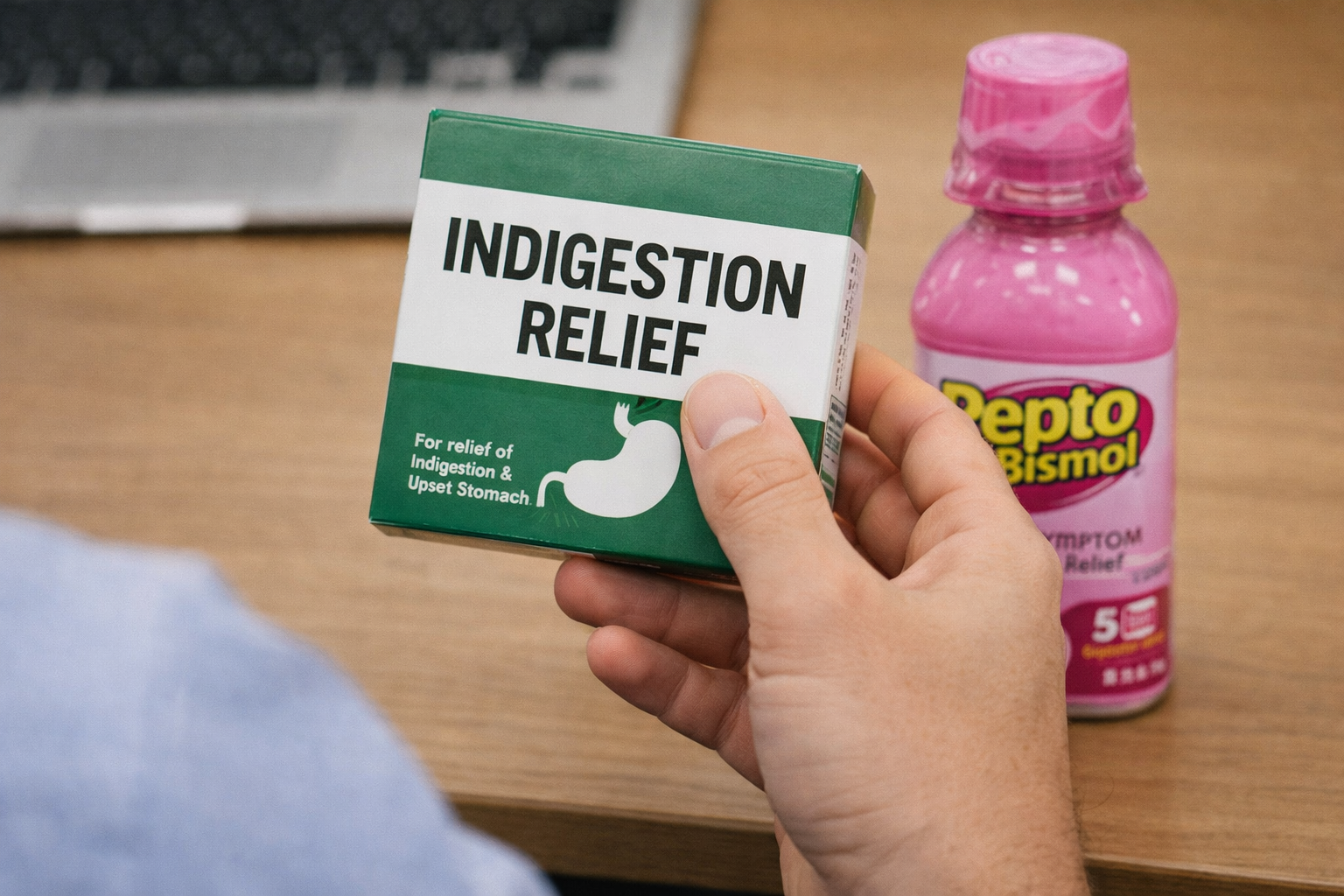
Why Early Stomach Cancer Can Look Like Simple Indigestion
Minjin Park
·
Most people do not panic when they feel bloated after a meal. A little discomfort, mild nausea, early fullness, or a burning sensation in the upper abdomen usually gets dismissed as indigestion. In many cases, that is exactly what it is. People eat too fast, drink too much coffee, skip meals, eat late at night, or deal with stress, and the stomach pushes back.
The problem is that early stomach cancer can sometimes begin with symptoms that look almost identical.
That is one reason stomach cancer is so tricky in its early stages. It does not always announce itself with dramatic warning signs. Instead, it can blend into ordinary digestive complaints that millions of people experience from time to time. Because the symptoms feel common and familiar, they are easy to ignore, rationalize, or treat with over-the-counter remedies.
So why does this happen? Why can something as serious as early gastric cancer look so much like a routine stomach problem?
The answer lies in how the stomach works, how early cancer develops, and how the body interprets irritation inside the digestive tract. Early stomach cancer often affects the same part of the body and the same digestive functions involved in ordinary gastritis, acid irritation, and functional dyspepsia. As a result, the symptoms can overlap in ways that are frustratingly subtle.
The stomach does not have a dramatic “alarm system”
One important reason early stomach cancer can resemble indigestion is that the stomach is not especially good at producing precise, location-specific pain signals in the early phase of disease.
When something starts going wrong in the stomach lining, the body may not interpret it as a sharp emergency. Instead, it often produces vague upper abdominal discomfort, fullness, pressure, or mild burning. These are broad digestive sensations, not highly specific ones.
That means many different problems can feel similar, including:
overeating
gastritis
acid irritation
peptic ulcer disease
delayed gastric emptying
functional dyspepsia
early stomach cancer
From the body’s perspective, these conditions can all interfere with digestion, irritate the lining, or alter normal stomach movement. The sensation that comes back to the brain is often a generic message: something feels off in the upper abdomen.
That is why a person with early stomach cancer may honestly believe they just have a sensitive stomach.
Early stomach cancer often begins in the lining
In its earliest stage, stomach cancer is usually limited to the inner layers of the stomach wall, especially the mucosa. At that point, it may not yet have grown deeply enough to cause severe pain, obstruction, or dramatic bleeding.
That detail matters.
When a disease remains superficial, symptoms can stay mild. The stomach may still function reasonably well, at least on the surface. There may be no obvious mass that a person can feel, no severe vomiting, and no intense pain that clearly says something is seriously wrong. Instead, the early lesion may cause small changes such as subtle inflammation, minor irritation, or altered digestion after meals.
This can lead to symptoms like:
persistent bloating
an uncomfortably full feeling after eating only a little
mild upper abdominal discomfort
nausea
reduced appetite
vague indigestion that keeps returning
Those are exactly the kinds of symptoms people often attribute to stress, irregular eating, aging, or “something I ate.”
Indigestion itself is a symptom, not a diagnosis
Another reason for confusion is that “indigestion” is not a single disease. It is a broad umbrella term people use to describe a cluster of upper digestive symptoms.
When someone says they have indigestion, they may mean:
heaviness after meals
burping
bloating
upper abdominal discomfort
acid-like burning
nausea
early satiety
general stomach unease
Because the word is so broad, it can hide many possible causes. Some are harmless and temporary. Others need medical evaluation. In everyday life, people use the word casually, which makes it easy to underestimate persistent symptoms.
This is why early stomach cancer can hide inside the label of indigestion. It does not have to mimic one specific stomach illness. It only needs to create enough upper gastrointestinal discomfort to be mistaken for a familiar digestive complaint.
The overlap with gastritis is especially strong
Stomach cancer and gastritis can look similar at first because both involve the stomach lining.
Gastritis refers to inflammation of the stomach lining, often related to Helicobacter pylori infection, alcohol use, certain medications, stress, bile reflux, or other irritants. Common symptoms include nausea, upper abdominal pain, bloating, and loss of appetite. Early stomach cancer may produce a surprisingly similar symptom pattern.
This overlap is not accidental. Both conditions can affect the mucosal surface and interfere with how the stomach responds to food, acid, and stretching. In both cases, eating may trigger discomfort. In both cases, symptoms can be intermittent rather than constant. In both cases, the person may still be able to continue daily life without major disruption.
Sometimes there is another layer to the story: chronic inflammation, especially from Helicobacter pylori, can contribute over time to changes in the stomach lining that increase the risk of gastric cancer. So in some people, the path from chronic stomach irritation to more serious disease is not conceptually separate. It exists along a continuum.
That makes self-diagnosis even harder.
Early satiety is easy to dismiss
One classic but easily overlooked symptom in stomach disorders is early satiety, meaning feeling full after eating a small amount.
People often explain this away. They assume they are tired, stressed, dieting unintentionally, or just not as hungry as usual. But when this symptom persists, it deserves attention. If the stomach lining is irritated or if the normal expansion and movement of the stomach is subtly affected, a person may feel full sooner than expected.
This can happen in many benign conditions too, which is exactly why it gets ignored. Yet persistent early fullness, especially when it is new or worsening, can be one of those quiet signs that should not be brushed aside.
What makes it misleading is that it does not feel dangerous. It feels almost ordinary. A person may even think, “Maybe I am just eating less lately.” But when that pattern continues for weeks, especially alongside bloating or discomfort, it becomes more meaningful.
Human behavior plays a major role
The stomach is one of the easiest body parts to excuse.
Headaches, chest pain, and sudden neurological symptoms tend to alarm people quickly. Stomach symptoms do not. Most adults have experienced indigestion many times in their lives, so they build a habit of normalizing it. They think in familiar explanations:
I ate too late
I drank too much coffee
It is stress
It is spicy food
My stomach has always been weak
I just need medicine from the pharmacy
This habit is understandable. Most indigestion truly is not cancer. But this same familiarity creates a blind spot. When symptoms are repetitive, persistent, or slightly different from a person’s normal pattern, they may still get treated as routine.
That is one reason early stomach cancer can stay unnoticed. Not because the body gives no signals at all, but because the signals are socially and psychologically easy to downgrade.
The symptoms may be mild for a long time
Many people assume cancer always causes severe symptoms from the beginning. That assumption is one of the most dangerous myths in medicine.
Early cancers can be quiet. Some cause symptoms so mild that they barely interrupt daily life. A person can continue working, eating, commuting, and socializing while carrying a disease that is slowly progressing. In stomach cancer, this may mean intermittent discomfort that comes and goes, rather than a dramatic downward spiral at the start.
That mildness creates delay. People wait to see if symptoms improve. They experiment with diet changes, antacids, herbal teas, or meal timing. Sometimes the symptoms do fluctuate, which gives false reassurance. A better day or week may make the problem seem resolved when it is not.
This on-and-off pattern is one reason the phrase “it just felt like indigestion” appears so often in stories of later diagnosis.
Alarm signs usually appear later
The symptoms that most people associate with serious stomach disease tend to appear later, not earlier.
These may include:
significant unintentional weight loss
repeated vomiting
vomiting blood
black stools from bleeding
worsening anemia-related fatigue
difficulty swallowing
severe persistent abdominal pain
When these signs show up, people are more likely to seek urgent evaluation. But in early disease, those obvious alarms may be absent. The body may only send softer signals at first. That is the core reason for confusion.
In other words, early stomach cancer can look like indigestion precisely because it has not yet evolved into the kind of disease that produces unmistakable red flags.
The role of Helicobacter pylori and long-term stomach changes
There is also a biological background that helps explain why early stomach cancer can feel like a chronic stomach issue rather than a sudden crisis.
In some cases, stomach cancer develops in a stomach environment that has already been abnormal for years. Helicobacter pylori infection, chronic gastritis, atrophic changes, and intestinal metaplasia can create a long-term setting of irritation and altered digestion. If a person already has a history of stomach discomfort, new symptoms may not stand out clearly. They may feel like a continuation of the same old problem.
This can blur the transition from benign-seeming symptoms to something more serious. A person with years of recurring gastritis-type discomfort may not realize that the pattern has changed in an important way. They may continue treating it as “my usual stomach trouble.”
That is why people with chronic digestive symptoms should pay attention not only to whether symptoms exist, but whether they are changing in frequency, intensity, or character.
So when is “indigestion” no longer just indigestion?
This is the practical question that matters most.
Occasional indigestion after a heavy or spicy meal is common. Persistent or repeatedly returning upper digestive symptoms are a different story. The concern rises when symptoms do not resolve, keep recurring, or begin to affect appetite, meal size, weight, or energy.
Warning patterns that deserve medical attention include:
indigestion that persists for weeks
symptoms that return again and again despite treatment
new early fullness after small meals
reduced appetite without a clear reason
unexplained weight loss
black stools or any sign of bleeding
ongoing nausea
anemia or unusual fatigue
symptoms beginning later in life when they are new for that person
a personal history of chronic gastritis, ulcers, or Helicobacter pylori infection
None of these automatically means cancer. In fact, many people with these symptoms will turn out to have other conditions. But they are important because they move the conversation from casual symptom management to proper evaluation.
Why endoscopy matters
The reason persistent indigestion-like symptoms should not be ignored is simple: the stomach cannot be reliably assessed from symptoms alone.
Many upper digestive conditions overlap too much. Acid irritation, ulcers, gastritis, functional dyspepsia, and early cancer can all create similar complaints. Endoscopy is valuable because it allows direct visualization of the stomach lining and, when needed, biopsy of suspicious areas.
That is a major difference between guessing and knowing.
Especially in places where stomach cancer screening is more common, early detection through endoscopy can make a huge difference. The earlier gastric cancer is found, the better the treatment options and outcomes tend to be. That is exactly why subtle symptoms deserve respect.
The deeper lesson
The bigger lesson is not that every episode of indigestion is dangerous. It is that familiarity can be misleading.
Common symptoms are common for a reason. They usually come from common causes. But serious disease does not always arrive in an obvious costume. Sometimes it borrows the appearance of something ordinary. Early stomach cancer can resemble indigestion because it begins quietly, often in the stomach lining, and disrupts digestion in vague, non-specific ways. The body responds with sensations people already know: bloating, upper abdominal discomfort, fullness, nausea, appetite change.
That overlap is real. It is biological, not imaginary. But it is also exactly why persistence matters more than drama. A symptom does not need to be severe to deserve attention. Sometimes the most important warning sign is not intensity, but repetition.
Final thoughts
Early stomach cancer can look like simple indigestion because the stomach has a limited way of expressing distress, early disease may stay superficial for some time, and the resulting symptoms overlap heavily with common digestive problems. Mild discomfort, bloating, early fullness, and vague nausea are easy to dismiss because they belong to everyday life.
That is what makes them dangerous when they linger.
The key is not to panic over every stomach complaint. The key is to notice patterns. Symptoms that persist, recur, or gradually worsen should not be endlessly self-explained. When the stomach keeps sending the same signal, it is worth asking why.
Sometimes it is just indigestion. Sometimes it is gastritis. Sometimes it is an ulcer. And sometimes the body is asking for a closer look before the problem grows harder to ignore.
Hi, I’m the creator and editor behind ZestyHabit. I research everyday safety, first aid, and practical wellness topics using official guidance and reliable public sources, then turn that information into clear, realistic steps for daily life.
My goal is to help readers make safer, better-informed choices at home and beyond.