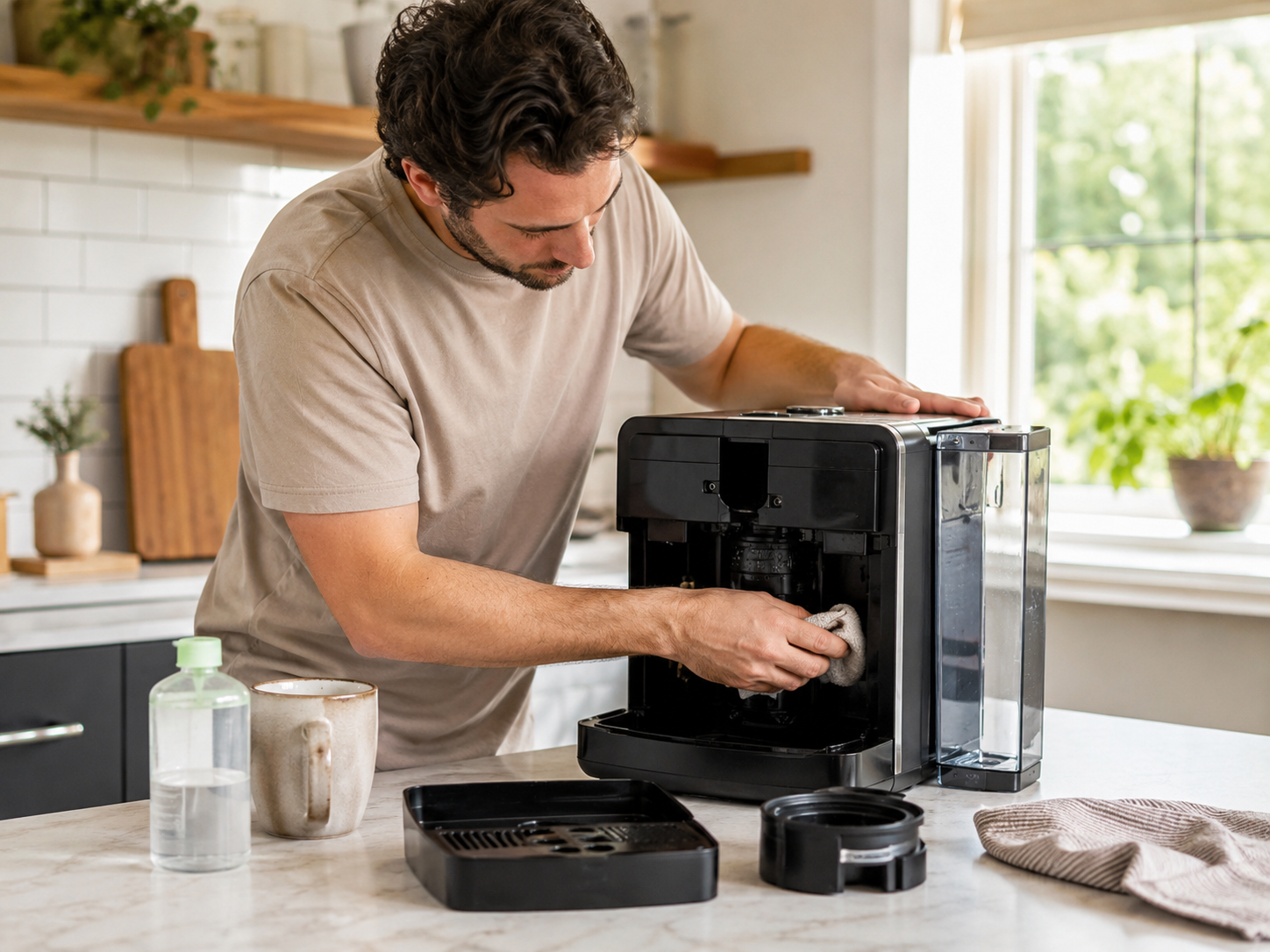
The Hygiene Problem Hiding Inside a Coffee Machine You Keep Meaning to Clean
Minjin Park
·
Putting off coffee machine cleaning can lead to old coffee oils, mineral buildup, mold, and bacteria in places you do not see. Here is why the habit matters and how to keep it manageable.
Most people do not ignore their coffee machine because they are careless.
They ignore it because mornings are busy, coffee is urgent, and the machine looks mostly fine from the outside. You pour water in, add coffee, press a button, and get on with the day. The used grounds get tossed. Maybe the carafe gets rinsed. Good enough, right?
For a while, yes. Sort of.
The problem is that coffee machines are warm, damp, and full of tiny parts that are easy to forget. Water sits in reservoirs. Coffee oils cling to baskets and internal tubes. Grounds get trapped in corners. Steam creates moisture around lids, seals, and drip trays. If the machine is used every day but cleaned only “when it looks dirty,” there may already be buildup long before anything looks dramatic.
And the slightly gross part is this: the areas that need cleaning most are often the ones you barely notice.
Coffee Machines Are Basically Moisture Machines
A coffee maker handles water every single day. That alone makes hygiene worth thinking about.
Moisture is not automatically a problem. A clean, well-drained machine is fine. But when water sits too long, especially in a dark reservoir or drip tray, it can become a comfortable place for microbes to grow. Add warmth from brewing, a few leftover coffee particles, and a busy household that forgets to empty things, and you have the kind of environment that quietly gets unpleasant.
This can happen with drip coffee makers, single-serve pod machines, espresso machines, French press setups, and even fancy automatic machines that look sleek enough to belong in a hotel lobby.
The machine may still make coffee. That is part of why people delay cleaning. It does not refuse to work just because the water tank is slimy at the edges or the drip tray has been sitting there since Tuesday.
It keeps going. Unfortunately.
The Water Reservoir Is Easy to Forget
The water reservoir is one of the most overlooked parts of a coffee machine.
It seems harmless because it only holds water. No coffee grounds, no milk, no sugar. But water reservoirs are often dark, covered, and not fully dried between uses. If you keep topping it off instead of emptying and rinsing it, older water can remain at the bottom for days.
That faint slippery feeling on plastic? That can be biofilm, a thin layer where microorganisms can settle and cling. It is not something most of us want involved in our morning coffee.
A simple habit helps: empty leftover water at the end of the day, rinse the tank, and let it air-dry when possible. You do not need to turn your kitchen into a lab. Just do not let the reservoir become a permanent little pond.
Old Coffee Oils Can Turn Rancid
Coffee contains oils. They give coffee body and aroma, which is lovely in the cup and less lovely when they sit on machine parts for too long.
Those oils cling to brew baskets, filters, carafes, grinder parts, portafilters, and internal surfaces. Over time, they can turn stale and bitter. If your coffee has started tasting flat, sour, burnt, or oddly dirty even though you bought decent beans, the beans may not be the problem.
It might be yesterday’s coffee. Or last week’s coffee. Or, let’s be honest, coffee residue from a month ago.
This is especially noticeable in reusable filters and espresso machine parts. A quick rinse may remove loose grounds, but it often leaves oil behind. That residue builds layer by layer until fresh coffee has to pass through old flavors before reaching your cup.
Not exactly the bright morning ritual people imagine.
The Drip Tray Is Usually Worse Than It Looks
If your machine has a drip tray, it deserves more respect than it gets.
Drip trays catch coffee, water, milk splashes, and tiny bits of grounds. They sit at room temperature. They often have grooves and corners. They are also very easy to ignore because the grate hides what is underneath.
Then one day you pull it out and immediately regret all your life choices.
A neglected drip tray can smell sour or musty. It may develop a film, stains, or even visible mold in bad cases. Machines that use milk, like espresso machines with steam wands or automatic cappuccino systems, can be especially unpleasant if the drip tray is not cleaned often.
Emptying and rinsing the drip tray takes less than a minute. The trick is making it automatic. If you wait until it is full, you have already waited too long.
Mold Can Grow in Hidden Spots
Mold needs moisture, a food source, and time. Coffee machines can offer all three.
Tiny coffee particles can lodge in seals, baskets, pods holders, and corners. Dampness can stay in the reservoir, tubing, drip tray, or around the lid. If the machine sits unused for a few days with moisture inside, mold has a chance to settle in.
This is not meant to make you suspicious of every cup of coffee. Most machines can be kept clean with ordinary care. But if you notice black specks, fuzzy spots, a musty smell, or slimy residue, do not ignore it.
Mold in a coffee machine is not just a visual problem. It suggests the machine has been staying damp and dirty enough for growth to happen. Cleaning the visible spot is only part of the fix. The machine also needs to dry better and be cleaned more regularly.
Mineral Buildup Is a Hygiene Issue Too
When people hear “descale your coffee maker,” they often think it is only about performance. And yes, mineral buildup can slow brewing, clog lines, and make coffee taste off.
But scale also creates rough surfaces where residue can cling more easily. Minerals from hard water can build up inside the machine, especially in heating elements and internal pathways. Once those surfaces become crusty, coffee oils and other debris may stick more stubbornly.
If you live somewhere with hard water, this can happen faster than you expect. Many U.S. households deal with hard water, and coffee machines are one of those appliances that quietly show it.
Signs you may need descaling include slower brewing, louder operation, less steam pressure, odd-tasting coffee, or a machine that seems to be working harder than usual.
A descaling routine does not have to be complicated. Follow your machine’s manual, use the recommended descaling solution or method, and rinse thoroughly afterward. The important thing is not waiting until the machine sounds like it is struggling through a marathon.
Milk Systems Need Extra Attention
If your coffee routine involves milk, the hygiene stakes go up.
Steam wands, frothing pitchers, milk tubes, automatic frothers, and built-in milk containers can become dirty quickly. Milk residue spoils faster than coffee residue. It can dry into crusty layers, sour inside tubes, and create odors that are hard to ignore once they start.
A steam wand should be wiped and purged right after use, not later in the day. Milk containers should be emptied, rinsed, and refrigerated or cleaned according to the machine instructions. Tubes and frother parts need regular washing because milk can hide inside them.
This is the part where a lot of people say, “But I only make one latte in the morning.”
That one latte still leaves milk behind.
Milk residue does not care whether your drink was small, organic, oat-based, dairy-based, or made with a very cute mug. It still needs cleaning.
Single-Serve Machines Are Not Self-Cleaning
Pod machines can feel cleaner because the coffee is contained in a capsule. There are fewer loose grounds, less measuring, and no messy filter basket.
But pod machines still need cleaning.
Water reservoirs still hold water. Needles and pod holders can collect residue. Drip trays still catch spills. Internal lines still need descaling. Used pods can leak a little after brewing, leaving coffee behind in the holder or bin.
The convenience can actually make cleaning easier to forget. Since the machine looks neat, people assume there is not much going on inside.
A quick daily wipe, regular emptying of the pod bin, washing the drip tray, and scheduled descaling can keep these machines much fresher.
A Dirty Machine Can Change the Taste of Your Coffee
This is usually the first thing people notice, even before hygiene concerns.
Coffee from a neglected machine can taste bitter, stale, metallic, sour, or muddy. Sometimes people blame the roast, the water, or their own brewing skills. Those can matter, of course. But a dirty machine can ruin good coffee with impressive efficiency.
Old oils add bitterness. Mineral buildup changes extraction. Mold or bacterial growth can create unpleasant odors. A dirty carafe can make even fresh coffee taste like it has been sitting in a break room since 2007.
Cleaning is not just about avoiding something gross. It is also about letting the coffee taste like itself.
A clean machine makes average coffee better. A dirty machine makes good coffee disappointing.
The “I’ll Clean It This Weekend” Trap
Coffee machine cleaning is the kind of chore that sounds easy to postpone because it is not visible all the time.
You notice the drip tray needs attention, but you are already late. You see water stains in the reservoir, but coffee is brewing. You remember descaling when the machine sputters, then forget as soon as caffeine enters your bloodstream.
This is how small maintenance becomes a bigger job.
Rinse the removable basket after each use. Empty the drip tray before it gets full. Leave the reservoir open to dry when you can. Wash the carafe daily. Descale monthly or according to your water hardness and machine instructions.
Small cleaning is much less annoying than rescue cleaning.
What Should Be Cleaned Daily?
Daily cleaning does not need to be intense. It just needs to remove moisture and fresh residue before they sit too long.
For a regular drip coffee maker, wash the carafe and filter basket with warm, soapy water. Rinse well. Leave the lid open so parts can dry. Toss used grounds promptly because damp grounds can mold quickly.
For a pod machine, empty used pods, rinse the drip tray if needed, wipe around the pod holder, and avoid letting water sit in the reservoir for days.
For an espresso machine, wipe the steam wand immediately after use, purge it, rinse the portafilter, knock out the puck, and clean the drip tray. If you use a milk frother, clean it the same day. Not eventually. Same day.
It sounds like a lot written out, but most of it takes seconds when done right away.
What Needs Weekly Attention?
Once a week, give the machine a slightly deeper reset.
Wash removable parts more thoroughly. Check corners, lids, seals, and trays. Look under grates. Wipe the outside and the warming plate if your machine has one. Clean reusable filters well enough to remove oily residue, not just visible grounds.
If your machine has a grinder, brush out old grounds. Coffee grounds left inside a grinder can go stale and affect flavor. Oily beans can leave residue on burrs or blades, depending on the grinder type.
This is also a good time to smell the machine. That may sound odd, but it works. A clean coffee machine should not smell sour, musty, or old when it is empty. If it does, something needs attention.
Descaling: The Chore People Avoid Most
Descaling is the maintenance step many people skip because it feels technical.
It is not that bad.
Descaling removes mineral deposits from inside the machine. How often you need it depends on your water, your machine, and how often you brew. Some machines have a light that tells you. Others rely on you remembering, which is bold of them.
Using filtered water can reduce mineral buildup, but it does not eliminate the need for cleaning. Follow your manual because machines vary. Some brands recommend specific solutions. Some warn against vinegar. Some require several rinse cycles afterward.
The main thing is to do it before the machine slows down badly or coffee starts tasting strange. Once scale builds up heavily, cleaning may take longer and the machine may not recover fully.
When to Be More Cautious
A little residue is normal in a well-used appliance. But certain signs mean you should take cleaning more seriously.
If you see visible mold, stop using the machine until it is properly cleaned. If mold is inside parts you cannot access, contact the manufacturer or consider replacing the machine.
If the water reservoir feels slimy even after washing, clean it more thoroughly and let it dry completely. If the machine smells musty after cleaning, hidden areas may still be contaminated.
If someone in your home has a weakened immune system, asthma, or significant mold sensitivity, it is worth being stricter with cleaning and drying routines. For some households, replacing an old, hard-to-clean machine may be the more sensible choice.
A coffee machine should make mornings easier, not become a mystery appliance with questionable biology.
A Simple Cleaning Rhythm That Actually Fits Real Life
Here is a realistic rhythm, not a perfect-person fantasy.
After brewing, toss the grounds or pod. Rinse the basket or holder. Leave parts open to dry.
At the end of the day, empty leftover water if it has been sitting. Wash the carafe or cup area. Check the drip tray.
Once a week, wash removable parts properly and wipe the machine. Look for buildup in corners.
Once a month, or as your machine recommends, descale.
That is enough for most people to stay ahead of the gross stuff. The key is drying. Clean and damp is better than dirty and damp, but clean and dry is what you really want.
Do Not Forget the Office Coffee Machine
Home machines are not the only ones with hygiene issues.
Office coffee machines can be worse because everyone uses them and no one feels fully responsible for them. The drip tray fills. The water tank gets topped off forever. The pod bin becomes a sad little archive. The milk frother, if there is one, lives a complicated life.
If you use a shared machine, it is fair to be a little cautious. Rinse your own mug. Check the drip tray before brewing. Avoid using milk systems that look neglected. If there is visible grime, say something or clean what you can safely clean.
Nobody wants to be the office coffee police, but nobody wants mystery coffee either.
Final Thoughts
Putting off coffee machine cleaning is an easy habit to fall into because the machine keeps working even when it needs attention. But warm moisture, old coffee oils, mineral buildup, and hidden residue can create real hygiene problems over time.
The fix does not have to be dramatic. A few small routines can keep the machine cleaner, the coffee better-tasting, and the whole morning ritual a little less questionable.
Empty what sits. Wash what touches coffee. Dry what holds water. Descale before the machine complains.
That is the quiet little rule. Your coffee will taste better for it, and your kitchen will feel cleaner in a way you may not notice until the old stale smell is gone.
Hi, I’m the creator and editor behind ZestyHabit. I research everyday safety, first aid, and practical wellness topics using official guidance and reliable public sources, then turn that information into clear, realistic steps for daily life.
My goal is to help readers make safer, better-informed choices at home and beyond.