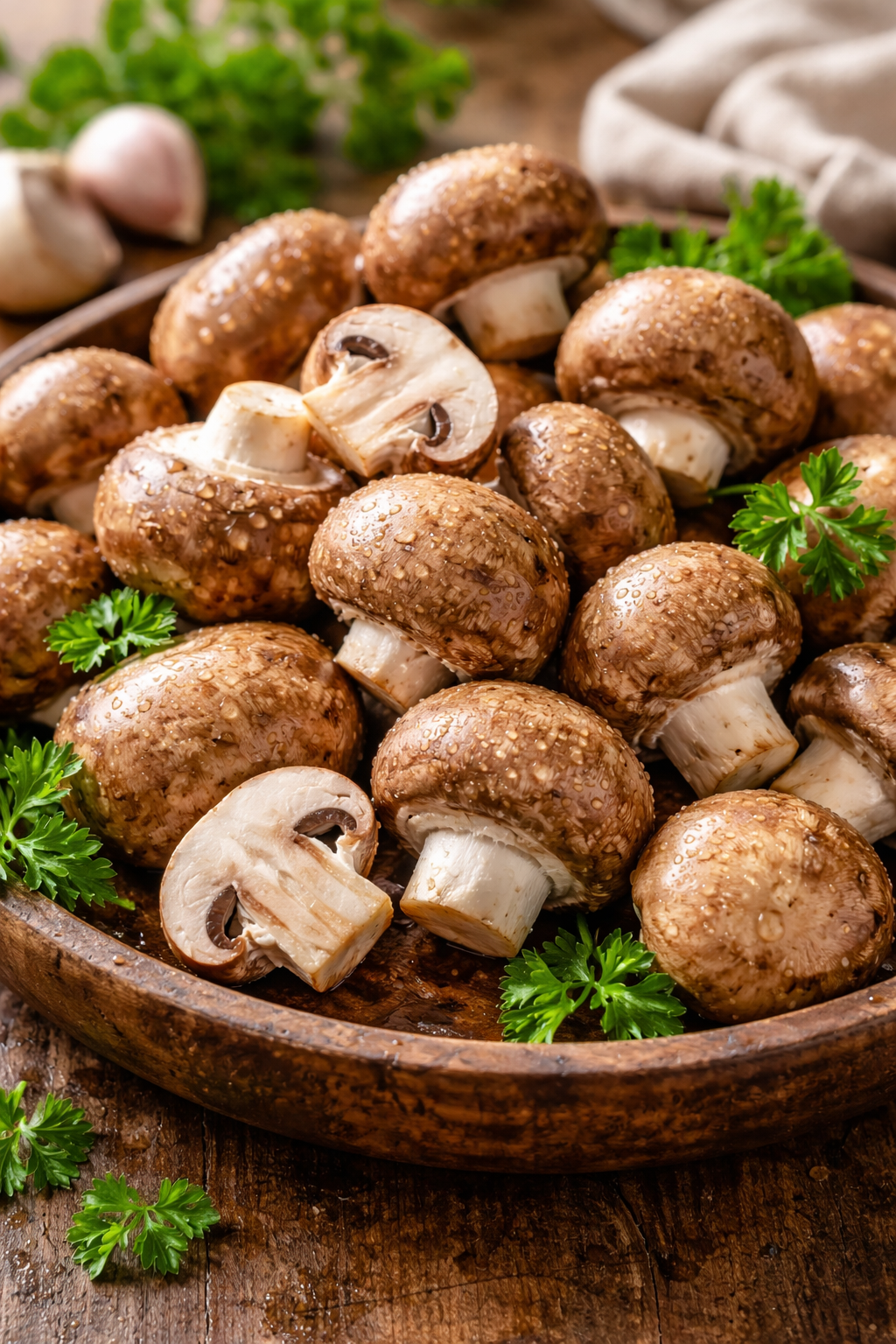
Mushroom Nutrition Facts and Why People Eat Them So Often Like Vegetables
Minjin Park
·
Mushrooms are one of the most interesting foods in the kitchen because they do not fit neatly into the way most people think about produce. Botanically, they are fungi, not vegetables. But in everyday cooking, they are used almost exactly like vegetables: tossed into soups, stir-fries, pasta, omelets, rice bowls, stews, salads, and side dishes. USDA food-pattern work also groups mushrooms with the vegetable group, specifically under “other vegetables,” and modeling research using USDA food patterns treats a serving of mushrooms as a vegetable addition.
That everyday treatment is not just about habit. Mushrooms are low in calories and fat, provide fiber and several micronutrients, and bring something many vegetables do not bring in the same way: deep savory flavor. Harvard notes that all varieties of mushrooms are low in calories and fat and contain modest amounts of fiber and various nutrients. Research modeling a serving of mushrooms into USDA food patterns found increases in fiber, copper, potassium, selenium, riboflavin, niacin, and other nutrients without increasing energy, sodium, or fat in a meaningful way.
That combination helps explain why mushrooms are eaten so often like vegetables. They work like vegetables on the plate, but they also contribute a more savory, almost meaty character that makes meals feel fuller and more satisfying. So if you have ever wondered why mushrooms appear in so many vegetable-heavy dishes, the answer is simple: they sit at a very useful intersection of nutrition, flavor, texture, and convenience.
One reason mushrooms are so widely used is that they fit well into the kind of nutrient-dense eating pattern many people are aiming for. In general, common edible mushrooms are low in calories, naturally low in fat, and provide a mix of B vitamins and minerals. UConn Extension describes mushrooms as low in fat and calories and good sources of B vitamins such as riboflavin and niacin, along with minerals such as selenium, copper, and potassium. Harvard’s overview says much the same in broader terms.
A helpful way to think about mushroom nutrition is that they are not usually eaten for one “hero nutrient” alone. Instead, they are valued for a package of traits:
low calorie density
modest fiber
B vitamins such as riboflavin and niacin
minerals such as copper, potassium, and selenium
in some cases, vitamin D if UV-exposed
This package makes them easy to add to meals without making the meal heavy. That is one of the biggest reasons they behave like vegetables in actual diets: they expand volume, add texture, and improve flavor while keeping the nutrition profile light.
Basic Mushroom Nutrition Facts
Nutrition varies somewhat by variety, but the broad pattern is very consistent. Mushrooms are low in calories and fat, and they offer useful micronutrients. One USDA-based mushroom analysis cited by the Mushroom Council found that adding one serving of mushrooms to typical diets increased fiber by about 5% to 6%, potassium by about 12% to 14%, selenium by about 13% to 14%, riboflavin by about 13% to 15%, and niacin by about 13% to 14%, again with little effect on calories, fat, or sodium.
That is exactly the kind of nutrition profile that makes a food easy to recommend often. A food does not need to be high in protein or packed with calories to matter. Sometimes its value is that it quietly improves overall diet quality. Mushrooms do that well. They can add micronutrients and culinary satisfaction at the same time, which is a big reason they keep showing up in everyday meals.
Mushrooms Are Fungi, but They Function Like Vegetables in Meals
This is where the mushroom story gets especially interesting. Biologically, mushrooms are fungi. But nutritionally and culinarily, they are often handled more like vegetables. USDA food-pattern materials place them in the vegetable group, and MyPlate recipes routinely use mushrooms alongside peppers, onions, and other vegetables as toppings or mix-ins.
That classification makes sense in real life. Most people do not eat mushrooms the way they eat meat, beans, or grains. They use mushrooms to bulk up dishes, add color and texture, and create variety on the plate. In that sense, mushrooms behave much more like vegetables than anything else.
At the same time, they also have traits that make them stand out from most vegetables. Harvard highlights mushrooms’ umami flavor and even recommends using chopped mushrooms to replace about one-quarter to one-half of the meat in some recipes. That is unusual for something commonly grouped with vegetables.
So mushrooms sit in a unique place: officially grouped with vegetables in dietary patterns, but flavor-wise capable of doing some of the work that meat usually does.
The Umami Factor Is a Huge Reason People Eat Them So Often
If there is one reason mushrooms get eaten again and again, it is umami.
Harvard describes mushrooms as umami-rich and notes that this savory quality can make them a great replacement for beef in some dishes. In another Harvard resource, mushrooms are described as packed with flavor because of their high concentration of glutamic acid, which contributes to the savory, brothy, meaty taste people associate with umami.
This matters a lot in everyday cooking. Many vegetables are mild, fresh, sweet, or bitter. Mushrooms bring something else: depth. They make soups taste richer, sauces taste fuller, and stir-fries taste more complete. That gives them a role that goes beyond basic nutrition.
It also explains why people often use mushrooms in meals even when they are not trying to eat vegetarian. Mushrooms add “savory satisfaction” in a way that carrots, zucchini, or lettuce generally do not. That makes them unusually useful in mixed dishes, especially when someone wants more vegetables on the plate without making the meal feel less satisfying.
Their Texture Makes Them Feel More Substantial Than Many Vegetables
Texture is another big reason mushrooms are treated almost like a staple vegetable.
Many vegetables soften quickly or disappear into a dish. Mushrooms, by contrast, can stay pleasantly chewy, juicy, or meaty depending on how they are cooked. Harvard specifically refers to their “meaty” texture in plant-forward cooking. That texture makes them more filling-feeling than many lighter vegetables, even though their calorie load remains low.
This is especially helpful in dishes such as:
stir-fries
pasta sauces
omelets
grain bowls
soups and stews
tacos and burgers using blended meat-and-mushroom mixtures
That is a major reason mushrooms are eaten frequently. They make vegetable-heavy meals feel less flat. They add body.
Mushrooms Make Vegetable-Heavy Meals Easier to Enjoy
One overlooked reason mushrooms are so common is that they help people enjoy healthier meals more.
A common challenge with eating more vegetables is that vegetable-forward meals can feel too light or too repetitive if they rely only on watery or sweet vegetables. Mushrooms help solve that problem. Their umami flavor and satisfying texture give more substance to plant-forward eating. Harvard’s “hearty and savory plant-based” guidance specifically points to mushrooms as a beef replacement because of their flavor and texture.
This is why mushrooms are often used by people trying to reduce meat without giving up richness. They can be mixed into sauces, burgers, soups, or grain dishes and still make the meal feel deeply savory. That makes them more likely to be eaten regularly, not just occasionally.
They Are Low in Calories, Which Helps Explain Their Popularity
Another practical reason people eat mushrooms so often like vegetables is that they fit well into lighter eating patterns. They add bulk and flavor without adding many calories. Harvard describes them as low in calories and fat, and the USDA diet-modeling study found that adding mushrooms improved several nutrient intakes with essentially no impact on energy, fat, or sodium.
That makes mushrooms very attractive in:
weight-conscious meals
high-volume, lower-calorie cooking
meal prep
soups and stir-fries
pasta dishes where part of the meat is replaced
side dishes where the goal is more flavor without much heaviness
This is the same reason many people casually start treating mushrooms like a standard vegetable ingredient. They are easy to add and rarely make a dish feel “too much.”
Mushrooms Can Also Contribute Vitamin D in Some Cases
One especially unusual thing about mushrooms is vitamin D. NIH’s vitamin D fact sheet notes that some mushrooms on the market are treated with UV light to increase their vitamin D2 content. UConn Extension likewise notes that the vitamin D content of mushrooms varies widely and depends on UV exposure, and packages may be labeled as UV-treated or rich in vitamin D.
This does not mean every mushroom container is a vitamin D powerhouse. But it does make mushrooms nutritionally distinctive compared with most items in the produce section. In fact, some extension sources describe mushrooms as the only food in the produce aisle that can provide vitamin D in this way.
That uniqueness adds to their appeal. Even when people are mostly eating mushrooms for flavor, they are also getting a food that can contribute useful nutrients in a way many vegetables cannot.
They Pair Easily With Almost Everything
Another reason mushrooms are eaten so often is pure kitchen practicality. They go with almost everything.
Mushrooms work with eggs, rice, noodles, chicken, beef, tofu, seafood, beans, butter, olive oil, soy sauce, garlic, onions, herbs, cream sauces, tomato sauces, and broths. Harvard’s mushroom recipes range from stroganoff-style dishes to soups to meat-replacing applications, which shows how flexible they are across cooking styles.
That kind of flexibility turns a food into a regular habit. Foods people only know how to use in one recipe tend to stay occasional. Foods that slip easily into breakfast, lunch, dinner, and sides become everyday foods. Mushrooms clearly fall into the second category.
They Help Stretch More Expensive Ingredients
This is a very practical but important point: mushrooms can help extend other ingredients.
Because of their savory flavor and substantial texture, mushrooms are often used to stretch meat in burgers, meat sauces, taco fillings, and stews. Harvard explicitly recommends replacing about a quarter to half of the meat in some recipes with chopped mushrooms.
That works economically and nutritionally. A dish can become lighter, less meat-heavy, and more vegetable-rich without losing flavor. This is another reason mushrooms are often eaten “like vegetables.” They are one of the few vegetable-group foods that can help carry the savory burden of the dish.
Why People Often Forget Mushrooms Are Not Actually Vegetables
Because mushrooms are cooked and eaten so similarly to vegetables, many people simply stop thinking about the botanical distinction. In the kitchen, the practical identity of a food often matters more than the scientific one.
Mushrooms are sliced into salads, sautéed with onions, added to pasta, mixed into omelets, tossed into pizza toppings, and stirred into soups. MyPlate materials and USDA food-pattern tools reinforce that practical identity by grouping mushrooms with vegetables in eating patterns.
So while “fungi, not vegetables” is technically true, it changes very little about how people use them. On the plate, mushrooms have earned vegetable status through function.
The Real Reason They Are Eaten So Frequently
When you strip the topic down, mushrooms are eaten often like vegetables because they combine four things people want from everyday food:
First, they are nutritionally useful: low in calories and fat, with fiber and micronutrients such as selenium, copper, potassium, riboflavin, and niacin.
Second, they are culinarily powerful: their umami flavor adds savory depth many vegetables cannot provide.
Third, they improve texture: mushrooms make vegetable-heavy dishes feel more substantial and satisfying.
Fourth, they are easy to use: soups, stir-fries, omelets, pasta, sauces, tacos, rice bowls, and burgers all welcome mushrooms naturally.
That is a rare combination. Most foods do one or two of those jobs well. Mushrooms do all four.
Final Thoughts
Mushrooms are one of the easiest foods to understand once you stop trying to force them into a strict category. Scientifically, they are fungi. Nutritionally and culinarily, they are often treated like vegetables because that is how they function best in the diet. USDA food-pattern work places them in the vegetable group, and nutrition sources consistently describe them as low in calories and fat while providing B vitamins, minerals, and, in some cases, vitamin D when UV-exposed.
But the deeper reason people eat mushrooms so often is not classification. It is usefulness. Mushrooms make meals taste richer, feel more satisfying, and stay relatively light. They help people eat more plant-forward meals without giving up savory depth. That is why they keep showing up on plates like vegetables, even though technically they are something else entirely.
FAQ
Are mushrooms vegetables?
Not biologically. Mushrooms are fungi. But in dietary guidance and everyday cooking, they are commonly treated like vegetables and grouped with the vegetable category in USDA food-pattern materials.
Are mushrooms healthy?
Yes, they can be a very nutritious addition to a balanced diet. They are generally low in calories and fat and provide fiber, B vitamins, and minerals such as selenium, copper, and potassium.
Why do mushrooms taste so savory?
Because they are rich in umami compounds. Harvard notes that mushrooms are umami-rich and contain a high concentration of glutamic acid, which contributes to that savory, meaty flavor.
Why are mushrooms often used instead of part of the meat?
Because their umami flavor and meaty texture make them a good partial substitute in burgers, sauces, and other savory dishes. Harvard specifically suggests replacing about one-quarter to one-half of the meat in some recipes with chopped mushrooms.
Do mushrooms contain vitamin D?
Some do. NIH notes that some mushrooms on the market are treated with UV light to increase their vitamin D2 levels, so the amount depends on the product.
As an Amazon Associate I earn from qualifying purchases.
Hi, I’m the creator and editor behind ZestyHabit. I research everyday safety, first aid, and practical wellness topics using official guidance and reliable public sources, then turn that information into clear, realistic steps for daily life.
My goal is to help readers make safer, better-informed choices at home and beyond.