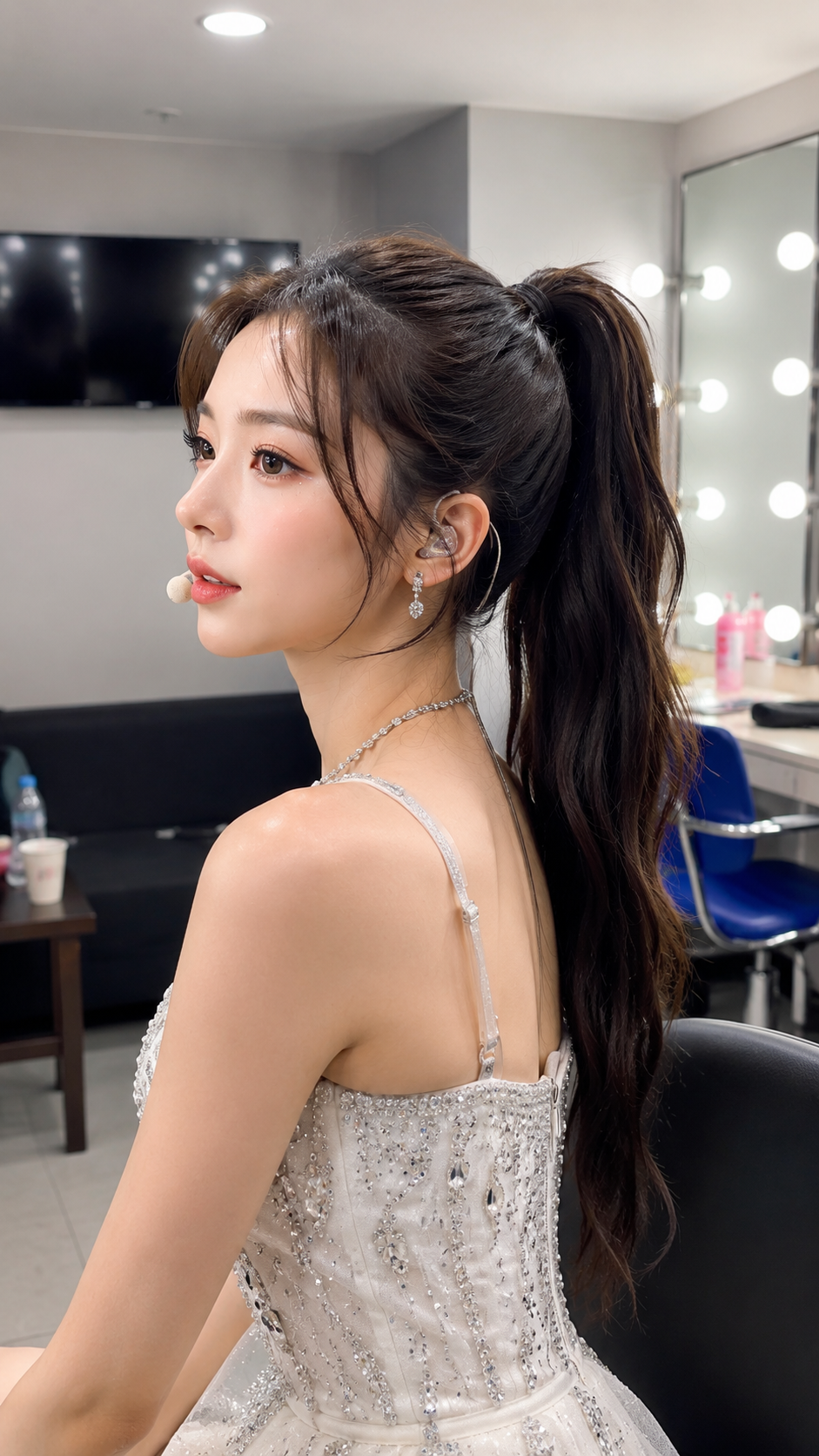
It is quick, clean, practical, and honestly one of the easiest ways to feel like your life is slightly more organized than it actually is. Running late? Ponytail. Working out? Ponytail. Greasy roots? Ponytail. Hot weather? Ponytail. Need to look polished without washing your hair? A low ponytail and hope nobody asks questions.
It is one of those hairstyles we reach for automatically.
But if you wear ponytails often, especially tight ones, your scalp and hair may start to complain. Not always dramatically. Sometimes it starts with a little scalp tenderness. A few broken hairs around the hairline. A dent where the hair tie sits. Frizzier ends. A strange wave in your hair after taking it down.
Then one day you let your hair loose and realize it does not feel quite the same.
Yes, they can. A ponytail is not “bad” by itself, but the way you wear it matters. Tightness, placement, hair tie type, frequency, and whether your hair is wet or dry can all make a difference. The goal is not to give up ponytails forever. That would be unreasonable. The goal is to wear them in a way that does not slowly stress out your scalp and hair.
Because your hair can handle being styled.
It just does not love being pulled into submission every single day.
If you have ever taken down a tight ponytail and felt that weird sore relief on your scalp, you know exactly what I mean.
That tenderness happens because your hair follicles are being pulled in one direction for a long time. Each hair is anchored in the scalp, and when you tie your hair tightly, tension spreads across those follicles. The longer the tension lasts, the more uncomfortable it can feel.
This is why a tight high ponytail may feel fine at first, then start to ache after a few hours.
It is not just “hair pain,” even though it feels like that. Hair itself does not have nerves, but the scalp and follicles around the hair do. When they are pulled for hours, they can become irritated and sore.
Some people are more sensitive than others. If you already have a tender scalp, headaches, thick heavy hair, extensions, or a sensitive hairline, tight ponytails can feel uncomfortable much faster.
And if you ignore that pain often, your scalp may not appreciate it.
Pain is not a styling requirement.
Despite what some childhood ballet buns may have taught us.
The Hairline Takes a Lot of Stress
The front hairline is one of the most vulnerable areas when it comes to tight ponytails.
Those small hairs around the forehead and temples are often finer and more fragile. When you pull them back tightly every day, they can weaken, snap, or thin over time. You may notice short broken pieces around the edges, little flyaways that never seem to grow, or a widening appearance near the temples.
Sometimes people call these “baby hairs,” but not all of them are cute natural baby hairs. Some are breakage.
A sleek ponytail can look beautiful, but if getting that sleek look requires brushing hard, pulling tight, adding gel, and tying the hair with serious force, the hairline may pay for it later.
This is especially true if you wear the same tight ponytail placement every day. The same hairs get pulled in the same direction again and again.
Hair likes variety more than we give it credit for.
Traction Alopecia: When Pulling Causes Hair Loss
This is the part that sounds scary, but it is worth knowing.
Repeated tension on the hair can contribute to a type of hair loss called traction alopecia. This can happen when hairstyles pull on the hair follicles for long periods. Tight ponytails, buns, braids, extensions, and similar styles can all be involved.
At first, traction-related hair loss may be reversible if you reduce the tension early. The scalp may recover, and the hair may grow back. But if the pulling continues for too long, the follicles can become damaged, and hair loss may become harder to reverse.
This does not mean one ponytail will make your hair fall out. Please do not panic over yesterday’s gym hairstyle.
The concern is repeated tight tension over months or years.
Warning signs include scalp tenderness, bumps near the hairline, itching, broken hairs, thinning at the temples, or a receding-looking hairline from constant pulling.
If you notice those signs, it is time to loosen up. Literally.
Ponytails Can Change the Look of Your Hair Texture
Ponytails can also affect how your hair looks after you take it down.
That dent from the hair tie? Very familiar.
Hair ties press into the strands and can temporarily bend the hair. If your hair is straight, you may get a visible crease. If your hair is wavy or curly, the ponytail can stretch out your natural pattern near the roots while leaving the ends more textured. This can make the hair look uneven, flat on top, or oddly shaped.
For some people, ponytails do not permanently change texture, but they can repeatedly disrupt the natural pattern.
Curly and wavy hair can be especially affected because tension stretches the curl pattern. Wearing a tight ponytail often may make curls look looser or less defined in the pulled areas, at least temporarily. If the hair is also dry or damaged, those stretched sections may not bounce back as easily.
Hair texture is not just about genetics. It is also affected by styling habits, heat, friction, moisture, and breakage.
Your ponytail may not change your hair forever, but it can definitely change how it behaves day to day.
Breakage Around the Hair Tie
The place where your hair tie sits can become a breakage zone.
This happens because the elastic creates pressure and friction in the same spot. When you remove the ponytail, the hair tie may pull or snag. If you wrap it tightly, especially with thin elastics, the strands can weaken over time.
You may notice shorter hairs in the middle or back of your ponytail, split ends, or a rougher texture where the elastic usually sits.
Traditional rubber bands are especially harsh. They can grip too strongly and tear the hair. Even regular elastics with metal pieces can snag. If you have fine, bleached, dry, curly, or fragile hair, this can become noticeable faster.
Silk scrunchies, satin scrunchies, spiral hair ties, soft fabric elastics, or seamless ties are usually gentler. They may not create the same super-tight hold, but that is partly the point.
Your hair does not need to be trapped like evidence.
Wet Hair and Ponytails Are a Risky Combination
Wet hair is more fragile than dry hair.
When hair is wet, it stretches more easily and can break more easily. Pulling it into a tight ponytail while wet can stress the strands and scalp. If you then sleep with it, twist it, or keep it tied for hours, the risk of breakage increases.
This is one reason people wake up with frizz, stretched texture, or broken pieces after sleeping in a wet ponytail.
If you need to tie wet hair, keep it loose. Use a soft scrunchie or claw clip. Avoid wrapping the tie several times until your scalp feels lifted. Let the hair dry with some freedom if possible.
A loose braid may be gentler than a tight wet ponytail, depending on your hair type.
But the main idea is simple: wet hair needs patience.
And unfortunately, patience is exactly what most of us do not have after a shower when we are already tired.
High Ponytails vs. Low Ponytails
Placement matters.
A high ponytail often creates more tension because the hair has to be lifted upward and held against gravity. If your hair is long or thick, the weight of the ponytail can pull at the scalp all day. That can lead to soreness, headaches, and stress around the hairline.
A low ponytail usually creates less tension, especially if worn loosely. It lets the hair fall more naturally and does not pull as strongly at the front.
That does not mean high ponytails are forbidden. They are cute. They are fun. They make you feel like you might go jogging even if you absolutely will not.
Just try not to wear a tight high ponytail every day.
Rotate styles. Low ponytail one day, loose braid another day, claw clip another day, hair down when possible. Giving different areas a break helps reduce repeated stress.
The “Slicked-Back” Ponytail Problem
The slicked-back ponytail is everywhere because it looks clean, elegant, and intentional. It is also very convenient on days when your roots are not exactly fresh.
But sleek styles often involve tension.
To get that smooth finish, people brush the hair tightly back, use gel or wax, flatten the hairline, and secure everything firmly. Done occasionally, that is usually fine. Done daily, it can become hard on the scalp and edges.
Another issue is product buildup. Gels, wax sticks, pomades, and sprays can sit on the scalp and hairline. If you do not wash properly, buildup may cause itching, clogged follicles, flakes, or irritation.
If you love sleek ponytails, try making them less aggressive.
Use a softer brush. Do not pull until your eyebrows move. Keep the ponytail secure but not painful. Wash out styling products properly. And give your hairline rest days.
A style can look polished without being painfully tight.
Ponytails and Headaches
Some people get headaches from ponytails.
This can happen because the hairstyle pulls on the scalp for hours. The weight of the hair, especially in a high ponytail, can create tension. If the ponytail is tight, heavy, or placed in the same spot all day, discomfort can spread from the scalp to the head and neck.
If you often get headaches after wearing your hair up, try changing the placement. A lower, looser ponytail may help. So can using a claw clip, loose braid, or half-up style instead of pulling all the hair into one tight point.
Also, take your hair down during breaks.
Your scalp is allowed to breathe. Your ponytail does not need perfect attendance.
How Ponytails Affect Curly and Wavy Hair
Curly and wavy hair can be more prone to shape changes from ponytails.
A tight ponytail can stretch curls at the roots and mid-lengths. The ends may stay curly while the top becomes flat, creating that strange triangle or mushroom situation depending on your hair. Very glamorous. Very confusing.
Hair ties can also disrupt curl clumps and create frizz when removed.
For curly hair, satin or silk scrunchies are often better than tight elastics. Loose pineapple styles can help preserve curls overnight. A claw clip may also be gentler than a tight ponytail.
When taking down a ponytail, do it slowly. Do not yank the tie out. That is how curls become a frizz festival.
A little water, leave-in conditioner, or curl refresher can help bring shape back after wearing hair up.
Curly hair has memory, but sometimes it needs encouragement.
How Ponytails Affect Fine Hair
Fine hair has its own challenges.
It may dent easily, break easily, and look flat after being tied back. A ponytail can make fine hair look thinner at the scalp because it pulls everything tight and exposes the part or hairline.
Fine hair also tends to slip out of loose styles, so people often tie it tighter to keep it secure. That can lead to more breakage.
For fine hair, lightweight fabric ties, small soft scrunchies, and claw clips can be helpful. You may also want to avoid tying the ponytail in the exact same spot every day. Repeated pressure on the same section can create breakage.
Dry shampoo or texture spray can add grip so you do not need to pull the ponytail as tightly. Just remember to wash product buildup out regularly.
Fine hair does not need rough handling.
It needs strategy.
How Ponytails Affect Thick or Heavy Hair
Thick hair can make ponytails feel heavy.
A high ponytail with dense hair can pull down on the scalp and cause soreness. The hair tie has to work harder to hold everything, which often means tighter tension.
If your hair is thick, try dividing the weight differently. A low ponytail, loose braid, large claw clip, or two smaller sections may feel better than one tight high ponytail. You can also use stronger but soft hair ties that hold without cutting into the strands.
Thick hair sometimes needs support, not force.
A ponytail should not feel like you are wearing a small animal attached to the back of your head.
How to Wear Ponytails More Safely
You do not have to stop wearing ponytails. Just make them gentler.
Keep them loose enough that your scalp does not hurt.
Change the placement often.
Use soft, snag-free hair ties.
Avoid rubber bands.
Do not tie wet hair tightly.
Take your hair down when you do not need it tied.
Avoid sleeping in tight ponytails.
Give your hairline rest days.
Be gentle when brushing hair back.
Remove the hair tie slowly.
These are not dramatic changes. They are tiny adjustments. But over time, tiny adjustments matter.
Hair damage usually does not happen from one bad ponytail. It happens from repeated stress.
Better Alternatives to Tight Ponytails
If you want your hair out of your face, there are gentler options.
A loose low braid can reduce tension and keep hair controlled. A claw clip can hold hair up without wrapping elastic around the strands. A low bun with a soft scrunchie can be more comfortable than a high ponytail. A half-up style can keep the front pieces away from your face while reducing weight.
For workouts, try a braid or a ponytail that is secure but not painfully tight. If you need strong hold, use a soft elastic and avoid yanking everything back from the hairline.
For sleep, a loose braid, silk scrunchie, satin bonnet, or silk pillowcase can reduce friction.
Your hairstyle should fit your life, but your scalp should not suffer for it.
How to Repair Hair From Ponytail Damage
If you already have breakage from ponytails, start by reducing tension.
That is step one. No product can fully fix breakage if the same habit keeps causing it.
Use a gentle shampoo and conditioner. Add a leave-in conditioner if your ends feel rough. Use a hair mask occasionally if your hair is dry. Avoid heat styling the damaged areas too often. Be gentle when detangling.
For broken hair around the hairline, avoid tight styles while it grows. Those little hairs need time. Slicking them down every day with heavy gel and tension may keep them looking neat, but it can also slow your progress.
If you notice actual thinning, widening at the temples, or hair loss that does not improve after changing hairstyles, see a dermatologist. Early help matters.
Hair regrowth takes time, and guessing can be frustrating.
Listen to Your Scalp
Your scalp gives signals.
Pain, tenderness, itching, bumps, redness, flaking, or a tight pulling feeling are not things to ignore. A hairstyle can be cute and still be too stressful for your scalp.
The easiest rule is this: if your ponytail hurts, it is too tight.
If you feel relief when you take it down, that is a sign.
If you get headaches from it, that is a sign.
If your hairline is breaking, also a sign.
Beauty should not require daily discomfort. Occasional fancy-event discomfort? Maybe. We have all made questionable choices for a look. But every day? No.
Your scalp deserves better than that.
The Bottom Line
Ponytails are not bad for your hair by default.
They are practical, pretty, and sometimes the only thing standing between you and a complete hair meltdown. But tight or frequent ponytails can affect your scalp and hair texture. They can cause scalp tenderness, breakage, hairline stress, ponytail dents, frizz, stretched curls, and in more serious cases, tension-related hair loss.
The fix is not complicated.
Loosen the style. Change the placement. Use softer hair ties. Avoid tying wet hair tightly. Give your hairline rest days. Be careful with slicked-back styles and product buildup. And listen when your scalp starts complaining.
A ponytail should make your day easier, not slowly bully your hair into damage.
Hi, I’m the creator and editor behind ZestyHabit. I research everyday safety, first aid, and practical wellness topics using official guidance and reliable public sources, then turn that information into clear, realistic steps for daily life.
My goal is to help readers make safer, better-informed choices at home and beyond.