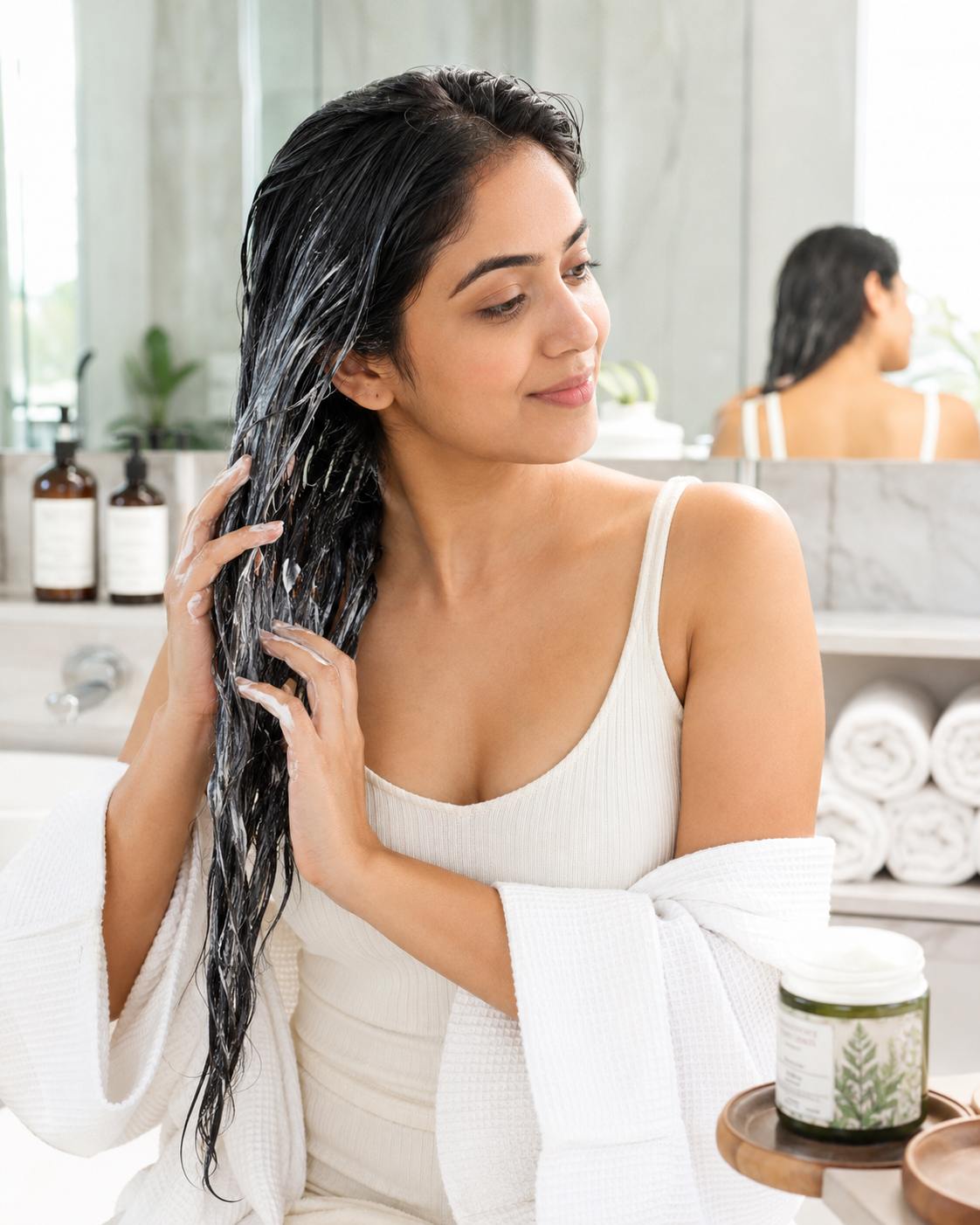
How Using a Hair Pack Regularly Can Affect Your Scalp and Hair Texture
Minjin Park
·
Hair packs can make hair feel softer, smoother, and easier to manage, but using them too often or applying them the wrong way can affect your scalp and hair texture in unexpected ways.
Hair packs have a very satisfying reputation.
They sound like the “serious” version of conditioner. Conditioner is the everyday step. Hair pack is the treatment. The rescue. The thing you reach for when your hair feels dry, rough, frizzy, over-processed, or generally tired of your life choices.
And honestly, a good hair pack can feel amazing.
You apply it after shampooing, wait a few minutes, rinse it out, and suddenly your hair feels smoother. Softer. Less tangled. Less like a broom that has been emotionally neglected. It is one of those beauty steps where you can sometimes feel the difference right away, which makes it tempting to use often.
But here is the part people do not always talk about: using a hair pack regularly can affect not only your hair strands, but also your scalp and overall hair texture.
Sometimes in a good way. Sometimes not.
It depends on your hair type, scalp condition, the formula, how often you use it, and whether you apply it to the scalp or only to the lengths.
A hair pack is usually a richer treatment product designed to condition the hair more deeply than a regular rinse-out conditioner.
Most hair packs contain ingredients that coat, soften, smooth, or temporarily repair the feel of damaged hair. Depending on the product, they may include oils, butters, silicones, proteins, amino acids, ceramides, panthenol, plant extracts, or moisturizing ingredients.
The main goal is usually to improve the feel of the hair.
Hair packs can help reduce roughness, make detangling easier, add shine, calm frizz, and make dry or damaged hair feel more manageable. If your hair is bleached, dyed, heat-styled, permed, straightened, or naturally dry, a hair pack can be especially helpful.
But it is important to understand one thing: most hair packs do not permanently “heal” damaged hair.
Hair is not living tissue once it grows out of the scalp. A hair pack can improve the surface, fill in rough-feeling areas temporarily, reduce friction, and make hair behave better. But if the hair shaft is severely damaged, split, or broken, a treatment can only do so much.
Still, “temporary improvement” is not a bad thing. A lot of good hair care is about protecting what you have and making it easier to manage.
How regular hair packs can improve hair texture
When used properly, hair packs can make a real difference in how your hair feels.
Dry hair often feels rough because the outer cuticle layer is raised or uneven. A conditioning hair pack can smooth that surface so strands slide against each other more easily. That means less tangling, less frizz, and a softer finish.
If your hair feels stiff after shampooing, a hair pack can bring back some slip. If your ends feel scratchy, it can make them feel more polished. If your hair looks dull, smoother strands can reflect light better, so the hair appears shinier.
This is especially useful for long hair. The ends of your hair are older than the roots, which means they have been through more washing, brushing, heat, sunlight, friction, and styling. They usually need more help.
A regular hair pack can make those older ends feel less dry and reduce breakage caused by rough detangling.
That part is worth appreciating. Sometimes hair care is not about making the hair magically perfect. It is about making it easier to comb without snapping half of it off.
The scalp and hair strands are not the same
This is where many people make mistakes.
Your hair strands may love a rich, buttery hair pack. Your scalp may not.
The scalp is skin. It has pores, oil glands, sweat, natural microbes, and its own balance. It can get oily, itchy, flaky, irritated, or clogged. The hair strands, on the other hand, are dead fibers that benefit from smoothing and coating.
So a product that is wonderful for your dry ends might be too heavy for your scalp.
If you apply a rich hair pack directly to the roots or scalp, especially often, it can leave residue. For some people, that residue may lead to greasiness, itchiness, flat roots, scalp odor, or buildup. If your scalp is already oily or prone to dandruff-like flaking, applying heavy treatments to the scalp can make things feel worse.
This is why most hair packs are better used from the mid-lengths to the ends, not rubbed into the scalp like shampoo.
Your ends need treatment.
Your scalp usually needs cleansing and balance.
Can hair packs cause scalp buildup?
Yes, they can, especially if used too often or applied too close to the roots.
Buildup happens when products leave behind residue on the hair or scalp. It can come from conditioners, masks, styling creams, oils, dry shampoo, silicones, waxes, or even minerals from hard water.
Sometimes people respond by using more hair pack because the hair feels weird and dry. But if the problem is buildup, adding more rich product can make the texture worse.
That is the confusing part: buildup can make hair feel both greasy and dry.
The roots may feel oily, while the ends feel coated but still rough. The hair does not move naturally. It may look flat at the top and stringy at the bottom.
Not exactly the glossy treatment result anyone was hoping for.
How often should you use a hair pack?
There is no perfect schedule for everyone.
For many people, using a hair pack once or twice a week is enough. If your hair is very dry, bleached, curly, coarse, or chemically treated, you may like using it more often. If your hair is fine, oily, or easily weighed down, once a week or even every other week may be plenty.
The best frequency depends on how your hair responds.
If your hair feels softer, smoother, and easier to manage, the routine is probably working.
If your hair starts looking limp, greasy, flat, sticky, or dull, you may be using too much or using it too often.
If your scalp becomes itchy or oily faster than usual, the product may be getting too close to the roots.
Hair care should be adjusted like skincare. Your scalp and hair give feedback. You do not have to force a routine just because the product says “intensive repair.”
Fine hair can get weighed down easily
Fine hair often has a hard time with rich hair packs.
It may feel soft after rinsing, but once dry, it can look flat or greasy. The roots lose volume. The lengths may clump together. The hair might feel coated instead of fresh.
This does not mean fine hair cannot use hair packs. It just means the product and amount matter.
If you have fine hair, apply the hair pack only to the ends, use a small amount, and rinse thoroughly. You may also prefer lightweight formulas labeled for volume, hydration, or repair rather than thick butter-based masks.
Fine hair usually needs softness without heaviness.
That balance can be tricky, but once you find the right amount, the difference is noticeable.
Thick, coarse, curly, or damaged hair may need more conditioning
Thick, coarse, curly, wavy, or highly damaged hair often benefits from regular hair packs because the hair structure tends to need more moisture, slip, and protection from friction.
Curly and wavy hair can be naturally drier because scalp oils do not travel down the bends of the hair as easily. Bleached or chemically treated hair can have a rougher cuticle, making it more prone to tangling and breakage.
For these hair types, a hair pack can make styling much easier.
It can reduce frizz, improve curl softness, make detangling gentler, and help the hair feel less brittle. Richer formulas may work well, especially on the ends.
But even then, the scalp rule still matters. Unless the product is specifically made for scalp care, keep rich hair packs away from the roots.
Healthy lengths do not require a suffocated scalp.
Protein hair packs vs. moisturizing hair packs
Not all hair packs do the same thing.
Some are more moisturizing. These usually focus on softness, smoothness, and hydration-like feel. They may contain oils, butters, glycerin, panthenol, or conditioning agents.
Others are protein-based. These are often marketed for damaged, bleached, weak, or breaking hair. They may contain keratin, silk protein, collagen, amino acids, or similar strengthening ingredients.
Protein can be useful for hair that feels weak, mushy, overly stretchy, or damaged from chemical processing. But too much protein can make some hair feel stiff, rough, or brittle.
Moisture-heavy masks can make hair soft, but if used too much on fine hair, they can make it limp.
This is why hair sometimes “loves” a mask at first and then starts acting strange after weeks of constant use. It may not need that same type of treatment every time.
A balanced routine usually works better than using one intense product endlessly.
Can hair packs change your natural hair texture?
A hair pack cannot permanently change your natural hair type.
It will not turn straight hair curly or curly hair straight. It will not permanently thicken fine hair. It will not reverse genetic hair texture.
What it can do is change how your hair behaves temporarily.
A smoothing hair pack can make frizzy hair look sleeker. A moisturizing mask can make curls more defined because the hair is less dry. A protein treatment can make damaged hair feel stronger and less limp. A heavy mask can make hair look straighter or flatter simply because it weighs the strands down.
So when people say a hair pack “changed” their hair texture, they often mean it changed the feel, movement, softness, and manageability.
That can still be a big deal.
Just do not expect a rinse-out treatment to rewrite your hair’s DNA. If only beauty products had that kind of power.
Applying hair packs to the scalp: good or bad?
Most regular hair packs are not meant for the scalp.
If a product is designed for hair lengths, it usually works best from the mid-lengths to ends. Applying it to the scalp may be too heavy.
However, some treatments are specifically made as scalp packs or scalp masks. These are different. They may focus on soothing, exfoliating, cooling, oil control, or scalp hydration. They should be used according to the instructions.
The problem is when people take a rich hair mask meant for damaged ends and massage it into the scalp. That can cause buildup or irritation, especially if the formula contains heavy oils, fragrance, or ingredients your scalp dislikes.
A simple rule: unless the label clearly says it is for the scalp, keep it off the scalp.
Your roots will thank you by not looking greasy in twelve minutes.
How to use a hair pack properly
Start with clean, shampooed hair. Gently squeeze out excess water so your hair is damp, not dripping. If the hair is too wet, the product can slide off or become diluted.
Apply the hair pack mainly from the mid-lengths to the ends. Focus on the driest parts. Usually, that means the ends.
Comb through gently with your fingers or a wide-tooth comb if your hair tangles easily. Do not rip through knots. The whole point is to reduce breakage, not create a small battlefield in the shower.
Leave it on for the recommended time. More time is not always better. Some products are designed for three to five minutes. Others can stay longer. Follow the instructions, especially for protein treatments.
Then rinse thoroughly.
This part matters. If you leave too much residue behind, your hair may feel heavy or coated.
Should you use heat with a hair pack?
Some people like using a shower cap or warm towel while the hair pack sits.
A little warmth can help the product spread and make the treatment feel more effective, especially for thick or coarse hair. But you do not need intense heat. Please do not blast your hair with high heat just because you want the mask to “go deeper.”
Hair can be damaged by excessive heat, and the scalp can get irritated too.
A warm towel or shower steam is usually enough if you want that spa feeling. Honestly, half the benefit is that it makes you slow down for a few minutes, which is rare enough.
Rinsing well makes a huge difference
A lot of hair pack problems come from not rinsing thoroughly.
If your hair feels sticky, waxy, or heavy after using a mask, you may have used too much or left too much behind. The back of the head and nape area are common places where conditioner and masks do not rinse out fully.
Take your time rinsing. Let the water run through the hair and gently separate sections with your fingers. The hair should feel smooth, but not slimy.
There is a difference between conditioned and coated.
Your hair should still move.
Can hair packs make hair fall out?
A hair pack does not usually cause true hair loss from the root.
But it can make shedding more noticeable in the shower because you are massaging the hair and detangling it. Loose hairs that were already ready to shed may come out all at once when you rinse and comb through.
That can look scary, especially if you have long hair.
However, if you notice sudden heavy shedding, scalp pain, bald patches, or ongoing hair loss, do not blame the hair pack and ignore it. Hair shedding can be related to stress, illness, hormones, nutrition, scalp conditions, medications, or other health factors.
Also, if a hair pack irritates your scalp badly and causes itching, inflammation, or scratching, that can indirectly worsen hair breakage or shedding around the scalp. In that case, stop using the product and consider seeing a dermatologist if it does not improve.
Hair pack vs. conditioner: do you need both?
You do not always need both in the same wash.
Conditioner is usually lighter and meant for regular use after shampooing. A hair pack is richer and more treatment-like. If you use a hair pack, you may not need conditioner afterward unless your hair is extremely dry or the instructions say so.
Some people shampoo, use a hair pack, rinse, and finish there. Others use conditioner after a protein treatment to add softness. It depends on the product and your hair.
If your hair feels limp after using both, skip the conditioner. If your hair still feels rough after a treatment, you may need a different formula or a small amount of conditioner on the ends.
Hair routines are not moral rules. You can adjust.
Signs you may be overusing hair packs
Hair packs feel good, so it is easy to overdo them.
You may be using them too often if your hair starts to feel:
Heavy Limp Greasy quickly Sticky or waxy Flat at the roots Dull instead of shiny Stringy at the ends Hard to style Overly soft but weak-feeling Stiff or brittle after protein treatments
If this happens, take a break. Use a regular conditioner for a while, or clarify gently if you suspect buildup. Then reintroduce the hair pack less often.
Your hair does not need an intensive treatment every time it gets wet.
Sometimes it just needs to be cleaned and left alone.
Clarifying can help when hair feels coated
If your hair feels dull, heavy, or coated no matter what you do, product buildup may be part of the issue.
A clarifying shampoo can help remove residue from conditioners, hair packs, styling products, oils, and hard water buildup. But clarifying shampoos can be drying, so use them carefully.
For most people, clarifying once every few weeks is enough. If you use lots of styling products or heavy masks, you may need it more often. If your hair is very dry, curly, color-treated, or damaged, use a gentle clarifying product and follow with a moisturizing treatment on the lengths.
Do not clarify aggressively every wash. That can create a new problem.
Balance, again. Annoying but true.
Choosing the right hair pack for your hair
For dry, coarse, or curly hair, richer moisturizing masks with oils, butters, ceramides, or panthenol may work well.
For bleached or damaged hair, look for bond-repair, protein, amino acid, or strengthening treatments, but do not overuse protein-heavy products if your hair starts feeling stiff.
For fine or oily hair, choose lightweight treatments and use them mainly on the ends. Avoid thick masks near the roots.
For sensitive scalps, avoid heavily fragranced products and do not apply hair masks to the scalp unless they are made for scalp use.
For frizzy hair, smoothing masks with conditioning agents and silicones can be helpful. Some people avoid silicones, but they can be very effective for reducing friction and protecting damaged hair. The key is cleansing properly so buildup does not become an issue.
The best hair pack is not the most expensive one. It is the one your hair actually likes after repeated use.
How regular hair packs can support healthier-looking hair
When used well, regular hair packs can help reduce mechanical damage.
That sounds boring, but it matters.
Hair breaks from friction, brushing, heat styling, rough towel drying, tight hairstyles, and dryness. A hair pack that improves slip can make detangling easier, which means less snapping. Smoother strands rub against each other less. Softer ends are easier to style without yanking.
So even if a hair pack does not permanently repair the hair, it can help protect it from extra daily damage.
That is a realistic and useful benefit.
Healthy-looking hair is often not about one miracle treatment. It is about reducing all the small things that wear hair down.
A simple weekly routine
If you are not sure where to start, try this:
Use your regular shampoo. Apply hair pack from mid-lengths to ends once a week. Leave it on for the recommended time. Rinse thoroughly. Use conditioner on other wash days if needed. Keep the product away from the scalp unless it is a scalp treatment. Clarify occasionally if your hair starts feeling heavy or coated.
Then watch how your hair responds.
If it feels better, continue. If it feels weighed down, use less or use it less often. If it still feels dry, you may need a richer formula, less heat styling, or a trim for damaged ends.
No product can rescue ends that are completely split. Sometimes the most effective “treatment” is scissors, which is rude but true.
So, how does using a hair pack regularly affect your scalp and hair texture?
Regular hair packs can make your hair softer, smoother, shinier, and easier to manage. They can help reduce tangles, improve the feel of dry or damaged ends, and make frizz less noticeable.
But if you use them too often, apply them to the scalp, choose a formula that is too heavy, or rinse poorly, they can lead to buildup, greasy roots, flat hair, itchiness, dullness, or a coated texture.
The sweet spot is using the right product in the right place at the right frequency.
For most people, that means treating the lengths and ends, not the scalp. It means rinsing well. It means adjusting based on your hair type instead of blindly following the label. And it means remembering that more treatment is not always better treatment.
A hair pack should make your hair feel easier to live with.
If it makes your scalp angry or your roots collapse, your hair is giving you feedback. Listen to it, tweak the routine, and keep the good part: softer, smoother hair without the heavy, greasy aftermath.
Hi, I’m the creator and editor behind ZestyHabit. I research everyday safety, first aid, and practical wellness topics using official guidance and reliable public sources, then turn that information into clear, realistic steps for daily life.
My goal is to help readers make safer, better-informed choices at home and beyond.