
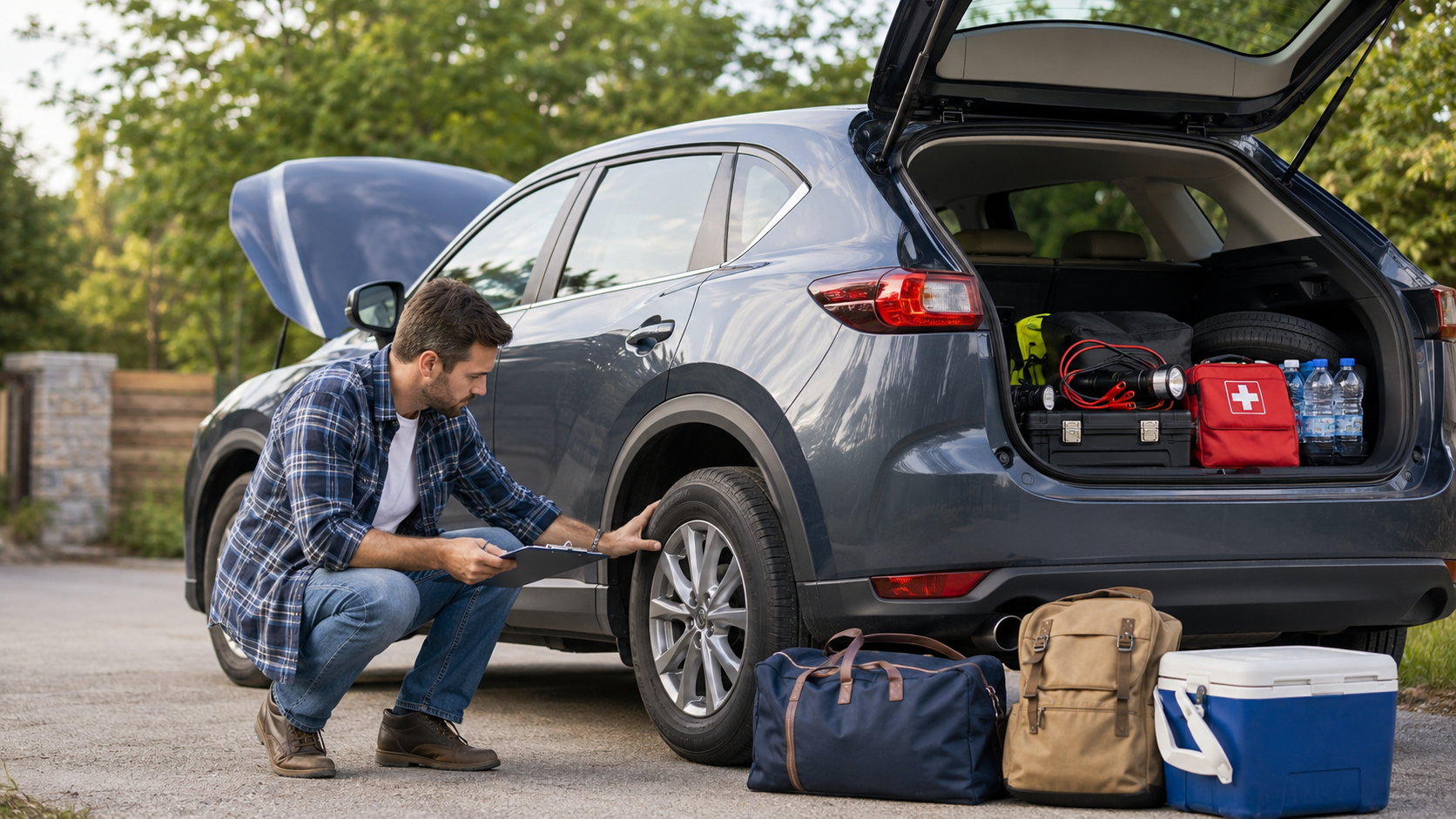
Traveling with luggage in your car can make quick stops stressful. Learn simple, practical ways to store bags, hide valuables, and reduce the chance of vehicle break-ins during road trips.

Why Luggage Storage Matters When You Travel
Travel days are full of small decisions.
You stop for gas. You grab coffee. You park near a scenic overlook. You check into a hotel later than planned. You leave your bags in the car for “just ten minutes” while you run into a store.
Most of the time, nothing happens. But when you are traveling, your car can become a moving storage unit. Suitcases, backpacks, camera bags, laptops, jackets, souvenirs, and shopping bags all pile up quickly. If those items are visible from outside the vehicle, they can make your car look like an easy target.
This does not mean you need to be anxious every time you park. It simply means luggage should be stored thoughtfully, especially in unfamiliar places.
A few simple habits can make your car look less interesting, protect your belongings, and help your trip feel calmer.
The Main Goal: Make the Car Look Boring
When it comes to preventing vehicle break-ins, one of the best goals is simple: make your car look boring.
A car with visible backpacks, shopping bags, electronics, luggage tags, and charging cables sends a message that something valuable might be inside. A car with nothing visible looks less tempting.
You cannot control every risk. But you can avoid advertising your belongings.
Think of your parked car from the outside. If someone walked by and looked through the windows, what would they see? A suitcase? A laptop case? A purse? A pile of bags under a jacket? A phone charger hanging from the console?
If the answer is yes, it is worth rearranging before you leave the vehicle.
Store Bags Before You Arrive, Not After You Park
One common mistake is waiting until you reach your destination to hide your bags.
For example, you park at a beach, trailhead, restaurant, or tourist attraction. Then you open the trunk, move a backpack inside, cover a suitcase, tuck a purse under the seat, and walk away.
The problem is that anyone nearby can see exactly where you put your belongings.
A better habit is to organize your luggage before you arrive. Move bags to the trunk at the hotel, gas station, or another earlier stop. Put valuables out of sight before you enter the parking lot. Then, when you park, you can simply lock the car and leave without making a show of where everything is stored.
This small timing change is one of the easiest ways to reduce risk.
Use the Trunk Whenever Possible
If your vehicle has a closed trunk, use it.
A trunk keeps luggage out of sight better than the back seat. It also makes it less obvious what you are carrying. Suitcases, backpacks, shopping bags, and gear should go there before you reach your stop.
If you drive an SUV, hatchback, or wagon, use the cargo cover if the vehicle has one. If there is no cargo cover, consider using plain, dark blankets or storage bins that do not scream “expensive gear inside.”
Still, be careful with blankets. A blanket thrown over a pile of luggage can look suspicious if the shape underneath is obvious. The goal is not to create a mystery pile. The goal is to keep the cargo area neat, low, and uninteresting.
Keep the Passenger Area Empty
The passenger area should look as empty as possible when you park.
Avoid leaving wallets, purses, backpacks, phones, tablets, cameras, sunglasses, shopping bags, medications, passports, or keys in view. Even loose change, charging cables, or a small pouch can make someone wonder what else might be inside.
Glove compartments and center consoles are not ideal for true valuables either, especially if someone can see you placing items there. They may be useful for low-value items, but they should not become your main safe storage spot.
If something is important, take it with you whenever possible.
Do Not Leave Important Documents in the Car
Travel often involves documents: passports, IDs, hotel confirmations, vehicle paperwork, insurance cards, rental agreements, tickets, and reservation details.
Some of these may need to stay in the car. Others should stay with you.
Passports, extra cash, credit cards, and essential travel documents should not be left in a parked vehicle if you can avoid it. Losing a suitcase is frustrating. Losing identity documents while traveling can create a much bigger problem.
Use a small crossbody bag, money belt, neck pouch, or secure travel wallet for documents you truly need.
The less irreplaceable material you leave in the car, the better.
Watch Out for “Hidden” Items That Are Still Obvious
Many people think they have hidden valuables when they really have only covered them.
A jacket over a laptop bag still looks like something is under a jacket. A towel over a purse may still show the strap. A backpack pushed under the seat may still stick out. A charging cable running from the dashboard to the floor suggests a device may be nearby.
Before leaving the car, step outside and look through the windows from different angles. What can you actually see?
If you can identify a bag shape, so can someone else.
Common Mistakes Travelers Make
Leaving Bags Visible During Quick Stops
Quick stops are where people get careless.
You may think, “I’m only going in for coffee,” or “I’ll be back in five minutes.” But short stops still count. A visible bag does not become safer because you are nearby.
Before entering a store, restroom, visitor center, or gas station, make sure valuables are out of sight and the vehicle is locked.
Packing the Car in Public
Travelers often repack at the worst possible time.
They open the trunk in a busy parking lot, take out luggage, rearrange electronics, move money, organize documents, and talk openly about where they are going next.
Try to do that kind of organizing in a more private place, such as your hotel room, rental home, or a safe indoor area. The less attention your luggage gets, the better.
Leaving Rental Car Clues Everywhere
Rental cars can sometimes stand out, especially in tourist areas. Out-of-state plates, rental stickers, barcodes, or a spotless unfamiliar model can make it obvious that the driver may be traveling.
You may not be able to change that. But you can avoid adding more clues.
Do not leave tourist brochures, luggage tags, airport parking receipts, hotel key folders, or large maps visible on the seats. These items may suggest that the car belongs to someone away from home with belongings inside.
Trusting Tinted Windows Too Much
Tinted windows help, but they do not make items invisible.
In bright light, at certain angles, or with a flashlight, people may still see inside. Do not treat window tint as a substitute for proper storage.
If something would be risky to leave visible in a clear-window car, it should not be visible in a tinted-window car either.
Be Extra Careful in High-Turnover Parking Areas
Some places naturally have more people coming and going. That does not make them unsafe, but it does mean you should be more alert.
Be careful at trailheads, beaches, scenic overlooks, downtown garages, shopping centers, hotel parking lots, airport lots, stadium areas, and roadside attractions. These are places where travelers often leave bags in cars while they explore.
If you are parking for several hours, take extra time to make the car look empty. Choose a visible, well-lit spot when possible. Avoid isolated corners if better options are available.
Also pay attention to broken glass on the ground. It does not always mean something bad will happen there, but it is a clue to be more cautious.
Choose Parking Spots Thoughtfully
A good parking spot cannot guarantee anything, but it can help.
Look for a spot that is visible, well lit, and close to normal foot traffic. Parking near an entrance, attendant booth, security camera, or busy walkway may be better than parking behind a building or in a dark corner.
At night, lighting matters. During the day, visibility matters. In parking garages, avoid remote levels if there are safer and busier areas available.
When parking on the street, choose a spot where you can load and unload safely without drawing attention. If you need to access the trunk, do it quickly and calmly.
Avoid Advertising Expensive Gear
Some items attract attention more than others.
Camera bags, laptop backpacks, designer purses, tool cases, sports equipment, musical instrument cases, and branded shopping bags can all suggest value. Even if the item inside is not expensive, the outside may look worth checking.
If you must travel with valuable gear, use plain bags when possible. Avoid leaving brand names visible. Keep items low in the trunk or cargo area. Do not leave camera straps, laptop chargers, or empty electronics boxes in sight.
A plain, organized car attracts less attention than one that looks full of expensive possibilities.
Plan Your Day Around Luggage
One of the best ways to protect luggage is to avoid leaving it in the car at all.
On travel days, think about timing. Can you check into the hotel before sightseeing? Can the hotel hold bags before check-in or after checkout? Can you use a luggage storage service in a city? Can you visit outdoor stops after dropping bags where you are staying?
Sometimes the answer is no. Road trips often require carrying luggage between locations. But when you can avoid leaving bags in the car for hours, it is worth planning around that.
A small schedule change can reduce stress.
What About Road Trips With Kids?
Family travel makes luggage management harder.
There are diaper bags, snacks, tablets, toys, jackets, strollers, sports gear, and extra clothes. The car can become messy fast, and messy cars often reveal more than people realize.
For family trips, assign zones. Keep daily-use items in one small bag that comes with you. Keep true luggage in the trunk or cargo area. Use plain bins for loose items. Put snacks and child supplies in bags that are easy to carry, not scattered across the seats.
Teach kids not to leave tablets, game devices, headphones, or backpacks visible when leaving the car. Make it part of the routine: before we get out, everyone checks their area.
Use a “Take With You” Bag
A small “take with you” bag can simplify everything.
This bag holds your wallet, phone, keys, ID, medication, sunglasses, charger, travel documents, and anything you would be upset to lose. Every time you leave the car, this bag comes with you.
It prevents the common problem of digging through luggage in a parking lot. It also helps you avoid leaving important items in cup holders, door pockets, and seat backs.
Choose a bag that is comfortable to carry. If it is too bulky, you may be tempted to leave it behind.
Keep the Car Organized Throughout the Trip
A cluttered car is harder to secure.
When items are scattered everywhere, it becomes difficult to tell what is visible from outside. A small pouch on the floor may hold nothing important, but someone looking in may not know that. A pile of jackets may look like it is hiding something.
At the end of each driving day, take a few minutes to reset the car. Throw away trash. Move luggage back to the trunk. Take valuables into your lodging. Clear the seats and floor.
A neat car looks less tempting and makes the next morning easier too.
Be Careful When Returning to the Car
Vehicle break-in prevention is not only about leaving the car. It is also about what you do when you return.
If you come back to grab one item and then leave again, avoid opening the trunk and displaying all your luggage to everyone nearby. Take what you need and close the trunk promptly.
If you need to repack, consider moving the car to a safer place or waiting until you are at your lodging.
Also make sure the car is fully locked after every stop. Listen for the lock sound or check the handle if needed. Rushing travelers sometimes think they locked the car when they did not.
Warning Signs to Notice Before Parking
Before leaving your car, take a quick look around.
Is the area poorly lit? Are there broken windows or glass nearby? Are people loitering close to parked cars? Is the lot isolated? Are signs warning about theft? Are other cars parked with visible valuables?
None of these signs means you must panic. They simply mean you should be more cautious, choose another spot if possible, and avoid leaving anything visible.
Trust your practical judgment. If a parking area feels wrong, it is okay to move.
What to Do If You Must Leave Luggage in the Car
Sometimes there is no perfect option. You may be between hotels, on a cross-country drive, or stopping for food before check-in.
If you must leave luggage in the car, use layers of common sense.
Put bags in the trunk before arrival. Keep the passenger area empty. Park in a visible location. Take documents, cash, and electronics with you. Keep the stop short when possible. Avoid opening the trunk after parking. Lock the car and double-check.
If you have a hatchback or SUV, keep cargo covered and low. If the cargo area looks full even with a cover, consider taking the most valuable items with you.
The goal is risk reduction, not perfection.
A Simple Travel Parking Routine
Before you leave your parked car, use this quick routine.
Look through the windows from outside.
Remove visible bags, electronics, and chargers.
Move luggage to the trunk before reaching your destination.
Take important documents, medications, and valuables with you.
Close the cargo cover if you have one.
Lock all doors.
Check that windows and sunroof are fully closed.
Avoid opening the trunk after parking unless necessary.
Choose a visible, well-lit parking spot when possible.
This routine takes less than a minute once it becomes a habit.
Calm Takeaways for Safer Travel
Travel should feel enjoyable, not like a constant worry about your belongings. The goal is not to be fearful. It is to be thoughtful.
Cars are not ideal storage lockers, especially when you are traveling with luggage. But with a few simple habits, you can reduce the chance of problems.
Keep valuables out of sight. Move bags to the trunk before you arrive. Avoid displaying luggage in public parking lots. Take essential documents and electronics with you. Choose parking spots with visibility and lighting. Keep the passenger area clean and boring.
Most trips will be completely uneventful, and that is exactly what you want. A few calm minutes of luggage organization can help protect your belongings and let you focus on the road, the destination, and the reason you traveled in the first place.

Hi, I’m the creator and editor behind ZestyHabit. I research everyday safety, first aid, and practical wellness topics using official guidance and reliable public sources, then turn that information into clear, realistic steps for daily life.
My goal is to help readers make safer, better-informed choices at home and beyond.


