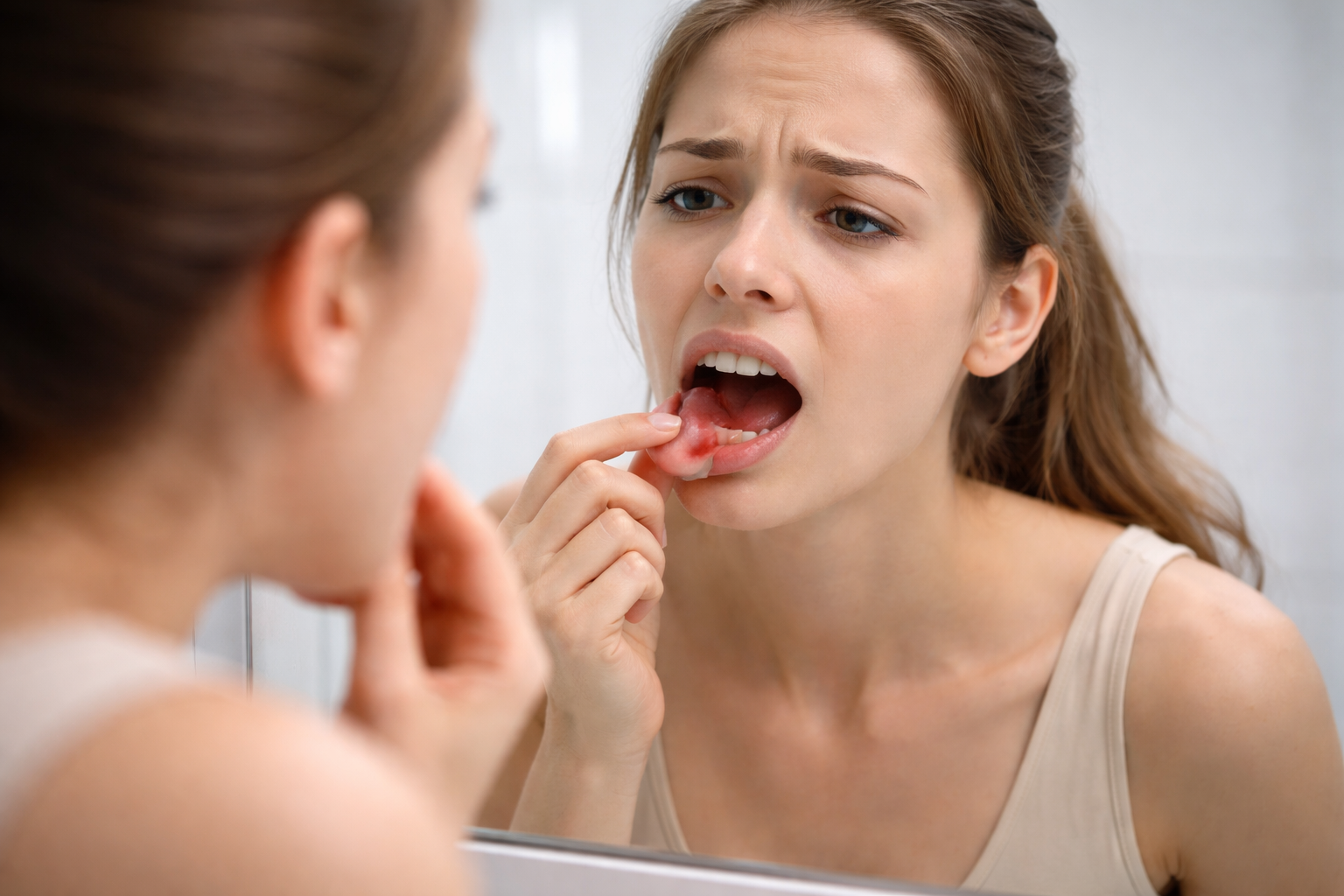
Why Does the Inside of Your Mouth Keep Getting Sore? Everyday Things Worth Checking
Minjin Park
·
If you get mouth sores over and over again, it is easy to blame it on “low immunity,” stress, or just bad luck. And yes, stress can play a role. But recurring mouth ulcers are often less mysterious than they seem. In many cases, the mouth is reacting to something happening in daily life: repeated friction, a toothpaste that irritates you, poor sleep, nutritional gaps, dry mouth, or a small habit you barely notice until it keeps causing the same problem. Mouth ulcers are common and many clear up within a week or two, but if they keep coming back, the pattern itself is worth paying attention to.
One of the most useful ways to think about recurring mouth sores is this: instead of asking only, “What should I put on it?” ask, “What in my routine keeps setting this off?” That shift matters. Canker sores often do not have one single clear cause, but major medical sources say they can be triggered by local injury, stress, smoking, and deficiencies in nutrients such as folate, iron, or vitamin B12.
Start with the simplest question: am I injuring my mouth without realizing it?
This is probably the most overlooked reason. A lot of single or repeated mouth ulcers come from minor trauma: biting the inside of your cheek, scratching the lining of your mouth with sharp food, burning yourself on hot drinks, brushing too aggressively, or living with a rough filling, sharp tooth edge, braces, or poorly fitting dentures. The NHS specifically lists cheek biting, dental irritation, cuts from food, and burns from hot food or drink among common causes of mouth ulcers.
That means the first everyday check is not glamorous at all. Think about your real habits. Do you chew fast? Do you talk while eating and accidentally bite the inside of your mouth? Do chips, toast crusts, nuts, or sharp crackers seem to trigger the same spot? Do you wake up with tenderness because you clench your jaw or chew the inside of your cheeks when stressed? Even a habit as small as absentminded lip biting can keep an irritated area from fully healing.
Then look at your toothbrush, toothpaste, and mouthwash
People do not always connect oral care products with irritation, but they should. The NHS notes that damaging your gums with a toothbrush or irritating toothpaste can contribute to mouth ulcers. Some patient guidance from NHS hospitals also mentions that certain people may benefit from avoiding toothpastes containing sodium lauryl sulfate or lauryl sulfate if ulcers keep recurring.
This does not mean every toothpaste is “bad.” It means your mouth may be sensitive to a particular formula, whitening product, strong flavoring, or aggressive brushing technique. If your ulcers seem to flare after switching products, that detail matters. The same goes for alcohol-heavy mouthwashes that leave the mouth feeling raw or dry. In everyday life, a “fresh and clean” sensation can sometimes be irritation in disguise.
Stress and lack of sleep deserve more attention than people usually give them
When people say, “I always get mouth ulcers when I’m exhausted,” they are not imagining it. The NHS lists feeling tired, stressed, or anxious as common contributors, and MedlinePlus and NIDCR also note stress as a possible trigger for canker sores.
This matters because stress does not only affect your mood. It changes your routines. You may sleep less, clench your jaw more, skip balanced meals, drink less water, snack on irritating foods, or brush carelessly when tired. So when checking your life for triggers, do not ask only, “Am I stressed?” Ask the more practical question: “What do I do differently when I’m stressed?” Often the mouth is responding to the chain reaction, not just the emotion itself.
Pay attention to what you eat and drink
Food is not the cause of every sore mouth, but it can absolutely be part of the pattern. The NHS says mouth ulcers may be linked to food intolerance or allergy, and everyday experience also makes this easy to recognize: acidic, salty, spicy, crunchy, or very hot foods can irritate tissue that is already sensitive.
This is where keeping things simple helps. If the same foods keep making your mouth sting, do not ignore the pattern. Citrus, tomatoes, spicy sauces, hard snacks, and very hot coffee or soup may not create the entire problem by themselves, but they can keep a vulnerable area inflamed. A lot of people say, “It started as a tiny spot, then I made it worse by eating something sharp or spicy.” That is believable and common. The important point is not to become afraid of food, but to notice repeat offenders.
Nutritional gaps are worth checking, especially if sores are frequent
Recurring ulcers are one of those symptoms people often try to explain away, but sometimes they are the body’s quiet way of asking you to look at nutrition more carefully. MedlinePlus says canker sores may be linked to lack of certain vitamins and minerals, including vitamin B12 or folate. NIDCR also lists deficiencies in folic acid, iron, and vitamin B12 as possible triggers, and Mayo Clinic notes that some people with canker sores may need evaluation for low intake of folate, vitamin B6, vitamin B12, or zinc.
This does not mean you should start buying every supplement on the shelf. It means it is worth checking your daily pattern honestly. Have you been eating irregularly? Are you dieting hard? Skipping meals? Avoiding whole food groups? Living on convenience food while working long hours? Mouth ulcers are not a guaranteed sign of deficiency, but if they keep recurring, nutrition is a very reasonable thing to review with a clinician.
Check whether your mouth is too dry
A dry mouth is more fragile. Saliva does more than keep the mouth comfortable; it protects tissues. NIDCR notes that dry mouth can be linked to disorders and treatments, and oral conditions become more likely when the mouth is not well protected by saliva.
In everyday life, dry mouth can happen because of dehydration, mouth breathing, certain medications, smoking, alcohol, or sleeping with your mouth open. If you wake up with a dry tongue, sticky feeling, or soreness along the cheeks and lips, pay attention to that. Sometimes the issue is not only “Why do I get ulcers?” but “Why is my mouth dry enough to get irritated so easily?”
Look at your smoking habits, too
Not everyone expects this, but NIDCR includes smoking among the things that may trigger canker sores. Smoking also dries and irritates the mouth in general, which is another reason it can complicate oral symptoms.
This is one of those areas where people sometimes misunderstand the pattern. They assume only obvious “burning” or staining counts as an effect. But the mouth is sensitive tissue. If you smoke or vape and also keep getting irritated spots inside the mouth, that connection is worth taking seriously rather than treating it like background noise.
Make sure it really is a canker sore
This part matters a lot. Not every sore in or around the mouth is the same thing. NIDCR explains that canker sores do not have a known single cause and are different from fever blisters, while Mayo Clinic notes that canker sores involve the mucous membrane and are not caused by herpes simplex virus.
That distinction matters because repeated “mouth sores” can actually refer to different problems: cold sores, irritation from friction, fungal infection, white patches, tongue irritation, or inflammatory conditions. If you are using the same home remedy over and over but the lesions do not act like classic small ulcers inside the mouth, it is worth stepping back and getting the diagnosis right instead of assuming all sore spots are interchangeable.
Recurrent sores can sometimes point to a bigger health issue
Most mouth ulcers are not serious. Still, recurrent ulcers can occasionally be linked to an underlying condition. Mayo Clinic notes that if canker sores are related to a more serious health problem, the underlying condition needs to be treated. MedlinePlus mentions immune weakness, hormone changes, stress, and vitamin deficiency as possible contributors, while Mayo Clinic and NHS sources also note that some recurrent mouth ulcers can be seen in conditions such as Behçet disease or other broader health problems.
This does not mean you should panic every time you see a small ulcer. It means patterns matter. If the sores are unusually frequent, especially painful, large, slow to heal, or accompanied by other symptoms such as genital ulcers, eye symptoms, bowel issues, weight loss, fever, or general illness, then “I just get mouth ulcers sometimes” may be too simple an explanation.
Dental fit and oral mechanics are worth a closer look
If you wear braces, retainers, dentures, or have a rough filling or a sharp tooth, repeated trauma can create repeated ulcers in the same area. The NHS explicitly mentions badly fitting dentures, braces, rough fillings, and a sharp tooth as causes to consider.
This is a very practical checkpoint because it often gets missed when people focus only on “body condition” or “immunity.” If the sore tends to appear on the same side, near the same tooth, or along the same inner lip area, think mechanically. Your mouth may not be signaling a mysterious systemic issue at all. It may be telling you that something in there keeps rubbing the same spot.
The best home check is often a pattern log
If mouth sores keep coming back, memory is not always reliable. A simple note on your phone can be surprisingly useful. Track when it happens, where the sore appears, what you ate the day before, how you slept, whether you were under unusual stress, whether you bit your cheek, and whether you changed oral-care products. You do not need to be obsessive. Just look for repetition. Since common triggers include trauma, tiredness, stress, irritation, and nutritional problems, a short pattern log can reveal what casual guessing misses.
That kind of record also helps if you end up seeing a dentist or doctor. “I get them sometimes” is vague. “I get them twice a month, usually after poor sleep and always on the right cheek near a rough molar” is much more useful.
Know when not to just “wait it out”
Here is the part people should not ignore: although many mouth ulcers clear within one to two weeks, persistent or recurring ones need proper attention. The NHS says to see a GP or dentist if a mouth ulcer lasts longer than three weeks. Mayo Clinic says you should seek care for unusually large sores, recurring sores, sores lasting two weeks or more, severe pain, trouble eating or drinking, or fever with canker sores. NHS mouth cancer guidance also says ulcers lasting more than three weeks should be checked.
That three-week point matters because not every persistent mouth lesion is a simple ulcer. If you also notice a lump, red or white patch, unexplained pain, trouble swallowing, or a sore that does not behave like your usual pattern, that deserves a real exam rather than another round of home treatment.
The everyday checklist that actually matters
So if the inside of your mouth keeps getting sore, the most helpful things to review in daily life are surprisingly ordinary: Are you injuring the area with food, brushing, or cheek biting? Is there dental friction from a tooth, brace, filling, or denture? Did you change toothpaste or mouthwash? Have stress, fatigue, or poor sleep been worse lately? Are you eating well enough to cover basics like iron, folate, and B vitamins? Is your mouth dry? Do certain foods keep irritating the same spot? Are you smoking? And does the sore heal like a typical small ulcer, or is it lasting too long or looking different from before?
In other words, recurring mouth ulcers are often less about finding one dramatic cause and more about noticing repeated small triggers. The mouth is sensitive, and it remembers friction, dryness, stress, and neglect quickly. Paying attention to those details can save you from repeating the same cycle over and over. And if the sores are persistent, frequent, unusually painful, or lasting beyond a few weeks, that is your cue to stop guessing and get them checked properly.
Hi, I’m the creator and editor behind ZestyHabit. I research everyday safety, first aid, and practical wellness topics using official guidance and reliable public sources, then turn that information into clear, realistic steps for daily life.
My goal is to help readers make safer, better-informed choices at home and beyond.