
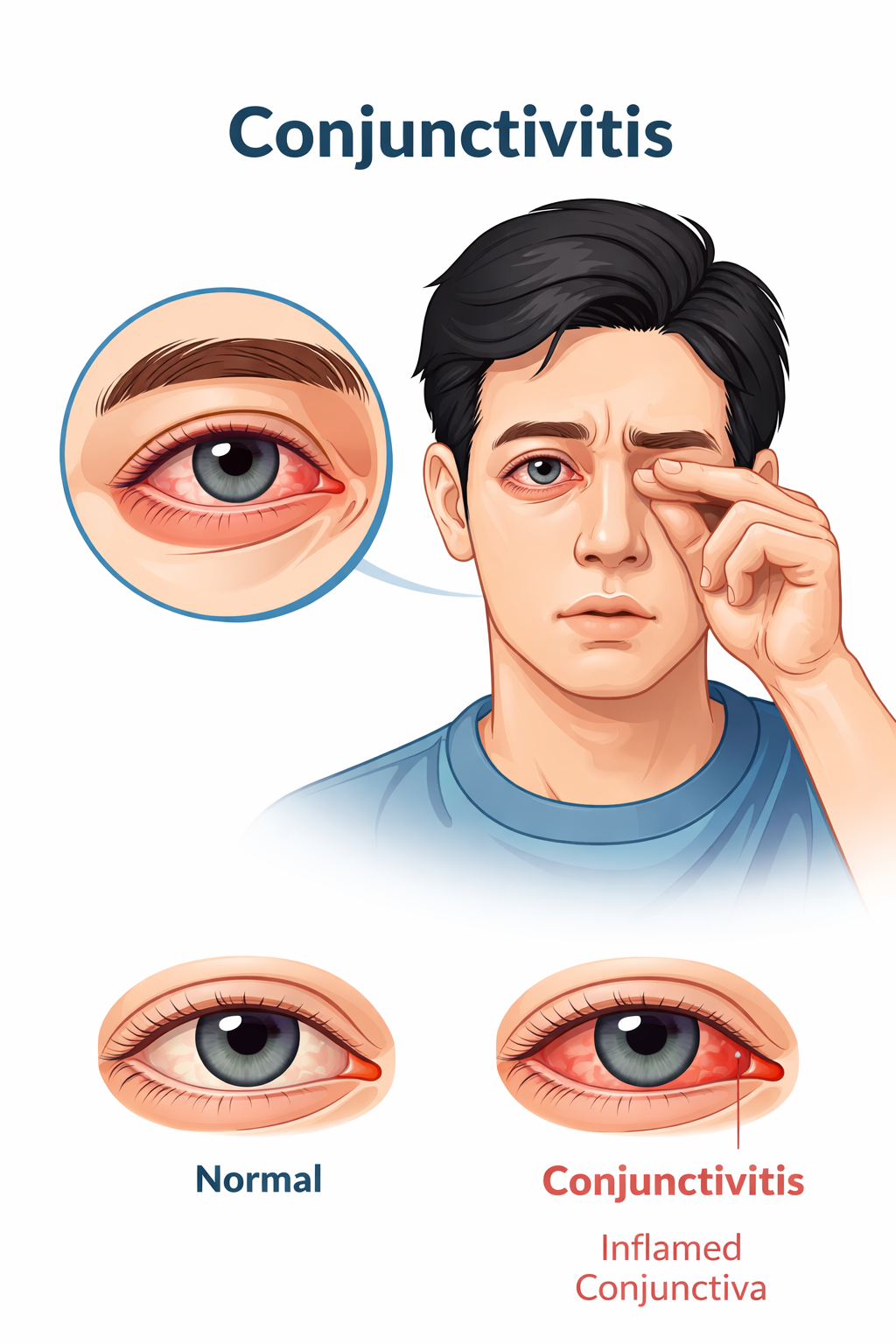

Conjunctivitis, often called pink eye, is one of those eye problems that sounds simple until it happens to you. Suddenly the eye feels irritated, red, watery, sticky, or just uncomfortable enough to make the whole day feel off. Sometimes it is caused by a virus, sometimes by bacteria, sometimes by allergies, and sometimes by irritation linked to contact lens use. That is exactly why prevention matters. You cannot prevent every case, but you can lower the risk significantly by focusing on two habits that matter more than most people realize: clean hands and proper contact lens care.
A lot of people think conjunctivitis prevention is mainly about not sharing towels or staying away from someone with a red eye. That is part of it, but it is only part. In real life, many cases spread because people touch their eyes without thinking, handle lenses with poorly washed hands, reuse cases for too long, or expose lenses to water when they should not. Public health and ophthalmology guidance consistently puts handwashing and lens hygiene near the center of prevention. The CDC specifically advises washing hands often, avoiding touching or rubbing the eyes, and using and cleaning contact lenses properly.
Why hands matter so much
Your hands are often the fastest route between germs and your eyes. During the day, hands touch phones, door handles, keyboards, money, public surfaces, and your own face repeatedly. Once you rub an eye or adjust a contact lens, whatever is on your fingers has a direct opportunity to reach the delicate surface of the eye. The CDC notes that pink eye can spread if you rub your eyes and do not wash your hands, and NHS advice also emphasizes regular handwashing and avoiding rubbing the eyes to stop conjunctivitis from spreading.
This is why hand hygiene is not a minor detail. It is one of the most basic ways to interrupt the chain of infection before it reaches the eye.
Wash hands before touching your eyes or lenses
The most important rule is simple: do not touch your eyes or contact lenses with unwashed hands. The CDC recommends washing hands thoroughly with soap and water before handling lenses, and the American Academy of Ophthalmology advises washing with soap and water and drying with a lint-free towel before touching contact lenses.
That matters even if your hands do not look dirty. Clean-looking hands are not the same as clean hands. If you are about to insert a lens, remove a lens, apply eye drops, or wipe discharge from the eye, handwashing should come first.
A practical routine helps here. Wash your hands, dry them well, then touch your lenses or eyes. Do not wash your hands and then immediately go back to your phone, sink taps, or bathroom handles before inserting the lenses.
Drying your hands is part of hygiene too
Many people remember to wash their hands but forget that wet hands are not ideal for lens handling. The CDC advises drying hands completely with a clean cloth before touching lenses, and AAO guidance similarly recommends drying with a lint-free towel.
This matters for two reasons. First, a damp hand can transfer unwanted water to the lens. Second, lint or residue from poor-quality towels can end up on the lens and irritate the eye. In other words, proper lens hygiene begins not only with soap and water, but with careful drying too.
Do not rub your eyes casually
Rubbing your eyes is one of those automatic habits people barely notice, especially when they are tired, wearing makeup, dealing with allergies, or staring at screens all day. But it is one of the easiest ways to spread irritation or infection from one eye to the other, or from the hand to the eye. NHS guidance specifically says not to rub your eyes when conjunctivitis is present, because that can help spread it.
Even outside active infection, it is a useful prevention habit to break. The less often your fingers go directly to your eyes, the lower the chance of bringing irritants or microbes there.
Contact lenses can raise the risk if care is sloppy
Contact lenses are medical devices, not just convenience items. The CDC specifically says contact lenses are medical devices and are not risk-free, and its prevention guidance stresses healthy habits to protect the eyes from infection.
This is where prevention becomes especially important. A person who never wears lenses can still get conjunctivitis, of course. But someone who wears contacts adds another step of direct eye handling to daily life. That means lens users need more than general cleanliness. They need a routine.
Always clean, store, and replace lenses as directed
The CDC advises people to clean, store, and replace contact lenses exactly as instructed by their eye doctor, and AAO also emphasizes proper cleaning methods, including using a rub-and-rinse method when recommended.
This is important because many lens-related problems happen not from dramatic mistakes, but from casual shortcuts. Reusing old solution, topping off yesterday’s solution instead of replacing it, stretching replacement schedules, or wearing lenses longer than recommended all increase risk.
Lens hygiene works best when it is boringly consistent. Fresh solution. Clean case. Correct schedule. No shortcuts.
Keep contact lenses away from water
This is one of the most overlooked rules in lens care. The CDC’s contact lens guidance clearly says to keep contact lenses away from all water and not to rinse or store contacts in water. It also advises removing lenses before showering or swimming.
A lot of people assume tap water is harmless because it looks clean, but lens guidance is much stricter for good reason. Water can expose lenses to organisms and contamination that do not belong on the eye. If you wear contacts, avoiding water contact is not a fussy extra step. It is one of the standard safety habits.
Do not sleep in lenses unless your eye care provider says you can
The CDC also advises avoiding sleeping in contact lenses unless an eye care provider has specifically directed you to do so.
This matters because sleeping in lenses reduces the eye’s comfort and increases the chance of irritation and infection. Many people treat this rule casually, especially after a long day or late night, but it is one of the habits that can quietly increase risk over time.
Clean the lens case too, not just the lenses
People often focus on the lenses themselves and forget that the case can become part of the problem. AAO specifically includes cleaning the contact lens case as part of eye infection prevention, and CDC guidance notes that reusable products like lens cases should be cleaned as directed.
A clean lens placed into a neglected case is not really being stored safely. Good lens hygiene includes both the lens and its environment.
Stop wearing lenses if conjunctivitis is suspected
If your eye becomes red, sticky, painful, unusually watery, or sensitive while you are wearing contacts, continuing to wear them is a bad idea. The CDC says to stop wearing contact lenses until symptoms are gone or an eye doctor says it is okay to start again. Mayo Clinic and AAO give similar advice: do not wear contacts while the eye is infected, and clean or replace them exactly as instructed before resuming use.
This is one of the clearest prevention rules for stopping a mild irritation from becoming a more serious problem. If the eye is already inflamed, a lens can keep aggravating the surface.
Replace contaminated disposables
CDC guidance also advises throwing away disposable products used while the eyes were infected, including disposable lenses and cases, and Mayo Clinic notes that soft contacts already worn may need to be discarded. AAO also notes replacing disposable lenses after recovery.
That may feel wasteful in the moment, but it is part of preventing reinfection. Returning to the same contaminated disposable lens or old case defeats the point of treatment and recovery.
Do not share eye-related personal items
Conjunctivitis spreads easily through shared personal items. The CDC says not to share things like towels, pillows, eye drops, eye makeup, contact lenses, contact lens cases, or eyeglasses, and NHS gives similar advice about not sharing towels and pillows.
For lens wearers, this should be an absolute rule. Contact lenses and lens cases are not shareable items under any circumstances.
Keep everyday habits simple and repeatable
The best prevention routine is usually not complicated. It looks like this: wash your hands before touching your eyes or lenses, dry them properly, avoid rubbing your eyes, keep lenses away from water, clean and store them exactly as directed, clean the case, do not sleep in lenses unless specifically told to, and stop wearing them right away if the eye becomes red or irritated. These are not random tips. They match the core prevention advice from CDC, AAO, NHS, and Mayo Clinic.
When prevention also means knowing when to get help
Good hygiene lowers risk, but it does not remove the need for medical attention when symptoms are more serious. If redness comes with pain, light sensitivity, vision changes, or significant lens-related discomfort, that is not something to manage casually at home. NHS patient guidance notes that pain in the eye, sensitivity to light, and changes in vision are reasons to seek medical advice.
That point matters especially for lens wearers, because contact lens-related eye infections can become more serious than routine mild irritation.
Final thoughts
Preventing conjunctivitis often comes down to respecting how easily the eye can be contaminated. Clean hands matter because hands are the main bridge between the outside world and the eye. Proper contact lens care matters because lenses sit directly on the eye and can turn small hygiene mistakes into bigger problems. The CDC, NHS, Mayo Clinic, and the American Academy of Ophthalmology all point in the same direction: wash hands well, do not rub your eyes, and handle lenses with care and consistency.
In other words, conjunctivitis prevention is not really about one dramatic precaution. It is about small daily habits done correctly. And with eye health, those small habits matter more than people think.

Hi, I’m the creator and editor behind ZestyHabit. I research everyday safety, first aid, and practical wellness topics using official guidance and reliable public sources, then turn that information into clear, realistic steps for daily life.
My goal is to help readers make safer, better-informed choices at home and beyond.


