
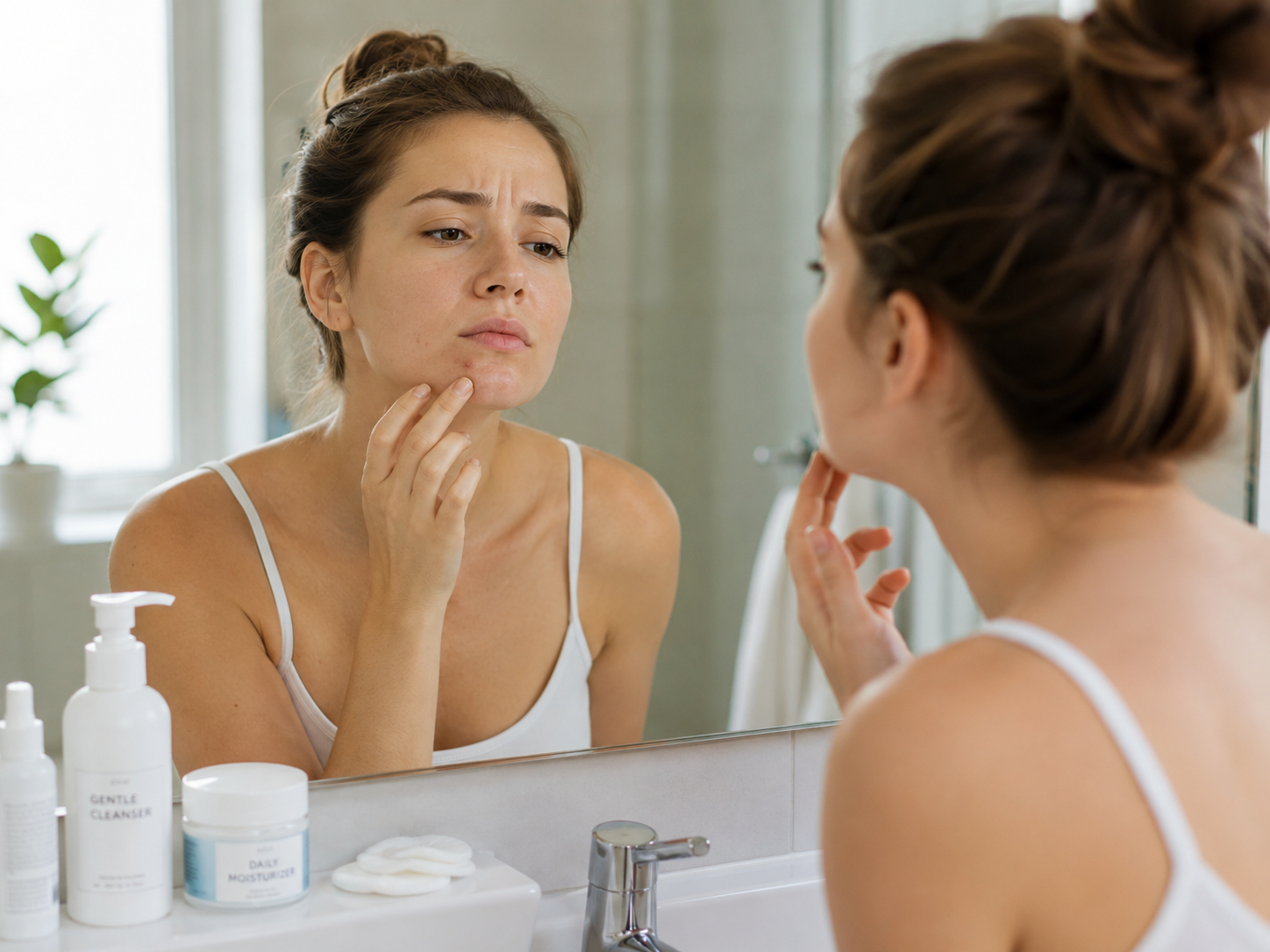

Chin acne has a special talent for being annoying.
It often shows up in the same area again and again. Just when one bump finally calms down, another one appears nearby. Sometimes it’s a deep, sore pimple under the skin. Sometimes it’s a cluster of small closed bumps. Sometimes it looks like a regular breakout, but it takes forever to heal and leaves a mark behind.
And because it sits right on the lower part of the face, it’s hard to ignore. You see it when you talk, smile, apply makeup, wash your face, or glance into the mirror under terrible bathroom lighting.
So why does chin acne keep repeating?
The frustrating answer is that chin breakouts usually have more than one cause. Hormones, clogged pores, friction, stress, skincare products, touching your face, shaving, hair removal, masks, and even toothpaste residue can all play a role.
That sounds like a lot. But once you understand the common triggers, chin acne becomes easier to manage.
Not instantly. Not magically.
But more calmly.
Why the Chin Area Breaks Out So Easily
The chin and jawline area is a common place for acne because it has active oil glands and is often influenced by hormones. This area also gets touched more than we realize.
You rest your chin on your hand. Your phone brushes against your lower face. A mask or scarf rubs there. Food, lip balm, toothpaste, shaving products, sunscreen, and makeup can all collect around the mouth and chin.
It is also an area where the skin moves a lot. Talking, eating, laughing, and facial expressions constantly stretch and fold the skin around the mouth and chin. If the barrier is irritated, that movement can make inflammation feel worse.
So the chin is not just another random patch of skin. It deals with oil, friction, product residue, and hormonal changes all at once.
No wonder it gets dramatic.
Hormones Are a Big Reason Chin Acne Repeats
When people talk about hormonal acne, they often mention the chin and jawline. That is because hormonal changes can increase oil production and make pores more likely to clog.
This can happen around the menstrual cycle, during periods of stress, after stopping or changing birth control, during pregnancy, or because of certain hormone-related conditions.
Hormonal chin acne often feels different from small surface bumps. It may appear as deeper, tender pimples that sit under the skin. They can feel sore before they become visible. They may also show up in a pattern, often around the same time each month.
If you notice that your chin acne flares before your period, during stressful weeks, or in a repeating cycle, hormones may be part of the picture.
That does not mean you are doing anything wrong with skincare.
It means your skin is responding to internal changes, not just surface dirt or poor cleansing.
This is important because people often blame themselves for chin acne. They scrub harder, use more treatments, and keep switching products. But if hormones are driving the breakouts, being harsh with your skin can make the irritation worse.
Stress Can Make Chin Acne Worse
Stress does not always directly “cause” acne, but it can make breakouts more likely or more stubborn.
When you’re stressed, your body can produce more stress-related hormones, which may affect oil production and inflammation. You may also sleep worse, crave different foods, touch your face more, or rush through skincare. All of that can show up on your skin.
Chin acne during stressful periods is very common.
And honestly, it can feel unfair. You’re already stressed, and then your skin decides to join the meeting.
The best approach is not to tell yourself, “Just don’t stress.” That has never helped anyone in the history of skin problems. Instead, treat stress as one factor among many. Support your skin barrier, keep your routine steady, and avoid attacking every breakout with ten strong products at once.
Stressed skin usually needs consistency more than punishment.
Touching Your Chin More Than You Think
The chin is one of those areas people touch without noticing.
You may rest your face on your hand while working. You may pick at tiny bumps while thinking. You may rub your chin while reading, scrolling, driving, or watching something. If you wear makeup, you might touch that area to check if it’s still smooth.
Each touch can transfer oil, bacteria, sweat, and dirt from your hands to your skin. More importantly, repeated touching adds friction and irritation.
This does not mean you need to become afraid of your hands. But if acne keeps forming in the exact area where your hand usually rests, that pattern is worth noticing.
One simple trick is to pay attention during the day. Not in a strict, obsessive way. Just notice. Where does your hand go when you’re tired? Do you lean your chin into your palm at your desk? Do you pick at rough texture while watching videos?
Sometimes the most helpful skincare change is not a product.
It’s moving your hand.
Masks, Scarves, and Friction Can Trigger Breakouts
Chin acne can also be caused or worsened by friction. This is especially true if you wear masks often, use scarves in cold weather, wear chin straps, helmets, or anything that rubs against the lower face.
Friction can trap sweat, oil, and heat against the skin. It can also irritate the skin barrier and make pores more likely to clog. This type of acne is sometimes called acne mechanica.
If your chin acne got worse during mask-wearing periods or flares after long days outside with a scarf, friction may be a trigger.
A few changes can help:
Choose soft, breathable fabrics when possible.
Change masks regularly.
Wash reusable masks with gentle detergent.
Avoid heavy makeup under areas that will be covered for hours.
Cleanse gently after sweating or wearing a mask for a long time.
Again, the point is not to live in fear of fabric touching your face. It’s just about reducing repeated irritation when you can.
Toothpaste and Lip Products Can Irritate the Chin
This is one of those small things that sounds too simple, but it can matter.
Toothpaste foam can drip or spread around the mouth and chin while brushing. Some people are sensitive to certain toothpaste ingredients, flavors, or foaming agents. If residue stays on the skin, it may irritate the area around the mouth.
Lip balm, lip oil, lipstick, and gloss can also migrate beyond the lip line. Rich or waxy products may clog pores around the mouth or chin in some people.
If your breakouts are clustered right below the lower lip or around the corners of the mouth, check what is touching that area.
Try brushing your teeth before washing your face at night. That way, any toothpaste residue gets removed during cleansing. Also, avoid smearing heavy lip products beyond your lips, especially before bed.
This tiny order change can be surprisingly helpful.
Brush teeth first. Wash face second.
Simple, but easy to forget.
Skincare Products Can Be Too Heavy for the Chin
Sometimes chin acne keeps coming back because something in your routine is clogging or irritating the area.
Heavy moisturizers, thick sleeping masks, oily sunscreens, rich foundations, cleansing balms that are not fully rinsed, and certain facial oils can all contribute to congestion in acne-prone skin.
The chin can be especially prone to this because products may collect there. When you apply skincare, gravity and facial movement can make creams settle around the mouth and lower face. If you apply extra moisturizer to dry patches near the chin, that can also become too much for some skin types.
This does not mean rich products are bad. They help many people. But if your chin is the only place breaking out, look at what touches that area regularly.
You can try using a lighter moisturizer on the chin while keeping a richer cream on drier areas like the cheeks. Skincare does not have to be applied in one identical layer everywhere.
Your face can have zones. It’s allowed.
Over-Treating Chin Acne Can Backfire
When chin acne is stubborn, the natural reaction is to treat it harder.
More salicylic acid. More benzoyl peroxide. More clay masks. More exfoliating toner. Maybe a little retinol. Then a drying spot treatment. Then picking at it because it looks “almost ready.”
And then the skin becomes red, flaky, tight, and angry.
Over-treating can damage the skin barrier. Once the barrier is irritated, acne may look worse, heal slower, and leave marks more easily. The area may also become more sensitive to products that used to work fine.
This is why a calm routine is often better than an aggressive one.
You can still use acne-fighting ingredients. Just don’t use all of them at full strength every day on already irritated skin.
More treatment does not always mean more progress.
Sometimes it just means more inflammation.
The Difference Between Chin Acne and Perioral Dermatitis
Not every bump around the chin is acne.
There is a skin condition called perioral dermatitis that can look like acne around the mouth, chin, and nose area. It often appears as small red bumps, sometimes with dryness, burning, or sensitivity. It may get worse with heavy creams, topical steroids, certain toothpaste, or irritating products.
The tricky part is that people often treat it like acne, using strong acids or harsh spot treatments. That can make it worse.
If your “acne” around the chin is mostly tiny red bumps, feels itchy or burning, clusters around the mouth, and does not respond to normal acne treatment, it may be worth seeing a dermatologist.
This is especially true if the skin feels more rash-like than pimple-like.
You don’t need to diagnose yourself perfectly. Just know that stubborn chin bumps are not always simple acne.
How to Build a Simple Routine for Repeating Chin Acne
The best routine is usually boring, consistent, and gentle enough that you can stick with it.
In the morning, cleanse gently or rinse with water if your skin is not oily. Apply a light moisturizer if needed. Use sunscreen every day, especially if you are treating acne or dealing with marks.
At night, cleanse properly. If you wear sunscreen or makeup, make sure it is fully removed. Then use a treatment product if your skin tolerates it. Finish with moisturizer.
For acne-prone chin skin, helpful ingredients may include salicylic acid, benzoyl peroxide, adapalene, or azelaic acid. But you do not need all of them at once.
Pick one main treatment and give it time.
That is the part people hate. Skin does not usually improve in three nights. Many acne treatments need weeks of consistent use before you can judge them fairly.
Painful, I know. But true.
Salicylic Acid for Clogged Pores
Salicylic acid can be useful for chin acne that looks like clogged pores, blackheads, whiteheads, or small bumps under the skin.
It is oil-soluble, which means it can work inside pores where oil and dead skin build up. It may help reduce congestion over time.
But salicylic acid can also dry out the skin if overused. Start slowly, maybe a few times a week depending on the product strength and your skin tolerance. If your chin starts peeling, burning, or feeling tight, reduce frequency.
A little consistency is better than a dramatic two-day attack followed by a damaged barrier.
Benzoyl Peroxide for Inflamed Pimples
Benzoyl peroxide can help with red, inflamed acne because it targets acne-causing bacteria and reduces inflammation.
It can be very effective, but it can also be drying. It may bleach towels, pillowcases, and clothing, which is deeply annoying but worth knowing before you ruin your favorite dark shirt.
Some people use benzoyl peroxide as a short-contact treatment, applying it for a few minutes and then rinsing it off. Others use a leave-on product. The best option depends on your skin and the product.
If your chin acne is sore, red, and inflamed, benzoyl peroxide may help. But don’t layer it carelessly with every other active in your cabinet.
Your chin is skin, not a science experiment.
Adapalene or Retinoids for Recurring Acne
Adapalene is a type of retinoid often used for acne. It can help prevent clogged pores and reduce recurring breakouts over time.
The key phrase is over time.
Retinoids are not quick spot treatments. They work gradually. They can also cause dryness or irritation when you first start. That is why moisturizer matters so much.
If you use adapalene or another retinoid, start slowly. Use a pea-sized amount for the whole face, not a giant blob on the chin. Apply moisturizer. Wear sunscreen in the morning.
Retinoids can be very helpful for repeating acne, but they reward patience.
Which is unfortunate, because acne makes nobody patient.
Azelaic Acid for Acne and Marks
Azelaic acid can be useful if your chin acne leaves red or brown marks. It may help with inflammation, uneven tone, and mild acne.
It is often gentler than some stronger acne treatments, though it can still sting or tingle for some people at first.
This can be a nice option for people who want to manage both active breakouts and leftover discoloration. But like most skincare ingredients, it needs consistency.
Marks take time. A lot more time than we want.
Don’t Pick at Chin Acne
I know. Easier said than done.
Chin pimples are very pickable because they are right there. You can feel them when you talk. You can see them in every mirror. Deep bumps especially make people want to press on them, even when there is nothing to extract.
But picking can make chin acne worse. It can push inflammation deeper, create scabs, increase swelling, and leave marks or scars.
If you need a physical barrier, use a hydrocolloid pimple patch on pimples that have come to a head. It can protect the spot from your fingers and absorb fluid. It will not magically remove a deep cyst overnight, but it may stop you from making it worse.
Sometimes preventing damage is the win.
Food, Dairy, and Sugar: Do They Matter?
Food and acne is a complicated topic. For some people, certain foods may worsen breakouts. For others, diet changes make little difference.
High-glycemic diets and dairy have been discussed in acne research, but not everyone reacts the same way. It is usually not helpful to panic and cut out everything at once.
If you suspect a pattern, track it calmly. For example, if your chin acne flares after several days of high-sugar foods or lots of dairy, you can experiment gently. Reduce one thing for a few weeks and see what happens.
Don’t turn it into punishment. Acne is not a sign that you ate “badly.”
Skin is influenced by many things, and food is only one possible piece.
When to See a Dermatologist
You may want to see a dermatologist if your chin acne is painful, deep, cystic, leaving scars, or not improving after consistent over-the-counter care.
This is especially important if the breakouts are strongly hormonal, recurring every month, or appearing with other symptoms like irregular periods or increased facial hair. In that case, there may be an internal hormone factor worth discussing with a professional.
A dermatologist can offer options that are stronger and more targeted than drugstore products, such as prescription retinoids, topical antibiotics, oral medications, hormonal treatments, or other therapies.
Getting help does not mean you failed at skincare.
It means your acne may need more than a cleanser and a serum.
Small Habits That Can Help Chin Acne
A few everyday changes can reduce triggers:
Wash your face after brushing your teeth at night.
Avoid resting your chin on your hand.
Clean your phone screen regularly.
Change pillowcases often.
Keep heavy lip products from spreading onto the chin.
Remove sunscreen and makeup fully.
Use gentle detergent for masks and pillowcases.
Avoid over-scrubbing.
Do not layer too many acne treatments.
Give products enough time to work.
None of these habits are dramatic. That is the point.
Chin acne often improves through small, repeated choices rather than one heroic skincare purchase.
So, Why Does Chin Acne Keep Coming Back?
Chin acne repeats because the chin is affected by a mix of internal and external triggers. Hormones, oil production, friction, product buildup, touching, stress, and irritation can all overlap in that one small area.
That is why it can feel so stubborn.
The best way to manage it is not to panic-treat every bump. Start by noticing patterns. Does it flare before your period? After stress? After using a heavy lip balm? After wearing a mask? After resting your chin on your hand all day?
Then build a routine that is simple and steady. Cleanse gently. Use one acne treatment consistently. Moisturize enough to protect your skin barrier. Wear sunscreen. Avoid picking.
And if the acne is painful, deep, scarring, or not improving, get help sooner rather than later.
Chin acne can be frustrating, yes. But it is not a personal failure, and it is not always because you are doing something wrong.
Sometimes your skin is just giving you clues.
The goal is to listen without attacking it.

Hi, I’m the creator and editor behind ZestyHabit. I research everyday safety, first aid, and practical wellness topics using official guidance and reliable public sources, then turn that information into clear, realistic steps for daily life.
My goal is to help readers make safer, better-informed choices at home and beyond.


