What Belongs in a Summer Survival Kit Before the Heat Gets Serious
Minjin Park
·
Summer emergencies are not only about storms and power outages. Heat, dehydration, sun exposure, and spoiled food can turn a normal day stressful fast. Here’s what to keep in a practical summer survival kit.
A winter emergency feels obvious. The power goes out, the house gets cold, roads freeze, and everyone suddenly remembers where the blankets are.
Summer emergencies can be sneakier.
The sun is out. The sky may even look cheerful. But the power goes off, the air conditioner stops, the fridge starts warming up, and your living room turns into a slow cooker with throw pillows. Or your car breaks down on a hot road. Or a storm knocks out electricity for two days. Or wildfire smoke rolls in. Or a heat wave pushes your neighborhood past what your body handles comfortably.
That is why a summer survival kit needs a slightly different mindset.
A basic emergency kit still matters: water, food, flashlight, radio, first aid, phone power, and necessary medications. Ready.gov recommends having your own supplies for several days and includes water, nonperishable food, a battery-powered or hand-crank radio, flashlight, first aid kit, extra batteries, hygiene supplies, a manual can opener, local maps, and a phone with chargers or backup batteries in a basic disaster kit.
But summer adds its own little troublemakers: heat illness, sunburn, dehydration, bug bites, sweaty clothes, food spoilage, and the strange emotional decline that happens when everyone is hot, sticky, and trying not to argue.
A good summer kit does not need to look dramatic. It just needs to help you stay cool, hydrated, informed, and reasonably functional when normal comfort disappears.
Start With Water, Then Add More Than You Think
Water is the first thing to pack because summer does not negotiate.
In a heat wave, during a long drive, after a storm, or while cleaning up debris outside, you can go through water faster than you expect. Ready.gov’s general emergency guidance is to store one gallon of water per person per day for several days, for drinking and sanitation.
That amount is a starting point. In hot weather, many households need more.
If you have pets, add water for them. If you have babies, older adults, medical needs, or anyone who spends time outdoors, add extra. If you live somewhere brutally hot, do not treat the minimum as generous.
For a summer kit, it helps to store water in a few forms:
Keep larger containers at home.
Keep small bottles for grab-and-go use.
Keep some water in the car if your climate and storage conditions allow it, but rotate it often and avoid letting plastic bottles bake for months in extreme heat.
Electrolyte packets can also be useful, especially if someone is sweating heavily. They are small, light, and easy to tuck into a kit. They are not a replacement for water, and people with kidney disease, heart conditions, or sodium restrictions should be careful with electrolyte products, but for many households they are handy during heat, travel, or outdoor cleanup.
Pack Food That Survives Heat
Summer emergency food has to tolerate warm storage better than your average snack drawer.
Chocolate bars, soft granola bars, gummy candy, and anything with a delicate coating may turn into a sticky science project. Some protein bars also get weird in heat. You open the wrapper and immediately regret your choices.
Choose foods that are shelf-stable, easy to eat, and not too salty if water is limited.
Good options include canned tuna or chicken, nut butter packets, crackers, shelf-stable fruit cups, dried fruit in reasonable portions, trail mix, jerky, canned beans, ready-to-eat meals, and plain nuts. If your household has dietary restrictions, diabetes, food allergies, or babies who need formula or specialty foods, build around that from the beginning. The CDC specifically recommends including specialty foods for infants, people with dietary restrictions, allergies, sensitivities, and medical conditions such as diabetes in emergency supplies.
Do not forget a manual can opener.
That sounds silly until you are staring at canned food during a power outage with no way to open it. Modern life has made us very confident until one small tool is missing.
Keep a Cooling Plan in the Kit
A summer survival kit should help you reduce body heat, not just survive boredom.
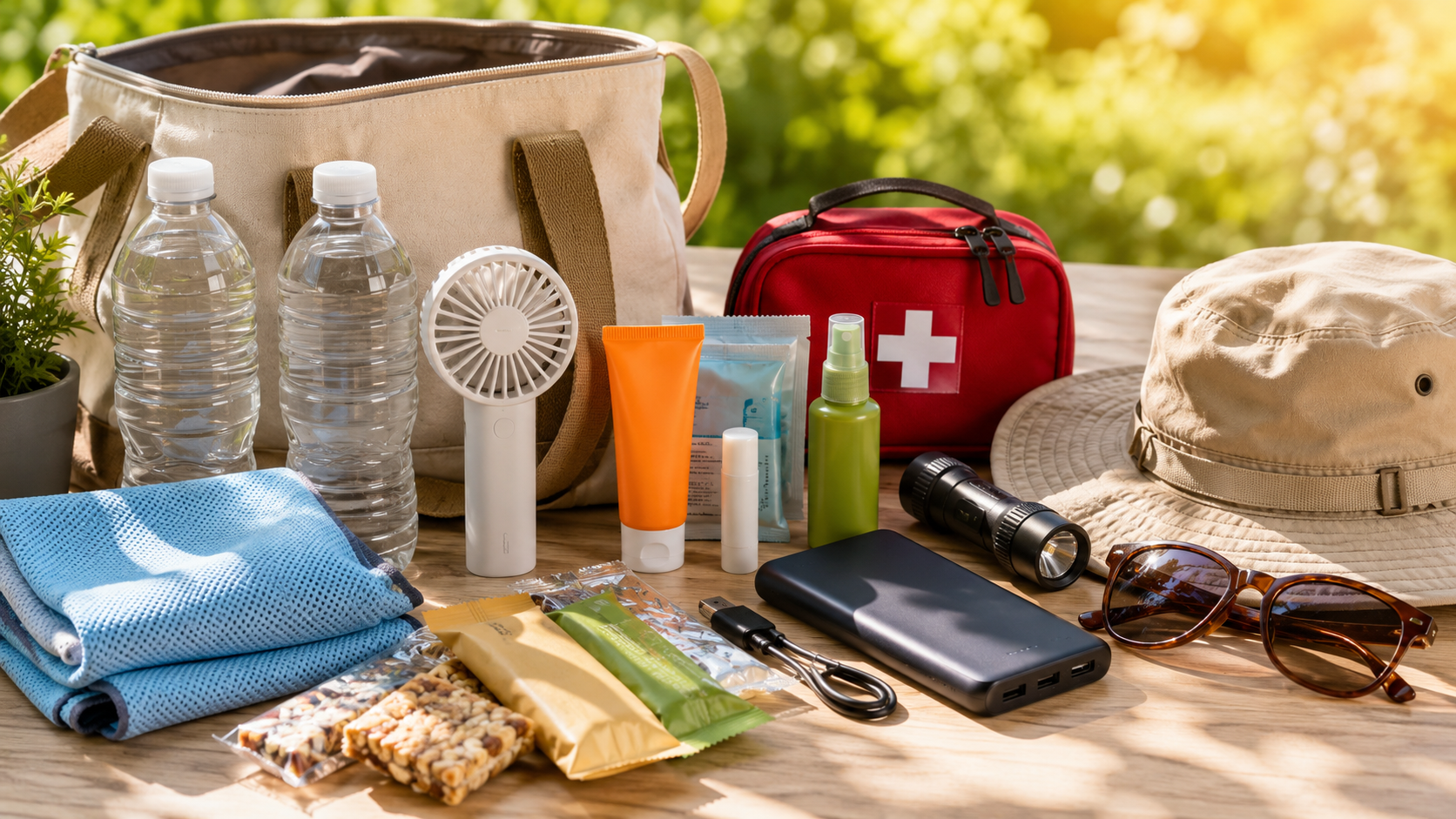
Add cooling towels, instant cold packs, a spray bottle, bandanas, and a battery-powered fan if you can. A small fan does not replace air conditioning during dangerous heat, but it can help with comfort when used wisely and when the indoor temperature is not dangerously high.
Cooling towels are useful because they are light and reusable. Wet them, wring them out, and place them around the neck or wrists. Bandanas can do a similar job. A spray bottle filled with clean water can help mist skin, especially if there is airflow.
Instant cold packs are good for injuries and temporary cooling, though they are single-use. Keep a few in the home kit and maybe one or two in a car kit.
Also think about shade. A wide-brim hat, lightweight long-sleeve shirt, umbrella, or emergency reflective blanket used carefully for shade can help if you are stuck outdoors. In summer, shade can be as important as warmth is in winter.
Sun Protection Is Not Optional
Sunscreen is one of those items people always mean to pack.
Then they forget.
Add broad-spectrum sunscreen, lip balm with SPF, sunglasses, and a hat. For kids, sensitive skin, or long outdoor waits, protective clothing may be easier than trying to reapply sunscreen perfectly while everyone is sweaty and irritated.
A small bottle of aloe gel or after-sun lotion can help with mild sunburn discomfort, but prevention is much better. Once you are burned during an emergency, everything becomes more annoying: sleeping, sweating, wearing a backpack, sitting in a hot car.
Keep sunscreen in more than one place if needed. Home kit, car kit, day bag. The best sunscreen is the one you can actually find before the sun has already done its work.
Just remember that sunscreen can expire and degrade in heat. Check dates and replace it when needed.
First Aid, But Make It Summer-Smart
A basic first aid kit is still the foundation: bandages, gauze, antiseptic wipes, medical tape, tweezers, gloves, pain reliever, and any personal medications.
For summer, add a few extras.
Include blister bandages if your emergency plan involves walking. Add anti-itch cream or hydrocortisone cream for bug bites and rashes. Add oral rehydration solution packets if appropriate for your household. Include burn gel or aloe for minor burns and sunburns. Keep insect repellent in the kit, especially if your area has mosquitoes or ticks.
Tweezers matter more than people think. Splinters, ticks, and tiny bits of debris are not glamorous emergency topics, but they happen.
If anyone in the household has severe allergies, asthma, diabetes, heart conditions, seizures, or other medical needs, the kit should reflect that. Keep a list of medications, dosages, allergies, doctors, and emergency contacts in a waterproof bag. The CDC encourages planning for personal medical needs and first aid supplies as part of emergency preparation.
And please rotate medications. An expired snack is disappointing. An expired rescue medication is a bigger problem.
Power Matters More When Heat Is Involved
A phone is not just for scrolling when the power goes out. It is your weather alert system, flashlight, map, emergency contact list, and sometimes your only way to find a cooling center or road closure update.
Pack power banks and keep them charged. Add charging cables for each device your household actually uses. If everyone has a different charging port, do not pretend one cable will magically solve that.
A small solar charger can help, but do not rely on it as your only backup. Solar charging can be slow and weather-dependent. A charged power bank is usually more dependable in the short term.
A battery-powered or hand-crank radio is also worth keeping. Ready.gov includes a battery-powered or hand-crank radio and NOAA Weather Radio with tone alert in its basic kit recommendations.
During storms, wildfires, or outages, cell service may be unreliable. Old-school information tools suddenly become less old-school and more “thank goodness we have this.”
Light, Batteries, and the Humble Flashlight
Summer power outages can happen in the evening after storms, and a dark hot house is not the vibe anyone asked for.
Keep flashlights, headlamps, and extra batteries. Headlamps are especially useful because they leave your hands free. You can cook, check a fuse box, walk a dog, or dig through a closet without holding a flashlight in your teeth like a tired raccoon.
Avoid relying only on candles. They add fire risk, especially when people are tired, distracted, or dealing with pets and kids.
Glow sticks can be useful for children, bathrooms, hallways, or quick visibility. They are not powerful lights, but they can reduce stumbling around in the dark.
Hygiene Supplies for Hot, Sticky Days
A summer emergency gets uncomfortable fast when showers, laundry, or air conditioning are unavailable.
Pack wet wipes, hand sanitizer, soap, paper towels, trash bags, toilet paper, menstrual products, and a few small quick-dry towels. Ready.gov includes moist towelettes, garbage bags, and plastic ties for personal sanitation in a basic emergency kit.
In hot weather, hygiene is not just about feeling fresh. Sweat, dirt, and damp clothing can irritate skin. Small cuts can get dirty. Hands still need cleaning before meals, after bathroom use, and before handling medications or baby supplies.
A change of lightweight clothing can help more than you might expect. Add socks and underwear too. Dry socks can feel like a luxury item when your feet are sweaty, blistered, or soaked from storm cleanup.
For a car kit, include a small towel and a spare shirt. Breaking down in summer heat while wearing work clothes is miserable enough without staying damp for hours.
Bug Protection Belongs in the Kit
Mosquitoes and ticks do not politely pause during emergencies.
If you may be outside after storms, near standing water, camping, evacuating, or cleaning up debris, insect repellent is worth packing. Add it to the summer kit before you need it.
Long sleeves and pants can also help, especially in tick-heavy areas, but choose lightweight breathable fabric so you do not overheat.
After outdoor cleanup, check for ticks. This is one of those unglamorous habits that can prevent bigger problems later. Keep a small mirror or ask someone to help check hard-to-see areas if ticks are common where you live.
If you have pets, talk to your vet about appropriate flea and tick prevention. Do not use human insect repellent on pets unless a veterinarian says it is safe.
Documents, Cash, and the Boring Items That Save Time
A summer survival kit is not only about physical comfort.
Add copies of IDs, insurance cards, prescriptions, emergency contacts, and important medical information in a waterproof pouch. Keep some cash in small bills. During power outages, card readers and ATMs may not work.
Add a spare house key or car key if that makes sense for your household. Keep local maps, especially if you live in an area with wildfire, hurricane, or flood evacuation routes. Ready.gov includes local maps in its basic emergency kit list.
A permanent marker and small notebook can also be useful. You may need to write down shelter information, medication times, insurance notes, or a message for someone.
These items feel boring until the exact moment they become priceless.
Build Separate Home, Car, and Go Kits
One big kit at home is helpful, but summer emergencies do not always happen while you are standing in your kitchen.
A home kit can be larger: several days of water, food, hygiene supplies, radio, flashlights, first aid, pet supplies, and backup power.
A go bag should be lighter: water, snacks, medications, documents, flashlight, power bank, hygiene items, sunscreen, hat, cash, and basic first aid.
A car kit should focus on breakdowns and delays: water, reflective vest, flashlight, phone charger, snacks that tolerate heat, first aid, sunscreen, hat, cooling towel, jumper cables, tire gauge, and emergency contact info.
Ready.gov recommends preparing supplies for home, work, and car because you may not know where you will be when an emergency happens.
This is practical advice. Emergencies have terrible timing. They do not wait for you to be near your neatly labeled closet bin.
Do Not Forget Pets
Pets need their own summer emergency supplies.
Pack water, food, bowls, leash, waste bags, medications, vaccination records, a carrier if needed, and a familiar small item like a blanket or toy. In summer, also think about heat. Pavement can burn paws. Cars heat up dangerously fast. Some breeds and older animals struggle more in hot weather.
If you may evacuate, know which shelters or hotels accept pets. Do not wait until the last minute to figure that out while holding a nervous cat who has suddenly developed the strength of a wild animal.
Pet prep is household prep.
They cannot pack for themselves, though some dogs would absolutely pack only treats if given the chance.
Check the Kit Before Summer Peaks
A survival kit is not something you assemble once and trust forever.
Heat ruins things. Batteries leak. Snacks expire. Sunscreen gets old. Water containers crack. Power banks slowly lose charge. Children outgrow clothing. Medications change. Pets change foods. Phone cables become outdated because apparently the universe enjoys making chargers complicated.
Set a simple seasonal check.
Before summer gets intense, open the kit and look through it. Replace expired items. Recharge power banks. Check water. Update documents. Make sure the clothes still fit. Add new medications or remove old ones.
Ready.gov recommends maintaining emergency kits by replacing expired items and rethinking needs each year as family needs change.
This does not need to be a whole weekend project. Put on music, give yourself 20 minutes, and make it less mysterious.
A Simple Summer Kit List
For a practical summer survival kit, start with these:
Water for each person and pet
Shelf-stable food that can handle heat
Manual can opener
Flashlight or headlamp
Extra batteries
Battery-powered or hand-crank radio
Power banks and charging cables
First aid kit
Prescription medications and medical info
Sunscreen and SPF lip balm
Hat and sunglasses
Cooling towel, bandana, or spray bottle
Instant cold packs
Insect repellent
Wet wipes, hand sanitizer, trash bags, toilet paper, menstrual products
Lightweight change of clothes
Cash and copies of important documents
Pet supplies
Local maps
Whistle
This list is not glamorous. That is the point. Emergency supplies should be useful before they are impressive.
The Best Kit Is the One You Can Actually Use
A summer survival kit does not need to be perfect.
It needs to be reachable, understandable, and suited to your real life. A family with toddlers needs different supplies than a single adult in an apartment. A person in Arizona has different heat concerns than someone in coastal Maine. A household with pets, medical equipment, or mobility needs should build around those details.
Start with the basics. Add the summer-specific items that help with heat, sun, hydration, bugs, and hygiene. Keep supplies in places that make sense: home, car, work, or a go bag by the door.
Then check the kit before the hottest part of the year.
Preparation is not about expecting every bad thing to happen. It is about making sure a rough day does not become harder than it has to be.
And when the power goes out, the car breaks down, or the heat feels heavier than usual, you will be glad you did the boring little task ahead of time.
Hi, I’m the creator and editor behind ZestyHabit. I research everyday safety, first aid, and practical wellness topics using official guidance and reliable public sources, then turn that information into clear, realistic steps for daily life.
My goal is to help readers make safer, better-informed choices at home and beyond.