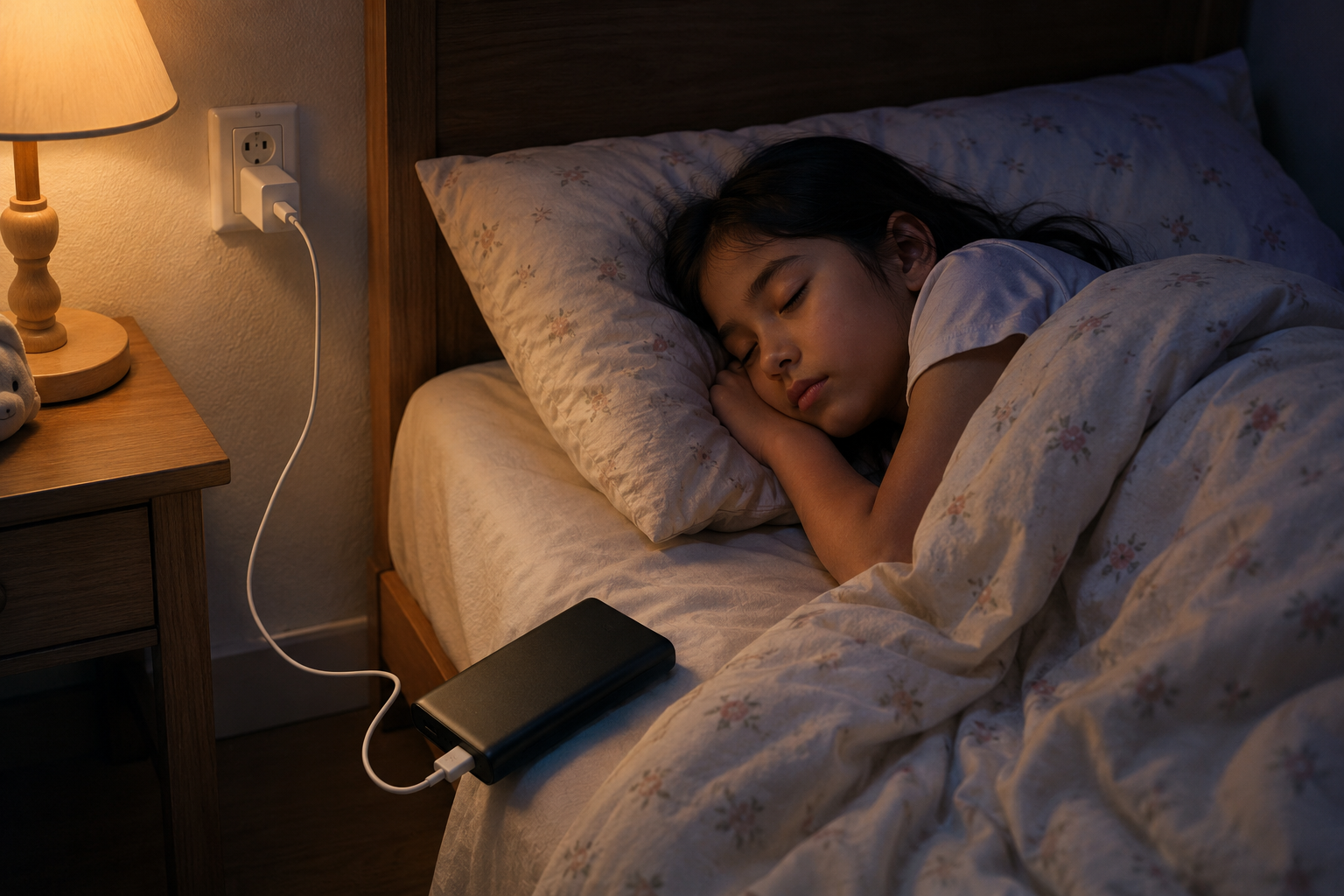
Why You Shouldn’t Charge a Power Bank on Your Bed: A Simple Safety Habit That Matters
Minjin Park
·
Charging a power bank on your bed may seem harmless, but soft bedding can trap heat and increase safety risks. Learn practical ways to charge portable batteries more safely at home.
The Small Charging Habit Many People Don’t Think About
A power bank is one of those things that quietly becomes part of everyday life. You use it while traveling, during long workdays, at school, in the car, or anytime your phone battery starts dropping too fast. Then, at night, you plug it in so it is ready for the next day.
That sounds normal enough.
The problem is where many people charge it.
A lot of people plug in a power bank and leave it on the bed, under a pillow, beside a blanket, or on top of a comforter. It feels convenient because the outlet is near the nightstand, the phone is already on the bed, and everything is within reach.
But charging a power bank on a bed is not a great idea.
A power bank is basically a rechargeable battery pack. When it charges, it can produce heat. Most of the time, that heat is mild and normal. But if heat gets trapped by blankets, pillows, mattresses, or clothing, the device may not cool properly. Add a damaged cable, cheap charger, old battery, or overnight charging habit, and the risk becomes more serious.
This does not mean every power bank is dangerous. It means charging habits matter.
Why Beds Are a Bad Charging Surface
A bed is soft, warm, and covered in fabric. That is exactly why it is comfortable for people. But it is not ideal for electronics that need airflow.
When a power bank is charging, heat needs to escape. A hard, flat surface like a desk, table, or nightstand allows heat to spread and air to move around the device. A bed does the opposite. The power bank can sink into the blanket or mattress, and fabric can wrap around the sides.
Even if it does not feel hot at first, the temperature can slowly build over time.
The risk is higher if the power bank ends up under a pillow or comforter. Many people do this accidentally. You plug it in, move around in bed, pull the blanket up, or place your phone nearby, and suddenly the battery pack is partly covered.
That trapped heat is the main reason beds are not a safe charging spot.
Power Banks Use Lithium-Ion Batteries
Most modern power banks use lithium-ion or lithium-polymer batteries. These battery types are common because they store a lot of energy in a small space. They are used in phones, laptops, tablets, wireless earbuds, and many portable devices.
Under normal conditions, they work well. But batteries do not like heat, physical damage, poor-quality chargers, or electrical stress.
A power bank contains more than just the battery cells. It also has a circuit board, charging ports, protective components, and a casing. Good-quality models are designed with safety features such as overcharge protection, temperature control, and short-circuit protection.
But safety features are not a reason to be careless. They are a backup, not an invitation to charge the device anywhere.
If the battery is defective, damaged, counterfeit, very old, or exposed to heat for long periods, it may become less stable. That is why simple charging habits can make a real difference.
The Main Risk: Heat Buildup
The biggest everyday risk of charging a power bank on a bed is heat buildup.
A little warmth during charging can be normal. But a power bank should not feel very hot. It should not be uncomfortable to touch, smell strange, swell, make noises, or discolor.
On a bed, heat can build faster because fabric acts like insulation. Think about how a blanket keeps your body warm by trapping heat. The same thing can happen to a charging device.
This is especially important during overnight charging. If you plug in a power bank before bed and fall asleep, you may not notice if it becomes too warm. The device could stay covered for hours.
A safer habit is to charge the power bank while you are awake, on a hard surface, with space around it.
Soft Bedding Can Block Airflow
Electronics do not need a strong breeze, but they do need some room to release heat. Beds, pillows, and blankets block that natural cooling.
A power bank sitting on a wooden desk has open air around it. A power bank sitting on a thick comforter may be surrounded by fabric on several sides. If it rolls slightly, sinks into the bedding, or gets covered, airflow becomes even worse.
This is one reason laptops are also not ideal on beds. The same basic idea applies: soft surfaces trap heat and block ventilation.
Power banks may not have visible vents like laptops, but they still benefit from being on a stable surface where heat can spread out.
Why Overnight Charging Makes the Problem Worse
Charging a power bank overnight is common because it feels practical. You go to sleep, and by morning it is fully charged. But overnight charging removes one important safety layer: your attention.
When you are awake, you may notice if something feels wrong. You may smell plastic, see a cable bent sharply, hear a strange sound, or feel that the device is too hot. When you are asleep, you may not catch these warning signs early.
Modern power banks usually stop charging once full, or reduce charging current. But this depends on the product quality and condition. Cheap, damaged, or poorly made battery packs may not manage charging as reliably.
The risk is still low with a good product used correctly. But it is unnecessary to add bedding, trapped heat, and hours of unattended charging to the situation.
Common Mistakes People Make With Power Banks
One common mistake is charging a power bank under a pillow because the outlet is near the bed. People may do this to keep things tidy, hide the bright indicator lights, or avoid stepping on the device.
Another mistake is stacking items on top of it. A phone, book, blanket, sweatshirt, or second device may be placed over the power bank without much thought.
People also use whatever cable is nearby. A frayed cable, loose connector, or low-quality adapter can create extra heat or unstable charging. The power bank may not be the only issue. The entire charging setup matters.
Some people charge the power bank while also using it to charge a phone. This is called pass-through charging. Some power banks support it, but not all do. Even when supported, it may generate more heat than charging the power bank alone.
Doing that on a bed adds another layer of risk.
Warning Signs Your Power Bank Is Not Safe to Use
A power bank should be replaced or stopped immediately if it shows signs of damage. Do not ignore changes just because the device still works.
Watch for these warning signs:
The power bank feels unusually hot while charging.
The case is swollen, bulging, cracked, or separating.
There is a chemical, burning, or plastic-like smell.
The charging cable or port feels loose or unstable.
The device makes hissing, popping, or crackling sounds.
The power bank charges much slower than before.
It shuts off randomly or behaves unpredictably.
There are scorch marks, melted areas, or discoloration.
The battery drains unusually fast after a full charge.
A swollen battery is especially important. If the case looks puffed up, do not keep using it. Do not press it flat, puncture it, or toss it casually into a drawer. Handle it carefully and follow local guidance for battery disposal or recycling.
The Cable and Charger Matter Too
Many charging problems are not caused by the power bank alone. The cable and wall adapter can also create issues.
A cheap cable with poor internal wiring may heat up. A damaged cable may expose wires or create unstable charging. A charger that does not match the power bank’s requirements may cause slow charging, overheating, or stress on the device.
It is best to use the cable and charger recommended by the manufacturer or a reliable certified replacement. Avoid using cords with cracked insulation, bent connectors, or loose ends.
A power bank problem can become more dangerous when it happens near flammable materials. Beds are full of fabric: sheets, blankets, pillows, mattress covers, pajamas, and sometimes clothing or towels.
Again, this does not mean a power bank will suddenly catch fire every time it charges. Most do not. But if something does go wrong, the bed is one of the worst places for it to happen.
Hard surfaces are safer because they are less likely to trap heat and less likely to catch quickly. A nightstand, desk, kitchen counter, or open shelf is a better choice.
The goal is not to be afraid of charging. The goal is to avoid charging in places where a small problem could become a bigger one.
Safer Places to Charge a Power Bank
The best charging spot is a hard, flat, stable surface with good airflow.
A nightstand is usually fine if it is not covered with papers, clothes, or tissues. A desk, table, countertop, or open shelf can also work well. The device should not be under anything, pressed against fabric, or sitting in direct sunlight.
Try to leave a little space around it. Do not sandwich it between books, tuck it behind pillows, or place it inside a bag while charging.
If the power bank has indicator lights that bother you at night, do not hide it under bedding. Instead, charge it earlier in the evening or place it somewhere the light is less noticeable.
A Simple Charging Routine That Works
A good routine can be very easy.
When you get home, place the power bank on a desk or table. Plug it into a reliable charger. Let it charge while you are awake and nearby. Once it is full, unplug it and store it in a cool, dry place.
If you need to charge it overnight, place it on a clear hard surface away from bedding, curtains, paper, and clothing. Make sure the cable is not bent sharply or trapped.
Do not charge it in direct sunlight, near a heater, on a radiator, or inside a hot car. Heat is one of the main things that shortens battery life and increases safety concerns.
What About Charging Your Phone on the Bed?
The same general rule applies to phones. Charging a phone under a pillow or blanket is not a good habit. Phones also produce heat while charging, especially during fast charging, gaming, video streaming, or software updates.
If your phone is connected to a power bank, both devices may warm up. If both are lying on a bed under fabric, the heat has fewer places to go.
A safer setup is to keep both devices on a nightstand or table. If you use your phone as an alarm, place it nearby but not under bedding.
Travel and Hotel Room Habits
Power banks are especially useful when traveling, but travel can make charging habits messier. Hotel rooms may have awkward outlets, limited surfaces, or beds near the only convenient plug.
It is still worth avoiding the bed. Use the desk, TV stand, luggage rack, or a clear section of a table. If you must use an outlet near the bed, place the power bank on the nightstand rather than the mattress.
Do not charge it inside a suitcase, backpack, or pouch. Bags can trap heat just like bedding. They also make it harder to notice if something smells strange or becomes too warm.
Be Careful With Cheap or No-Name Power Banks
Not all power banks are made with the same quality standards. Very cheap, no-name models may have weaker safety controls, inaccurate capacity claims, or lower-quality battery cells.
A good power bank does not have to be expensive, but it should come from a reliable brand or seller. Look for clear labeling, safety certifications where applicable, realistic capacity numbers, and solid customer reviews.
Be careful with fake products, damaged secondhand battery packs, or power banks that feel poorly made. If the price seems unusually low for a very high capacity, that can be a red flag.
A trustworthy power bank is still not something to charge on a bed, but product quality does matter.
How to Store a Power Bank Safely
Storage is part of safety too. Do not leave a power bank loose in a drawer with keys, coins, metal tools, or other objects that could damage the ports. Do not store it in hot places such as a car dashboard or near a window.
Keep it in a cool, dry place. If you do not use it for a long time, check the manufacturer’s instructions. Many rechargeable batteries do better when stored partially charged rather than completely empty for months.
Inspect it before using it again. If it looks swollen, cracked, or damaged, do not charge it just to “test it.”
What to Do If a Power Bank Gets Hot
If a power bank becomes warmer than usual, unplug it and move it away from bedding or flammable materials if it is safe to do so. Let it cool on a hard, nonflammable surface.
Do not keep using it if the heat seems abnormal. Do not put it in the freezer or pour water on it. Sudden temperature changes and moisture can create other problems.
If it repeatedly overheats, replace it. A power bank is not worth taking risks over, especially when safer replacements are widely available.
Practical Safety Checklist
Before charging your power bank, ask yourself a few quick questions.
Is it on a hard, flat surface? Is it uncovered? Is the cable in good condition? Is the charger reliable? Is the power bank free from swelling, cracks, strange smells, and hot spots? Is it away from pillows, blankets, clothing, paper, and direct heat?
If the answer is yes, you are already using a much safer setup than charging it on the bed.
This habit takes almost no extra effort. You are simply moving the device from a soft surface to a safer one.
Conclusion: Charge It Like a Battery, Not Like a Pillow
Charging a power bank on your bed may feel harmless because it is small, familiar, and quiet. But it is still a battery-powered electrical device, and it needs space to release heat safely.
Beds are comfortable for people, but they are not ideal for charging electronics. Blankets and pillows can trap heat, hide warning signs, and place the device near flammable materials. The risk becomes more concerning when the power bank is old, damaged, cheap, covered, or left charging overnight.
The safer habit is simple: charge your power bank on a hard, open surface, use a good cable and charger, keep it uncovered, and pay attention to warning signs like swelling, strange smells, or unusual heat.
You do not need to be scared of using power banks. Just treat them with a little respect. A small change in where you charge them can make your home routine safer and more reliable.
Hi, I’m the creator and editor behind ZestyHabit. I research everyday safety, first aid, and practical wellness topics using official guidance and reliable public sources, then turn that information into clear, realistic steps for daily life.
My goal is to help readers make safer, better-informed choices at home and beyond.