Cica Skincare: How to Understand It and Use It the Right Way
Minjin Park
·
Cica is one of those skincare words that sounds soft and comforting before you even know what it means.
You see it on creams, serums, sheet masks, toners, calming pads, barrier balms, and sometimes even sunscreens. The packaging is usually green or beige. The words around it are very soothing: calming, repair, sensitive skin, redness relief, barrier care.
Honestly, it has excellent branding.
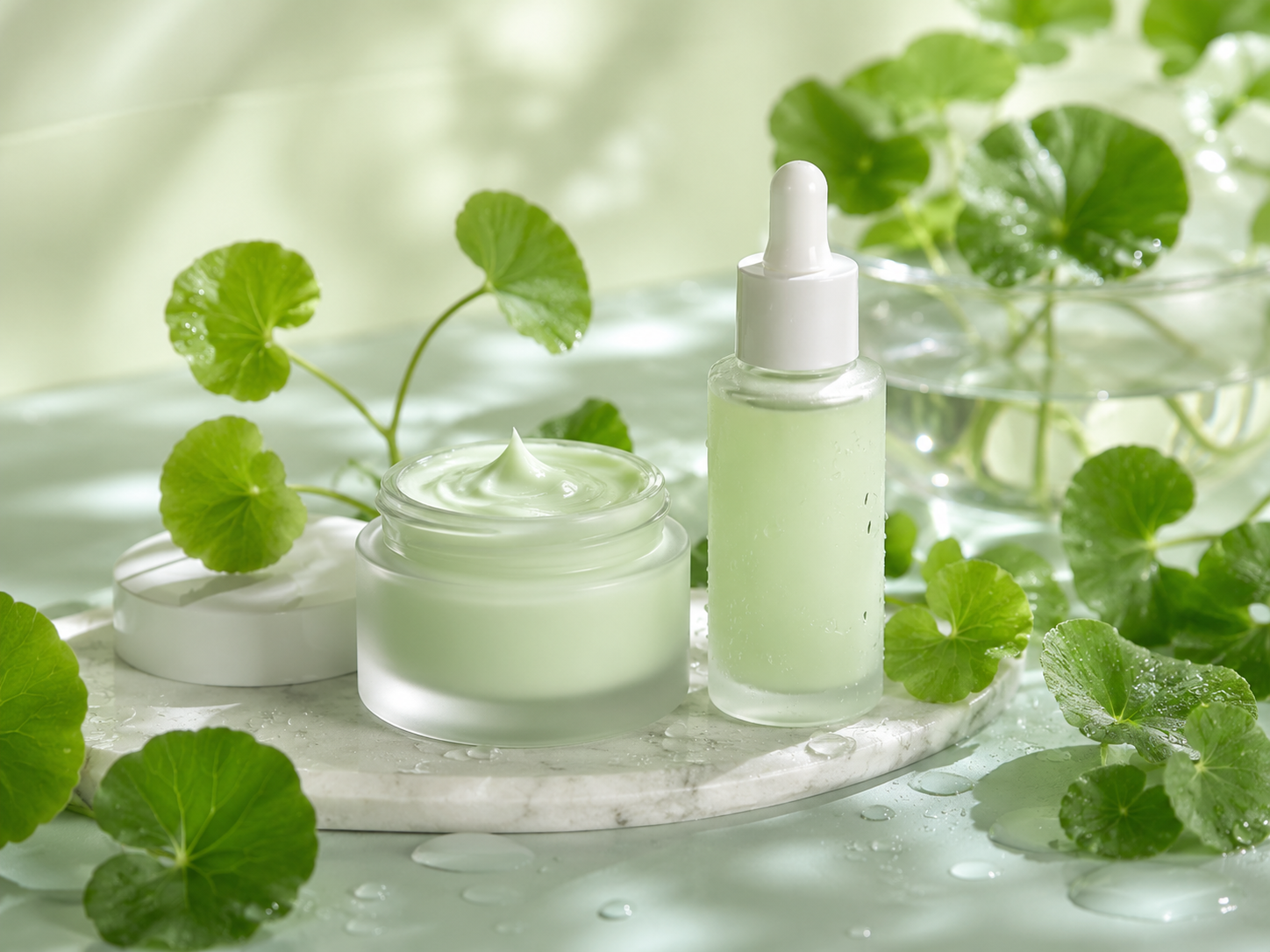
But cica is not just a trendy label. It usually refers to ingredients derived from Centella asiatica, a plant that has been used in traditional care for a long time and is now very common in modern skincare. In beauty products, cica is mainly known for calming irritated skin, supporting the skin barrier, and helping skin feel more comfortable.
That sounds simple, but it’s also easy to misunderstand.
Cica is not a miracle cure. It will not erase acne overnight. It will not magically fix a damaged skin barrier in one application. And not every product with “cica” on the label is automatically gentle.
Still, when used properly, cica can be a very helpful ingredient, especially if your skin often feels red, tight, sensitive, or overworked.
Let’s talk about what cica actually does, who might benefit from it, and how to use it without turning your routine into a green-labeled product collection.
Cica usually refers to Centella asiatica, also called tiger grass in some skincare marketing.
In skincare formulas, you may see it listed in a few different ways. Sometimes it appears as Centella asiatica extract. Other times you may see related components like madecassoside, asiaticoside, madecassic acid, or asiatic acid.
You don’t need to memorize every ingredient name like you’re studying for a chemistry exam. The basic idea is that cica ingredients are used because they may help soothe the skin and support recovery from irritation.
That’s why cica products are often marketed toward sensitive, irritated, dry, acne-prone, or barrier-damaged skin.
The key word here is support.
Cica helps create a calmer environment for the skin. It does not do all the work alone.
Your cleanser, moisturizer, sunscreen, exfoliation habits, and overall routine still matter.
Why Cica Became So Popular
Cica became popular because a lot of people have stressed skin.
We use retinol. We use exfoliating acids. We try vitamin C. We test new sunscreens. We wear makeup. We cleanse twice. We deal with air conditioning, cold weather, pollution, masks, stress, poor sleep, and sometimes we pick at our skin even though we know better.
Then one day, the skin barrier gets tired.
The face feels hot. Products sting. Redness appears. The cheeks feel tight. The area around the mouth flakes. Acne spots look angrier. Makeup looks rough. Suddenly, your skin is not “glowing.” It is negotiating.
Cica fits perfectly into this modern skincare problem because it sounds like relief.
And sometimes, it really can help.
A good cica product can make irritated skin feel calmer, softer, and more protected. It can be especially useful when your skin feels like it needs a break from stronger ingredients.
Not exciting in a dramatic way. More like a quiet cup of tea for your face.
Which, honestly, is sometimes exactly what skin needs.
What Cica Can Do for the Skin
Cica is mostly used for calming and barrier support.
If your skin feels irritated, dry, or sensitive, cica may help reduce that uncomfortable feeling. It is often included in products meant to soothe redness, support healing-looking skin, and make the skin barrier feel stronger.
It can be helpful when your skin is dealing with:
dryness
redness
rough texture from irritation
tightness
sensitivity after over-exfoliating
discomfort from acne treatments
a weakened skin barrier
post-breakout irritation
But cica is not the same as a prescription treatment. It is not a replacement for medical care if you have severe acne, eczema, rosacea, infection, or a serious rash.
Think of cica as a supportive ingredient.
It helps your skin feel more comfortable while your routine gives it the right conditions to recover.
Cica and the Skin Barrier
The skin barrier is basically your skin’s protective wall.
When it is healthy, your skin holds moisture better and reacts less dramatically to the world. When it is weakened, everything becomes annoying. Your moisturizer stings. Your sunscreen burns. Your cheeks look red. Your skin feels tight after cleansing. You start wondering if every product you own has betrayed you.
Cica is often used in barrier-supporting products because it can help calm the look and feel of stressed skin.
But here is the important part: cica alone cannot repair your barrier if you keep damaging it every night.
If you are using strong acids, retinoids, scrubs, acne treatments, cleansing brushes, and drying masks all at once, a cica cream may help a little, but it cannot fully protect your skin from an aggressive routine.
That’s like drinking one glass of water while standing in the desert wearing a wool coat. Helpful, yes. Enough? Probably not.
If your barrier feels damaged, simplify first. Then use cica as part of the repair routine.
Who Should Try Cica?
Cica can be useful for many skin types, but it tends to be especially popular with people who have sensitive or irritated skin.
You might like cica if your skin often feels:
red after washing
tight in dry weather
irritated from acne products
sensitive after exfoliation
uncomfortable around the cheeks or mouth
rough but not necessarily oily
easily reactive to new products
It can also be helpful if you use active ingredients like retinoids, benzoyl peroxide, salicylic acid, or exfoliating acids. These ingredients can be effective, but they can also dry out the skin. Cica products may help balance the routine by adding a calming step.
People with acne-prone skin may also like cica, especially if breakouts leave redness or irritation.
But if your skin clogs easily, choose the texture carefully. A heavy cica balm may feel comforting but could be too rich for some acne-prone skin. A lightweight cica gel or lotion may be better.
The ingredient is only part of the story.
The formula matters just as much.
Cica Is Not Only for Sensitive Skin
Cica has a sensitive-skin reputation, but normal, oily, combination, and dry skin types can use it too.
If your skin is oily, cica can be helpful when you want calming care without using a heavy cream. Look for gel creams, watery serums, or light lotions.
If your skin is dry, you may prefer a richer cica cream that also contains ingredients like ceramides, glycerin, panthenol, or squalane.
If your skin is combination, you can use cica only where you need it. Maybe your cheeks get red, but your forehead gets oily. That’s fine. Apply a calming cream to the cheeks and a lighter product on the T-zone.
Skincare does not have to be one identical layer everywhere.
Your face can have different neighborhoods. They don’t all need the same rent.
Cica for Acne-Prone Skin
Cica can be useful for acne-prone skin, but it is not an acne treatment by itself.
It does not replace benzoyl peroxide, salicylic acid, adapalene, or prescription acne treatments. It does not unclog pores the way exfoliating ingredients can. It does not remove acne bacteria like benzoyl peroxide.
But it can help with the irritation that often comes with acne.
Acne-prone skin can be inflamed, red, sore, and easily irritated. And acne treatments can sometimes make that worse if used too aggressively. A cica product may help calm the skin and make a treatment routine easier to tolerate.
If your acne treatment dries your skin so badly that you quit after one week, it is not very helpful. A calming moisturizer can make the routine more sustainable.
Cica may also help with the look of post-breakout redness, especially when used consistently with sunscreen. But for dark marks or deeper pigmentation, other ingredients may be needed too, like azelaic acid, niacinamide, retinoids, or vitamin C, depending on your skin.
Cica is a helper.
Not the entire team.
Cica After Over-Exfoliating
Over-exfoliation is one of the most common reasons people reach for cica.
You use an exfoliating toner. Then maybe a peeling serum. Then a scrub because your skin still feels rough. Then suddenly your face feels hot, shiny, tight, and weirdly smooth in a bad way.
That is not glow.
That is your barrier asking for mercy.
When this happens, cica can be useful as part of a recovery routine. But the first step is to stop exfoliating for a while. Pause acids, scrubs, retinoids, and strong acne treatments until your skin feels calmer.
Then keep the routine boring:
Gentle cleanser. Cica serum or cream. Moisturizer. Sunscreen in the morning.
That’s it.
No “just one more exfoliating pad.” No “maybe a clay mask will fix it.” No “but my pores.”
Your skin needs calm, not a group project.
How to Use Cica in Your Routine
Cica can show up in many different product types, so how you use it depends on the product.
If it is a toner or essence, use it after cleansing.
If it is a serum, apply it before moisturizer.
If it is a cream, use it as your moisturizer or after a lighter serum.
If it is a balm, use it as the last step on dry or irritated areas.
In the morning, follow with sunscreen. This is especially important if your skin is irritated, recovering, or dealing with marks after acne. Sun exposure can make redness and discoloration linger longer.
At night, cica can be used after active ingredients, or on recovery nights when you skip actives completely.
Simple routines are underrated. Skin often likes them more than we do.
Should You Use Cica Every Day?
Most people can use cica every day if the product suits their skin.
Because cica is generally used for soothing and barrier support, it is not something you need to cycle like strong exfoliating acids. You can use it morning, night, or both.
But daily use depends on the formula.
A lightweight cica serum may be easy to use every day. A thick cica balm may be too heavy for daytime or for oily areas. A cica product with extra active ingredients may not be suitable for twice-daily use.
Always look beyond the word “cica” on the front label.
Some products include fragrance, essential oils, alcohol, exfoliating acids, or other ingredients that may not be ideal for sensitive skin. A cica product can still irritate you if the overall formula is not right.
Gentle branding does not always mean gentle product.
Annoying, but true.
Can You Use Cica With Retinol?
Yes, cica can pair nicely with retinol.
Retinol and other retinoids can improve texture, acne, and signs of aging over time, but they can also cause dryness, peeling, and irritation. Cica can help support the skin while it adjusts.
If you are new to retinol, you might use a cica moisturizer after retinol. Or you can use the “sandwich method,” where you apply moisturizer, then retinol, then moisturizer again.
Some people use cica on non-retinol nights as a recovery step. That can work too.
The main thing is not to push through severe irritation. If your skin is burning, cracking, or peeling heavily, reduce the retinol frequency and focus on barrier repair.
Cica can help calm the situation, but it cannot make an overly aggressive routine magically safe.
Your skin has limits. Very inconvenient, but real.
Can You Use Cica With Vitamin C?
Usually, yes.
Vitamin C is often used in the morning for brightness and antioxidant support. Cica can help keep the skin comfortable, especially if vitamin C makes your skin tingle or feel slightly dry.
A morning routine might look like this:
Cleanse or rinse. Apply vitamin C. Apply cica serum or moisturizer. Apply sunscreen.
If your vitamin C product is strong and your skin is sensitive, cica may be a nice supporting step. But if vitamin C burns every time you use it, do not just cover the problem with cica. You may need a gentler vitamin C formula or a different brightening ingredient.
Skincare should not feel like a test of bravery.
Can You Use Cica With Exfoliating Acids?
Yes, but carefully.
Cica can be a good partner for exfoliating acids because it helps calm and moisturize the skin. But if your skin is already irritated, do not use exfoliating acids just because you have cica in the routine.
For example, if you use glycolic acid or salicylic acid a few times a week, a cica cream afterward may help reduce dryness.
But if you use acids every night, your skin burns, and you keep applying cica like a peace offering, that’s not balance. That’s damage control.
Exfoliation should make your skin smoother over time, not permanently red and sensitive.
Cica supports. It does not cancel out overuse.
Cica for Redness
Cica is often used for visible redness, especially redness caused by irritation, dryness, or a weakened skin barrier.
If your cheeks look flushed after cleansing or your skin gets red easily when trying products, cica may help calm the appearance over time. It can be especially useful when paired with a gentle cleanser and a proper moisturizer.
But redness can have many causes. Rosacea, eczema, allergies, acne, sun damage, and irritation can all create redness. If your redness is persistent, painful, spreading, or accompanied by burning and bumps, it is worth seeing a dermatologist.
Cica may help the skin feel better, but it is not a diagnosis.
Sometimes skin needs more than a calming cream.
Cica for Dryness and Flaking
Cica can help dry, flaky skin when it is part of a moisturizing formula.
But cica extract alone is not always enough for dryness. If your skin is truly dry, look for cica products that also contain barrier-supporting ingredients like ceramides, cholesterol, fatty acids, glycerin, panthenol, or squalane.
If your skin is flaky because of over-exfoliation, retinoids, harsh cleansers, or cold weather, a cica cream can be comforting. Apply it after cleansing while the skin is slightly damp, then seal with moisturizer if needed.
If your skin is very dry, a thin layer of ointment over irritated patches at night can help too.
Just don’t keep peeling the flakes.
Dry skin usually wants moisture, not punishment.
Cica and Wound Healing Claims
You may see people talk about cica as a “healing” ingredient.
This can be a little tricky.
Centella-derived ingredients are often studied for skin repair and soothing properties, and they are used in products that support irritated or compromised skin. But a cosmetic cica cream is not the same thing as a medical wound treatment.
Do not apply regular skincare products to deep cuts, infected wounds, burns, or serious skin injuries unless a medical professional tells you to.
For minor irritation, dryness, or post-acne discomfort, cica skincare can be helpful.
For actual wounds, be more careful.
Skincare TikTok is not emergency care. Unfortunately.
Choosing the Right Cica Product
Choosing a cica product depends on what your skin needs.
If your skin is oily or acne-prone, look for a lightweight cica gel, serum, or lotion. Avoid very heavy balms unless you only use them on small dry patches.
If your skin is dry, a cica cream may be better than a watery serum. Dry skin usually needs both soothing ingredients and richer moisturizing support.
If your skin is sensitive, choose fragrance-free formulas when possible. Avoid products with strong essential oils, heavy perfume, or too many extra actives.
If your skin is damaged from over-exfoliation, choose the simplest product you can. This is not the time to test a cica product that also contains acids, retinol, and brightening ingredients.
If your skin is normal but occasionally irritated, you may only need cica during certain times: after shaving, after too much sun, during winter, after trying a strong active, or when your skin feels unusually reactive.
You do not have to use cica forever just because it is popular.
Use it when it makes sense.
Cica Cream vs. Cica Serum
A cica serum is usually lighter. It may be better if you want a calming layer under moisturizer or sunscreen. Oily and combination skin types often prefer this texture.
A cica cream is usually more moisturizing. It may be better for dry, irritated, or barrier-damaged skin. Some cica creams can replace your regular moisturizer.
A cica balm is usually thicker and more protective. It may be useful for small rough patches, around the nose, or areas that feel very dry. But it may be too heavy for the entire face if you clog easily.
There is no best version for everyone.
The best version is the one your skin tolerates and you actually use.
Very boring. Very true.
How Long Does Cica Take to Work?
Some people feel comfort immediately after applying a cica cream, especially if the formula is moisturizing. The skin may feel less tight or less hot within minutes.
But visible improvement in redness, dryness, or barrier damage usually takes longer. Think days to weeks, depending on what caused the irritation and whether you stop the habits that are making it worse.
If you keep over-exfoliating, picking, using harsh cleansers, skipping sunscreen, and sleeping in makeup, cica will have a hard time keeping up.
It is helpful, not magical.
Skin repair takes consistency. And sometimes, the hardest part is not adding cica.
It is removing the things that keep irritating your skin.
Common Mistakes With Cica
The first mistake is expecting cica to fix everything. It is soothing, but it is not a cure-all.
The second mistake is using a cica product while keeping an overly harsh routine. If your skin is irritated, simplify.
The third mistake is assuming all cica products are gentle. Some contain fragrance or strong extras that sensitive skin may not like.
The fourth mistake is choosing the wrong texture. A thick cica balm may break out oily skin, while a watery cica toner may not be enough for very dry skin.
The fifth mistake is skipping sunscreen. If you are using cica to calm redness or post-acne marks but not protecting your skin from sun, you are making the process harder.
Cica can help the skin calm down.
Sunscreen helps prevent the problem from lingering.
They work well together.
A Simple Cica Routine for Irritated Skin
If your skin feels sensitive, red, or overworked, try keeping things very simple for a while.
Morning:
Rinse with water or use a gentle cleanser. Apply cica serum or cream. Apply sunscreen.
Night:
Use a gentle cleanser. Apply cica serum or cream. Apply moisturizer if needed.
Avoid exfoliating acids, strong retinoids, scrubs, drying masks, and too many new products until your skin feels normal again.
If your skin is very dry, use a richer moisturizer at night. If your skin is oily, use a lighter cica gel or lotion. If only certain areas are irritated, apply cica there instead of all over.
A recovery routine should feel calm.
If it stings every night, something is wrong.
When Cica Might Not Be Enough
Cica is useful, but it has limits.
If you have severe acne, painful cysts, persistent redness, burning, eczema-like patches, signs of infection, or a rash that keeps spreading, don’t rely only on skincare. A dermatologist can help identify what is actually happening.
Also, if every product suddenly stings and your skin looks raw, you may need to pause most products and focus on medical-level barrier care. Sometimes less is better.
Cica is a nice ingredient.
But your skin does not need endless calming products if the real issue is irritation from too many products.
That is the skincare irony. We buy more things to fix the problems caused by too many things.
I hate that it’s true.
So, How Should You Think About Cica?
Cica is a calming, supportive skincare ingredient that can be especially helpful for sensitive, irritated, dry, acne-prone, or barrier-stressed skin. It is not an exfoliant. It is not an acne medication. It is not a miracle repair tool. But it can be a very useful part of a balanced routine.
Use it when your skin feels red, tight, overworked, or uncomfortable. Choose a texture that fits your skin type. Pair it with moisturizer and sunscreen. Be careful with strong actives. And don’t expect one cica cream to undo weeks of over-exfoliation overnight.
The best thing about cica is not that it sounds trendy.
It is that it encourages a slower, gentler kind of skincare.
And honestly, many of us need that.
Not more harsh routines. Not more panic exfoliation. Not another product promising glass skin by morning.
Just calmer skin, a stronger barrier, and a routine that doesn’t make your face feel like it’s constantly defending itself.
Hi, I’m the creator and editor behind ZestyHabit. I research everyday safety, first aid, and practical wellness topics using official guidance and reliable public sources, then turn that information into clear, realistic steps for daily life.
My goal is to help readers make safer, better-informed choices at home and beyond.