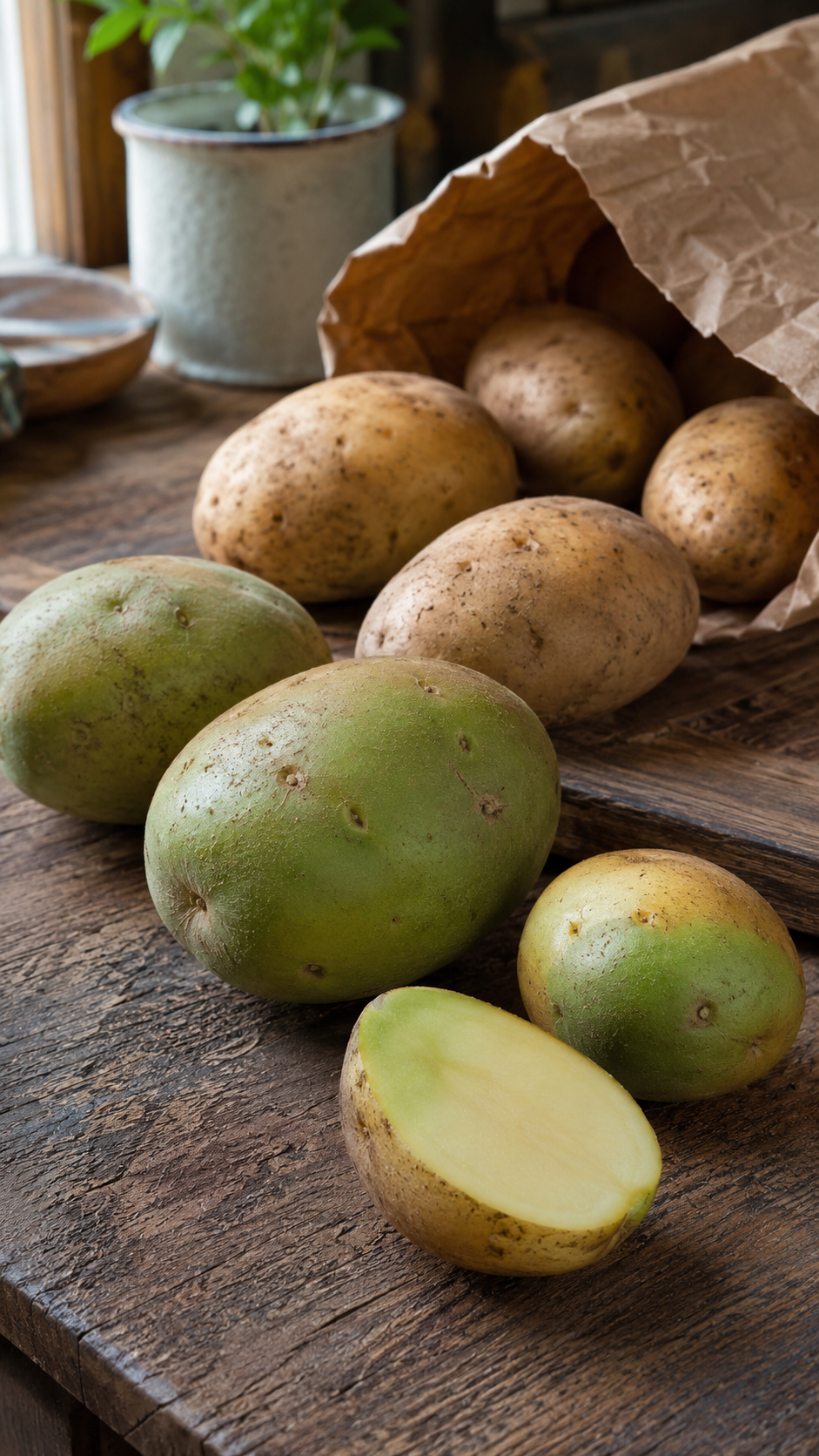
Introduction: When a Potato Looks a Little Too Green
You grab a potato from the pantry, turn it in your hand, and notice a greenish patch under the skin. It might be just a small area near one side, or the whole potato may have a pale green tint.
At first, it is tempting to shrug it off. Potatoes are sturdy. They are cheap. They seem like the kind of food that can survive almost anything. And if you were planning mashed potatoes or roasted potatoes for dinner, throwing one away can feel annoying.
That green color is not just a harmless cosmetic issue. It usually means the potato has been exposed to light. Along with the green color, the potato may also have higher levels of natural compounds that can make it unsafe or unpleasant to eat in larger amounts.
This does not mean you need to be afraid of potatoes. Potatoes are a normal, useful food in many kitchens. The key is knowing when a green spot can be cut away, when the potato should be discarded, and how to store potatoes so they do not turn green in the first place.
Why Potatoes Turn Green
Potatoes turn green when they are exposed to light.
The green color comes from chlorophyll, the same pigment that makes many plants green. Chlorophyll itself is not the main safety problem. The bigger concern is that light exposure can also encourage potatoes to produce higher levels of natural defensive compounds called glycoalkaloids.
The two most well-known glycoalkaloids in potatoes are solanine and chaconine.
These compounds help protect the potato plant from insects, disease, and damage. They are naturally present in potatoes, especially in the skin, sprouts, eyes, and green areas. When the potato is exposed to light, damaged, or stored poorly, the levels can increase.
So the green color is like a warning sign. It tells you the potato has been under conditions that may also increase bitterness and unwanted compounds.
In everyday kitchen terms, green means “slow down and inspect this before cooking.”
Is the Green Color Itself Dangerous?
The green color itself is mostly chlorophyll, and chlorophyll is not the main issue.
The reason people warn against green potatoes is because greening often happens alongside increased solanine and chaconine. You cannot tell exactly how much of those compounds are present just by looking at the potato.
A lightly green patch on one side of a firm potato is different from a potato that is green all over, bitter, sprouted, soft, or wrinkled.
That is why the decision is not only about color. It is about the whole potato.
Ask yourself:
Is the potato firm?
Is the green area small or large?
Are there sprouts?
Does it smell normal?
Is the skin smooth or shriveled?
Does it look fresh enough to trust?
If the potato has several warning signs, it is better to throw it away.
Why Solanine and Chaconine Matter
Solanine and chaconine are naturally occurring compounds found in potatoes and other parts of the potato plant.
At low levels, they are part of the plant’s normal defense system. At higher levels, they can cause a bitter taste and may lead to stomach upset or other symptoms if enough is eaten.
This is why green potatoes should not be treated like regular potatoes.
The highest concentrations are often found in the peel, green areas, sprouts, and just beneath the skin. Peeling can reduce some of the concern when the greening is minor, but it does not make every green potato safe.
Cooking is also not a reliable fix. Boiling, baking, frying, or microwaving does not guarantee that the unwanted compounds are removed.
That is one of the most important points for everyday kitchen safety: you should decide whether the potato is acceptable before you cook it, not after.
When You Can Cut Away a Green Spot
If a potato is firm, fresh-looking, and has only a small green patch, you may be able to cut away the green area generously.
Do not shave off only the thin green surface. Cut deeper and wider around the affected area. Peeling the potato can also help remove compounds concentrated near the skin.
After trimming, check the rest of the potato. It should look normal inside, smell normal, and feel firm.
This approach is reasonable for a potato with a small green spot and no other signs of aging or spoilage.
But if you find yourself cutting away half the potato, that is a clue. At that point, it is usually better to throw it away and use a different one.
Food safety does not need to become a debate over every inch of a potato. If it looks questionable, move on.
When to Throw a Green Potato Away
Some green potatoes are not worth saving.
Throw away a potato if:
It is green over a large area.
It tastes bitter.
It has long sprouts.
It is soft, mushy, or wrinkled.
It smells rotten or unpleasant.
It has mold or wet spots.
It is leaking liquid.
The inside looks dark, slimy, or unusual.
A bitter taste is especially important. If you cook a potato and it tastes unusually bitter, stop eating it. Do not try to cover the taste with butter, cheese, salt, or sauce.
Bitterness can be a sign of higher glycoalkaloid levels. It is better to discard the food than to force yourself through it.
If children, older adults, pregnant people, or anyone with a weakened immune system will be eating the meal, be more cautious. Use fresh, normal-looking potatoes instead of trying to rescue questionable ones.
Do Not Feed Green Potatoes to Pets
It can be tempting to give scraps to a dog or toss questionable produce into a pet’s food bowl, but green potatoes are not something to share.
Pets may react differently than people, and potato plants, sprouts, and green potato parts can be a concern for animals.
If your pet eats green potatoes, potato sprouts, or potato plant material and you are worried, contact a veterinarian or pet poison helpline for guidance.
The easiest prevention is simple: keep potato bags out of reach, do not leave old potatoes where pets can chew them, and secure compost or trash if your pet likes to investigate.
Why Light Exposure Is the Main Problem
Most green potato problems start with light.
That light exposure can happen at the grocery store, in your kitchen, or even inside a clear plastic bag stored near a window.
Potatoes may turn green if they sit under bright store lights for too long. They can also turn green at home if you keep them on the counter, in a wire basket near a sunny spot, or in a pantry with frequent light exposure.
Even indoor light can contribute if potatoes are exposed long enough.
That is why potatoes are often best stored in a dark place. A cabinet, pantry bin, paper bag, cardboard box, or covered basket can help protect them from light.
The goal is not to hide them so well that you forget they exist. The goal is to keep them dark, dry, cool, and easy to check.
The Best Way to Store Potatoes at Home
Potatoes last best in conditions that are cool, dark, dry, and well ventilated.
That sounds simple, but many kitchens accidentally do the opposite.
A warm cabinet near the oven is too hot.
A sunny countertop is too bright.
A sealed plastic bag can trap moisture.
A damp basement corner can encourage spoilage.
A forgotten bag under the sink can become a mystery.
Better options include a breathable paper bag, mesh bag, basket, cardboard box, or ventilated storage bin placed in a dark, cool pantry area.
Avoid washing potatoes before storing them. Extra moisture can encourage spoilage. Instead, brush off loose dirt if needed and wash potatoes right before cooking.
Check the bag once in a while. Remove any potato that is soft, moldy, wet, or heavily sprouted so it does not affect the others.
Keep Potatoes Away From Heat
Heat speeds up aging.
If your potatoes keep turning green, sprouting, or getting soft quickly, look at where you store them.
Are they near the stove?
Above the dishwasher?
Beside the refrigerator motor?
Close to a heating vent?
In a cabinet that warms up during the day?
Potatoes may seem tough, but they do not love heat. A warm kitchen can shorten their storage life quickly.
If you do not have a naturally cool pantry, buy smaller amounts more often. It is better to buy five potatoes and use them while they are good than to buy a large bag and throw half away later.
Should You Refrigerate Raw Potatoes?
Raw potatoes are usually not best stored in the refrigerator.
Cold temperatures can change the potato’s starches and sugars, which may affect taste, texture, and browning during cooking. For most home kitchens, a cool, dark pantry location is a better choice.
That said, every kitchen is different. If your home is very warm and potatoes spoil quickly, you may need to adjust your buying habits rather than trying to store a large bag for a long time.
Cooked potatoes are different.
Once potatoes are cooked, they should be treated like leftovers. Let them cool safely, refrigerate them in a covered container, and use them within a reasonable time.
Raw potato storage and cooked potato storage are two separate things. Raw potatoes need cool, dark, dry airflow. Cooked potatoes need refrigeration.
Onions can release moisture and gases that may encourage potatoes to sprout or spoil faster. Potatoes can also be affected by nearby produce that releases ripening gases.
If you have space, give potatoes their own storage area. Keep onions in a separate breathable container nearby, but not mixed in the same bag or bin.
This does not need to be complicated. Even two separate baskets on different shelves can help.
How to Choose Potatoes at the Store
Prevention starts before the potatoes come home.
At the store, choose potatoes that feel firm and look dry. Avoid potatoes with green patches, large cuts, soft spots, mold, or long sprouts.
If potatoes are sold in a bag, take a moment to look through the bag. You may not see every potato, but you can often spot obvious greening, moisture, or sprouting.
If the bag is wet inside or smells musty, choose another one.
For loose potatoes, pick only what you need. This is one of the easiest ways to reduce waste. If you do not cook potatoes often, buying a smaller amount is usually smarter than buying a large discounted bag.
A bargain is not really a bargain if the potatoes turn green before you use them.
What About Peeled Green Potatoes?
Peeling can reduce some of the glycoalkaloids because these compounds are often more concentrated in the skin and just below it.
But peeling is not a magic fix.
If the potato is only slightly green in one small area and otherwise firm, peeling and cutting away the affected section may be reasonable.
If the potato is green throughout, bitter, sprouted, soft, or old-looking, peeling does not make it a good choice.
Think of peeling as a tool for minor surface issues, not a rescue method for a bad potato.
Can You Use Green Potatoes for Compost?
If you compost, green potatoes can usually go into a compost system, depending on your local composting method and pest concerns.
However, avoid leaving green potatoes or sprouted potatoes where children or pets can reach them. Also be aware that potato pieces may sprout in compost or garden beds if conditions are right.
If you do not compost, wrap or bag questionable potatoes before throwing them away, especially if they are wet, moldy, or smelly.
The point is to get them out of the kitchen cleanly and prevent pets from digging them back out.
What If You Already Ate Green Potatoes?
If you ate a small amount of green potato before realizing it, do not panic. Not every exposure causes a serious problem.
Stop eating the potato, throw away the rest, and pay attention to how you feel.
If you or someone else develops severe, persistent, or concerning symptoms, contact a healthcare professional, Poison Control, or local medical services for guidance. This is especially important for children, older adults, pregnant people, and people with existing health conditions.
Do not try to diagnose the situation yourself based only on internet information. When symptoms are concerning, it is better to ask a qualified professional.
A Simple Decision Rule for Green Potatoes
Here is the calm, beginner-friendly rule:
A small green spot on a firm potato may be cut away generously.
A potato that is mostly green, bitter, soft, sprouted, moldy, or strange-smelling should be thrown away.
That is usually enough for everyday home cooking.
You do not need to measure the green area or argue with yourself over whether it “counts.” If the potato makes you hesitate, especially if you are feeding others, choose a different one.
Final Thoughts
Green potatoes are a small kitchen warning sign, not a reason to panic. The color usually means the potato has been exposed to light, and that same exposure may increase natural compounds like solanine and chaconine.
For a tiny green patch on a firm potato, careful trimming may be enough. But when a potato is heavily green, bitter, soft, sprouted, or unpleasant-looking, it is better to toss it.
The easiest solution is prevention. Store potatoes somewhere cool, dark, dry, and ventilated. Keep them away from light, heat, sealed plastic, onions, and curious pets.
It is a simple habit, but it makes potatoes easier to trust when you finally reach for them at dinner time.
Hi, I’m the creator and editor behind ZestyHabit. I research everyday safety, first aid, and practical wellness topics using official guidance and reliable public sources, then turn that information into clear, realistic steps for daily life.
My goal is to help readers make safer, better-informed choices at home and beyond.