
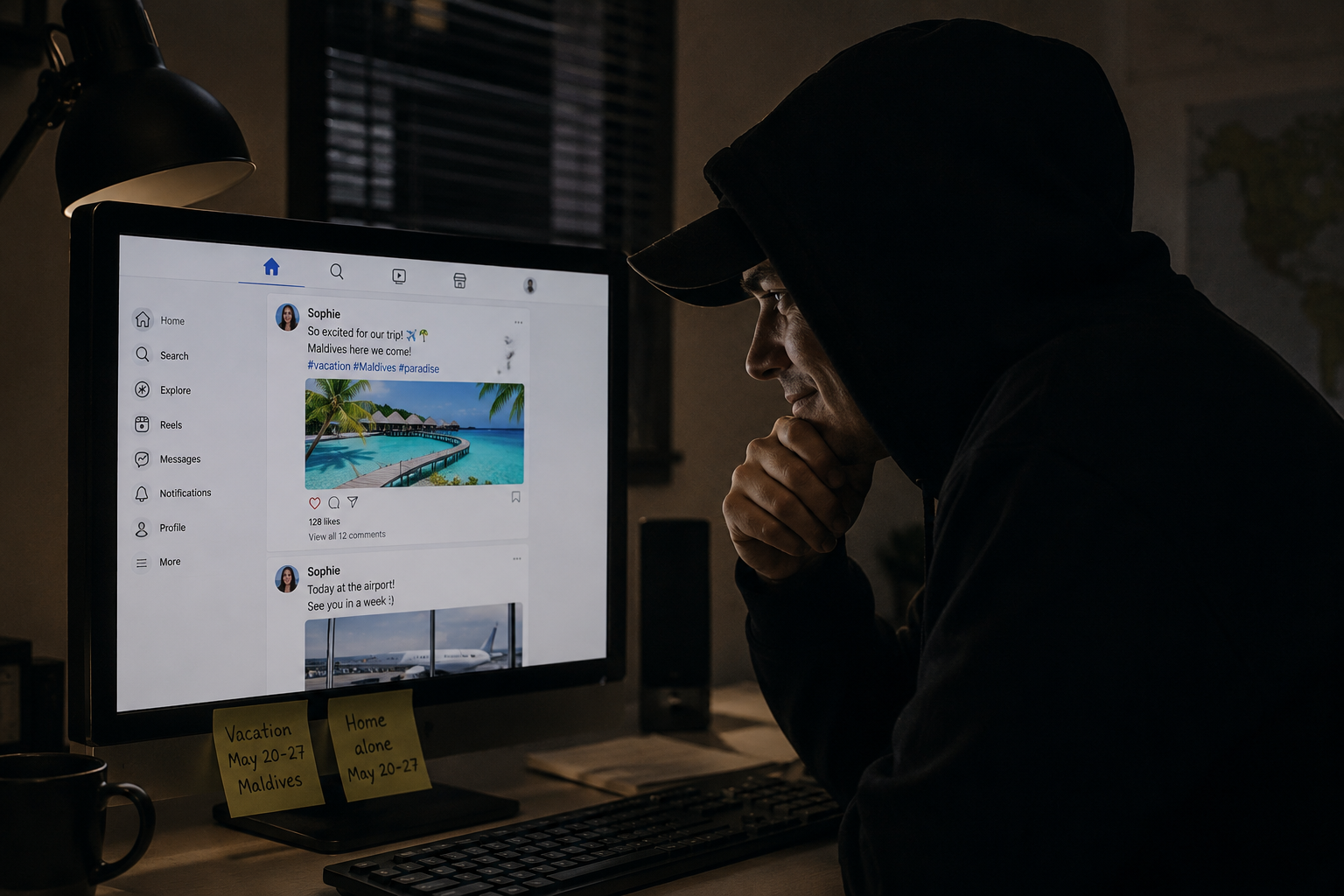

Sharing an upcoming trip online may reveal more than you realize. Learn why posting travel plans in advance can create privacy and security risks, plus safer ways to share your vacation.
Planning a vacation is exciting.
Once the flights are booked, the hotel is confirmed, and the countdown begins, it is natural to want to share the news. You may post a photo of your boarding pass, mention the exact dates, tag the hotel, or write something like, “Only three more days until we leave for Hawaii!”
Most people who see that post are probably friends, relatives, or coworkers who are happy for you. The problem is that social media posts do not always stay within the audience you had in mind.
An advance travel post can reveal that your home may be empty, where you will be staying, when you will be away, who is traveling with you, and sometimes even how to find you. The risk is not limited to strangers. Posts may be seen by acquaintances, friends of friends, former contacts, or people who can access information through public profiles.
This does not mean you need to stop sharing happy moments online. It simply means that a little timing and privacy awareness can make a big difference.
Why Advance Travel Posts Reveal More Than You Think
A single vacation post may look harmless, but several small details can combine into a surprisingly complete picture.
For example, imagine posting the following:
“Leaving for Orlando Friday morning! We’ll be gone for a full week. The kids are so excited for their first Disney trip!”
That one caption tells people when you are leaving, how long you will be gone, that the whole family is traveling, and that your home may be unoccupied.
If your profile also contains photos of your house, neighborhood tags, school information, or a workplace location, it may be possible to connect even more details.
Your Home May Appear Unoccupied

The most obvious concern is that a public post can signal that nobody will be home.
This can matter even if you never list your address. Many people unknowingly reveal where they live through tagged locations, neighborhood groups, house photos, real estate listings, local events, or background details in older pictures.
A person does not always need a full street address to narrow down where someone lives. A visible street sign, mailbox number, school name, gym location, or familiar landmark may provide enough clues.
Posting exact travel dates gives that information a timeline.
Real-Time Updates Confirm You Are Still Away
Some people avoid announcing a trip beforehand but then post throughout the vacation.
A beach photo with the caption “Day two of seven” still communicates that the home may remain empty for several more days.
Frequent location tags, restaurant check-ins, hotel photos, and airport updates can create a real-time record of your movements. Even if the original audience is small, screenshots and shared posts can travel beyond it.
Your Daily Routine Becomes Easier to Predict
Travel posts can reveal more than home vacancy.
They may show where you are staying, what attractions you plan to visit, whether you are traveling alone, and when you expect to be in a particular location.
A detailed itinerary such as “Museum at 10, lunch downtown at noon, concert at 8” gives a public schedule of where you are likely to be throughout the day.
For most people, nothing unusual will happen. Still, sharing less precise information reduces unnecessary exposure.
Who Can Actually See Your Posts?
Many users assume that a private account means everything is fully controlled.
Privacy settings are helpful, but they are not perfect.
Friends of Friends
You may personally know everyone on your friends list, but you probably do not know everyone who might see a repost, screenshot, tagged photo, or comment.
A friend may share your vacation announcement in a group chat. A family member may comment publicly. Someone traveling with you may post the same details on a fully public account.
Once multiple people are involved, it becomes harder to control the audience.
Old Contacts and Loose Acquaintances
Social media networks often include people you have not spoken to in years.
Former classmates, past coworkers, neighbors, distant relatives, local service providers, and people from community groups may still have access to your posts.
That does not mean these people have bad intentions. It simply means your actual online audience may be much broader than your circle of close friends.
Public Followers
On public platforms, your content may be visible to anyone.
Hashtags, location tags, trending audio, public stories, and recommended posts can expose travel content to users who do not follow you.
A post intended as a personal update can become discoverable through search or platform recommendations.
Common Travel-Sharing Mistakes
Most risky posts are not dramatic. They are ordinary updates shared without much thought.
Here are some of the most common mistakes.
Posting Exact Departure and Return Dates
Captions such as “Gone from June 10 through June 18” create a clear window of absence.
Even a countdown post can reveal the same information. If you post “Five days until our two-week trip,” the dates are easy to estimate.
A safer option is to avoid announcing the trip until you return.
Sharing a Boarding Pass Photo
Boarding passes often contain more information than travelers realize.
A photo may show your full name, flight number, departure airport, destination, boarding time, booking details, or machine-readable codes. Even when some text looks small, modern phone cameras can capture it clearly.
Covering one line of information may not be enough if other identifying details remain visible.
The easiest option is not to post the boarding pass at all.
Tagging the Hotel in Real Time
Hotel tags can tell others where you are staying.
A room view, lobby photo, wristband, key-card holder, or hotel name in the background may reveal the same thing even without a formal location tag.
Posting the hotel after checkout is generally less revealing than posting while you are still there.
Sharing Your Full Itinerary
Detailed schedules are useful for family members, but they do not belong in a public post.
Flight numbers, reservation times, tour locations, rental-car details, and daily plans can create a highly specific picture of your movements.
Share itineraries privately only with people who need them.
Mentioning That Nobody Is Home
Some captions make home vacancy especially clear:
“The whole family is finally getting away.”
“Even the dog is staying with Grandma.”
“House is empty, suitcase is packed, and we’re off!”
These details may feel playful, but they remove any uncertainty about whether someone is still at home.
Leaving Location Services On
Photos may include location information depending on your phone, app, and privacy settings.
Platforms often remove some metadata, but it is better not to rely on that alone. Location stickers, check-ins, map screenshots, and recognizable landmarks can still reveal where you are.
Review location permissions before traveling.
Practical Examples of How Information Adds Up
The risk usually comes from combined details rather than one single post.
Example One: The Countdown Post
A family posts a photo of packed luggage with the caption, “Three days until our 10-day cruise!”
An older post shows the front porch decorated for the holidays. Another post tags the family’s neighborhood pool.
Together, these posts reveal a likely home area, departure timing, trip length, and the possibility that the entire household will be away.
Example Two: The Solo Traveler
A traveler posts, “First solo trip! Staying downtown all week.”
Later, she shares the hotel rooftop, a morning running route, and a real-time dinner check-in.
The posts reveal that she is alone, where she is staying, and parts of her daily routine.
Again, most viewers are harmless. But reducing precise, real-time details is still a sensible safety habit.
Example Three: The Teen’s Story
Parents keep their own accounts private, but their teenager posts publicly.
The teen shares airport clips, the hotel name, and daily countdowns such as “Four more days here.”
Family travel privacy is only as strong as the most public account involved. This is why a short conversation before the trip can help everyone follow the same plan.
Warning Signs That You May Be Oversharing
It can be difficult to judge your own posts while caught up in the excitement of travel.
Pause before posting when your content includes:
- Exact departure or return dates
- Flight numbers or boarding passes
- Hotel names while you are still staying there
- Real-time locations
- A statement that the entire household is away
- Photos showing house keys, luggage tags, passports, or reservation details
- A detailed daily itinerary
- Public location tags
- Children’s names combined with travel locations
- Information about who is home, who is not, or where pets are staying
A useful question is: “Would I be comfortable announcing this information to a room full of acquaintances?”
If the answer is no, the post may be better saved for later.
Safer Ways to Share Your Trip
You do not need to disappear from social media whenever you travel.
A few simple changes can help protect your privacy without taking away the fun.
Post After You Return
The easiest habit is to share vacation photos once you are home.
You can still write captions in the present tense if that feels natural, or simply mention that the photos are from a recent trip.
Posting later allows you to enjoy the experience without constantly documenting your location. It also avoids creating a real-time record of an empty home.
Use a Private Group Chat
For close family and friends, use a private message thread instead of a public feed.
This works well for arrival updates, hotel information, children’s photos, and daily highlights.
Keep in mind that private messages can still be forwarded or screenshotted, so share sensitive details only with people you trust.
Limit the Audience
Most platforms allow users to create close-friends lists or custom audiences.
Review who is included before using these settings. A list created years ago may contain people you no longer know well.
Audience controls are useful, but delayed posting is still the more cautious choice for exact travel information.
Turn Off Automatic Location Sharing
Review your phone and app settings before leaving.
Check whether your camera, social apps, map apps, and family-sharing tools are using precise location. Disable location access where it is unnecessary.
Also check whether stories or posts automatically suggest your current location.
Avoid Identifying Details in Photos
Before posting, examine the full image rather than only the main subject.
Look for:
- Boarding passes
- Passport pages
- Luggage tags
- Hotel key folders
- Room numbers
- Car license plates
- Home addresses on packages
- School or workplace logos
- Reservation confirmations
- Computer or phone screens
Cropping or blurring may help, but sometimes it is better to choose a different photo.
Keep Home-Security Details Private
Avoid posting information about alarm systems, spare-key locations, camera blind spots, or household routines.
Do not announce that a neighbor will “only check the house once” or that a pet sitter visits at a predictable time.
Security arrangements work best when they are not public.
Talk With Everyone Traveling With You
One person’s careful posting can be undone by someone else’s public account.
Before a family trip or group vacation, agree on a simple sharing plan.
You might decide:
- No boarding-pass photos
- No hotel tags until checkout
- No exact dates in public posts
- No real-time location sharing
- Ask before posting photos of other people
- Save most vacation content until everyone is home
This conversation is especially useful with teenagers, who may not realize how much information a story or short video reveals.
Keep the discussion practical rather than alarming. The goal is not to make social media feel dangerous. It is to help everyone understand that location information deserves the same care as other personal details.
Protecting Your Home While You Travel
Social media habits are only one part of travel preparation.
Basic home precautions can also reduce risk.
Arrange for mail and packages so they do not pile up. Ask a trusted person to check the home when appropriate. Use timers or smart lighting carefully. Lock doors and windows, including less obvious entry points such as side doors and garage access.
Avoid hiding spare keys in predictable outdoor locations.
These steps are useful whether or not you post online. Privacy settings should never replace ordinary home-security habits.
What to Do If You Already Posted Your Plans
If you realize that you shared too much, there is no need to panic.
Delete or edit the post if possible. Remove location tags, exact dates, hotel details, and images containing travel documents.
Check who viewed or interacted with the content when the platform provides that information. Review your audience and privacy settings.
Ask friends or relatives not to repost the information. If someone has already shared it, request that they remove it.
You can also pause further real-time updates until you return.
The goal is simply to reduce continued exposure.
Finding a Comfortable Balance
Social media is often how people celebrate, stay connected, and save memories.
There is nothing wrong with being excited about a vacation or sharing beautiful photos. The main issue is timing and detail.
A general post such as “Looking forward to a summer getaway” reveals less than a full itinerary. A photo shared after checkout reveals less than a live hotel tag. A vacation album posted after returning home offers the same memories without announcing an empty house.
Small changes can preserve both enjoyment and privacy.
A Simple Rule for Safer Travel Posts
Before sharing travel content, ask three questions:
- Does this reveal that my home is empty?
- Does this show where I am right now?
- Does this include information that someone else does not need to know?
When the answer to any of these is yes, consider waiting, limiting the audience, or removing some details.
Travel should be enjoyable, not stressful. You do not need to assume that every viewer has bad intentions. You only need to recognize that online information can travel farther than expected.
Post the highlights after you return, keep itineraries private, review location settings, and make sure everyone traveling with you follows the same basic plan.
A little discretion allows you to share the memories without sharing your entire schedule.

Hi, I’m the creator and editor behind ZestyHabit. I research everyday safety, first aid, and practical wellness topics using official guidance and reliable public sources, then turn that information into clear, realistic steps for daily life.
My goal is to help readers make safer, better-informed choices at home and beyond.


