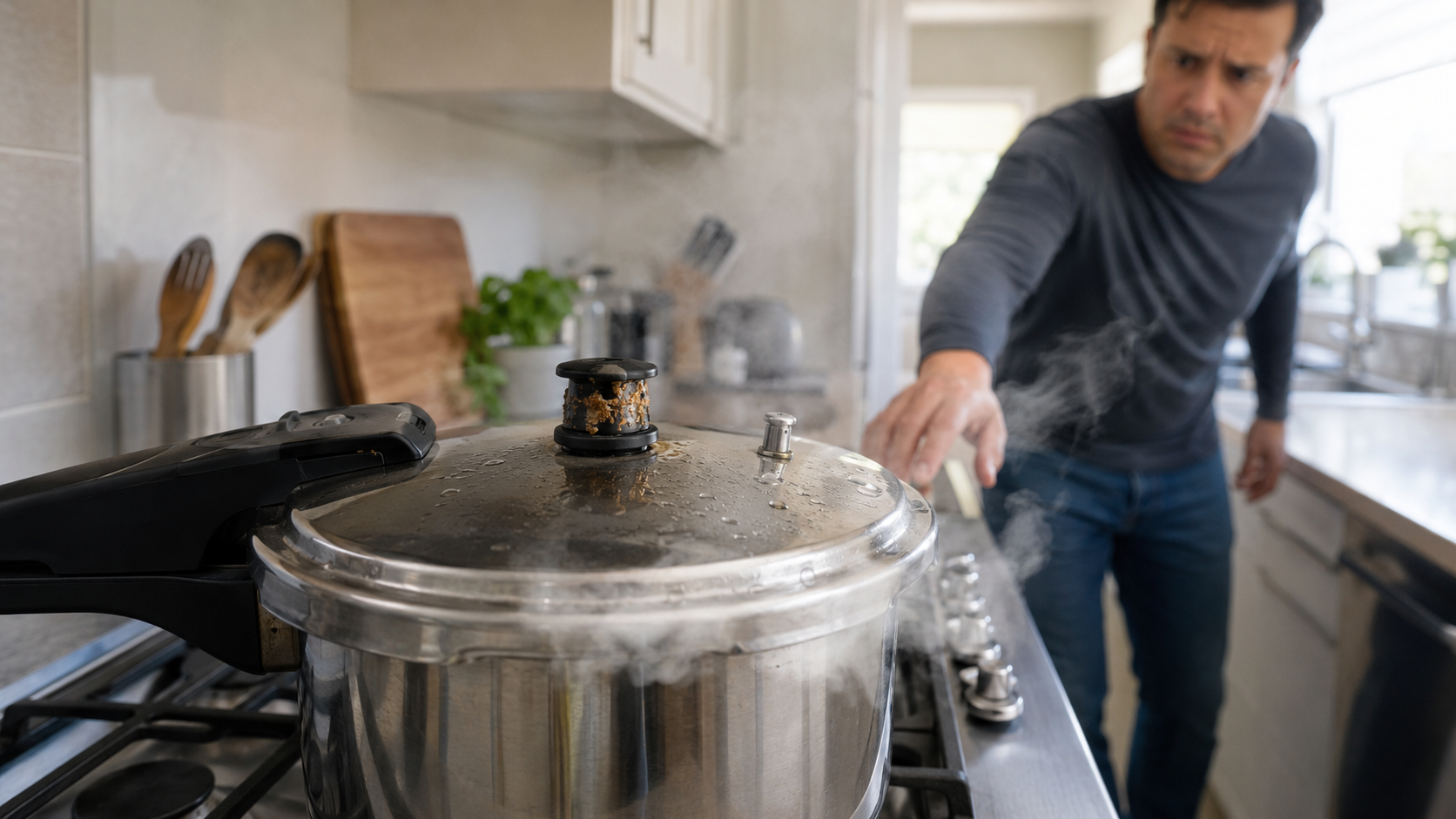
What Can Happen If a Pressure Cooker Steam Vent Gets Blocked?
Minjin Park
·
A blocked pressure cooker steam vent can lead to pressure buildup, messy overflow, burns, or damaged equipment. Learn the warning signs, common causes, and simple safety habits before cooking.
The Small Part of a Pressure Cooker That Matters More Than People Think
Pressure cookers are one of those kitchen tools that can feel almost magical once you get used to them. Beans soften faster. Tough cuts of meat become tender. Soups, stews, rice, and one-pot meals come together with less waiting.
But pressure cooking works because steam is trapped inside the pot. That trapped steam raises the pressure, and the higher pressure helps food cook faster.
That also means one small part of the cooker deserves real attention: the steam vent.
If the steam vent, pressure release valve, or surrounding opening gets blocked, pressure may not release the way it should. In mild cases, you may end up with sputtering, messy food foam, or a cooker that does not behave normally. In more serious cases, pressure buildup can lead to sudden steam release, hot liquid spraying, damaged seals, lid problems, or burn risks.
This does not mean pressure cookers are unsafe. Modern stovetop and electric pressure cookers usually include multiple safety features. But those features still depend on the cooker being used, filled, cleaned, and maintained correctly.
A blocked vent is often preventable. Most problems start with thick foods, overfilling, dirty valves, damaged parts, or skipping the instruction manual.
Let’s walk through what can happen, why it matters, and how to use a pressure cooker more safely at home.
How a Pressure Cooker Steam Vent Works
A pressure cooker heats liquid inside a sealed pot. As the liquid turns into steam, the pressure rises. The cooker is designed to control that pressure using a valve, regulator, or release system.
On a stovetop pressure cooker, you may see a weighted regulator, a pressure valve, or a small vent pipe where steam escapes. On an electric pressure cooker, you usually have a steam release valve, float valve, sealing ring, and internal pressure controls.
The basic idea is the same: pressure needs a controlled path.
When the cooker reaches pressure, steam may escape gently, pulse occasionally, or stay mostly contained depending on the model. When cooking is done, steam is released naturally over time or manually through the release valve.
If that vent path is blocked, the cooker may not be able to regulate pressure normally.
Why a Blocked Vent Can Be Dangerous
Pressure can build higher than intended
The main concern is pressure buildup. A pressure cooker is designed to operate within a specific pressure range. If steam cannot escape properly, the pressure can rise beyond normal cooking conditions.
Modern cookers usually have backup safety mechanisms, such as emergency release points, locking lids, or pressure sensors. But you never want to rely on backup systems as your regular safety plan.
The safer habit is to prevent clogs in the first place.
Steam can release suddenly
If the blockage shifts, breaks loose, or forces another safety release point to activate, steam may escape quickly and unexpectedly.
That steam can be extremely hot. It can carry tiny droplets of liquid, sauce, foam, or food particles. If your hand, face, arm, or chest is close to the vent area, the result can be painful.
Blocked vents are often caused by food foam, starch, grains, beans, sauce, or small particles. If pressure pushes that material through the valve, it can sputter out with steam.
That may look like bubbling soup, rice starch, bean foam, tomato sauce, or greasy broth spraying from the top of the cooker.
Even if it does not cause a serious incident, it can create a hot mess on counters, cabinets, walls, and nearby appliances.
Seals and parts may be strained
When pressure is not released properly, the sealing ring, lid, valve, and safety mechanisms may experience extra stress.
A cooker that repeatedly clogs, leaks, or releases steam abnormally should not be ignored. It may need cleaning, replacement parts, or professional inspection depending on the model.
Common Causes of a Blocked Pressure Cooker Vent
Overfilling the cooker
Overfilling is one of the biggest causes of pressure cooker problems.
When food expands, foams, or bubbles during cooking, it needs room inside the pot. If the cooker is filled too high, food and liquid can rise toward the vent and block it.
This is especially common with soups, beans, lentils, rice, pasta, oatmeal, applesauce, and starchy foods.
Most pressure cookers have a maximum fill line. Some foods require filling even lower than that because they foam or expand. The manual may say not to fill more than half full for beans, grains, or foamy foods.
That rule may feel overly cautious until you see what bean foam can do inside a pressurized pot.
Cooking foods that foam heavily
Some foods naturally create foam or thick bubbles under pressure.
Beans, split peas, lentils, rice, barley, oats, pasta, and certain soups can foam enough to reach the valve if the pot is too full or the liquid is too thick.
A little oil or fat is sometimes recommended in bean recipes to reduce foaming, but you should follow your specific cooker manual and recipe. Do not improvise with large amounts of oil or thick sauces in a pressure cooker.
Thick sauces and purees
Pressure cookers need liquid to produce steam, but very thick mixtures can behave unpredictably.
Tomato sauce, creamy soups, split pea soup, mashed vegetables, thick chili, and purees may bubble, scorch, or splatter. If a thick mixture rises toward the valve, it may clog the steam path.
Many electric pressure cooker recipes recommend placing thick sauces on top without stirring them into the bottom liquid, or using enough thin liquid underneath. This helps reduce scorching and improves pressure-building.
Food particles stuck in the valve
Small pieces of food can get trapped in the steam release valve, float valve, anti-block shield, or vent pipe.
This may happen after cooking beans, rice, soup, stew, pasta, or anything with small bits of seasoning, herbs, skins, or grains.
Even if the cooker looks clean from the outside, the valve area may need a closer check.
Not cleaning after each use
Pressure cookers are not hard to clean, but some parts need special attention.
The lid, sealing ring, steam release valve, float valve, anti-block shield, and condensation collector may all need regular cleaning depending on the model.
A quick rinse of the inner pot is not enough if food residue has reached the lid.
Using damaged or mismatched parts
A worn sealing ring, cracked valve, loose regulator, bent vent pipe, or off-brand replacement part can affect pressure control.
Pressure cookers are not a good place to “make it work” with random parts. Use parts designed for your exact model.
Warning Signs That Something May Be Wrong
Steam is not releasing normally
If your cooker usually releases a gentle stream of steam but suddenly does not, pay attention.
Different cookers behave differently, so “normal” depends on your model. But a sudden change in sound, steam pattern, or pressure behavior is worth noticing.
Food or foam comes out of the valve
A little moisture during steam release may be normal, especially with some foods. But heavy sputtering, foamy liquid, sauce, or chunks of food coming out of the vent can mean the cooker is too full, the food is too foamy, or the valve area needs cleaning.
The lid area leaks heavily
Some light steam around a valve may be expected depending on the cooker, but steam leaking from unusual places can signal a sealing problem, dirty parts, damaged gasket, or pressure issue.
The cooker struggles to reach pressure
A cooker that takes too long to pressurize, repeatedly loses pressure, or displays an error may have a sealing, valve, or liquid problem.
The lid is difficult to open after cooking
Never force open a pressure cooker lid. If the lid resists, assume pressure may still be inside.
Wait, follow the manual’s release instructions, and make sure the pressure indicator has dropped before opening.
What Not to Do If You Suspect the Vent Is Blocked
Do not force the lid open
This is one of the most important rules.
A pressure cooker lid is designed to stay locked while pressure remains inside. Forcing it open can lead to sudden release of steam and hot food.
If the lid does not open easily, stop. Let the cooker cool and follow the manufacturer’s instructions.
Do not put your face or hand over the valve
If steam is not releasing properly, do not lean over the lid to inspect it while the cooker is hot and pressurized.
Steam can release suddenly. Always keep your face, hands, and arms away from the vent path.
Do not poke the valve while the cooker is pressurized
It may be tempting to use a fork, toothpick, knife, or chopstick to clear the vent.
Do not do this while the cooker is hot or pressurized. You could trigger a sudden burst of steam or hot liquid.
Clean valves only when the cooker is fully depressurized, unplugged if electric, and cool enough to handle.
Do not move a pressurized cooker around
A pressurized pot full of hot liquid should stay where it is. Moving it can cause sloshing, splashing, or accidental release.
For electric models, turn it off if needed and leave it in place. For stovetop models, remove heat only if you can do so safely and without jostling the pot.
Do not ignore repeated problems
If your cooker clogs once because you overfilled it with beans, that is a learning moment. If it keeps clogging, leaking, or acting strangely, stop using it until you identify the issue.
It may need a deep cleaning, a new sealing ring, a replacement valve, or model-specific troubleshooting.
Simple Prevention Habits Before Cooking
Read your cooker’s manual
This may sound boring, but pressure cookers vary a lot.
A stovetop pressure cooker is not exactly the same as an electric multi-cooker. One electric model may have a removable anti-block shield, while another may have a different valve setup.
Your manual tells you fill limits, cleaning steps, release methods, and foods that need extra caution.
Check the vent before each use
Before cooking, look at the steam release valve, vent pipe, float valve, and anti-block shield if your model has one.
Make sure nothing is clogged with dried food, starch, grease, or mineral buildup.
You do not need to take the entire appliance apart every time, but a quick visual check is a good habit.
Keep food below the fill line
Follow the maximum fill line. For foods that expand or foam, use a lower fill level.
As a general habit, be especially cautious with:
Beans Lentils Split peas Rice Pasta Oatmeal Barley Applesauce Soups with small grains Thick stews Creamy or pureed foods
These foods may need more space than you expect.
Use enough thin liquid
Pressure cooking needs steam. If there is not enough liquid, food may scorch and the cooker may not pressurize correctly.
However, not all liquids behave the same. Thin broth or water produces steam more predictably than thick sauce.
If using tomato sauce, cream, or thick stew ingredients, follow a tested pressure cooker recipe rather than guessing.
Avoid deep-frying in a pressure cooker
Unless you have a specialized pressure fryer designed for that purpose, do not use a regular home pressure cooker for pressure frying. Regular pressure cookers are not designed for deep-frying under pressure.
Hot oil under pressure creates a different level of risk and should not be improvised at home.
Safer Habits During Cooking
Stay nearby
You do not have to stare at the cooker the entire time, but do not leave home while pressure cooking.
Stay close enough to notice unusual sounds, smells, steam patterns, error messages, or sputtering.
Keep the vent area clear
Do not cover the vent with towels, cabinets, foil, utensils, or decorative covers.
Steam needs a clear path. Also, avoid placing the cooker directly under low cabinets if steam release may damage wood or paint over time.
Turn handles inward
For stovetop pressure cookers, turn pot handles inward so they are not hanging off the stove edge.
This lowers the chance of bumping the cooker while it is hot.
Use the right burner size
On a stovetop cooker, use a burner that matches the pot size. Flames should not lick up the sides of the cooker.
Too much heat can cause pressure to rise faster than needed and may make the cooker harder to control.
Follow release instructions
Some foods are better with natural release, where pressure drops gradually. Others may allow quick release.
Foamy foods, thick soups, and starchy dishes may sputter if quick-released too aggressively. If the manual or recipe recommends natural release, follow it.
Cleaning the Steam Vent and Lid Area
Cleaning is one of the easiest ways to prevent blocked vents.
After each use, let the cooker cool and depressurize fully. Remove the lid parts according to the manual. Wash the sealing ring, valve area, anti-block shield, and lid surfaces as directed.
Look for dried starch, food skins, herbs, oil residue, or mineral deposits.
For electric pressure cookers, make sure all parts are dry and reassembled correctly before the next use. For stovetop cookers, check that the vent pipe is open and the pressure regulator moves or sits properly as designed.
If a part looks cracked, stretched, brittle, loose, or damaged, replace it with the correct manufacturer-approved part.
Practical Examples From Everyday Cooking
Beans that foam up
You fill the cooker high with dried beans, water, onion, and seasonings. During cooking, foam rises and reaches the vent. Later, the steam release sputters bean liquid.
Next time, fill the cooker lower, add only the recommended amount of oil if your manual allows it, and use natural release if the recipe recommends it.
Rice that clogs the lid
Rice can release starch into the cooking liquid. If overfilled, starchy bubbles may reach the valve.
Rinse rice when appropriate, use the right water ratio, avoid overfilling, and clean the lid parts after cooking.
Thick chili that burns and sputters
A very thick chili may scorch on the bottom or bubble unevenly. When released, sauce may sputter from the valve.
Use enough thin liquid, avoid stirring thick tomato products into the bottom if your recipe advises layering, and follow a pressure-cooker-specific recipe.
Soup filled too close to the top
Soup looks harmless because it is mostly liquid. But ingredients can expand, foam, or bubble under pressure.
Leave extra headspace, especially with grains, pasta, beans, or split peas.
When to Stop Using the Cooker
Stop using your pressure cooker until checked or repaired if:
The vent repeatedly clogs.
The lid will not lock or unlock normally.
Steam leaks from places it did not before.
The sealing ring is cracked, stretched, or damaged.
The pressure indicator does not move correctly.
The cooker was dropped or damaged.
Replacement parts do not fit correctly.
The cooker gives repeated error messages.
A pressure cooker should feel predictable. If it no longer does, do not force it back into service.
Final Thoughts: Keep the Steam Path Clear
A pressure cooker is useful because it controls steam. When the steam vent is clean and working properly, the cooker can build and release pressure as designed.
When that vent is blocked, pressure may not release normally. That can lead to sputtering, hot food spray, sudden steam release, damaged parts, or a stressful cooking situation.
The prevention habits are simple: do not overfill the pot, be careful with foamy and starchy foods, check the vent before cooking, clean the lid parts after use, and follow your specific model’s instructions.
Pressure cooking does not need to be intimidating. Treat the steam vent as an important safety part, not just a tiny hole in the lid. A clear vent, enough headspace, and a clean lid go a long way toward making pressure cooking calmer, safer, and more reliable.
Hi, I’m the creator and editor behind ZestyHabit. I research everyday safety, first aid, and practical wellness topics using official guidance and reliable public sources, then turn that information into clear, realistic steps for daily life.
My goal is to help readers make safer, better-informed choices at home and beyond.