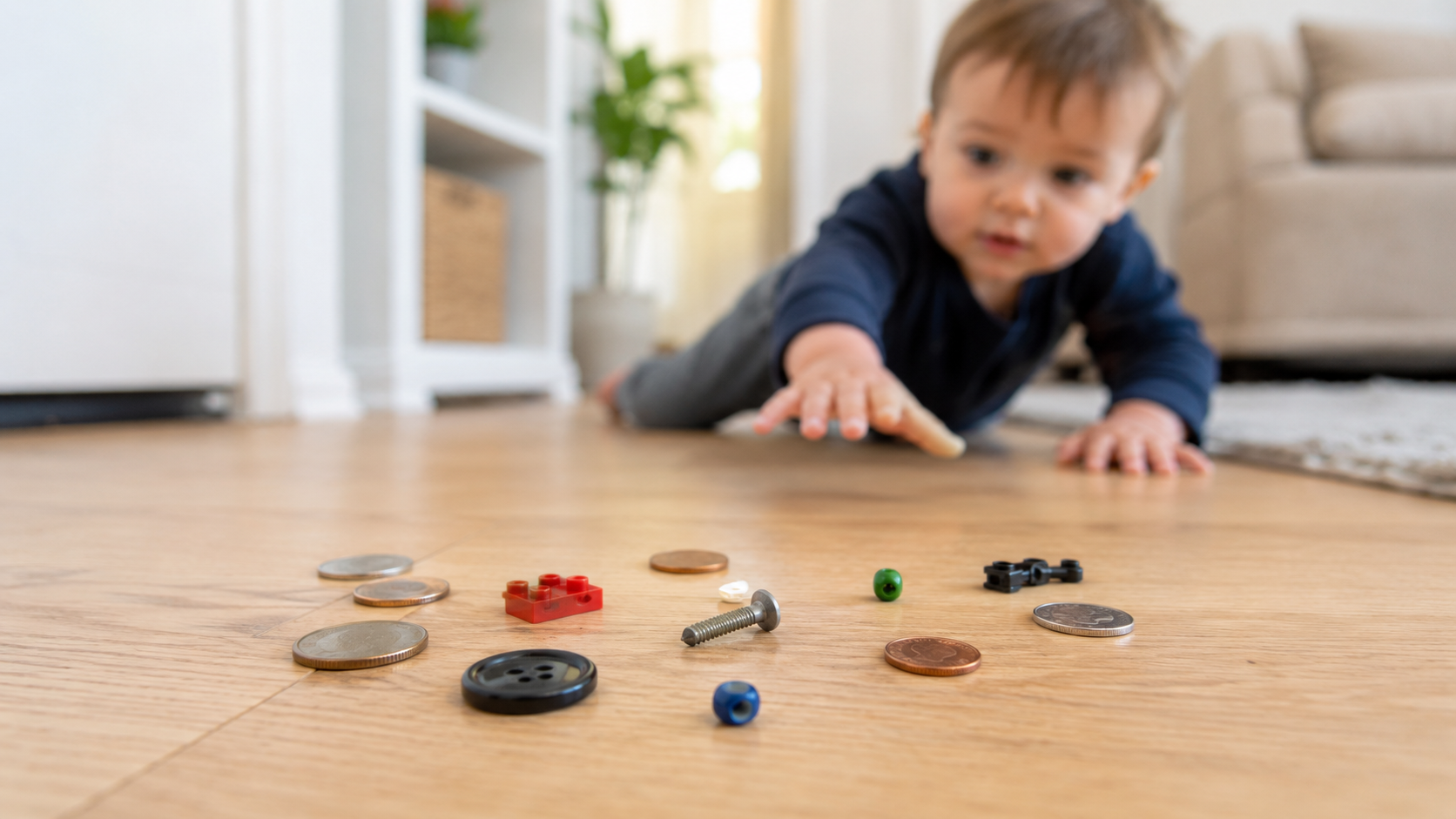
Why Coins and Small Parts Should Never Be Left on the Floor
Minjin Park
·
Coins, screws, batteries, beads, toy parts, and other small objects on the floor can create choking risks, pet hazards, foot injuries, and household clutter problems. Learn simple habits to keep small items safely contained.
Neither does a loose screw, a button, a bead, a toy wheel, a pen cap, a small battery, or a plastic piece from a broken toy. These things are so small that they barely seem worth stopping for. You notice them, think, “I’ll pick that up later,” and keep walking.
They can become choking hazards for babies and toddlers. Pets may chew or swallow them. Adults can step on them, slip slightly, or get a sharp piece stuck in a foot. Small parts can disappear under rugs, furniture, vents, and appliances, only to show up later in the worst possible place.
The tricky thing is that tiny items are easy to overlook. They blend into flooring, roll under furniture, hide in carpet, or get pushed into corners during cleaning. A quarter on a light floor may be obvious. A screw on dark carpet may be nearly invisible. A button under a child’s bed may stay there for weeks.
Keeping floors clear of small objects is not about being overly tidy. It is a practical safety habit, especially in homes with young children, pets, older adults, or anyone who walks barefoot.
Why Small Objects on the Floor Matter
Big clutter is easy to recognize. A box in the hallway or a bag near the stairs clearly blocks movement. Small clutter is different. It often feels harmless because it does not take up much space.
But small objects create risk in a quieter way.
They can be swallowed, stepped on, slipped on, lost, or mistaken for toys. They may also signal that something in the home is broken, loose, or not being stored properly.
Small objects travel
Coins and small parts do not always stay where they fall. They roll, slide, bounce, and get kicked. A coin dropped near the couch may end up under the coffee table. A screw from a chair may roll into a hallway. A toy bead may get carried into a bedroom on someone’s sock.
That movement makes them harder to control.
Small objects are easy to miss
Many small items are the same color as the floor. Others hide in carpet fibers or under rugs. In dim light, almost anything small can disappear.
This matters because people do not always look carefully at the floor. They walk through the house while carrying laundry, talking on the phone, holding a child, or heading to the bathroom at night.
Small objects attract curious hands and mouths
For babies, toddlers, and some pets, the floor is not just a walking surface. It is a discovery zone.
A shiny coin, colorful bead, tiny screw, or small toy part may look interesting enough to pick up, chew, or swallow.
That is why small floor clutter should be treated differently in homes where children or pets spend time.
Choking Hazards for Babies and Toddlers
The biggest concern with coins and small parts is choking.
Young children explore the world with their hands and mouths. If they find something small on the floor, they may put it in their mouth before an adult even notices.
Coins are especially tempting
Coins are shiny, smooth, and easy for little fingers to pick up. They also make interesting sounds when dropped or shaken. A child may find one under a couch, near a purse, beside a nightstand, or in a jacket pocket left on the floor.
Even if you do not usually leave coins around, they can fall out of pockets, wallets, backpacks, and laundry.
Small toy parts can break loose
Toys with wheels, buttons, plastic eyes, beads, magnets, caps, or snap-on pieces can shed small parts over time. A toy that was safe when purchased may become risky if pieces break off.
Check toys regularly, especially after rough play.
Craft supplies are easy to scatter
Beads, buttons, googly eyes, sequins, small clips, rubber bands, and foam pieces can spread across the floor during art projects. They may roll under furniture and be found later by a younger sibling.
After craft time, a floor check is just as important as putting supplies back in the box.
Pets Can Swallow or Chew Small Items Too
Pets are another reason to keep small parts off the floor.
Dogs may chew coins, batteries, toy pieces, hair ties, earbud tips, bottle caps, or screws. Cats may bat small items around and then hide them under furniture. Rabbits, ferrets, and other small pets may chew on items that fall near their play area.
Dogs may treat small objects like treats or toys
Some dogs are especially likely to mouth anything they find. A dropped coin or plastic part may not smell like food, but curiosity is sometimes enough.
Small items can create digestive risks, choking risks, tooth damage, or toxic exposure depending on what the object is.
Cats love small moving objects
A small screw or coin sliding across the floor can become a toy for a cat. The item may end up under a rug, inside a shoe, near a stair, or behind furniture where it becomes harder to find.
Batteries are a special concern
Small batteries should never be left on the floor. Button batteries and loose batteries can be dangerous if swallowed or chewed. They should be stored securely and disposed of properly according to local guidance.
If you replace batteries in a remote, toy, scale, key fob, thermometer, or hearing aid device, do the swap over a table or counter, not on the floor.
Small Parts Can Hurt Bare Feet
Even when there are no children or pets in the home, small items on the floor can still cause problems.
A coin may not seem painful, but a screw, nail, staple, pin, earring back, broken plastic piece, or sharp toy part can hurt if stepped on. Bare feet are especially vulnerable.
Tiny sharp objects hide well
Screws, nails, staples, sewing pins, and broken pieces can disappear into carpet or under furniture. You may not see them until someone steps on them.
This is common after assembling furniture, hanging pictures, fixing appliances, sewing, wrapping gifts, or doing crafts.
Hard objects can cause slips
A coin, bead, marble, small toy wheel, or round battery can roll underfoot. It may not cause a dramatic fall, but it can make someone lose balance for a moment.
That quick slip matters more near stairs, bathrooms, kitchens, and hard flooring.
Footwear does not always protect you
Thin socks, soft slippers, and bare feet offer little protection. Even shoes can be affected if a small object rolls under the sole.
Keeping small parts off the floor is easier than hoping nobody steps on them.
Small Objects Can Damage Vacuums and Appliances
Leaving small items on the floor can also damage household tools.
A vacuum may suck up coins, screws, hairpins, beads, or toy parts. Sometimes they rattle in the hose. Sometimes they jam the brush roller. Sometimes they damage internal parts.
Coins and screws are hard on vacuums
A vacuum is meant for dust, crumbs, hair, and small debris, not metal objects. A coin or screw can create loud clattering, block suction, or damage the machine.
Before vacuuming, quickly scan the floor for small hard items.
Small parts can get into vents and appliances
A tiny object can roll into a floor vent, under a refrigerator, beneath a washing machine, or inside a baseboard heater area. Once there, it may be difficult to retrieve.
This is another reason to pick up small objects right away instead of letting them migrate.
Common Places Coins and Small Parts End Up
Certain areas of the home collect small objects more than others.
Entryways
Coins fall from pockets. Key rings lose small attachments. Backpack clips break. Shoes track in pebbles or tiny debris.
Because entryways are busy, small items can be kicked around quickly.
Living rooms
Couches are famous for hiding coins and small objects. Remote batteries, game pieces, snack wrappers, toy parts, and craft items often end up under cushions or on the floor.
If children play in the living room, this area needs regular floor checks.
Bedrooms
Nightstands, dressers, laundry piles, and pockets are common sources of coins and small accessories. Earrings, buttons, hair clips, pins, and small packaging pieces can fall unnoticed.
The path between bed and bathroom should be kept clear, especially at night.
Laundry areas
Coins often come out of pockets in the laundry. So do screws, buttons, hair ties, receipts, small toys, and jewelry.
Check pockets before washing clothes, and check the floor around the washer and dryer.
Home offices
Paper clips, staples, thumbtacks, pen caps, USB caps, screws from office chairs, and small tech parts can end up on the floor.
This matters if pets or children enter the room.
Garages and hobby spaces
Garages, craft rooms, and workbenches produce many small parts: nails, screws, washers, bolts, drill bits, clips, zip ties, and broken plastic pieces.
These areas need extra attention because the small items are often sharp or metal.
Common Mistakes People Make
Mistake 1: Thinking “small” means “safe”
Small items can be more dangerous than larger clutter because they are harder to see and easier to swallow.
Mistake 2: Leaving coins on low surfaces
Coins on coffee tables, nightstands, TV stands, or low shelves can easily fall to the floor. In homes with young children, coins should be stored out of reach.
Mistake 3: Doing repairs over carpet
Assembling furniture or fixing a toy over carpet makes it easy to lose screws and tiny parts. Work over a tray, towel, or table instead.
Mistake 4: Vacuuming without checking first
Vacuuming may seem like the fastest solution, but hard objects can damage the vacuum. Pick up coins and small parts before cleaning.
Mistake 5: Ignoring broken toys
A broken toy can keep shedding pieces. If a toy is cracked, missing parts, or falling apart, remove it until it can be repaired or discarded.
Mistake 6: Letting junk drawers overflow onto the floor
When drawers are too full, small items fall out. Batteries, coins, clips, keys, and hardware should be stored in containers, not loose piles.
Warning Signs Your Floor Needs a Small-Item Reset
Your home may need a better system if you notice:
Coins often fall from pockets or bags. Small toy parts appear on the floor. Pets play with random objects they find. A child picks things up from under furniture. You hear the vacuum suck up hard items. Screws or hardware are left after repairs. Craft supplies scatter beyond the table. Buttons, beads, or batteries are stored loosely. People walk barefoot and step on sharp bits. You find small objects near stairs or hallways.
These are simple signs that the floor is becoming a catch-all for tiny hazards.
How to Keep Coins Off the Floor
Coins are one of the easiest small items to control once you create a habit.
Use a coin dish or jar
Place a small dish, jar, or container near the entryway, dresser, or laundry area. Empty pockets there instead of on random surfaces.
Keep the container out of reach if young children are in the home.
Check pockets before laundry
This prevents coins from ending up in the washer, dryer, or floor. It also protects machines from damage.
Make pocket-checking part of the laundry routine.
Avoid tossing coins onto tables
Coins bounce and roll. Place them directly into a container instead.
Clean under couch cushions
Couches collect coins quietly. Check cushions and under the sofa regularly, especially before babies, toddlers, or pets play nearby.
How to Handle Small Parts Safely
Small parts come from repairs, toys, crafts, gadgets, and furniture assembly. A little organization helps a lot.
Work over a tray
When replacing batteries, assembling furniture, repairing glasses, fixing toys, or handling screws, work over a tray, bowl, or towel. If something drops, it is easier to find.
Use small containers
Keep screws, washers, buttons, beads, and clips in containers with lids. Avoid open piles on tables or shelves.
Count parts before and after
When assembling something, count the screws and small pieces before starting. After finishing, check that no extras are left on the floor.
Keep batteries separate and secure
Store batteries in their original packaging or a proper container. Keep them away from children and pets.
Clean immediately after projects
After crafts or repairs, do a floor sweep before leaving the area. Do not wait until later.
Special Care in Homes With Babies and Toddlers
If a baby or toddler lives in or visits the home, floor checks need to become routine.
Get down to their level
Look at the floor from a child’s height. You may notice coins under furniture, small toys near baseboards, or shiny parts that are invisible from adult height.
Check before playtime
Before putting a child on the floor, scan the area. Look under the couch, around rugs, near toy bins, and under tables.
Keep older kids’ toys separate
Older children’s toys may include small pieces that are not safe for younger siblings. Store building sets, beads, mini figures, game pieces, and craft supplies in areas younger children cannot access.
Watch visiting spaces
Grandparents’ homes, friends’ homes, hotel rooms, and vacation rentals may not be childproofed. Do a quick floor check when arriving.
Special Care With Pets
Pets can find things humans miss.
Keep bags and pockets off the floor
Coins, gum, medication, batteries, and small items may fall from bags or jacket pockets. Keep bags on hooks or shelves instead of the floor.
Check pet play areas
Before letting pets roam, check for dropped hardware, craft items, children’s toys, and broken pieces.
Be careful after repairs
If you fixed a chair, shelf, appliance, or cage, check the floor carefully for screws and metal parts before pets return to the area.
Avoid letting pets play with bottle caps or small plastic pieces
They may seem like harmless toys, but they can crack, splinter, or be swallowed.
Safer Storage Ideas for Small Items
The best way to keep small items off the floor is to give them a home.
Try:
A coin jar near the laundry area A lidded box for batteries A divided organizer for screws and hardware A bead box for craft supplies A small bowl for keys and pocket items A drawer organizer for clips and pins A sealed container for game pieces A high shelf for tiny toys A zip bag for spare furniture parts
Storage does not have to be fancy. It just has to keep small objects contained and out of walking or play areas.
A Quick Daily Floor Scan
A daily floor scan takes less than a minute.
Check the entryway, living room, child’s play area, kitchen floor, bedroom paths, and anywhere pets spend time. Look for coins, batteries, screws, small toys, beads, plastic bits, jewelry, paper clips, and sharp objects.
Pay extra attention after:
Opening packages Doing laundry Assembling furniture Replacing batteries Craft projects Playdates Repair work Vacuuming under furniture Guests visiting Moving bags or backpacks
Small items usually appear after activity. A quick scan afterward prevents them from becoming hidden hazards.
What to Do If You Find an Unknown Small Part
Sometimes you find a screw, plastic cap, spring, or tiny piece and have no idea where it came from.
Do not throw it back onto a counter or leave it on the floor. Put it in a small “mystery parts” container for a few days. Then check nearby furniture, toys, appliances, and electronics.
A mystery screw may mean a chair, crib, cabinet, fan, toy, or device is loose. If something wobbles or seems broken, stop using it until it is checked.
A Simple Small-Item Safety Checklist
Use this quick checklist at home:
Coins are stored in a container, not loose on tables. Pockets are checked before laundry. Small batteries are stored securely. Craft supplies are kept in lidded containers. Repair work is done over a tray or table. Floors are checked after projects and playtime. Broken toys are removed. Pet areas are free of small objects. Baby play areas are checked from floor level. Vacuuming is done after picking up hard objects first.
This habit is simple, but it prevents many small problems from becoming stressful surprises.
Final Thoughts: Tiny Objects Deserve Attention
Coins and small parts on the floor may not look like much. But they can create real everyday risks, especially for babies, toddlers, pets, barefoot adults, and anyone moving through the home in dim light.
A coin can become a choking hazard. A screw can hurt a foot. A button battery can be dangerous if swallowed. A bead can roll underfoot. A broken toy part can hide in carpet. A small object can damage a vacuum or disappear into a vent.
The safest habit is also the simplest: pick up small items as soon as you see them.
Use containers for coins, batteries, craft supplies, and hardware. Check pockets before laundry. Clean up after repairs. Look under furniture regularly. Keep small objects away from play areas, pet spaces, stairs, and nighttime walking paths.
A safer home is not always about big changes. Sometimes it starts with noticing the tiny things on the floor before someone else finds them the hard way.
Hi, I’m the creator and editor behind ZestyHabit. I research everyday safety, first aid, and practical wellness topics using official guidance and reliable public sources, then turn that information into clear, realistic steps for daily life.
My goal is to help readers make safer, better-informed choices at home and beyond.