Crowd Crush Accidents: Why They Happen and How to Protect Yourself in a Dense Crowd
Minjin Park
·
Learn how crowd crush accidents happen, which warning signs indicate dangerous crowd density, and what to do if you become trapped in a tightly packed crowd.
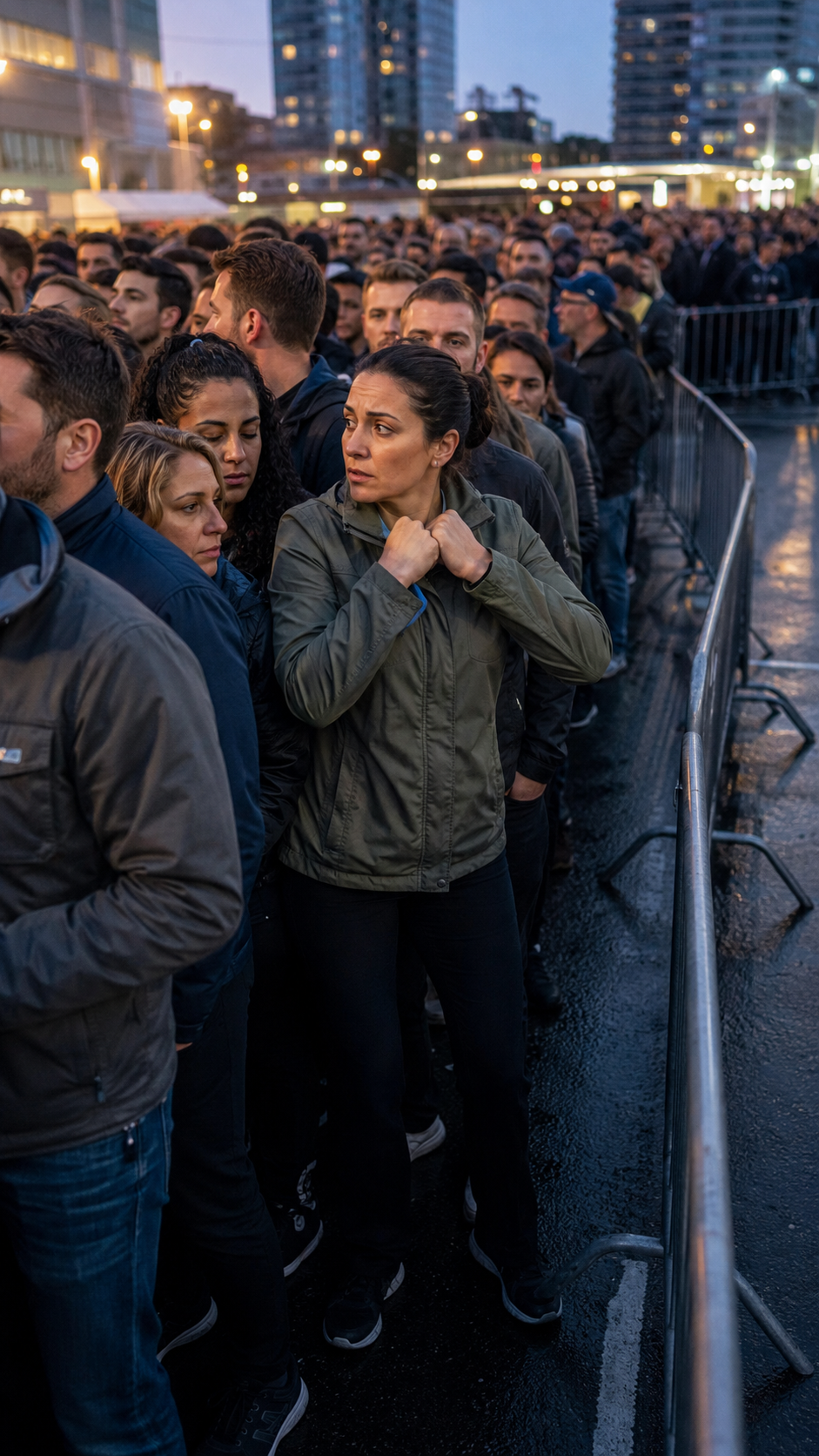
Concerts, festivals, religious gatherings, sporting events, transit stations, and street celebrations can bring thousands of people together in a limited space. Most large gatherings remain safe, but conditions can change quickly when too many people enter a narrow area or when crowd movement becomes blocked.
Crowd crush accidents are often described as “stampedes,” suggesting that frightened people suddenly ran out of control. In many disasters, however, victims had little or no ability to choose where they moved. Pressure from people behind them traveled through the crowd, trapping those near barriers, walls, gates, or bottlenecks.
The greatest danger is not always being stepped on. People may be injured or killed while still standing because the pressure around the chest prevents normal breathing. Understanding this mechanism helps explain why early recognition and crowd management are much more effective than trying to escape after severe compression has begun.
A crowd crush occurs when people are packed so closely together that physical pressure builds between their bodies. Individuals may no longer be able to control their direction, protect their balance, or create enough room for their chest to expand.
A crush can happen in a crowd that is moving or standing still. It does not require widespread panic, running, or aggressive behavior. Ordinary people calmly entering a popular area can unintentionally create dangerous pressure if those at the back do not know that movement has stopped at the front.
Common crowd-crush locations include:
Narrow streets and alleys
Entrances and exit gates
Stairways, ramps, and tunnels
Train and subway platforms
Areas directly in front of a stage
Barriers separating audience sections
Concession stands and merchandise areas
Escalators feeding people into a congested space
Intersections where two crowd flows meet
Routes narrowed by vehicles, temporary structures, or street furniture
The United Kingdom’s Health and Safety Executive identifies surging, swaying, crushing against fixed structures, falls, inadequate exits, poor ground conditions, and conflicting pedestrian flows as important crowd-safety hazards.
Why “Stampede” Is Often the Wrong Word
The word “stampede” implies that a crowd became irrational and began running. That can happen in some emergencies, but it does not accurately describe many fatal crowd disasters.
At extreme density, there may not be enough room to run. A person’s arms can become pinned against the body, and their feet may be moved by forces generated elsewhere in the crowd. People can remain cooperative and still be unable to reduce the pressure.
Describing every incident as panic may also place responsibility on the victims rather than examining inadequate capacity controls, blocked routes, poor venue design, ineffective communication, or failures to stop additional people from entering.
Crowd safety is primarily a management and design responsibility. Individual behavior still matters, but no personal technique can guarantee survival once crowd pressure becomes overwhelming.
Compressive Asphyxia: The Main Medical Danger
The chest must expand for the lungs to draw in air. When a person is squeezed tightly between other bodies or against a fixed object, that expansion can become restricted.
This is known as compressive or traumatic asphyxia. A person may be unable to take an adequate breath even though their mouth and nose are not blocked. They may remain upright at first, become confused or weak as oxygen falls, and then lose consciousness.
A medical analysis of the 2022 Seoul crowd disaster noted that traumatic asphyxiation caused by crowd compression has been a predominant cause of death in multiple crowd disasters. The study also emphasizes that extreme pressure can develop through the collective forces of a tightly packed crowd, not simply from individual pushing. Read the study through the National Library of Medicine.
Falling creates another serious hazard. In a very dense crowd, one person’s fall can remove the support that was holding nearby people upright. Others may fall into the same space, producing a progressive crowd collapse and a pile of bodies. People at the bottom can suffer chest compression, head injuries, fractures, or suffocation.
Situations That Can Trigger a Crowd Crush
A Bottleneck
A wide stream of people may be forced through a narrow gate, staircase, doorway, tunnel, or street. People at the back continue moving because they cannot see that the front has slowed.
Opposing Crowd Flows
When one group tries to enter while another tries to leave through the same route, both flows may stop. Sideways pressure and sudden changes in direction can make people lose their balance.
A Sudden Surge Toward an Attraction
A performer appearing on stage, transportation arriving, gates opening, prizes being distributed, or rumors of limited availability can cause many people to move toward one point at the same time.
Blocked or Inadequate Exits
Locked gates, narrow doors, poorly positioned barriers, vendors, parked vehicles, or security checkpoints may reduce the amount of usable space.
Downhill Movement
Crowds moving downhill may find it more difficult to stop. People near the bottom can receive pressure from the weight and momentum of those behind them.
Emergency Evacuation
Fire, smoke, violence, a loud unexplained noise, or an alarming announcement may cause sudden movement. If exits are not clearly visible or multiple routes merge, congestion can worsen rapidly.
Continued Entry Into a Full Area
People entering from behind usually cannot see conditions ahead. A space may appear open from the entrance even while people at its center are already struggling to breathe.
Warning Signs of a Dangerous Crowd
It is difficult for an attendee to estimate the number of people per square meter. Functional warning signs are more useful.
Leave the area as early as possible if:
You are touching strangers on several sides continuously.
You cannot move without the crowd moving you.
You can no longer choose your direction or pace.
Your hands or arms are becoming pinned.
You feel repeated waves of pressure moving through the crowd.
People nearby are stumbling or calling for more space.
You cannot easily turn around.
Movement repeatedly starts and stops.
You are being pushed toward a barrier, wall, closed gate, or narrow passage.
People continue entering even though those ahead are not moving.
You feel chest pressure or difficulty taking a full breath.
Do not wait until the situation “looks like an emergency.” Severe crowd pressure may develop before observers outside the crowd understand what is happening.
How to Prepare Before Entering a Crowded Event
Identify More Than One Exit
When arriving, look for emergency exits and side routes, not just the entrance you used. People often return instinctively to a familiar entrance, which can overload one route while alternatives remain less crowded.
Notice stairways, fences, barriers, slopes, tunnels, and dead ends. Ask yourself where you could move if the main flow stopped.
Avoid Predictable Pressure Zones
The center-front area near a stage, narrow entrance lanes, barrier corners, and the bottom of crowded stairways may experience greater pressure.
A position near the side or rear may offer a less obstructed view than expected and a faster route out. No performance is worth remaining in a location where you cannot move freely.
Wear Practical Clothing and Shoes
Choose closed-toe shoes that fit securely. Loose sandals, high heels, and untied laces increase the risk of tripping or losing footwear.
Mobile networks may become overloaded during a major event. Agree on a meeting location outside the venue in case your group becomes separated.
Children and people with mobility, sensory, or respiratory limitations should not be placed in the center of a dense standing crowd. Leave early if conditions begin to deteriorate rather than expecting them to manage stronger pressure later.
What to Do When Crowd Density Starts Increasing
Leave Before Movement Becomes Impossible
The safest time to escape is while you can still choose where to walk. Move toward a less crowded edge or an alternate exit as soon as you notice steadily increasing contact and reduced mobility.
Do not force your way directly against a strong incoming flow. This wastes energy and may cause you or someone else to fall. Move gradually at an angle toward the edge while following the general direction of movement.
Stay Upright and Maintain Your Balance
Keep your feet about shoulder-width apart, with one slightly ahead of the other. Bend your knees slightly so that sudden movement is less likely to knock you over.
Take short steps and lift your feet rather than allowing them to drag. Avoid standing on tiptoe, jumping, climbing onto unstable objects, or making sudden turns.
Protect Space Around Your Chest
Bring your forearms in front of your chest with your elbows angled downward, similar to a boxer’s guarded position. This may help preserve a small amount of breathing room and protect your ribs.
Do not lock your elbows, extend your arms aggressively, or push the person ahead. The goal is to protect your chest, not transfer additional force into the crowd.
If you are carrying a small bag, avoid holding it between your chest and arms if it reduces breathing space. Do not attempt to remove a backpack while severely compressed if doing so could make you lose balance.
Move With Pressure Waves
In a tightly packed crowd, pressure may arrive in waves. Fighting each wave directly can exhaust you and destabilize the people around you.
Allow your body to move with the wave while keeping your feet underneath you. When pressure eases briefly, continue angling toward an edge, open doorway, side street, or other relief area.
Do not attempt to squeeze through a narrow opening unless you can see that it leads to genuinely open space. A doorway can become another bottleneck.
Avoid Fixed Objects
Walls, fences, railings, barriers, columns, vehicles, and closed gates are dangerous because they do not move when the crowd presses against them.
If you are approaching a fixed object, begin moving away from it before contact becomes unavoidable. Be particularly cautious near the front of a stage, where barriers may receive pressure from an entire audience behind them.
Do Not Bend Down for Dropped Items
A phone, wallet, shoe, or bag can be replaced. Bending over lowers your center of gravity, restricts your view, and exposes you to being knocked down.
If an item falls, leave it. If a shoe comes off, continue moving rather than stopping in the crowd to retrieve it.
What to Do If You Fall
Falling in a dense crowd is extremely dangerous, but your immediate actions may protect your airway and vital organs.
If possible, get back up promptly by placing one foot beneath you and rising with the flow. Avoid pulling forcefully on another person, as this may cause both of you to fall.
If you cannot stand:
Turn onto your side rather than remaining face down.
Curl your knees toward your body.
Bring your forearms around your head and neck.
Keep space in front of your mouth and chest if possible.
Continue looking for a safe opportunity to rise.
This position cannot protect you from all crowd pressure, but it may reduce direct exposure to the head, neck, and abdomen.
If someone beside you falls, alert people around you with short, clear words such as “Person down!” Help only if you can do so without bending deeply or losing your own balance. Several stable people coordinating may be able to create space, but one person leaning into a moving crowd can cause another fall.
If You Are Trapped Against a Barrier
Turn your body slightly sideways if space allows, while keeping your forearms in front of your chest. Look for gaps, barrier openings, raised platforms, security staff, or a direction where pressure is lower.
Use short calls for help rather than continuous screaming, which can use energy and breath. If you can reach event staff without climbing or destabilizing others, clearly state that people are being compressed and cannot breathe.
Do not climb a fence or barrier unless it is designed as an emergency escape and the other side is visibly safe. Falls from barriers can cause injuries and create obstacles for the crowd below.
Helping After the Pressure Is Released
Move to a genuinely open area rather than stopping immediately outside the bottleneck. Stopping near the exit can block others who are still trying to escape.
Call 911 or the local emergency number and give a precise location. Tell the dispatcher that a crowd crush or compression incident has occurred and that multiple people may have breathing or crush injuries.
Someone who has been compressed may appear awake but still have internal injuries. Seek urgent medical evaluation for:
Breathing difficulty
Chest or abdominal pain
Confusion or unusual drowsiness
Coughing blood
Blue or gray lips
Weakness, collapse, or loss of consciousness
Severe limb pain or swelling
Numbness or inability to move a limb
If a person is unresponsive and not breathing normally, begin CPR and use an automated external defibrillator if available, following emergency-dispatch instructions. If they are breathing, monitor them closely and avoid moving them unnecessarily unless remaining in place is dangerous.
Do not give food or drinks to an unconscious or confused person.
The Responsibility of Event Organizers
Personal survival advice is only a final layer of protection. Organizers must prevent excessive density from developing in the first place.
Essential measures include:
Establishing and enforcing safe capacity limits
Monitoring density in separate venue zones
Preventing additional entry when an area becomes full
Separating incoming and outgoing pedestrian flows
Keeping exits and emergency routes unobstructed
Designing barriers that do not create hidden traps
Training stewards to recognize pressure and crowd distress
Using clear signs, lighting, and public announcements
Maintaining communication between security, medical teams, performers, and transport operators
Pausing or stopping an event before conditions become critical
Preparing medical and evacuation plans for mass casualties
The HSE emphasizes that organizers should assess crowd movement during arrival, entry, circulation, exit, and dispersal—not only while the main event is taking place.
Final Thoughts
Crowd crush accidents are not simply the result of people “panicking.” They develop when density, restricted movement, and inadequate crowd control allow pressure to build beyond what individuals can resist. The most effective personal strategy is to recognize the warning signs and leave early; if trapped, stay upright, protect your chest, move gradually with the flow, avoid fixed objects, and never bend down for dropped belongings. Have you ever been in a crowd where you could no longer control your movement, and what warning sign did you notice first? Share your experience and crowd-safety advice in the comments below.
Hi, I’m the creator and editor behind ZestyHabit. I research everyday safety, first aid, and practical wellness topics using official guidance and reliable public sources, then turn that information into clear, realistic steps for daily life.
My goal is to help readers make safer, better-informed choices at home and beyond.