Piercing Infections and Side Effects: Warning Signs, Treatment, and Prevention
Minjin Park
·
A new piercing can be an exciting form of self-expression. Whether it is a simple earlobe stud, a nose ring, or a more adventurous cartilage or tongue piercing, most people expect a little soreness while it heals. What they do not always expect is an itchy rash, a stubborn bump, damaged gums, or an infection that requires medical treatment.
Piercings create intentional openings in the skin or oral tissue. Until those openings heal, bacteria, friction, unsuitable jewelry, and harsh cleaning products can all cause problems. Even an old piercing can become irritated after the jewelry is changed, pulled, or exposed to a new metal.
Fortunately, most piercing complications can be prevented—or treated more easily—when you recognize the warning signs early. The key is knowing the difference between normal healing, irritation, an allergic reaction, and a true infection.
Some redness and soreness do not automatically mean that your piercing is infected. A new piercing is a wound, so a temporary inflammatory response is expected.
During the early healing period, you may notice:
Mild, localized swelling
Tenderness when the area is touched
Slight redness or a darker color around the opening
Minor itching
A small amount of bleeding immediately after the procedure
Pale or clear fluid that dries into a light crust
According to the NHS guidance on infected piercings, tenderness, mild itching, slight discoloration, and a pale fluid that forms a crust can occur during normal healing.
The general direction of these symptoms matters. Normal discomfort should gradually become less noticeable. If the area becomes hotter, more painful, increasingly swollen, or starts producing thick discharge, the problem may be moving beyond ordinary healing.
Signs of a Piercing Infection
A piercing infection occurs when harmful microorganisms enter the wound and begin multiplying. Bacteria can be introduced during the procedure, through dirty hands, from contaminated water, or by frequently touching the jewelry.
Common signs of an infected piercing include:
Pain that is getting worse instead of better
Significant or spreading swelling
Skin that feels unusually hot
Intense redness or dark discoloration
Thick white, yellow, green, or gray discharge
An unpleasant odor
Continued bleeding
Red streaks extending from the piercing
Fever, chills, dizziness, or feeling generally unwell
A small amount of light-colored crust is not the same as pus. Pus is usually thicker, may smell unpleasant, and often appears alongside worsening pain, warmth, or swelling.
Do not squeeze the piercing to see whether anything comes out. Squeezing can damage healing tissue and push bacteria deeper into the area.
Common Piercing Infections and Side Effects
Not every piercing problem is an infection. In fact, irritation and allergic reactions may be more common than bacterial infections. Understanding the major possibilities can help you avoid using the wrong home remedy.
1. Local Skin Infection
A localized infection may begin around one or both openings of the piercing. The area may become painful, hot, swollen, and filled with pus. Without treatment, the infection can develop into cellulitis, an abscess, or a more widespread illness.
Treatment depends on the location and severity. A healthcare professional may prescribe a topical or oral antibiotic, and an abscess may need to be drained. Using leftover antibiotics or someone else’s medication is unsafe because the treatment may not target the responsible organism.
2. Ear Cartilage Infection
A cartilage piercing deserves extra attention. Unlike the soft earlobe, cartilage has a more limited blood supply. An infection involving the tissue surrounding ear cartilage is called perichondritis.
High ear piercings are a common cause. Warning signs include severe pain, warmth, swelling, and redness in the firm upper portion of the ear. An abscess may also develop. If treatment is delayed, the infection can damage the cartilage and cause permanent changes to the ear’s shape, according to the Cleveland Clinic’s perichondritis guidance.
Do not wait several days to see whether a painful cartilage piercing improves on its own. Prompt medical evaluation can reduce the risk of permanent tissue damage.
3. Allergic Reaction to Jewelry
An itchy piercing is not always infected. Nickel and other metals can cause allergic contact dermatitis, especially in people with sensitive skin.
A jewelry allergy tends to cause:
Persistent itching
A red, scaly, or blistering rash
Dry or cracked skin
Clear weeping fluid
Irritation that extends beyond the piercing opening
Nickel is a particularly common trigger, and earrings and earring backs are frequent sources of exposure, according to the American Academy of Dermatology.
If you suspect a metal allergy, consult a qualified piercer or healthcare professional before changing jewelry in a fresh piercing. Implant-certified titanium is often considered for people concerned about nickel sensitivity. Suitable jewelry must also have a smooth finish, appropriate size, and verified material quality—not simply a label that says “hypoallergenic.”
4. Piercing Bumps, Hypertrophic Scars, and Keloids
The phrase “piercing bump” can describe several different conditions. A bump may be caused by friction, unsuitable jewelry, trapped fluid, excess granulation tissue, or raised scar tissue. It is not necessarily a pocket of infection.
A hypertrophic scar remains within the original injured area and may shrink over time. A keloid grows beyond the original wound and can continue becoming larger. Keloids may feel firm, itchy, tender, or painful.
Anyone can develop a keloid, but the risk is higher among people with darker skin tones and those with a personal or family history of keloid formation. The AAD advises people prone to keloids to consider avoiding piercings because skin injury can trigger another one.
Do not apply tea tree oil, aspirin paste, or other viral social-media remedies to an unexplained bump. These products can irritate or burn the skin. A dermatologist can identify the type of growth and discuss appropriate treatment.
5. Migration and Rejection
Sometimes the body gradually pushes jewelry toward the skin’s surface. This is called migration. Rejection occurs when the jewelry moves so far that it is nearly or completely expelled.
Possible signs include:
The skin between the openings becoming thinner
More of the jewelry becoming visible
Entry and exit holes moving from their original positions
Peeling, shiny, or persistently inflamed skin
Jewelry appearing visible through nearly transparent tissue
Migration is more likely when the piercing is poorly placed, the jewelry is too heavy, or the area experiences repeated pulling and friction. Rejection is not an infection, but allowing it to continue can cause tearing and a noticeable scar. Ask an experienced piercer to evaluate it promptly.
6. Embedded Jewelry and Pressure Damage
Initial jewelry must leave enough space for swelling. If it is too short or tight, the skin may begin growing over the jewelry or backing. Embedded jewelry can restrict circulation, trap discharge, and become painful.
Do not dig out deeply embedded jewelry with tweezers or another sharp object. A clinician may need to remove it safely, especially if the surrounding tissue is swollen or infected.
Jewelry can also snag on clothing, towels, bedding, sports equipment, or hairbrushes. A forceful pull may tear the piercing channel and cause significant bleeding or scarring.
7. Oral and Dental Complications
Tongue, lip, and cheek piercings have risks that extend beyond the initial wound. Jewelry can repeatedly strike the teeth or rub against the gums.
The American Dental Association lists complications such as chipped teeth, gum recession, bleeding, infection, embedded jewelry, tissue injury, and airway obstruction. Oral jewelry may also interfere with speaking, chewing, or swallowing.
Severe tongue swelling is particularly dangerous because it can obstruct breathing. A loose piece of jewelry can also be swallowed or inhaled. Anyone with difficulty breathing or rapidly increasing mouth, tongue, or neck swelling needs emergency care.
8. Bloodborne Illness
Improperly sterilized piercing equipment can expose a person to infected blood. Possible bloodborne diseases include hepatitis B and hepatitis C. Tetanus is another potential concern associated with contaminated wounds.
A reputable piercer should use a new, sterile, disposable needle and open its package in front of you. Equipment that must be reused should be sterilized in an autoclave. Mayo Clinic also recommends choosing a trained professional who washes their hands and wears fresh disposable gloves.
Keep your routine vaccinations current and speak with a healthcare professional if you believe contaminated equipment was used.
How to Reduce the Risk Before Getting Pierced
Safe healing begins before the jewelry is inserted. Research studios instead of choosing one based only on price or convenience.
A responsible piercer should:
Follow local licensing and health regulations
Work in a visibly clean environment
Wash their hands and use new disposable gloves
Use a sealed, sterile, single-use needle
Sterilize reusable equipment in an autoclave
Explain the procedure, risks, and healing time
Provide written aftercare instructions
Use jewelry suitable for a fresh piercing
Be willing to answer questions about material standards
Reusable piercing guns can be difficult to sterilize properly and may cause more tissue trauma. A sterile disposable needle used by a trained professional is generally the better option, particularly for cartilage and body piercings.
Tell the piercer about metal allergies, previous keloids, medications, immune-system conditions, diabetes, or other health concerns that could affect healing. Your healthcare professional can help you decide whether a piercing is appropriate.
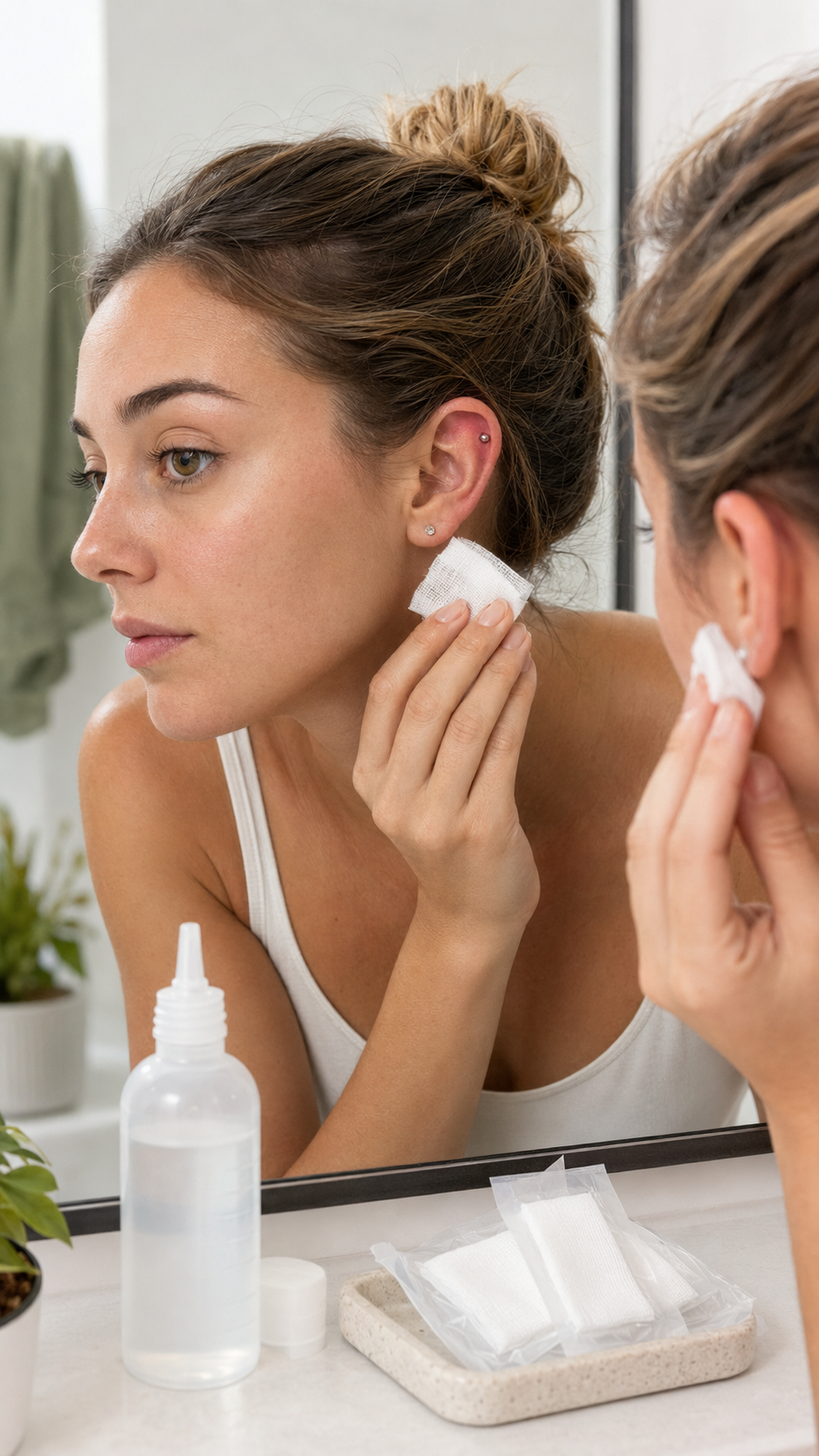
Safe Piercing Aftercare
Aftercare should be gentle and consistent. More cleaning is not necessarily better; aggressive cleaning can keep the wound irritated.
For a new skin piercing:
Wash your hands before touching the area.
Clean it as directed, usually with sterile saline wound wash or mild soap and water.
Rinse away soap completely and dry gently with a clean disposable paper product.
Keep makeup, lotions, perfume, and hair products away from the wound.
Reduce friction from tight clothing, helmets, headphones, and sleeping pressure.
Stay out of pools, hot tubs, rivers, and lakes while the piercing heals.
Do not change the jewelry too early.
Avoid hydrogen peroxide, rubbing alcohol, iodine, harsh antiseptics, and strong soaps unless a healthcare professional specifically tells you to use them. These products can injure new cells and delay healing.
For an oral piercing, maintain careful dental hygiene and use an alcohol-free mouthwash as directed. Avoid playing with the jewelry against your teeth. Once the initial swelling subsides, a qualified piercer may need to replace the longer starter jewelry with a properly fitted piece.
What to Do If You Think a Piercing Is Infected
Stop touching, squeezing, and experimenting with remedies. Wash your hands, clean the area gently, and arrange a medical evaluation.
Do not automatically remove the jewelry. The opening can begin closing quickly, potentially trapping infection beneath the skin. The NHS recommends leaving jewelry in unless a doctor tells you to remove it. There are exceptions—such as embedded jewelry, rejection, or certain cartilage infections—so the decision should be made by a clinician.
A professional piercer can help with jewelry fit, material, or mechanical irritation, but a piercer cannot diagnose an infection or prescribe medication. When symptoms suggest infection, medical care comes first.
When to Seek Urgent Medical Care
Contact a healthcare professional promptly if you have worsening pain, spreading redness, significant swelling, heat, foul-smelling pus, or symptoms that are not improving. Seek urgent care for:
Fever, chills, vomiting, dizziness, or confusion
Red streaks moving away from the piercing
Severe or rapidly increasing swelling
An embedded piece of jewelry
Heavy bleeding that does not stop
A painful, swollen cartilage piercing
Facial, mouth, tongue, or neck swelling
Difficulty swallowing or breathing
Symptoms in someone with diabetes or a weakened immune system
Call emergency services for breathing difficulty, severe facial or throat swelling, fainting, or uncontrolled bleeding.
Piercings can heal beautifully, but they need the same respect as any other wound. Choose a skilled professional, use quality jewelry, follow gentle aftercare, and pay attention when symptoms worsen instead of improve. This article provides general information and is not a substitute for an examination or personalized medical advice.
Have you ever dealt with a piercing bump, metal allergy, infection, or another unexpected side effect? What helped you recognize and resolve the problem? Share your experience or questions in the comments—your story may help another reader care for their piercing more safely.
Hi, I’m the creator and editor behind ZestyHabit. I research everyday safety, first aid, and practical wellness topics using official guidance and reliable public sources, then turn that information into clear, realistic steps for daily life.
My goal is to help readers make safer, better-informed choices at home and beyond.