Tai Chi Precautions: How to Move Slowly Without Losing Balance
Minjin Park
·
Tai Chi looks gentle, but slow movement can challenge balance, knees, and focus. Learn simple precautions for safer transitions and steadier practice.
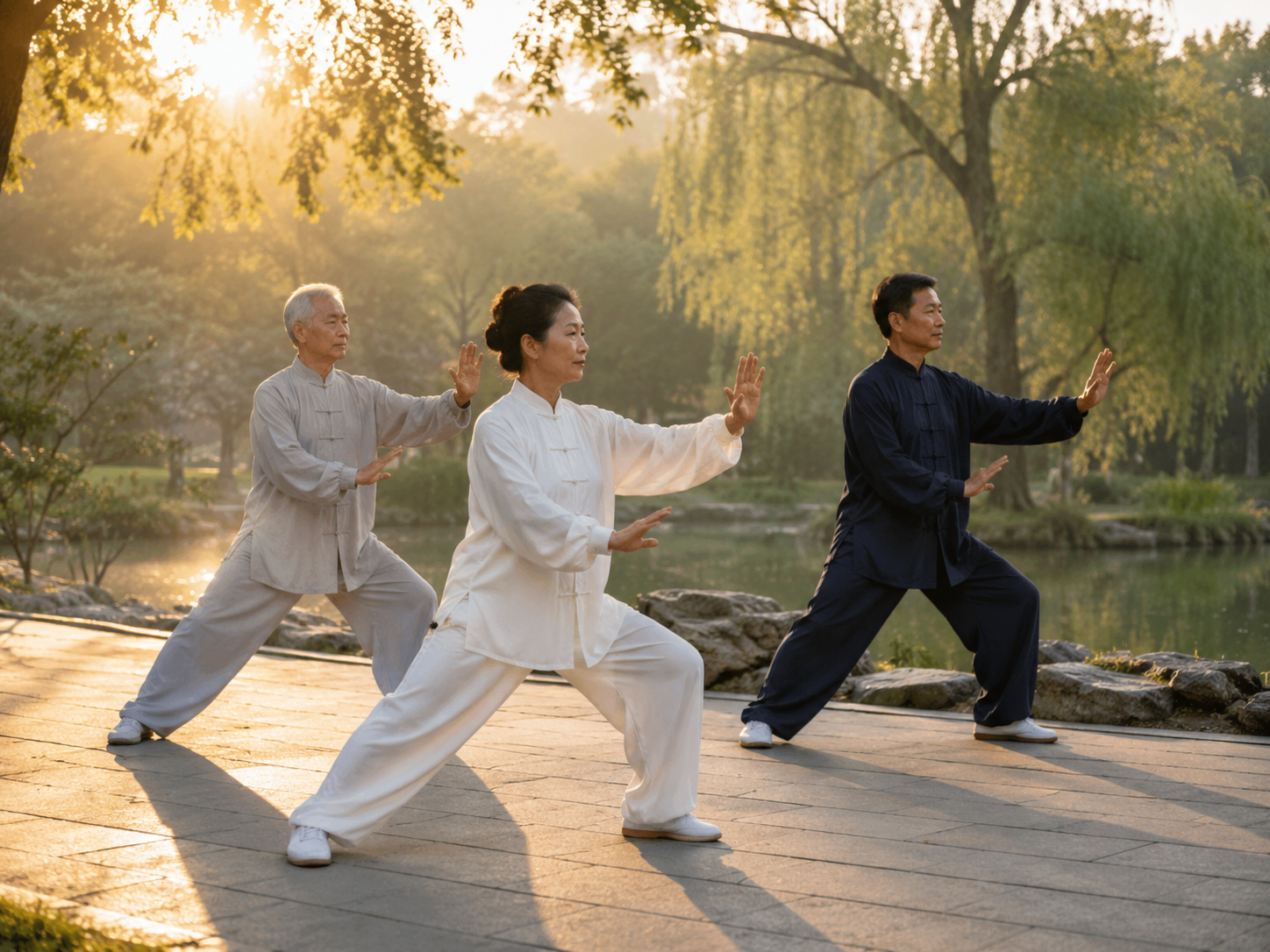
Tai Chi has a calm reputation. People often picture slow flowing movements, quiet breathing, and peaceful outdoor practice. Compared with running, lifting weights, or intense fitness classes, it may look almost effortless.
But anyone who has tried Tai Chi for the first time knows something surprising: moving slowly can be harder than moving quickly.
When you move fast, momentum can carry you through a step. When you move slowly, your body has to control every inch of the movement. Your feet, ankles, knees, hips, core, and posture all work together to keep you steady. That is part of what makes Tai Chi valuable. It trains balance, coordination, body awareness, and gentle strength.
Still, gentle does not mean risk-free. Losing balance, twisting the knee, locking the joints, or trying to copy deep stances too soon can make practice uncomfortable. The goal is not to force yourself into impressive-looking positions. The goal is to move with control, breathe naturally, and build steadiness over time.
If you are new to Tai Chi, returning after a long break, or practicing at home without an instructor, these precautions can help you move slowly without feeling wobbly or strained.
Slow movement gives your body more time to notice instability. In regular walking, each step happens quickly. Your weight shifts, your foot lands, and your body moves forward. In Tai Chi, you may spend several seconds transferring weight from one leg to the other.
That slow transfer is the challenge.
Your standing leg has to support you while the moving leg steps, turns, lifts, or slides. Your ankles make small corrections. Your hips adjust. Your core helps keep your upper body from tipping. Your eyes and inner ear help your brain understand where you are in space.
If one piece of that system is not ready, you may feel shaky. This is normal in the beginning. It does not mean you are bad at Tai Chi. It means your balance system is being trained.
The key is to make the practice safe enough that your body can learn without panic. Balance improves best when you are challenged, not when you are scared of falling.
Start with a Stable Practice Area
Before thinking about the movements, look at the space around you. Tai Chi does not need much room, but the floor matters.
Practice on a flat, dry, uncluttered surface. Avoid thick rugs, slippery socks, uneven grass, loose mats, or crowded rooms with furniture close by. A surface that feels fine for standing may become risky when you slowly shift weight or turn.
If you are practicing outdoors, check for small slopes, stones, wet patches, roots, or uneven pavement. Tai Chi in a park can feel beautiful, but the ground should still be predictable.
For home practice, give yourself enough space to step forward, backward, and sideways without hitting a table, chair, or wall. If you are worried about balance, practice near a wall, sturdy chair, or countertop. You do not need to hold on the whole time. Just having support nearby can make you more relaxed.
For Tai Chi, you generally want shoes that are light, comfortable, stable, and not too bulky. Very thick running shoes may make it harder to feel the floor. Slippery socks can increase fall risk. Heavy shoes may make slow stepping feel awkward.
Barefoot practice can work for some people on a safe indoor surface, but it is not ideal for everyone. If your feet need support, if the floor is cold or slippery, or if you are practicing outside, shoes are usually better.
The best choice is something that lets your foot contact the ground clearly while still giving enough grip and comfort. You should be able to turn gently without your shoe sticking aggressively or sliding unexpectedly.
Warm Up Before Slow Practice
Tai Chi is slow, but your joints still need preparation. Starting cold can make your knees, hips, ankles, and back feel stiff.
A warm-up does not have to be intense. Five to ten minutes is often enough. Try gentle marching in place, shoulder rolls, ankle circles, knee bends, hip circles, and easy side-to-side weight shifts.
The warm-up should feel smooth and relaxed. You are not trying to stretch deeply or tire yourself out. You are simply telling your body, “We are about to move.”
This is especially helpful in the morning, after sitting at a desk, or when the weather is cold. Slow movement feels much better when the body is already awake.
Keep Your Stance Smaller at First
One common beginner mistake is copying a deep stance too soon. Tai Chi videos and experienced practitioners may show wide steps, low positions, and graceful weight shifts. That does not mean you need to start there.
A smaller stance is safer and easier to control. Keep your feet closer together than you think you need. Bend your knees only slightly. Step shorter. Move within a range where you can still breathe and stay relaxed.
Deep stances increase the demand on the thighs, hips, ankles, and knees. If your legs are not ready, your knees may cave inward, your feet may grip the floor, or your upper body may lean to compensate.
A good beginner stance should feel stable, not dramatic. You can always make movements larger later.
Protect Your Knees During Weight Shifts
Tai Chi involves many weight shifts, bends, turns, and transitions. These can be gentle on the body when done well, but the knees need attention.
The basic rule is simple: let your knee follow the direction of your toes. If your foot points forward, your knee should generally move forward. If your foot turns slightly outward, your knee should track in that same direction. Avoid twisting your knee while your foot stays planted.
Many knee problems in Tai Chi come from turning the body while the foot is stuck. Instead of forcing the knee to rotate, gently adjust your foot position first. Small foot adjustments are not cheating. They are smart.
Also avoid locking your knees. A locked knee may feel stable, but it reduces your ability to absorb movement. Keep a soft bend, especially during transitions.
If you feel pressure inside the knee, sharp pain, or twisting discomfort, reduce the range of motion immediately. Tai Chi should not feel like a knee endurance test.
Shift Weight Before You Step
Balance often improves when you separate the movement into stages.
Before stepping, first shift your weight clearly onto the standing leg. Then lightly release the other foot. Then step. Then gradually transfer weight into the new position.
Beginners often try to step before their weight has fully moved. This makes the body feel rushed and unstable. It can also cause the moving foot to drag, catch, or land awkwardly.
A helpful cue is: “Empty the foot before moving it.”
In Tai Chi, the foot that is about to step should feel light. You should not have to yank it off the ground. If it feels stuck, your weight is probably still split between both legs.
Practice this slowly: shift to the right foot, make the left foot light, tap the left toes, then place the left foot down. Then reverse. This simple drill teaches the foundation of controlled transitions.
Do Not Rush the Transitions
Tai Chi is not just a collection of poses. The transitions are the practice.
Many people can stand in a position, but lose balance while moving between positions. That is normal. Transitions require coordination, timing, and weight control.
Move slowly, but not so slowly that you freeze. There should be a gentle flow. If you feel stuck, make the movement smaller. If your breath stops, you are probably concentrating too hard or trying to force precision.
It is better to perform a small, smooth transition than a large, wobbly one.
Think of pouring water from one cup to another. The shift should be gradual. Your body weight moves from one foot to the other without dropping suddenly or jerking.
Use Your Eyes Wisely
Your eyes help your balance. Looking around too quickly during Tai Chi can make you feel unsteady.
Try to keep your gaze soft and steady. You do not need to stare intensely. Let your eyes follow the direction of the movement without snapping your head around.
Avoid looking down at your feet the entire time. It may feel safer at first, but it can pull your posture forward and make balance worse. Instead, glance down briefly when needed, then return your gaze forward.
If turning movements make you dizzy, slow them down and reduce the range. Practice turns in smaller pieces. Dizziness is a sign to pause, not something to push through.
Keep the Upper Body Relaxed
When people feel unstable, they often tighten their shoulders, lift their chest, hold their breath, or stiffen their arms. This can make balance harder.
Tai Chi works best with a relaxed but upright posture. Imagine your head gently floating upward while your shoulders soften downward. Your arms should feel supported, not rigid. Your hands do not need to be tense.
A stiff upper body makes it harder for your lower body to adjust. Balance requires small corrections. If everything is locked, those corrections become jerky.
Relaxation does not mean collapsing. You still want structure. Think “soft and tall,” not “loose and floppy.”
Breathe Naturally
Some beginners accidentally hold their breath during slow movements. This usually happens when they are trying very hard to get everything right.
Breath-holding can increase tension and make the body feel less steady. Instead, breathe naturally through the movement. You do not need to match every motion to a perfect inhale or exhale at first.
If you lose track, pause and take one easy breath. Then continue.
Over time, your breathing may naturally coordinate with the flow of the form. But in the beginning, simple and comfortable breathing is enough.
Practice Near Support If Needed
Using support does not make Tai Chi less legitimate. It makes it safer.
If you are older, recovering from an injury, dealing with dizziness, or simply new to balance training, practice near a wall or sturdy chair. You can lightly touch the support when needed, then gradually rely on it less.
A chair can be especially helpful for practicing weight shifts. Stand beside it, not behind it, so your hand can rest lightly on the back of the chair. Keep your grip gentle. The goal is not to hang on, but to give your brain a sense of safety.
Over time, you may notice that you need the support less often.
Modify Movements for Knee Comfort
Tai Chi should be adaptable. If a movement bothers your knees, change it.
Use a higher stance. Shorten the step. Reduce the bend. Turn the foot more carefully. Move more slowly through the transition. Avoid deep lunges or low squats until your body is prepared.
Pain is not required for progress. In fact, pain often makes movement worse because your body starts guarding and tightening.
For knee comfort, pay attention to three things: foot direction, knee alignment, and stance depth. Most discomfort improves when these are adjusted.
If pain continues, especially sharp or swelling-related pain, stop the movement and consider asking a qualified instructor or healthcare professional for guidance.
Avoid Practicing When You Are Too Tired
Tai Chi is gentle, but balance requires focus. Practicing when you are exhausted can increase the chance of stumbling.
Fatigue affects coordination. Your foot may not lift as cleanly. Your knee may drift inward. Your posture may slump. Your reactions may slow down.
If you are very tired, choose a shorter session. Practice seated breathing, gentle arm movements, or simple standing weight shifts instead of a full form.
Consistency matters more than forcing a long session.
A Simple Beginner Balance Drill
Before learning a full Tai Chi sequence, try this small drill:
Stand with your feet about hip-width apart. Soften your knees. Keep your posture tall. Slowly shift your weight to your right foot without leaning your upper body too far. Let your left heel become light. Then return to center. Shift to the left foot and let the right heel become light.
Repeat this for one to two minutes.
Once that feels comfortable, lift the light foot slightly and place it back down. Keep the movement small. You are training control, not height.
This drill may look simple, but it teaches the skill behind many Tai Chi transitions.
How Long Should Beginners Practice?
A beginner does not need a long session. Ten to twenty minutes is a good starting range. Short practice done regularly is often better than one long session that leaves your knees sore or your legs shaky.
You can divide practice into small sections: warm-up, weight shifts, one or two movements, then cooldown. This keeps the experience manageable.
As your balance improves, your sessions can become longer. But there is no need to rush. Tai Chi rewards patience.
Cool Down After Practice
After Tai Chi, give your body a gentle finish. Walk slowly for a minute or two. Shake out your legs. Roll your shoulders. Take a few relaxed breaths.
If your calves, hips, or thighs feel tight, use gentle stretching. Avoid forcing deep stretches right after balance practice, especially if your legs feel fatigued.
Notice how your body feels afterward. Mild warmth or gentle muscle fatigue is normal. Sharp pain, knee swelling, dizziness, or lingering discomfort means you should reduce intensity next time.
Final Thoughts
Tai Chi may look soft, but it teaches real control. Moving slowly asks your body to balance, shift weight, coordinate the feet, protect the knees, and stay calm through transitions.
The safest way to practice is to keep your stance small, move gradually, warm up first, protect your knees, and use support when needed. Do not worry about looking graceful right away. Grace comes from steadiness, not from forcing big movements.
If you treat slow movement as a skill, Tai Chi becomes much more enjoyable. Each session can help you feel a little more balanced, a little more aware, and a little more comfortable in your own body.
Hi, I’m the creator and editor behind ZestyHabit. I research everyday safety, first aid, and practical wellness topics using official guidance and reliable public sources, then turn that information into clear, realistic steps for daily life.
My goal is to help readers make safer, better-informed choices at home and beyond.