Everyday Electrical Shock Hazards Around the Home and How to Prevent Them
Minjin Park
·
Electricity is so deeply woven into everyday life that it is easy to forget how dangerous it can be. We charge phones beside the bed, use appliances near sinks, run extension cords through garages, and plug outdoor equipment into the nearest outlet without always considering the conditions around us.
Most of these activities are safe when electrical systems and products are properly installed, maintained, and used. The risk increases when water, damaged insulation, faulty equipment, poor grounding, or careless handling creates an unintended path for electric current.
An electrical shock can cause pain, muscle contractions, burns, heart rhythm problems, loss of consciousness, or death. The visible injury may also be smaller than the damage inside the body. Understanding common electrical shock hazards is therefore an important part of home and family safety.
An electrical shock occurs when current passes through the body. This can happen after touching an exposed energized wire, a damaged appliance, or a metal surface that has accidentally become energized.
The severity of the injury depends on several factors:
The amount and type of electrical current
The path the electricity takes through the body
How long the person remains in contact
Whether the skin is wet or dry
The person’s health and physical condition
Whether the source is household voltage or a high-voltage system
Electricity becomes particularly dangerous when it travels through the chest because it may affect the heart or breathing muscles. Wet skin generally lowers the body’s resistance, allowing current to pass more easily. This is why bathrooms, kitchens, pools, basements, and outdoor areas deserve special attention.
1. Electrical Appliances Near Water
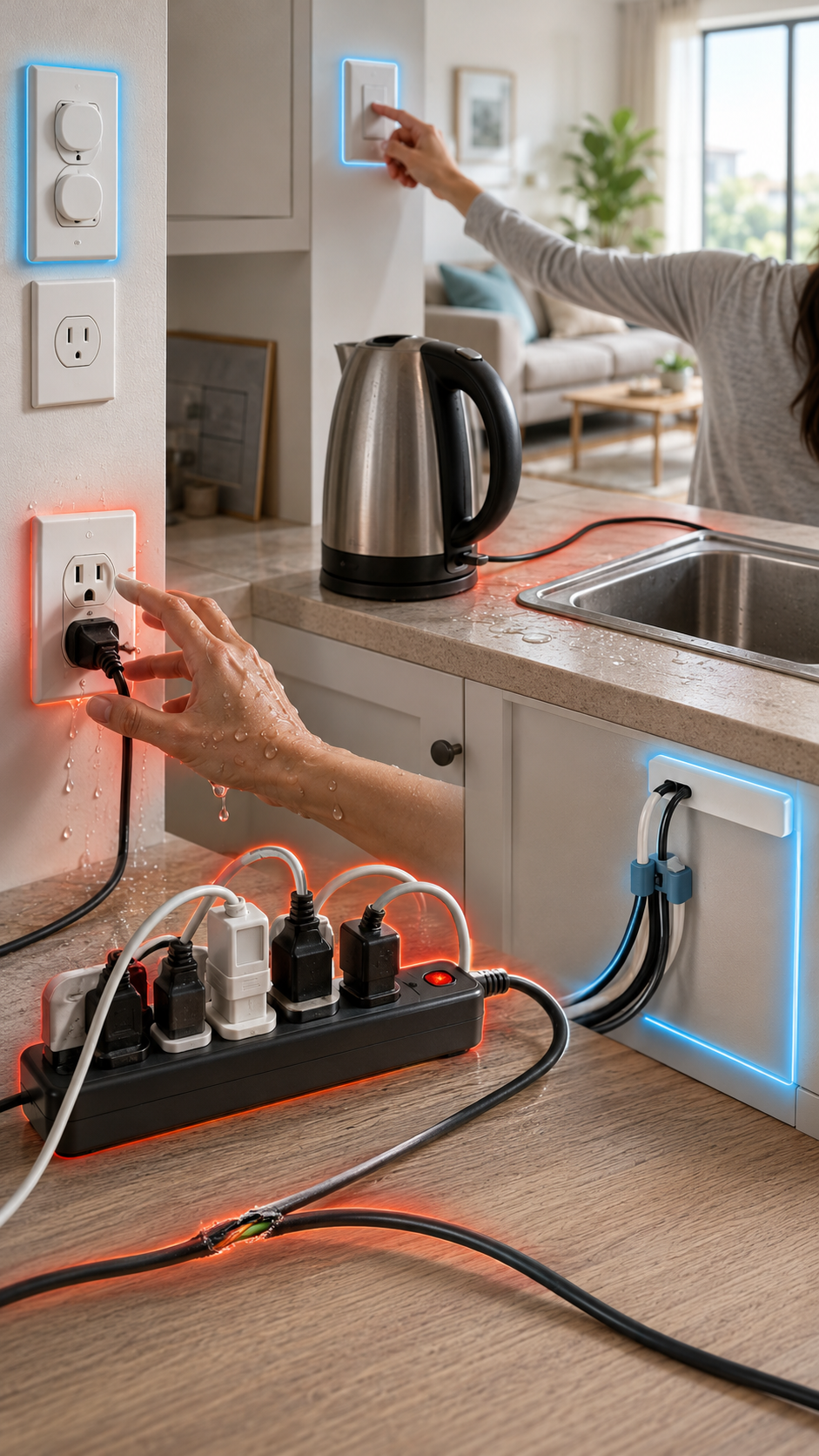
Water and electricity are one of the most dangerous combinations in the home. Hair dryers, electric razors, curling irons, radios, chargers, and portable heaters should never be placed where they could fall into a sink, bathtub, or container of water.
Reaching for an appliance that has fallen into water
Using a corded device near a swimming pool
If a plugged-in appliance falls into water, do not reach into the water to retrieve it. Turn off the power at the circuit breaker if it is safe to do so, and have the appliance inspected or replaced. Unplugging it may not be safe if the plug, outlet, floor, or your hands are wet.
Bathrooms, kitchens, laundry rooms, garages, basements, and outdoor outlets should have appropriate ground-fault circuit interrupter protection. A GFCI is designed to shut off power quickly when it detects electricity flowing along an unintended path. According to the U.S. Consumer Product Safety Commission, GFCIs are intended to protect people from severe or fatal electrical shocks, especially where equipment is used near water.
2. Frayed, Cracked, or Pinched Electrical Cords
A cord may still power an appliance even when its protective insulation has been damaged. That does not mean it is safe. Cracks, cuts, exposed wires, melted areas, and loose plug connections can create both shock and fire hazards.
Inspect cords for:
Exposed copper or internal wiring
Cracked or brittle insulation
Burn marks or melted plastic
A plug that separates from the cord
Bent, loose, or missing prongs
Damage caused by pets
Cords crushed by furniture
Repeatedly twisted or sharply bent sections
Do not cover damaged insulation with ordinary household tape and continue using the product. Tape may hide the problem without restoring the cord’s original protection. Disconnect the item and replace the cord or appliance according to the manufacturer’s instructions.
When unplugging a device, hold the plug itself instead of pulling the cord. The CPSC warns that worn or damaged extension cords should be discarded and that plugs should be removed by pulling on the plug rather than the wire.
3. Loose or Partially Inserted Plugs
A plug that sits loosely in an outlet may expose part of the metal prongs. A child, pet, or adult moving furniture could touch the energized metal. Loose connections can also create heat and electrical arcing.
Stop using an outlet if:
Plugs repeatedly fall out
The outlet feels unusually warm
You hear buzzing, sizzling, or crackling
There are scorch marks or discoloration
You see sparks when inserting a normal plug
The outlet cover is cracked or broken
The outlet moves when touched
A small, brief spark may sometimes occur when certain devices are connected, but repeated sparking, noise, heat, or burning odors should never be ignored. Turn off the affected circuit if it can be done safely and contact a licensed electrician.
Do not insert objects into an outlet to tighten or clean it. Electrical repairs should not be attempted while the circuit is energized.
4. Overloaded Power Strips and Outlet Adapters
Overloading is commonly discussed as a fire risk, but damaged or overheated power strips can also expose users to electrical shock.
Power strips do not increase the amount of electricity a circuit can safely supply. They simply provide additional connection points. Plugging several high-power appliances into one strip can exceed the capacity of the strip or household circuit.
Avoid connecting items such as portable heaters, air conditioners, microwaves, refrigerators, or other major appliances to an ordinary power strip unless the manufacturer specifically permits it. These products generally need an appropriate wall outlet and circuit.
Never connect one power strip to another, a practice sometimes called daisy-chaining. Replace strips that have cracked housings, loose sockets, damaged switches, missing safety markings, or cords that become warm.
The National Fire Protection Association also advises against running cords through doorways or underneath carpets, where they may be crushed or damaged without being noticed.
5. Missing Grounding Prongs
The round third prong on many plugs is a safety feature. It provides a grounding path that can help direct fault current away from a person.
Never break off the third prong to make a plug fit into an older two-slot outlet. Do not force incompatible plugs into outlets or use unapproved adapters to bypass grounding.
If your home has older two-slot outlets and you need to connect grounded equipment, ask a licensed electrician about the safest upgrade. Simply installing a three-slot receptacle without the required protection or grounding may create a misleading appearance of safety.
Grounding is especially important for appliances and tools with metal housings. If an internal fault energizes the housing, touching it could complete the circuit through the user’s body.
6. Cheap, Counterfeit, or Damaged Chargers
Phone, tablet, and laptop chargers are frequently handled, carried, bent, and left plugged in for long periods. Poorly manufactured or damaged chargers may lack adequate insulation, temperature control, or protection against electrical faults.
Use chargers that are compatible with the device and certified by a recognized testing organization. Stop using any charger that has visible damage or becomes unusually hot. Do not charge devices on wet countertops, beside sinks, or under pillows and blankets.
If a phone or laptop produces a tingling sensation while charging, unplug it safely and have the charger, device, and outlet examined. Do not assume the sensation is normal.
7. Extension Cords Used as Permanent Wiring
Extension cords are intended for temporary use. Problems arise when they are treated as permanent substitutes for properly installed outlets.
Unsafe extension cord practices include:
Running indoor cords outside
Placing cords beneath rugs
Routing them across doorways
Pinching them behind furniture
Using cords with insufficient electrical capacity
Connecting several cords together
Exposing connections to rain
Using an ungrounded cord with a grounded tool
Leaving coiled cords under heavy electrical load
Continuing to use cords that have been repaired repeatedly
Choose a cord rated for its intended environment and electrical load. Outdoor cords should be clearly marked for outdoor use and connected to GFCI-protected power. Keep plug connections dry and elevated where they cannot sit in puddles.
The CPSC’s power-tool safety guidance recommends properly grounded, undamaged outdoor-rated cords and warns against using corded tools in damp or wet conditions.
8. Unsafe Cleaning and Appliance Maintenance
Unplug an appliance before cleaning it, removing trapped material, replacing an accessible part, or inspecting it for damage. Turning off the appliance with its normal control button may not disconnect electricity from every internal component.
This applies to products such as:
Toasters
Blenders and food processors
Fans
Vacuum cleaners
Portable heaters
Washing machines
Power tools
Lamps
Printers and office equipment
Never insert a metal fork, knife, or other object into a plugged-in toaster. Do not touch internal components of an appliance unless it has been disconnected and the manufacturer’s instructions say the task is safe for the user.
Some equipment can retain hazardous electrical energy even after being unplugged. Microwaves, televisions, power supplies, and other products containing capacitors should be repaired only by qualified professionals.
9. Outdoor Tools, Decorations, and Yard Work
Outdoor electricity introduces moisture, soil, metal ladders, long cords, and unpredictable weather. Lawn mowers, trimmers, pressure washers, electric grills, holiday lights, pumps, and power tools must be used only under appropriate conditions.
Before starting outdoor work:
Check the weather
Inspect cords and plugs
Confirm that products are rated for outdoor use
Use GFCI protection
Keep electrical connections away from water
Know where underground and overhead utilities are located
Never use corded equipment while standing in water or on saturated ground. Stop working if rain begins and the equipment is not specifically designed for those conditions.
Outdoor decorations should be securely installed without staples or nails that can pierce insulation. Remove damaged light strings rather than attempting improvised repairs.
10. Children, Pets, and Accessible Outlets
Young children explore by touching and inserting objects into openings. Use appropriate child-safety receptacles or covers, but remember that covers are only one layer of protection.
Keep cords out of reach so children cannot chew, pull, or wrap them around themselves. Secure appliances that could fall when a cord is pulled. Teach older children that outlets are not toys and that they should never retrieve an electrical object from water.
Pets can also chew through cables and expose energized wires. Route cords behind protective barriers, inspect them regularly, and unplug equipment that is not being used.
A damaged cord should be disconnected before anyone attempts to move or examine it. Do not grab a pet or child who may still be in contact with a live electrical source until the power has been shut off.
11. Floodwater and Fallen Power Lines
Flooded basements and storm-damaged areas can conceal energized wiring. Never walk into standing water if outlets, appliances, electrical panels, or wiring may be submerged.
Do not enter the area to reach the breaker panel if doing so requires standing in water. Contact emergency services or the utility company and wait for qualified help.
Fallen power lines are another major hazard. Electricity can travel through the ground, vehicles, fences, puddles, and nearby objects. Stay far away from the line and anything it touches. The American Red Cross recommends remaining at least 35 feet from fallen power lines and calling 911.
If a power line falls on a vehicle, occupants should generally remain inside and call emergency services unless fire or another immediate threat makes evacuation necessary. Follow the emergency dispatcher’s instructions.
What to Do If Someone Receives an Electrical Shock
Your first priority is to avoid becoming a second victim.
Do not touch the person while they are connected to electricity. Their body may still be conducting current.
Turn off the power. Disconnect the circuit at the breaker or unplug the source only if you can do so without entering water or touching damaged electrical parts.
Stay away from high-voltage sources. Do not approach fallen power lines, utility equipment, or industrial electrical systems. Call 911 and the utility company.
Call emergency services. Electrical injuries can affect breathing and heart rhythm.
Check responsiveness and breathing once the scene is safe. If the person is unresponsive and not breathing normally, begin CPR and use an automated external defibrillator if available and if you are trained to do so.
Treat visible burns carefully. Do not apply ice, butter, ointment, or adhesive material. Cover the area loosely with a clean, dry dressing after the electrical source has been disconnected.
The American Red Cross stresses that the power source must be turned off before approaching someone with an electrical burn.
Seek emergency care after high-voltage exposure, loss of consciousness, breathing difficulty, chest pain, an irregular heartbeat, seizures, confusion, significant burns, or prolonged contact. Medical advice may also be appropriate after an apparently minor shock because internal injury is not always visible.
A Simple Home Electrical Safety Check
Walk through your home periodically and look for:
Damaged cords or plugs
Warm, discolored, or loose outlets
Missing outlet covers
Frequently tripping breakers
Flickering lights
Buzzing or burning smells
Power strips connected to other strips
Cords hidden under rugs
Electrical products near water
Missing GFCI protection in wet locations
Three-prong plugs altered to fit two-slot outlets
Outdoor connections exposed to rain
Chargers or appliances with cracked housings
Do not open panels, remove outlets, or inspect energized wiring yourself. If you notice repeated warning signs, stop using the affected circuit or product and contact a licensed electrician.
Electrical shock prevention is largely about noticing small problems before they become emergencies. Which electrical hazard have you discovered in your own home—an overloaded power strip, a damaged charger, a loose outlet, or an appliance too close to water? Share your experience and your best electrical safety habit in the comments so other readers can make their homes safer too.
Hi, I’m the creator and editor behind ZestyHabit. I research everyday safety, first aid, and practical wellness topics using official guidance and reliable public sources, then turn that information into clear, realistic steps for daily life.
My goal is to help readers make safer, better-informed choices at home and beyond.