Why Bathroom Outlets Can Be Dangerous: Everyday Electrical Safety Tips for a Safer Home
Minjin Park
·
Bathroom outlets can be risky because electricity and moisture do not mix well. Learn why bathroom electrical safety matters, common mistakes to avoid, and simple habits that help reduce everyday risks.
Most people use bathroom outlets without thinking much about it. You plug in a hair dryer, electric razor, curling iron, toothbrush charger, night-light, or phone charger, and it becomes part of the morning or bedtime routine.
The bathroom feels ordinary because we use it every day. But from an electrical safety point of view, it is one of the trickiest rooms in the home.
The reason is simple: bathrooms combine electricity, water, steam, wet hands, metal fixtures, and bare feet. That mix can create safety risks if outlets are old, damaged, overloaded, or used carelessly.
This does not mean every bathroom outlet is dangerous. Modern bathrooms are usually designed with safety features, especially GFCI protection. But even with safer outlets, habits still matter.
A bathroom outlet should be treated differently from an outlet in a bedroom or living room. The environment is wetter, surfaces are smaller, and appliances are often used close to sinks, tubs, showers, and damp towels.
A few small precautions can make a big difference.
The Basic Problem: Water Helps Electricity Travel
Electricity always looks for a path. Water, especially water with minerals, soap, or impurities, can make it easier for electricity to travel where it should not.
That is why using electrical devices around water requires extra care. A dry outlet on a bedroom wall is one thing. A bathroom outlet near a sink, with wet hands and a dripping countertop, is another.
Even a small splash can matter. You do not need a dramatic accident for risk to increase. A wet plug, damp cord, or outlet exposed to repeated moisture can become a problem over time.
Bathrooms also create steam. After a hot shower, moisture can settle on mirrors, counters, walls, cords, and outlet covers. If ventilation is poor, that dampness may linger longer than people realize.
It happens easily. You wash your face, rinse your hands, grab the hair dryer, and plug it in. Or you step out of the shower and unplug an electric toothbrush charger. Because the action feels normal, it is easy to forget that your skin is still damp.
Wet skin lowers the body’s natural resistance to electricity. That means an electrical fault can become more serious than it might be in a dry situation.
A simple habit helps: dry your hands completely before touching plugs, cords, switches, chargers, or appliances. It sounds basic, but it is one of the most useful bathroom electrical safety habits.
What GFCI Outlets Do
Many bathroom outlets in the United States are protected by GFCI, which stands for ground-fault circuit interrupter.
A GFCI outlet is designed to shut off power quickly if it detects electricity flowing in an unsafe path. You have probably seen outlets with “Test” and “Reset” buttons. These are commonly installed in bathrooms, kitchens, garages, laundry rooms, outdoor areas, and other places where water may be present.
GFCI protection is important because it adds a layer of safety. If something goes wrong while an appliance is being used near water, the GFCI can reduce the risk of serious shock.
But a GFCI is not a magic shield. It does not make it safe to drop a plugged-in device into a sink or use electronics carelessly around water. It is a backup safety feature, not a reason to ignore basic precautions.
The Problem With Old Bathroom Outlets
Older homes may have bathroom outlets that are worn, loose, cracked, or not GFCI-protected. Sometimes a bathroom has been updated cosmetically, but the electrical system is still old.
A loose outlet can be risky because plugs may not fit securely. If a plug wiggles, falls halfway out, sparks, or feels warm, the outlet should not be ignored.
Old outlets may also have worn internal contacts. This can create heat, arcing, or inconsistent power. In a dry room, that is already a concern. In a bathroom, moisture makes it more concerning.
If you notice these signs, stop using that outlet and have it checked by a qualified electrician.
Hair Dryers and Curling Irons Need Extra Care
Hair dryers, curling irons, flat irons, and hot brushes are common bathroom appliances. They are also devices that draw significant power and produce heat.
That combination makes placement important.
A hair dryer should never be used near standing water. Do not use it while sitting on the edge of a bathtub. Do not place it next to a sink full of water. Do not leave it plugged in on a damp counter.
Curling irons and flat irons create another issue: heat. If they are plugged in and left on a towel, plastic tray, paper tissue, or makeup bag, they can damage surfaces or create a burn risk. The outlet may not be the only concern; the appliance itself can become a hazard.
After using heated styling tools, turn them off, unplug them, and place them on a heat-safe surface while they cool.
Charging Phones in the Bathroom
Charging a phone in the bathroom may seem harmless, especially if you listen to music, watch videos, or use your phone while getting ready.
But bathrooms are not ideal charging areas. Chargers and phones can be exposed to splashes, steam, wet counters, and accidental drops. A phone plugged in near a sink or tub creates unnecessary risk.
The safest habit is to charge your phone outside the bathroom. If you use your phone for music, place it somewhere away from water and do not plug it in while the room is damp. A small waterproof speaker used correctly may be a better option than balancing a charging phone on the sink.
It is also smart to avoid using your phone while in the bath or shower, especially if it is connected to power.
Toothbrush Chargers and Small Bathroom Devices
Electric toothbrushes, water flossers, shavers, facial cleansing brushes, and other small devices are often designed for bathroom use. Many are water-resistant, and their chargers are meant to sit on counters.
Still, water-resistant does not mean careless-proof.
Try to keep charging bases away from the sink edge. Wipe up puddles around the base. Do not let cords sit in standing water. If the charger has a damaged cord, cracked plastic, or a loose connection, replace it.
A good habit is to create a small “dry zone” on the bathroom counter. This is the area where chargers and electrical items stay. Keep it away from soap pumps, toothbrush cups, wet washcloths, and anything likely to drip.
Extension Cords Do Not Belong in Bathrooms
Using an extension cord in the bathroom is a common but risky workaround. Maybe the outlet is too far from the mirror, or there is only one outlet available. It may feel convenient to run an extension cord across the counter or floor.
But bathrooms are not a good place for extension cords.
Cords can lie near water, get stepped on by wet feet, or become pinched under doors or cabinets. They can also encourage people to plug in too many devices at once.
Power strips are also a poor choice in bathrooms unless they are specifically rated and used in a way that follows safety guidance. In everyday home use, it is much safer to avoid them in wet areas.
If your bathroom does not have enough safe outlets, the better long-term solution is to have proper outlets installed by a professional.
Overloading One Outlet
Bathrooms often have limited outlet space. That leads people to plug in several devices at once: a hair dryer, electric toothbrush, shaver, phone charger, night-light, and maybe a heated styling tool.
The issue is not just the number of devices. It is the type of devices. Hair dryers and heated tools can use a lot of power. Adding adapters or multi-plug devices can create stress on the outlet.
If an outlet feels warm, smells odd, or trips often, something is wrong. Unplug devices and reduce the load.
A safer routine is to use one high-power appliance at a time. Do not leave chargers plugged in permanently if they do not need to be. Keep the counter clear, and unplug styling tools immediately after use.
Steam and Poor Ventilation Can Make Things Worse
A hot shower fills the bathroom with steam. That moisture may not look like much once the mirror clears, but it can settle on surfaces and inside tiny gaps.
If the bathroom has poor ventilation, moisture can linger. Over time, repeated dampness may affect outlets, cords, chargers, and switches.
Using the exhaust fan during and after showers helps reduce moisture. Leaving the bathroom door open after showering, when privacy is no longer needed, can also help air circulate.
This is not only good for electrical safety. It also helps reduce musty smells, peeling paint, and mold-friendly conditions.
Outlet Placement Matters
Bathroom outlets should not be placed where they are likely to get splashed. In modern bathrooms, outlets are usually positioned with safety rules in mind, but older or DIY-renovated bathrooms may have awkward layouts.
An outlet directly beside a sink, too close to a bathtub, or below a towel rack where wet towels hang can create extra concern.
Even when the outlet itself is properly installed, the way you use the space matters. Do not drape wet towels over cords. Do not place a plugged-in device where it can slide into the sink. Do not let children play with outlet covers or plugs.
A bathroom counter is often small, so it helps to keep only what you need on it.
Children and Bathroom Outlets
Children may not understand why bathroom outlets are different from outlets elsewhere in the home. They may touch plugs with wet hands, splash water near cords, or try to plug in devices without help.
If children use the bathroom, keep electrical devices out of reach when not in use. Unplug hair dryers, styling tools, and chargers. Store cords neatly instead of leaving them dangling.
Outlet covers may help with young children, but they are not a substitute for supervision and safe habits. Teaching kids simple rules can also help: dry hands first, do not touch plugs near water, and ask an adult before using electrical devices.
Warning Signs You Should Not Ignore
Bathroom electrical problems often give small clues before they become more serious.
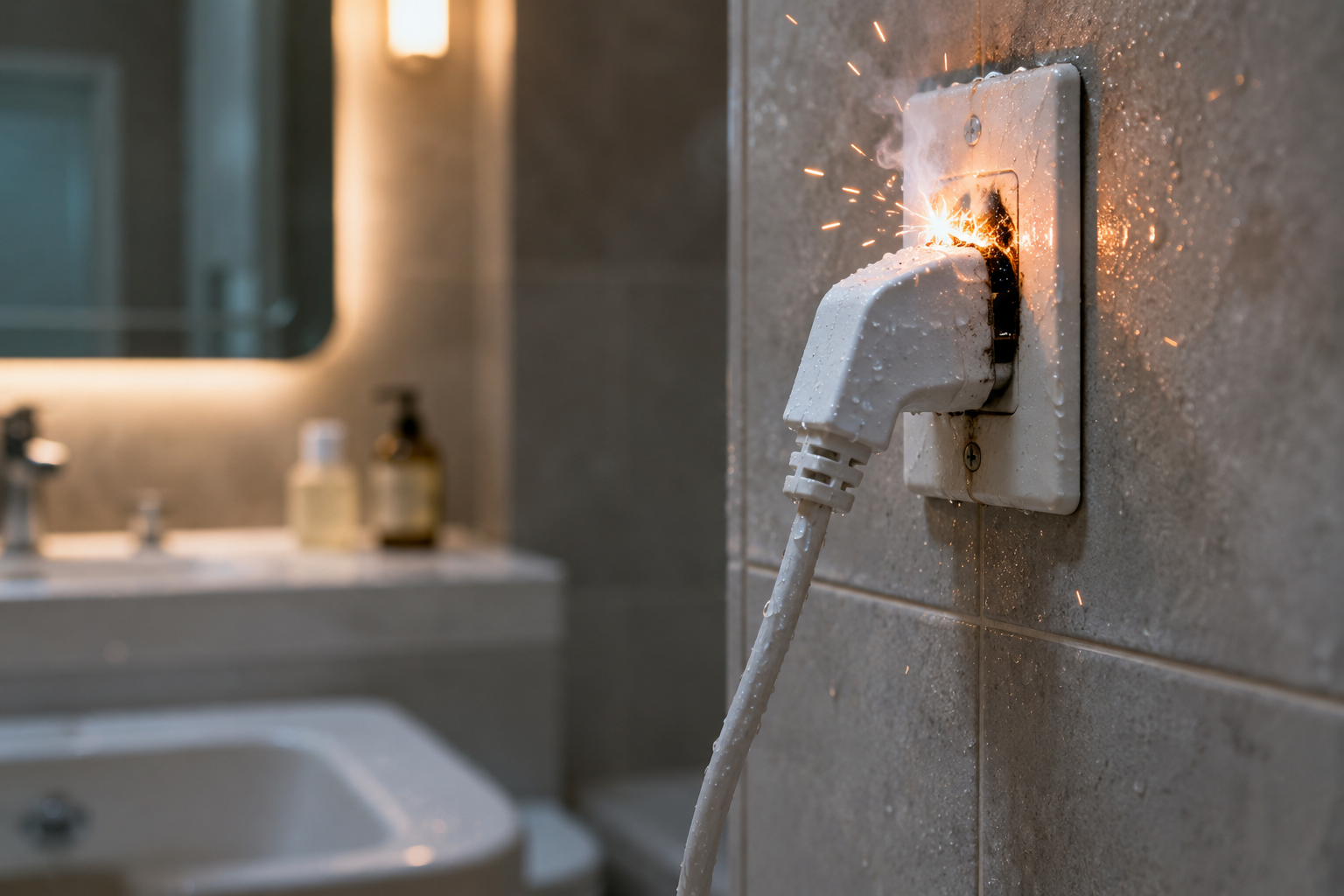
Pay attention to outlets that spark when you plug something in. A tiny spark once in a while may not always mean disaster, but repeated sparking, loud popping, scorch marks, or a burning smell should be taken seriously.
Also watch for devices that behave strangely only in the bathroom. If a hair dryer cuts in and out, a charger gets unusually hot, or a GFCI trips again and again, do not keep resetting it without wondering why.
A GFCI that trips repeatedly may be doing its job. Something in the circuit or device may be unsafe.
Simple Bathroom Outlet Safety Habits
You do not need a complicated checklist to make bathroom outlet use safer. A few everyday habits cover most situations.
Dry your hands before touching plugs or switches. Keep plugged-in devices away from sinks, tubs, showers, and wet counters. Use only one high-power appliance at a time. Unplug hair dryers and heated tools after use. Keep chargers in a dry area.
Do not use extension cords or power strips in the bathroom as a regular solution. Do not charge your phone on a wet counter. Do not leave cords tangled around faucets, towel bars, or damp items.
If your bathroom outlet has “Test” and “Reset” buttons, test it occasionally according to the manufacturer’s instructions. If it does not work properly, have it checked.
What to Do If an Outlet Gets Wet
If water splashes directly onto an outlet, do not use it while it is wet. Do not plug something in to see whether it still works.
If the outlet is visibly wet or water has entered the outlet area, avoid touching it and turn off power to that circuit if you can do so safely. Then let a qualified professional inspect it, especially if the outlet was exposed to a significant amount of water.
For small surface moisture on the outlet cover after a steamy shower, improve ventilation and wipe nearby surfaces dry. But if moisture seems to be getting inside the outlet, that is different and should be checked.
When to Call an Electrician
Some bathroom outlet issues are not DIY problems. Call a qualified electrician if your bathroom does not have GFCI protection, the outlet is loose, the cover is cracked, the outlet smells burnt, or it trips frequently.
You should also get help if you see discoloration, hear buzzing, feel heat from the outlet, or notice that plugs do not stay firmly in place.
Electrical work in bathrooms needs to be done carefully because moisture changes the safety picture. A professional can check whether the outlet, wiring, breaker, and GFCI protection are appropriate.
A Quick Bathroom Electrical Safety Checklist
Before using an outlet in the bathroom, pause for a few seconds.
Are your hands dry? Is the counter dry? Is the device away from the sink or tub? Is the cord in good condition? Is the outlet secure and free from cracks or burn marks? Are you avoiding extension cords and power strips? Are high-heat tools unplugged when not in use?
These small checks quickly become automatic. You do not have to feel anxious every time you plug something in. You just want to use the bathroom outlet with awareness.
Conclusion: Bathroom Outlets Are Useful, but They Need Respect
Bathroom outlets are part of modern life. We use them for grooming, hygiene, charging, and daily routines. But bathrooms are not like dry rooms. Water, steam, wet hands, metal fixtures, and small counters all make electrical safety more important.
The main idea is simple: keep electricity away from water whenever possible. Use GFCI-protected outlets, keep devices dry, avoid extension cords, unplug appliances after use, and pay attention to warning signs like heat, sparks, buzzing, or burning smells.
You do not need to be afraid of your bathroom outlet. You just need to treat it with a little more care than an ordinary wall outlet. A few calm, practical habits can make your morning routine safer without making it complicated.
Hi, I’m the creator and editor behind ZestyHabit. I research everyday safety, first aid, and practical wellness topics using official guidance and reliable public sources, then turn that information into clear, realistic steps for daily life.
My goal is to help readers make safer, better-informed choices at home and beyond.