9 Bad Lifestyle Habits That Can Harm Your Eye Health—and How to Fix Them
Minjin Park
·
Most people do not think seriously about eye health until their vision becomes blurry, their eyes feel persistently dry, or they begin having trouble reading road signs. Yet many of the choices we make every day can affect how comfortable our eyes feel now and how well they function later in life.
Some habits, such as staring at a computer without taking breaks, are more likely to cause temporary eye strain than permanent damage. Others—including smoking, unsafe contact lens use, unprotected ultraviolet exposure, and poorly controlled diabetes—can contribute to serious eye disease or vision loss.
The good news is that protecting your eyesight does not require a complicated routine. Small changes in how you use digital devices, handle contact lenses, spend time outdoors, and manage your general health can make a meaningful difference.
1. Using Digital Screens for Hours Without a Break
Work, entertainment, shopping, and socializing now happen on screens. It is easy to spend several hours looking at a laptop, followed by another hour scrolling through a phone.
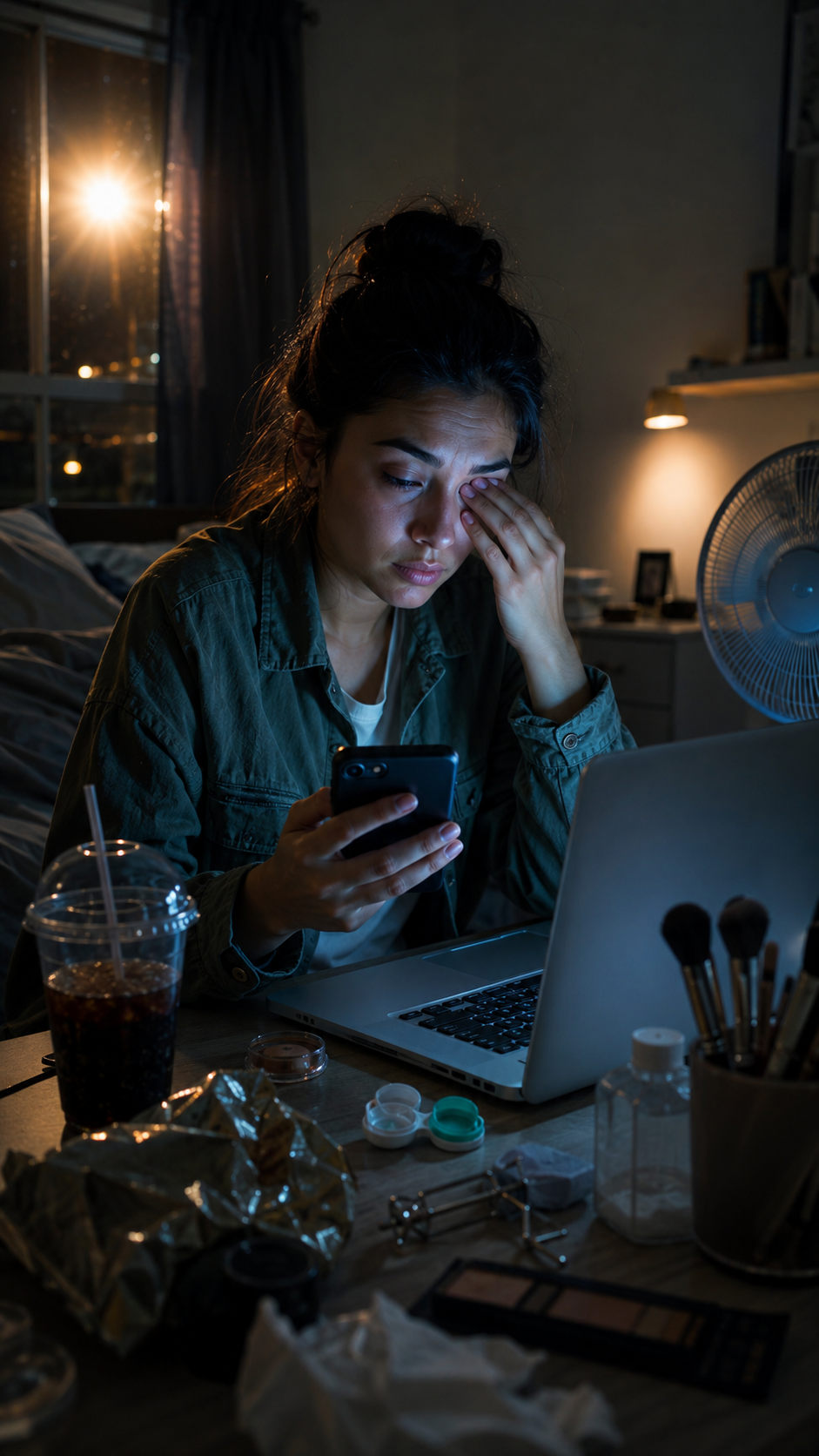
Long periods of screen use can cause digital eye strain. Common symptoms include dry or watery eyes, headaches, blurred vision, difficulty focusing, and an aching sensation around the eyes. These problems often occur because people blink less frequently while concentrating and keep their eyes focused at the same short distance for too long.
However, it is important to separate eye strain from permanent eye damage. According to the American Academy of Ophthalmology, discomfort associated with digital devices is related mainly to how we use them, rather than damage caused by the blue light coming from the screen.
A simple strategy is the 20-20-20 rule: every 20 minutes, look at something approximately 20 feet away for at least 20 seconds. The National Eye Institute recommends this approach to give tired eyes a brief rest.
You can also:
Blink deliberately several times during each break.
Increase text size instead of leaning toward the screen.
Alternate screen tasks with phone calls, paperwork, or walking.
Take a longer break after one or two hours of concentrated work.
Keep frequently used documents close to the monitor to reduce repeated refocusing.
Blue-light-filtering glasses may feel comfortable to some users, but they are not a substitute for regular breaks, proper lighting, or an updated vision prescription.
2. Working With a Poorly Positioned Screen
Screen time is not the only issue. The way your workstation is arranged can also influence eye fatigue.
A monitor that is too close may encourage continuous near focusing. One that is too high can make you open your eyes more widely, potentially increasing tear evaporation. Bright windows, overhead lights, and reflections on the screen may force your eyes to work harder, even when you do not consciously notice the glare.
Try placing your monitor roughly an arm’s length away, with the top of the screen at or slightly below eye level. Adjust the display so that it is bright enough to read comfortably without looking dramatically brighter than the surrounding room.
Avoid using a bright phone in a completely dark bedroom. This is unlikely to “ruin” your eyes, but the sharp contrast can be uncomfortable and may encourage you to hold the device close to your face. It can also interfere with a healthy bedtime routine.
If you still experience headaches or blurred vision after improving your setup, the problem may be an outdated prescription, dry eye, or another condition that deserves professional evaluation.
3. Sleeping, Showering, or Swimming in Contact Lenses
Contact lenses are medical devices, even though wearing them may feel as routine as putting on shoes. Poor lens hygiene can allow microorganisms to reach the cornea, the transparent surface at the front of the eye.
Falling asleep in lenses that were not prescribed for overnight wear, handling lenses with unwashed hands, wearing them beyond their replacement schedule, or exposing them to water can increase the risk of infection. Microbial keratitis, a serious corneal infection, can cause pain, light sensitivity, redness, discharge, and vision changes.
The Centers for Disease Control and Prevention warns that failing to wear, clean, and store contact lenses as directed increases the risk of eye infections. Some contact-lens-related infections can lead to vision loss or blindness.
To lower your risk:
Wash and thoroughly dry your hands before touching your lenses.
Never rinse or store lenses in tap water.
Do not use saliva to moisten a lens.
Use fresh disinfecting solution rather than “topping off” yesterday’s solution.
Replace lenses and storage cases as directed.
Remove lenses before showering or swimming.
Keep a pair of backup glasses nearby.
Never share lenses, including decorative or colored contacts.
Remove your lenses promptly if an eye becomes painful, unusually red, sensitive to light, or suddenly blurry. Do not put the lens back in until an eye care professional says it is safe.
4. Rubbing or Touching Your Eyes Frequently
Rubbing may provide a few seconds of relief when your eyes are tired or itchy, but it can make irritation worse. Hands can transfer dirt, allergens, bacteria, and viruses to the eye area. Forceful rubbing may also injure the surface of the eye.
People with allergies can become caught in an “itch-rub” cycle: the eyes itch, rubbing increases inflammation, and the increased inflammation produces more itching. Frequent, vigorous rubbing is especially concerning for people with a weakened or unusually shaped cornea. The American Academy of Ophthalmology specifically advises people with keratoconus to avoid rubbing because it can damage already-thin corneal tissue.
When your eyes itch, try a clean, cool compress over closed eyelids. Preservative-free artificial tears may help rinse away irritants, although persistent symptoms should be discussed with a healthcare professional. If allergies are the cause, treating the allergy is more useful than repeatedly rubbing the eyes.
5. Going Outdoors Without UV-Protective Sunglasses
Many people remember sunscreen but forget that ultraviolet radiation also reaches the eyes. Repeated UV exposure is associated with conditions such as cataracts and growths on the eye’s surface.
Dark lenses alone are not enough. The important feature is verified UV protection. Choose sunglasses labeled as blocking 99% to 100% of both UVA and UVB radiation, which is the standard recommended by the National Eye Institute.
Wraparound frames can reduce sunlight entering from the sides. A brimmed hat provides another layer of protection, particularly around water, snow, sand, and other reflective surfaces. Children need UV protection too, and sunglasses should be worn even when the weather is cool or partly cloudy.
Most importantly, never look directly at the sun, including through ordinary sunglasses. Proper certified solar viewers are required for observing a solar eclipse.
6. Smoking and Assuming It Only Affects the Lungs
The effects of smoking extend far beyond the respiratory system. Tobacco smoke exposes the body to chemicals that damage blood vessels and contribute to oxidative stress.
Smoking is associated with a higher risk of cataracts and age-related macular degeneration, a condition affecting the central portion of vision. It can also harm the optic nerve. These are not simply short-term irritation problems; they can threaten vision over time.
The National Eye Institute’s eye-health guidance identifies quitting smoking as an important step for lowering the risk of macular degeneration, cataracts, and other eye problems.
Quitting is difficult, and many people need several attempts. Counseling, medication, nicotine-replacement products, and social support can improve the chance of success. In the United States, free assistance is available through 1-800-QUIT-NOW.
7. Neglecting Diet, Exercise, and Chronic Health Conditions
Eye health is closely connected to the rest of the body. Blood vessels supplying the retina can be affected by diabetes, high blood pressure, and high cholesterol.
Diabetic retinopathy is a particularly important example. High blood sugar can gradually damage the small blood vessels in the retina. The early stages often have no noticeable symptoms, which means a person can feel that their eyesight is normal while damage is developing.
The National Eye Institute recommends that people with diabetes receive a comprehensive dilated eye exam at least once a year. Managing blood sugar, blood pressure, and cholesterol can help reduce the risk of vision loss.
For everyday eye health, aim for a varied diet containing vegetables, fruit, whole grains, healthy proteins, and beneficial fats. Dark leafy greens and fish containing omega-3 fatty acids can be part of an eye-friendly eating pattern. Regular physical activity also supports a healthier weight and reduces the risk of conditions that can affect vision.
No single food—or enormous quantity of carrots—can guarantee perfect eyesight. Likewise, eye supplements should not be treated as a universal insurance policy. Certain supplements are used for specific stages of age-related macular degeneration, but they are not appropriate for everyone. Ask an eye care professional before taking high-dose products marketed for vision.
8. Sharing or Keeping Eye Makeup Too Long
Mascara, eyeliner, brushes, and false-eyelash adhesive are used very close to delicate eye tissues. Sharing these products can transfer another person’s microorganisms, while keeping them too long may allow contamination to build up.
The U.S. Food and Drug Administration recommends not sharing eye cosmetics and notes that manufacturers commonly advise discarding mascara two to four months after purchase. Adding water or saliva to dried mascara is unsafe because it can introduce bacteria and weaken the product’s preservative system.
Avoid applying makeup in a moving car or bus. A sudden stop can push an applicator into the eye and scratch the cornea. Remove makeup gently before sleeping, clean reusable tools regularly, and discard products used around the time of an eye infection.
If a cosmetic causes burning, swelling, persistent redness, or pain, stop using it. Do not hide worsening irritation under another layer of makeup.
9. Skipping Eye Exams and Ignoring Warning Signs
Waiting until vision becomes noticeably poor is one of the most dangerous eye-health habits. Several common eye diseases can progress without obvious early symptoms.
A routine vision screening or glasses check is not always the same as a comprehensive dilated examination. Dilation allows the eye care professional to inspect the retina and optic nerve for signs of disease. Exam frequency should be based on age, medical conditions, family history, prescription, and individual risk.
The National Eye Institute explains that many eye diseases have no warning signs and may be easier to treat when found early.
Some symptoms should never wait for a routine appointment. Seek urgent medical care for sudden vision loss, a painful red eye, an eye injury, or a chemical splash. A sudden shower of new floaters, flashes of light, or a dark curtain or shadow across your vision can signal retinal detachment. The National Eye Institute advises immediate evaluation because prompt treatment may help prevent permanent vision loss.
A Simple Daily Routine for Healthier Eyes
You do not have to change every habit overnight. Start with a routine that is easy to repeat:
Follow the 20-20-20 rule during screen-heavy work.
Blink more often and adjust screen distance, text size, and glare.
Wash your hands before touching your eyes or contact lenses.
Keep water away from contact lenses.
Wear UV-blocking sunglasses outdoors.
Eat a balanced diet and stay physically active.
Manage diabetes, blood pressure, and cholesterol with your healthcare team.
Replace old eye makeup and never share it.
Schedule eye examinations according to your personal risk.
Seek help promptly when symptoms are sudden, painful, or unusual.
Consistency matters more than buying expensive glasses, supplements, or gadgets. The healthiest habits are usually the simplest ones: taking breaks, keeping lenses and hands clean, protecting your eyes outdoors, avoiding tobacco, and not dismissing new symptoms.
This article is for general educational purposes and is not a substitute for diagnosis or treatment from a qualified healthcare professional. Contact an optometrist, ophthalmologist, or other appropriate medical professional if you have persistent discomfort or changes in vision.
Which of these unhealthy eye habits do you find hardest to change—screen time, contact lens care, wearing sunglasses, or something else? Share your experience and your favorite eye-care tip in the comments below so other readers can learn from it too.
Hi, I’m the creator and editor behind ZestyHabit. I research everyday safety, first aid, and practical wellness topics using official guidance and reliable public sources, then turn that information into clear, realistic steps for daily life.
My goal is to help readers make safer, better-informed choices at home and beyond.