Bat in the House? How to Reduce the Risks and Respond Safely
Minjin Park
·
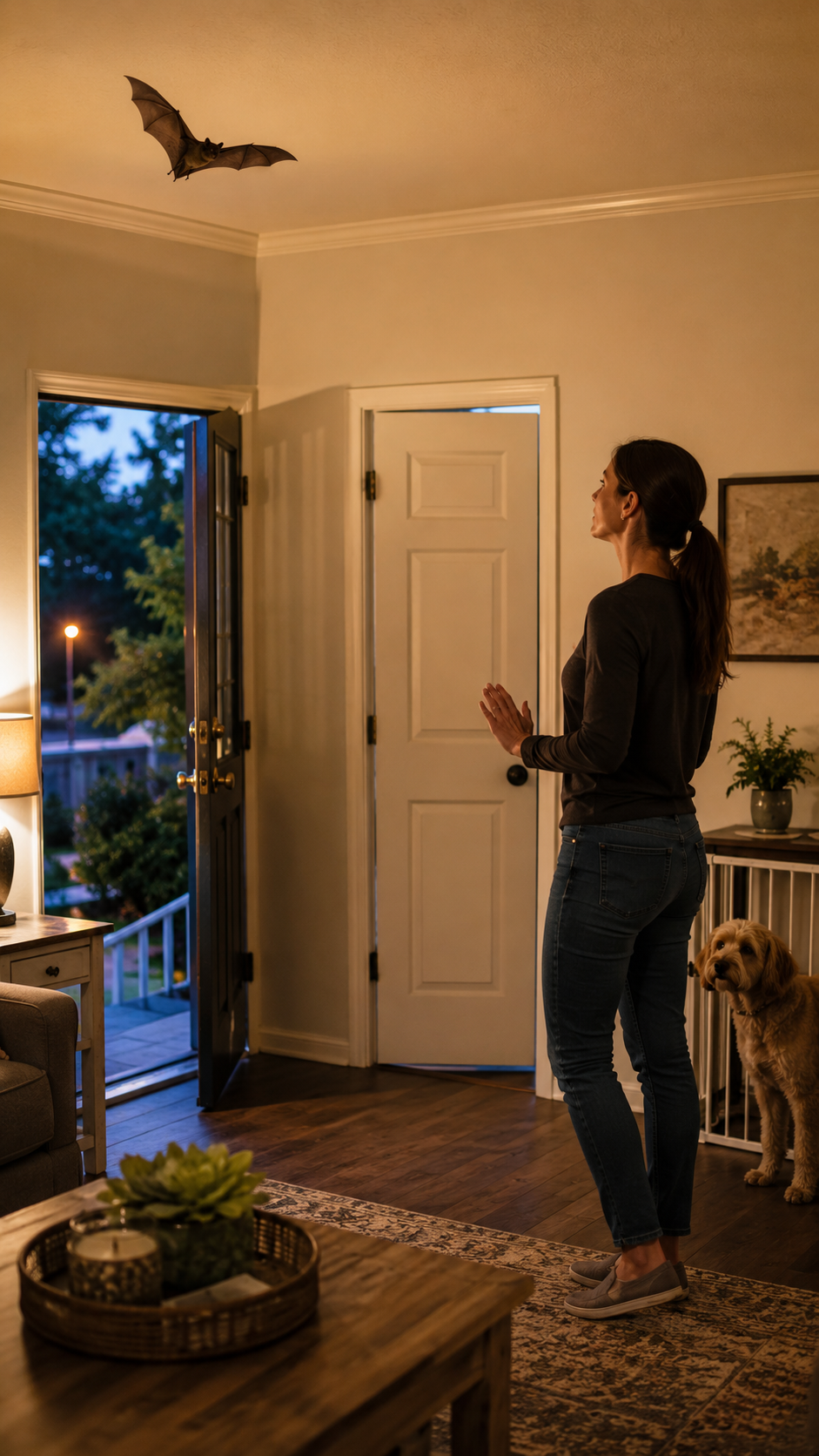
A bat suddenly circling your bedroom or living room can turn an ordinary evening into a stressful one. Your first instinct may be to swing a broom, chase it from room to room, or open every door in the house. Unfortunately, panic can make the situation more dangerous for both you and the bat.
Most bats do not want to attack people. A bat flying indoors is usually lost, frightened, or searching for a way back outside. The immediate problem is not simply that a wild animal has entered your home. You also need to consider whether anyone could have been bitten, scratched, or otherwise exposed to the bat’s saliva.
Bat bites can be small and difficult to notice. That makes an indoor bat encounter different from finding a bird or large insect inside. In certain situations—especially when a bat is discovered in a bedroom with a sleeping person—you should not release it before speaking with a public health professional. The bat may need to be captured and tested for rabies.
Here is how to handle a bat in the house calmly, reduce the chance of contact, determine whether medical advice is needed, and prevent another bat from getting inside.
A flying bat may appear to be swooping toward you, but it is usually navigating around walls, furniture, and people while searching for an exit. Running after it or striking at it can increase the likelihood of accidental contact.
Move slowly and avoid standing directly in its flight path. Keep your hands away from the bat, even if it lands and appears weak or motionless. Never pick up a bat with bare hands.
Move children and other vulnerable household members out of the room. Put pets in a separate enclosed area so they cannot chase, bite, or carry the bat. Close interior doors to contain the bat in one part of the house, but first confirm that no person or animal remains trapped in the room with it.
If the bat is on the floor, do not assume it is dead. An injured or sick bat may still bite when approached.
Before Letting the Bat Out, Ask One Important Question
Could anyone have had physical contact with the bat?
This question determines what you should do next. When there is no reasonable possibility of human or pet exposure, the goal may simply be to give the bat a safe route outside. When contact is possible or uncertain, preserving the bat for rabies testing may be important.
Do not release the bat before seeking public health advice when:
Someone was bitten or scratched.
A person touched the bat with bare skin.
Bat saliva may have entered the eyes, nose, mouth, or an open wound.
Someone woke up and found a bat in the room where they had been sleeping.
The bat was found with an unattended young child.
The bat was in a room with someone unable to reliably describe what happened.
A pet may have caught, bitten, or been bitten by the bat.
Possible exposure can be difficult to recognize because bat teeth are small and may leave little or no obvious wound. State and local recommendations can vary, so a health department should evaluate the details rather than the homeowner making the decision alone.
Finding a bat elsewhere in the home does not automatically mean everyone in the building was exposed. For example, seeing a bat enter an occupied living room while everyone remained awake and clearly avoided contact is different from waking up with one in a closed bedroom.
What to Do If a Bite or Scratch Occurred
Wash the affected skin immediately with plenty of soap and running water. CDC guidance recommends washing a possible rabies exposure wound thoroughly for 15 minutes. After washing, contact a healthcare professional or local public health department urgently for a rabies risk assessment.
Do not wait for symptoms to appear. Rabies prevention is based on assessing and treating exposure before illness develops.
A clinician or public health official will consider several factors, including:
Whether direct contact occurred
The part of the body involved
Whether the skin was broken
Whether saliva contacted a mucous membrane or existing wound
Whether the bat can be tested
Local rabies surveillance information
The person’s previous rabies vaccination history
Rabies post-exposure prophylaxis may include wound care, rabies immune globulin for people not previously vaccinated, and a series of rabies vaccine doses. The decision should be made with medical and public health professionals rather than through an online symptom checklist.
What If a Bat Was in the Bedroom While You Slept?
This is one of the most confusing indoor bat scenarios.
A sleeping person may not reliably notice a minor bite or scratch. The same concern applies when a bat is found with a very young child, a person with certain cognitive or communication limitations, or someone whose awareness was significantly impaired.
In these situations, close the room and prevent the bat from escaping into the rest of the house. Contact animal control or the local health department for instructions on capture and testing. Do not simply open a window and release it before receiving advice.
A bat in a bedroom is not proof that a bite occurred, and it does not mean every person automatically requires treatment. However, releasing the bat removes the opportunity to test it and may complicate the risk assessment.
How to Help a Bat Leave When Exposure Is Not Suspected
When you are confident that no person or pet had contact with the bat, you may be able to let it leave without physically handling it.
First, isolate the bat in one room by closing doors to hallways and other indoor spaces. Open a door or unscreened window that leads directly outside. Remove window screens only when this can be done without approaching the bat.
Turn off ceiling fans, since the blades could injure the bat. Reduce noise and unnecessary movement. Dim the room and allow the bat time to orient itself and find the opening.
Do not stand in the exit or wave objects at the animal. Leave the room when practical, close the interior door, and check later from a safe distance.
Some bats may land and rest before attempting to leave. This does not necessarily mean that they are trapped or preparing to attack. If the bat does not leave, appears injured, or lands somewhere that creates a risk of contact, call a licensed wildlife professional or animal control agency.
Remember that this exit approach is appropriate only when exposure has been reasonably ruled out. When there is uncertainty, keep the bat contained and seek public health guidance first.
How to Safely Capture a Bat for Possible Testing
Professional capture is usually the safest option. Contact animal control, a wildlife removal specialist, or your health department and explain why the bat may need to be tested.
When local authorities instruct you to capture it yourself and you can do so safely, wait until the bat lands. Do not attempt to catch it while it is flying.
You will need:
Thick leather work gloves
A rigid container or box large enough to cover the bat
A stiff piece of cardboard
Tape
Small air holes in the container or cardboard, if directed
Approach the landed bat slowly while wearing thick leather gloves. Place the container over it, then slide the cardboard between the surface and the container. Keep the container pressed firmly against the cardboard, turn it upright, and tape it securely closed.
Do not hold the bat directly, even while wearing gloves. Do not use a pillowcase, blanket, towel, or soft bag because a bat may bite through fabric. Do not crush or strike the animal; rabies testing generally requires an intact specimen.
Keep people and pets away from the secured container. Follow the health department’s instructions for transfer, storage, and testing. Do not release the bat until a public health professional confirms that testing is unnecessary.
When safe capture is not possible, close the room, block the gap beneath the door if needed, and wait for trained assistance.
What to Do If a Pet Encountered the Bat
Separate the pet from the bat without touching either animal with bare hands. Confine the pet and contact a veterinarian promptly. Also contact your local health department or animal control agency.
The response may depend on the pet’s species, vaccination records, local laws, and whether the bat is available for testing. Keep dogs, cats, and ferrets current on rabies vaccination because pets can bring people into indirect contact with infected wildlife.
Do not examine the pet’s mouth with unprotected hands immediately after a wildlife encounter. Fresh saliva from the bat may be present on the pet’s fur or around its mouth.
Do not administer an extra vaccine dose or attempt home treatment without veterinary instructions.
Should You Be Concerned About Bat Droppings?
One bat briefly flying through a room is unlikely to create a major droppings problem. However, repeated indoor sightings, scratching sounds, staining around exterior openings, or accumulated droppings in an attic may suggest that bats are roosting in the building.
Avoid sweeping or vacuuming large accumulations of dry bat droppings without professional advice. Disturbing contaminated material can send dust into the air. A wildlife removal or environmental cleanup professional can evaluate the infestation, determine what protective equipment is appropriate, and clean the area without spreading debris through occupied spaces.
Do not use droppings alone to identify an animal. Rodent and bat droppings may look similar, and misidentification can lead to the wrong exclusion strategy.
Why Does a Bat Enter a House?
A single bat may enter through an open door, unscreened window, chimney, attic access point, damaged vent, loose soffit, roof gap, or opening around plumbing and electrical lines.
Young bats learning to fly may become disoriented. Adults may also follow air currents or accidentally move from an attic or wall cavity into the living area through gaps around light fixtures, vents, fireplaces, or access panels.
One indoor bat does not always mean there is a colony in the house. Repeated appearances, however, deserve a building inspection.
CDC guidance notes that bats can use very small openings. Common preventive measures include repairing screens, installing chimney caps, sealing gaps around utilities, using draft guards around attic doors, and making sure exterior doors close tightly.
How to Bat-Proof Your Home
Inspect the exterior at dusk to see whether bats are leaving from a particular point. Do not stand directly below the opening, and do not attempt to grab exiting animals.
Likely entry points include:
Roof edges and eaves
Loose siding or fascia
Unscreened attic vents
Chimneys without proper caps
Gaps around pipes and cables
Damaged window screens
Openings where additions meet the original building
Spaces beneath flashing or roof tiles
Seal small gaps that are not being actively used. When bats are already roosting inside, however, simply closing the main entrance can trap them in walls or force them into living spaces.
Humane exclusion generally uses one-way devices that allow bats to leave without returning. Once professionals confirm that all bats are out, the openings can be permanently sealed.
Timing matters. Exclusion during maternity season may trap young bats that cannot yet fly. CDC guidance recommends taking care not to trap dependent young, particularly during the warmer months, and following local wildlife rules because some bat species have legal protections.
For an established roost, hire a professional experienced in bat exclusion rather than a company that relies on poison, glue traps, or indiscriminate killing.
Mistakes to Avoid When a Bat Is Indoors
Do not swat at a flying bat with a broom, racket, or towel. You may injure it, cause contact, or make it disappear into a harder-to-reach area.
Do not pick it up with bare hands, even when it appears dead.
Do not release a bat when a bite, scratch, bedroom exposure, or uncertain contact may have occurred.
Do not allow pets to investigate or chase it.
Do not use household insecticides, fumigants, mothballs, ultrasonic devices, or poison as a substitute for proper exclusion.
Do not permanently seal an active entry point until you know that no bats remain inside.
Finally, do not assume that every bat has rabies. Bats are important wildlife, and most avoid people. The goal is not to panic or destroy the animal—it is to prevent direct contact, preserve testing options when necessary, and return the bat outdoors safely.
When to Call for Professional Help
Call animal control, the local health department, or a qualified wildlife professional when:
Anyone may have touched, been bitten by, or been scratched by the bat.
The bat was found with a sleeping person or unattended child.
A pet made contact with it.
You cannot safely isolate or capture it.
It appears injured, sick, or unable to fly.
Bats repeatedly enter the living area.
You suspect a colony in the attic, walls, chimney, or roof.
Droppings have accumulated inside the building.
Exclusion may affect young bats or a protected species.
A reliable wildlife professional should explain how the bats are entering, use humane exclusion methods, identify the appropriate season for the work, and seal secondary gaps after the animals leave.
Final Thoughts
Finding a bat inside is frightening, but a calm response keeps the situation manageable. Move people and pets away, isolate the bat, avoid direct contact, and determine whether anyone may have been exposed. When a bat was in a room with a sleeping person, unattended child, or someone unable to reliably report contact, do not release it before speaking with public health officials. When exposure has been ruled out, the bat may be allowed to leave through a clear exterior opening or removed by a wildlife professional. Afterward, inspect the building and seal entry points at the right time so the problem does not return.
Have you ever discovered a bat flying through your home or hiding in an unexpected place? Share what happened, how you handled it, and what you later found to be the entry point in the comments. Your experience could help another homeowner stay calm and make a safer decision.
Hi, I’m the creator and editor behind ZestyHabit. I research everyday safety, first aid, and practical wellness topics using official guidance and reliable public sources, then turn that information into clear, realistic steps for daily life.
My goal is to help readers make safer, better-informed choices at home and beyond.