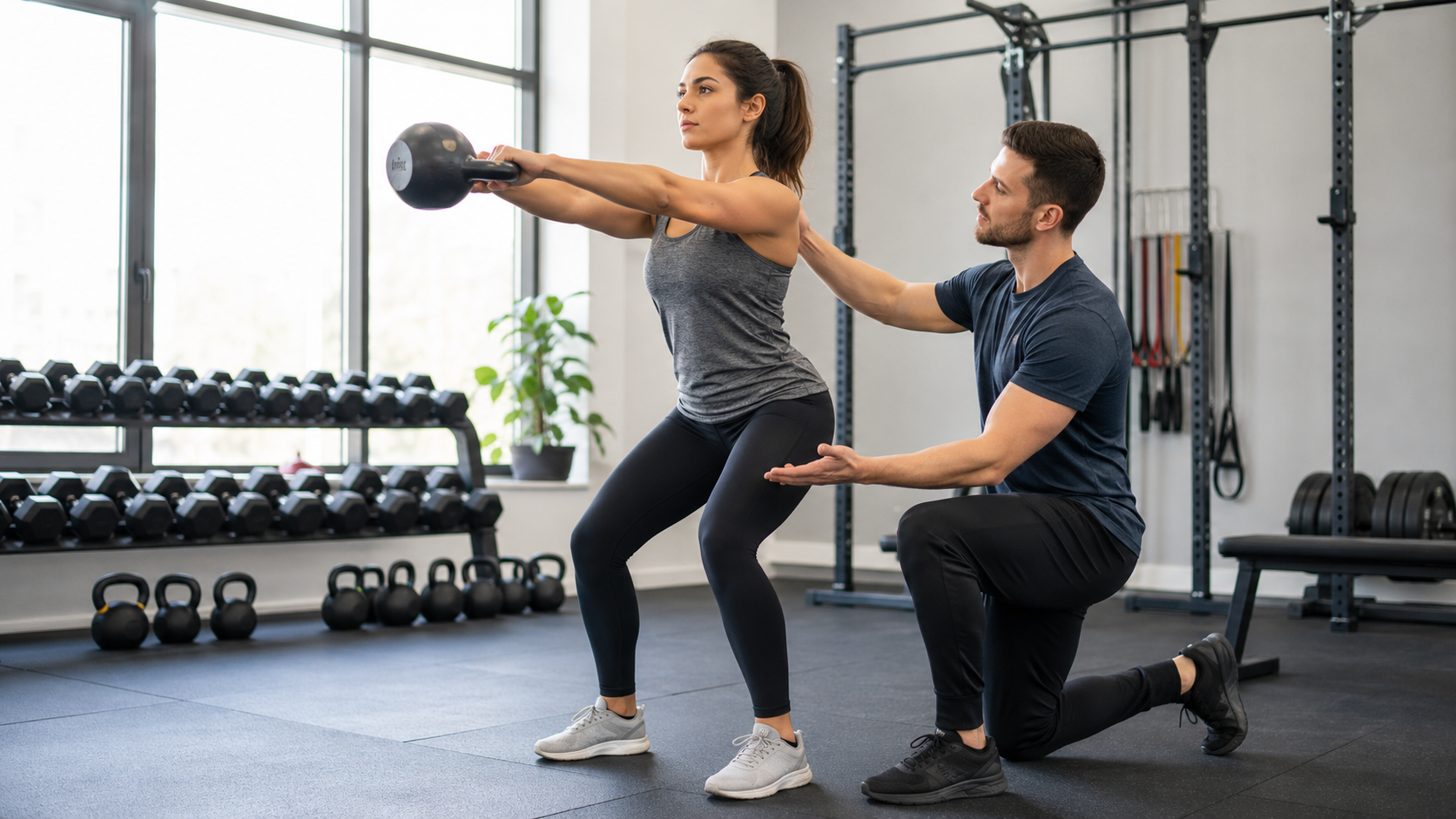
Kettlebell Swing Precautions: How to Protect Your Back and Shoulders
Minjin Park
·
Kettlebell swings look powerful, athletic, and almost effortless when done well. The bell moves smoothly, the hips snap forward, and the whole body seems to work as one strong unit. It is one of those exercises that can make a workout feel efficient and energetic without needing a long list of movements.
But kettlebell swings are also easy to misunderstand.
Many beginners treat the swing like a squat with a front raise. They bend the knees too much, lift the bell with the arms, round the back, or let the kettlebell pull them forward. Instead of training the hips, glutes, hamstrings, and core, the exercise starts stressing the lower back and shoulders.
A proper kettlebell swing is not an arm exercise. It is a hip-hinge movement powered by the lower body. Your arms guide the bell, but your hips create the force. When that difference is clear, the swing becomes much safer and more effective.
The goal is not to make kettlebell swings feel scary. It is to help you understand the key precautions, especially for protecting your back and shoulders, so you can move with control instead of relying on momentum in the wrong way.
The kettlebell swing is dynamic. Unlike a slow squat or a basic dumbbell curl, the bell travels through space with momentum. That momentum can be useful when your body controls it well. It can also become risky when your form is loose.
Your back has to stay stable. Your hips have to hinge properly. Your shoulders have to remain connected without pulling or shrugging. Your grip has to be firm but not tense. Your core has to brace at the right moments.
When one part breaks down, another part often compensates.
For example, if you do not hinge well at the hips, your lower back may round. If you do not use your glutes, you may lift with your arms. If your shoulders are relaxed in a passive way, the bell may pull them forward. If your grip is weak, your upper body may tense up too much.
Good form allows the kettlebell swing to feel powerful without feeling reckless.
Understand the Hip Hinge First
The most important part of the kettlebell swing is the hip hinge.
A hip hinge means your hips move back while your spine stays long and stable. It is the same basic movement pattern used in deadlifts and Romanian deadlifts. Your knees bend slightly, but they are not the main driver. The movement comes from pushing the hips back and then snapping them forward.
Many beginners confuse hinging with squatting. In a squat, your knees bend more and your hips drop down. In a hinge, your hips travel backward, your torso tilts forward, and your hamstrings load like a spring.
Before learning the swing, practice the hinge without weight.
Stand tall with your feet about shoulder-width apart. Place your hands on your hips. Soften your knees slightly, then push your hips back as if closing a car door with your butt. Keep your chest facing somewhat forward, your spine long, and your neck neutral. Then drive your hips forward to stand tall again.
If you feel the movement in your hamstrings and glutes, you are probably on the right track. If you feel it mainly in your knees or lower back, slow down and practice more.
Do Not Start with a Heavy Kettlebell
Kettlebell swings can feel awkward at first. The bell has a different shape and center of mass than a dumbbell, so it moves differently. Starting too heavy can make it harder to learn the pattern.
A bell that is too heavy may pull your shoulders forward, round your back, or force you to use your arms to control the movement. A bell that is too light can also be tricky because people may end up lifting it with their arms instead of using hip power.
Choose a weight that lets you feel the hinge and maintain control. It should be heavy enough that you respect it, but not so heavy that you lose your posture.
The first goal is not to sweat as much as possible. The first goal is to learn how the swing should feel.
Set Up Properly Before the First Rep
A good swing starts before the bell even moves.
Place the kettlebell on the floor slightly in front of you, not directly under your body. Stand with your feet around shoulder-width apart. Hinge at your hips, reach for the handle, and grip it with both hands. Your back should be long, your shoulders packed, and your hips behind you.
From this position, gently tilt the bell toward you. This is often called the hike setup because the first movement is like hiking a football backward.
Instead of lifting the bell straight up from the ground, pull it back between your legs. This helps create a natural swing path and reduces the chance of turning the movement into a squat or front raise.
If your first rep begins with poor posture, the whole set usually feels messy. Take a moment to set up well.
Keep Your Back Long and Stable
Back safety is one of the biggest concerns with kettlebell swings.
Your spine should not round as the bell swings back. It should also not overarch aggressively when you stand tall. Think of keeping your back long and strong from the top of your head to your tailbone.
The lower back is not supposed to create the swing. It is supposed to stay stable while the hips do the work.
A helpful cue is: “hips move, spine stays steady.”
At the bottom of the swing, your hips should be back, your knees slightly bent, and your chest angled toward the floor. At the top, you should stand tall with your glutes engaged, ribs down, and core braced. Do not lean backward at the top to make the movement look bigger.
If your lower back feels tired or sore during swings, stop and check your technique. You may be squatting, rounding, leaning back, or using a bell that is too heavy.
Let the Hips Drive the Bell
A kettlebell swing is powered by the hips, not the arms.
Your arms are like ropes connecting your body to the kettlebell. They guide the bell, but they should not be the main source of force. The bell rises because your hips snap forward, not because your shoulders lift it.
At the top of the swing, the kettlebell should float for a brief moment. You should not feel like you are forcing it upward with your arms.
If your shoulders burn more than your glutes or hamstrings, you may be lifting the bell instead of swinging it. Try reducing the height of the swing and focusing on a stronger hip drive.
The bell does not need to go extremely high. For most people, chest height is enough for a standard two-handed swing. Higher is not automatically better.
Avoid Turning It Into a Squat
A common mistake is dropping the hips too low and bending the knees too much. This turns the movement into a squat-like swing.
In a proper swing, the bell travels back between the thighs, not down toward the floor. Your shins should stay relatively vertical, and your hips should move backward more than downward.
If the kettlebell is dropping low near your knees or ankles, you may be squatting too much. This can change the timing of the movement and make your back work harder.
Think “back and forward,” not “down and up.”
The kettlebell should move like a pendulum. Your hips load backward, then snap forward. The movement should feel athletic and crisp, not like repeated deep squats with a weight in your hands.
Protect Your Shoulders by Keeping Them Connected
Your shoulders should not be loose and passive during swings. They should also not be shrugged, stiff, or pulled up toward your ears.
The best position is active and connected.
Before you start, gently draw your shoulders down and back without squeezing too hard. As the bell swings, keep your arms long but not limp. Your shoulders should feel stable in their sockets.
At the bottom, do not let the kettlebell yank your shoulders forward. At the top, do not shrug to lift the bell higher.
A helpful cue is: “shoulders away from ears.”
If your neck tightens during swings, your shoulders may be rising too much. If the front of your shoulders feels strained, you may be letting the bell pull you forward or lifting with your arms.
Grip the Bell Without Over-Tensing
Your grip matters, but squeezing the handle as hard as possible for the entire set can create unnecessary tension in the forearms, shoulders, and neck.
Hold the kettlebell firmly enough that it feels secure. Your grip should be confident, but your upper body should not become rigid. During the swing, the handle may shift slightly in your hands, especially during the float at the top. That is normal as long as you maintain control.
If your grip gives out quickly, reduce the weight or shorten the set. A slipping kettlebell is dangerous, especially in a crowded space.
Also avoid using sweaty hands without preparation. Dry your hands, use chalk if appropriate, and make sure you have enough room around you.
Keep the Kettlebell Close on the Backswing
The backswing is where many form problems appear.
The kettlebell should pass high between your thighs, close to your body. It should not drop low toward the floor or swing far away from you. When the bell travels too low or too far forward, it can pull on your back and shoulders.
Think of the bell moving back toward the wall behind you, not down toward the ground.
Your forearms should come close to your inner thighs during the backswing. Your hips should move back at the right moment to make space for the bell. If you hinge too late, the bell may tug on your arms and lower back.
Timing matters. Let the bell come toward you, then hinge as it approaches. Do not rush into the hinge before the bell is ready.
Brace Your Core at the Top
At the top of the swing, your body should look like a strong standing plank. Your glutes are engaged, your abs are braced, your ribs are not flaring, and your shoulders are relaxed but stable.
Do not lean backward at the top.
Some people thrust the hips forward and then arch the lower back to finish the rep. This can irritate the spine and reduce the quality of the exercise. The top position should be tall and stacked, not bent backward.
Imagine standing tall and zipping up your core. Your hips finish under you, your glutes squeeze briefly, and the bell floats in front of your chest.
This moment should feel strong, not loose.
Breathe with the Movement
Breathing helps rhythm and control.
Many kettlebell lifters use a sharp exhale as the hips snap forward. This helps create tension and power at the top of the swing. Then they inhale as the bell returns and the hips hinge back.
A simple pattern is: inhale on the way back, exhale as you stand tall.
The breath does not need to be dramatic, but it should match the movement. Holding your breath randomly can make the exercise feel tense and uncomfortable. Breathing too loosely can make it harder to brace.
Try to find a rhythm that keeps your core active and your shoulders relaxed.
Do Not Chase Speed Too Early
Kettlebell swings are supposed to be powerful, but beginners often mistake speed for quality.
If you swing too fast before learning control, your form may fall apart. Your back may round, your shoulders may get pulled forward, and your grip may become less secure.
Start with controlled sets. Let the movement become smooth before increasing pace or volume.
A clean swing has a rhythm: hike, snap, float, return. It is not frantic. The bell should move with power, but your body should still feel organized.
If every rep feels like you are trying to save the kettlebell from pulling you off balance, slow down or use a lighter weight.
Keep Sets Short While Learning
High-rep kettlebell swings can be demanding. Fatigue can quickly affect form, especially in the back, grip, and shoulders.
Beginners should keep sets short at first. Instead of doing 50 swings in a row, try sets of 8 to 12 clean reps with rest between sets. This gives you time to reset and notice whether your technique is still sharp.
Stop the set when your form changes. If your back starts rounding, your shoulders start shrugging, or your hips lose power, continuing the set will not make it better.
Quality reps build skill. Sloppy reps build bad habits.
Use the Right Amount of Space
Kettlebell swings need room.
Make sure there is nothing directly in front of you or behind you. Avoid swinging near glass, furniture, pets, children, or other gym members. The kettlebell should never feel like it might hit something if your timing is slightly off.
Your floor surface should also be stable. Avoid slippery floors or thick, soft mats that make your feet unstable. A firm surface gives you better footing and allows you to generate power safely.
Your shoes matter too. Choose shoes with a stable base. Very soft, squishy shoes can make it harder to feel grounded during the hinge.
Warm Up Before Swinging
Because swings are explosive, warming up is important.
Start with general movement, such as walking, light cycling, or dynamic mobility. Then prepare the hips, hamstrings, glutes, and shoulders.
Useful warm-up movements include:
Hip hinges without weight
Glute bridges
Bodyweight good mornings
Cat-cow movements
Shoulder circles
Light deadlifts with the kettlebell
A few slow practice hikes
The goal is to prepare the pattern before adding speed. If the hinge does not feel good during the warm-up, it probably will not improve once the bell is moving fast.
Know the Difference Between Effort and Pain
Kettlebell swings can make your glutes, hamstrings, core, and grip work hard. That kind of effort is expected. You may also feel your heart rate rise quickly.
But pain is different.
Stop swinging if you feel sharp lower back pain, shoulder pinching, numbness, tingling, dizziness, or a sudden pulling sensation. Do not try to push through pain just because swings are supposed to be challenging.
Mild muscle fatigue is normal. Joint pain or spine pain is not something to ignore.
If pain continues after adjusting your technique, choose a simpler exercise for now, such as kettlebell deadlifts, glute bridges, or hip hinges without weight.
Learn the Deadlift Before the Swing
If the swing feels confusing, step back and practice the kettlebell deadlift.
The kettlebell deadlift teaches the same hip hinge pattern without the speed and momentum. Place the bell between your feet, hinge at your hips, grip the handle, and stand tall by driving through your feet and hips. Lower it with control.
Once you can deadlift with a stable back and strong hip movement, the swing becomes easier to understand.
This is not a step backward. It is the foundation.
Many people would benefit from several sessions of deadlift practice before attempting full swings.
A Simple Beginner Swing Practice
Start with a warm-up and a few kettlebell deadlifts. Then set the bell slightly in front of you. Hinge, grip the handle, and practice hiking the bell back without completing a full set. This helps you feel the backswing.
Then try short sets of 5 to 8 swings. Focus on the hip snap, long spine, relaxed neck, and stable shoulders. Rest fully between sets.
If the swings feel smooth, gradually increase to sets of 10 to 12. Do not rush into long sets until your form stays consistent.
Remember: the best beginner swing is not the most powerful-looking one. It is the one you can repeat safely.
Final Thoughts
Kettlebell swings can be an excellent exercise for building power, conditioning, and full-body coordination. But they are not just a simple arm swing with a weight. They require a strong hip hinge, stable back, connected shoulders, good grip, and controlled momentum.
To protect your back and shoulders, learn the hinge first. Keep your spine long. Let your hips drive the bell. Avoid lifting with your arms. Keep your shoulders away from your ears. Start with short, clean sets instead of chasing high reps.
When done well, kettlebell swings feel powerful without feeling reckless. Respect the technique, build gradually, and the swing can become one of the most useful exercises in your routine.
Hi, I’m the creator and editor behind ZestyHabit. I research everyday safety, first aid, and practical wellness topics using official guidance and reliable public sources, then turn that information into clear, realistic steps for daily life.
My goal is to help readers make safer, better-informed choices at home and beyond.