Centipede Bites and Stings: Symptoms, First Aid, Treatment, and Prevention
Minjin Park
·
Learn what a centipede bite or sting looks like, which symptoms are normal, how to give first aid, when to seek medical care, and how to prevent centipedes around your home.
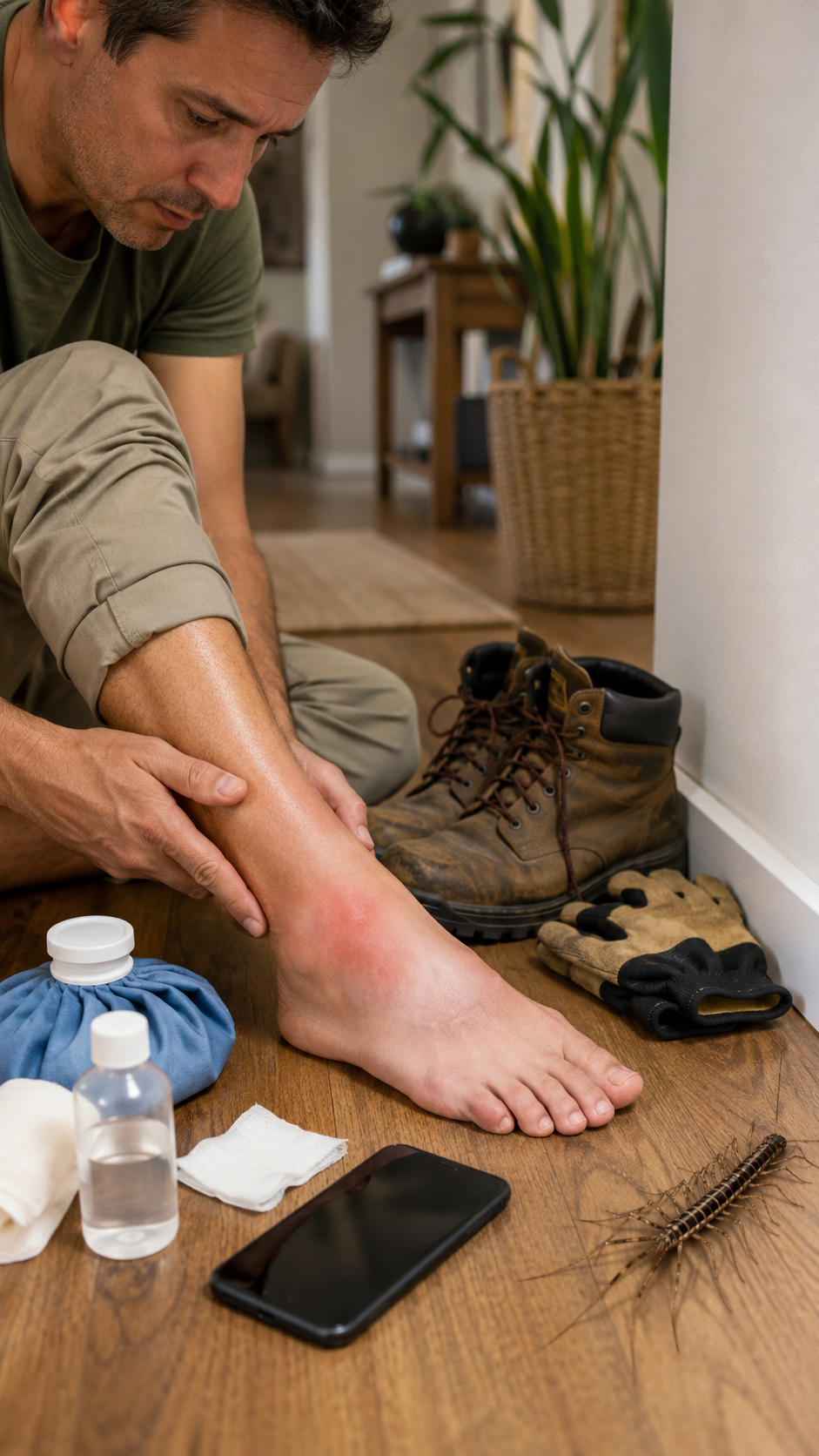
Finding a centipede racing across the bathroom floor is unsettling. Being pinched by one can be even more alarming, especially when the area begins to burn, swell, or turn red.
Fortunately, most centipede injuries cause temporary symptoms limited to the skin. Pain can be intense, particularly after contact with a large tropical species, but serious complications are uncommon. Still, allergic reactions, infection, eye exposure, and unusually severe swelling require prompt attention.
Knowing what to do in the first few minutes can reduce discomfort and help you recognize when a minor-looking injury is becoming more serious.
People commonly call the injury a centipede bite, although “sting” or “envenomation” is more accurate. A centipede does not inject venom with a tail stinger. It uses a modified pair of hollow front legs, called forcipules, to grasp the skin and deliver venom. Centipedes normally use these structures to capture prey and usually try to escape people rather than attack them.
An injury is more likely when a centipede is trapped against the skin, handled, stepped on, or caught inside clothing, bedding, gloves, or shoes. Common house centipedes are smaller and relatively harmless, while large members of the genus Scolopendra, found mainly in warmer regions, can cause a much more painful reaction.
Common Symptoms of a Centipede Bite
The reaction often begins immediately. Many people describe a sharp pinch followed by burning, throbbing, or stinging pain. The affected area may resemble a bee or wasp sting.
Typical symptoms include:
Immediate pain or burning
Redness around the puncture
Local swelling
Tenderness or warmth
Itching
Two small puncture marks, although they may be difficult to see
The amount of pain does not always match the size of the visible wound. A small puncture can hurt significantly because venom has entered the tissue.
Most reactions remain localized. Medical references report that pain, redness, and swelling usually improve within 48 hours, although tenderness or swelling can occasionally persist longer. Less common effects include numbness near the injury or swollen lymph nodes.
Less Common or Concerning Symptoms
Contact a healthcare professional or poison center if the person develops rapidly spreading swelling, worsening pain, numbness, weakness, nausea, swollen lymph nodes, or symptoms extending far beyond the original puncture.
Extra caution is sensible when the injury involves the face, neck, mouth, or eye; when a young child is affected; or when the animal is a large or exotic centipede. When possible, take a photograph from a safe distance. Do not attempt to capture the centipede by hand.
Difficulty breathing, wheezing, or noisy breathing
Swelling of the lips, tongue, mouth, or throat
Widespread hives
Dizziness, confusion, or fainting
A rapid heartbeat accompanied by weakness
Collapse or inability to wake normally
If the person has a prescribed epinephrine auto-injector, use it according to their emergency plan and then call emergency services. Do not wait to see whether symptoms improve. Poison Control identifies hives, dizziness, mouth or throat swelling, and breathing difficulty as warning signs requiring urgent medical attention.
First Aid for a Centipede Bite or Sting
Most uncomplicated centipede injuries can initially be managed with basic wound care.
1. Move Away From the Centipede
Avoid grabbing it with bare hands. Check clothing, towels, bedding, shoes, and gloves to make sure the animal is no longer in contact with the person.
2. Remove Tight Items
If the injury is on a hand, finger, foot, or ankle, remove rings, bracelets, watches, or tight footwear before swelling increases.
3. Wash the Area
Clean the skin with plenty of soap and running water. This removes surface contamination and helps reduce infection risk. MedlinePlus advises against using alcohol to clean the injury. Do not scrub aggressively, cut the skin, or squeeze the puncture.
4. Apply a Wrapped Cold Pack
Place an ice pack or cold pack inside a thin, clean cloth and hold it over the area for about 10 minutes. Remove it for about 10 minutes, then repeat as needed. Never place ice directly on the skin. People with poor circulation or reduced skin sensation should use cold therapy cautiously.
5. Elevate the Limb
If practical, raise the affected hand, arm, foot, or leg above heart level to help limit swelling.
6. Consider Pain Relief
Acetaminophen or ibuprofen may help when the person can normally take these medicines safely. Follow the package directions and avoid combining products containing the same active ingredient.
Ask a pharmacist or clinician when pregnancy, kidney disease, stomach ulcers, bleeding problems, allergies, or medication interactions are a concern. Poison Control lists these common pain relievers as options for centipede-related pain.
7. Monitor the Reaction
Mark the outer edge of redness with a pen and note the time. Take a photograph and check whether swelling or redness is expanding over the next several hours.
What Not to Do
Do not:
Cut the skin or attempt to drain venom
Suck or squeeze the wound
Apply a tourniquet
Put ice directly on bare skin
Use bleach, gasoline, ammonia, or other harsh chemicals
Apply unknown pastes or essential oils to broken skin
Burn or electrically shock the area
Handle the centipede for identification
Delay emergency care for breathing problems
Trying to extract venom after it has entered the tissue is ineffective and can cause additional injury or infection.
When Should You Seek Medical Care?
Contact a healthcare professional, urgent care service, or poison center when:
Pain is severe or continues to intensify
Swelling spreads rapidly or crosses a major joint
Redness keeps expanding
Numbness, weakness, vomiting, or swollen lymph nodes develops
The injury is near the eye, mouth, face, throat, or genitals
A large tropical or exotic centipede was involved
Symptoms are not improving within a day or two
The person has poor circulation or a history of serious venom allergy
You are uncertain what caused the injury
Call emergency services rather than driving yourself if there is trouble breathing, throat swelling, fainting, confusion, a seizure, or collapse.
In the United States, Poison Control is available at 1-800-222-1222. Readers elsewhere should use their local poison information service or emergency number.
Watch for Infection
A centipede injury creates a puncture wound, so infection is possible even though it is not the usual outcome. Seek medical care if the area becomes increasingly painful after initially improving or develops:
Pus or cloudy drainage
Expanding warmth and redness
Red streaks moving away from the wound
Fever or chills
Increasing swelling
Skin breakdown or an open sore
Poison Control recommends medical evaluation when redness and swelling continue to expand or when fever or pus appears.
Keep the area clean and avoid scratching it. A loose, clean dressing may help if clothing rubs against the wound.
Check Tetanus Vaccination Status
Because the skin has been punctured, review the person’s tetanus vaccination history. Whether a booster is needed depends on the type of wound and the person’s previous vaccinations.
Contact a clinician or pharmacist if the last dose is unknown, the primary vaccination series was never completed, or the wound is contaminated. The MSD Manual includes tetanus assessment as part of centipede wound management.
What If Venom Gets Into the Eye?
Begin rinsing the eye immediately with plenty of clean, room-temperature water. Remove contact lenses if they come out easily, and continue irrigation rather than waiting for medical advice.
Poison Control recommends irrigating toxic eye exposures for at least 15 to 20 minutes. Seek urgent evaluation if severe pain, redness, swelling, tearing, blurred vision, or sensitivity to light continues after rinsing. Do not put skin creams, essential oils, or household chemicals into the eye.
Centipede or Millipede?
Centipedes and millipedes are often confused, but their injuries differ.
Centipedes have flatter bodies with one pair of legs per body segment. They are fast-moving predators and can deliver venom through modified front legs.
Millipedes are usually more rounded, move slowly, and have two pairs of legs on many body segments. They do not bite in the same way, but some release irritating secretions that can cause burning, itching, skin discoloration, or eye irritation.
Wash millipede secretions from the skin with soap and water. If the secretion enters an eye, begin irrigation immediately.
How to Prevent Centipedes Indoors
Centipedes favor protected and often damp environments. House centipedes also feed on spiders, cockroaches, silverfish, and other arthropods, so repeated sightings may point to excess moisture and an available food supply.
Reduce the chance of contact by:
Repairing leaking pipes, faucets, drains, and condensation lines
Using a dehumidifier in damp basements or crawl spaces
Ventilating bathrooms, kitchens, and laundry rooms
Sealing cracks around foundations, pipes, windows, and doors
Repairing screens and installing door sweeps
Reducing clutter in basements, garages, and storage rooms
Keeping shoes, towels, and gloves off damp floors
Shaking out footwear and clothing stored outdoors or in sheds
Vacuuming visible centipedes instead of touching them
Controlling cockroaches, silverfish, spiders, and other prey
A single house centipede does not necessarily indicate an infestation. Frequent sightings, however, are a reason to inspect the home for leaks, high humidity, structural gaps, and other pests.
Preventing Centipedes Around the Yard
Move firewood, stones, boards, compost, leaf litter, and dense groundcover away from the foundation. Allow soil near the house to dry between watering, correct poor drainage, and trim vegetation to improve airflow.
University of Minnesota Extension recommends moisture reduction, clutter removal, sealing cracks, and controlling the insects that centipedes eat.
Try exclusion and moisture control before using pesticides. If chemicals are needed, use only a product labeled for the intended pest and location, follow the label exactly, and consider hiring a licensed pest-management professional.
EPA guidance emphasizes removing the food, water, and shelter that pests need before relying on chemical control.
How to Remove a Centipede Safely
Do not use bare hands. Place a container over the centipede, slide a piece of stiff cardboard underneath, and release it away from occupied areas when practical.
A vacuum is another simple option. Empty the vacuum canister or dispose of the bag according to the manufacturer’s instructions.
Teach children not to touch centipedes, even when an animal appears dead. Wear gloves when moving damp wood, stones, stored boxes, or garden debris, and inspect the gloves before putting them on.
The Bottom Line
A centipede bite or sting can be surprisingly painful, but most cases cause localized redness, swelling, and tenderness that improve with washing, a wrapped cold pack, elevation, and careful observation. The priorities are to prevent further contact, keep the puncture clean, and act quickly if breathing trouble, throat swelling, fainting, severe spreading symptoms, eye exposure, or signs of infection develop.
Have you ever found a centipede in your home or experienced a painful encounter with one? Share where it happened, what symptoms appeared, and what helped in the comments. Your experience may help another reader respond calmly and prevent the same problem.
Hi, I’m the creator and editor behind ZestyHabit. I research everyday safety, first aid, and practical wellness topics using official guidance and reliable public sources, then turn that information into clear, realistic steps for daily life.
My goal is to help readers make safer, better-informed choices at home and beyond.