Why You Should Stop Touching Printer Toner Powder With Bare Hands
Minjin Park
·
Printer toner powder may seem harmless, but handling it with bare hands can irritate skin, spread fine particles, stain surfaces, and create unnecessary exposure. Here’s how to deal with toner spills and cartridges more safely at home or work.
Printer toner is one of those things most people never think about until something goes wrong.
The printer jams. The cartridge leaks. A gray-black powder appears on your fingers, the desk, the floor, or—because life has a sense of humor—your white shirt.
And the first instinct is usually simple: wipe it with your hand.
Maybe you brush it off the cartridge. Maybe you pick up a little clump with your fingers. Maybe you rub your hands together and think, “It’s just printer dust.”
Toner powder is not the same as ordinary household dust. It is a very fine powder designed to stick to paper using heat and an electrostatic process inside a laser printer or copier. It can stain, spread easily, irritate skin or eyes, and become messy fast when handled carelessly.
This does not mean you need to panic every time you change a cartridge. Most everyday toner handling is simple and safe when done properly. The problem is treating toner like harmless dirt and touching it with bare hands, especially during a spill or leak.
Toner is a fine powder used in laser printers and photocopiers. Unlike inkjet ink, which is liquid, toner is dry.
It usually contains tiny plastic resin particles, carbon black or other pigments, and additional ingredients that help it melt, flow, charge, and bond to paper. When the printer works correctly, the toner is transferred to the page and fused with heat.
That is why freshly printed laser pages come out dry. The powder has been heated and fixed onto the paper.
Loose toner powder, though, is a different situation. It has not been fused yet. It can smear, float, cling to skin, settle into fabric, and get into tiny cracks on desks or floors.
If you have ever accidentally touched spilled toner and then touched three other things before realizing your fingers were gray, you already know how quickly it travels.
It is not dramatic. It is just annoying, stubborn, and better handled with care.
Why Bare Hands Are a Bad Idea
Touching toner powder with bare hands is not usually an emergency, but it is not a great habit.
Your skin has oils and moisture on it. Toner can cling to those oils, making it harder to remove. If you rub your eyes, scratch your face, eat a snack, or touch your phone afterward, you can spread the powder without meaning to.
And toner is not meant to sit on skin.
Some people may notice dryness, irritation, redness, or itching after contact. Others may feel nothing. Sensitivity varies. But even if your skin does not react, there is still the practical issue: toner stains and spreads.
It can get under nails.
It can mark clothing.
It can transfer to papers, keyboards, countertops, and door handles.
It can make a small leak look like a crime scene for office supplies.
Gloves are a small barrier, but they save a lot of cleanup.
The Fine Particle Problem
The bigger issue with toner powder is not only skin contact. It is how fine the particles are.
Loose powder can become airborne if you brush it aggressively, blow on it, shake the cartridge, or use the wrong vacuum. Once airborne, particles may be inhaled or settle over a wider area.
This is why the classic “just blow it off” move is a terrible idea.
Please do not blow toner dust off a cartridge, printer tray, desk, or paper stack. That only sends the powder into the air, where it can reach your eyes, nose, throat, and lungs.
For most healthy people, a small accidental exposure may cause little or no noticeable effect. But people with asthma, chronic respiratory issues, allergies, or sensitivity to dust may react more strongly. A small printer room with poor ventilation can make the irritation worse.
If toner powder is visible, treat it like something to contain—not something to scatter.
It Can Irritate Eyes and Airways
Toner is not something you want in your eyes.
If you touch toner with bare hands and then rub your eye, the powder can cause irritation, redness, watering, or a gritty feeling. That is not a fun way to spend an afternoon.
The same goes for breathing in dust from a spill. You may notice coughing, throat irritation, sneezing, or a dry feeling in the nose. If the exposure is brief and minor, fresh air is usually enough. But repeated careless handling, especially in offices where printers are used heavily, is not a habit to shrug off.
This is where people sometimes get too casual because printers feel familiar.
A printer is not a hazardous laboratory machine. True.
But loose toner is still a fine chemical powder. Familiar does not mean you should rub it on your fingers and keep typing.
Toner Is Messier Than It Looks
A tiny amount of toner can spread surprisingly far.
Because the powder is so fine, it can cling to textures. It may settle into carpet, fabric chairs, paper edges, keyboard gaps, and printer seams. If you wipe it with a wet cloth too soon, it can smear into a darker stain.
This surprises people. They see powder and think water will fix it.
Sometimes water makes the mess worse, especially on fabric or porous surfaces. Toner can become pasty and harder to lift. On hands, washing with cold water and soap is usually better than hot water, because heat can make some toner bind more stubbornly.
That is the cruel little joke of toner: it is designed to react to heat.
So if toner gets on your hands, avoid hot water at first. Use cool water and mild soap. Wash gently. Do not scrub your skin raw trying to erase every trace in ten seconds.
Changing Cartridges Without Making a Mess
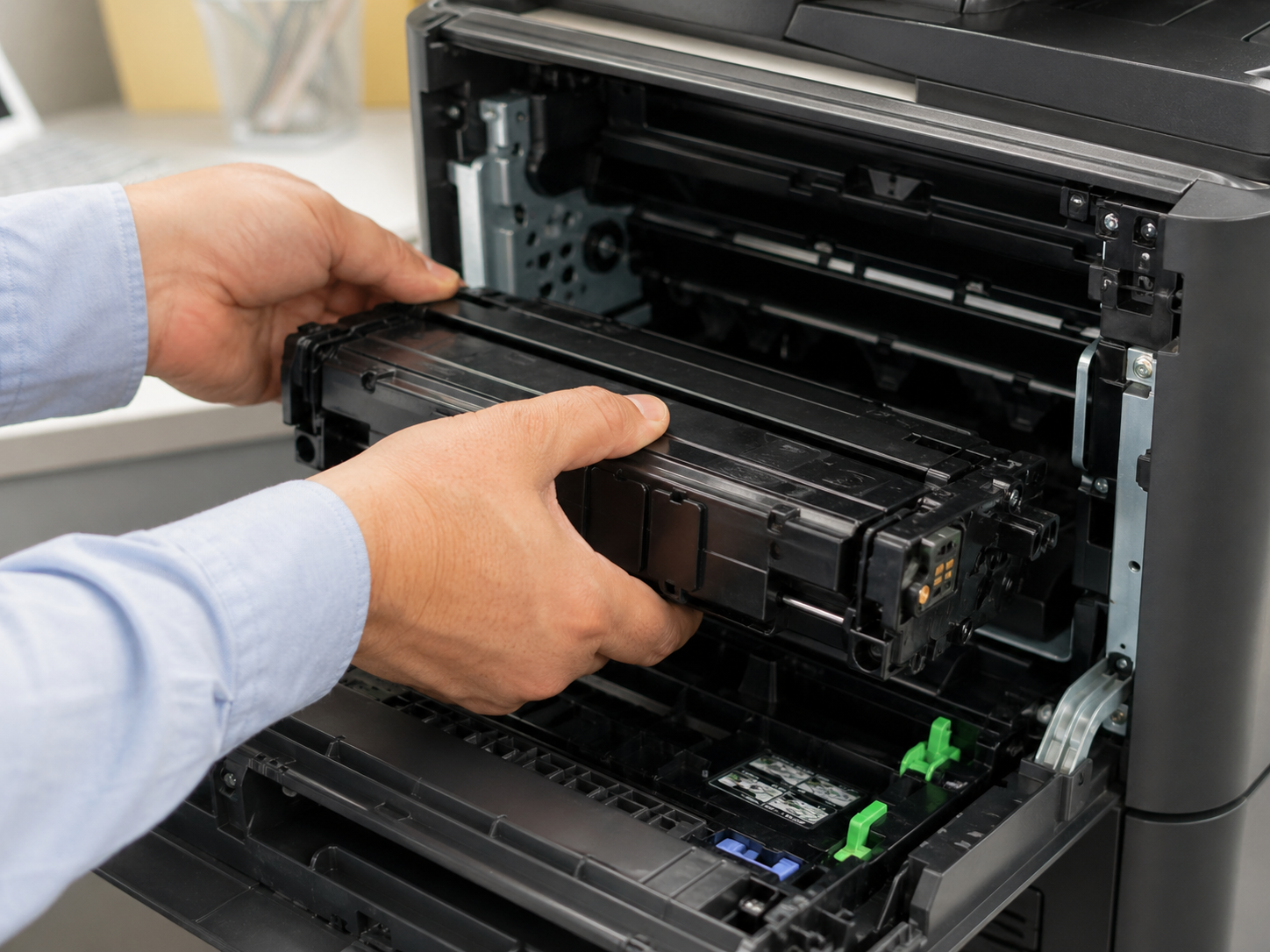
Most toner exposure happens during cartridge changes.
Maybe the old cartridge is leaking. Maybe the new one has protective seals. Maybe someone shakes it too hard because they heard that helps distribute the toner.
Cartridge instructions matter. Different brands have slightly different steps, and some cartridges are designed to be gently rocked before installation. The key word is gently.
Do not open the cartridge beyond the normal packaging instructions. Do not touch rollers, drums, or toner-covered parts unless the manual tells you to. Do not shake a leaking cartridge like you are mixing a cocktail.
Before changing a toner cartridge, it helps to prepare the area:
Put down scrap paper or newspaper.
Keep disposable gloves nearby.
Have a sealable plastic bag ready for the old cartridge.
Turn off or unplug the printer if the manual recommends it.
This sounds like overplanning until the cartridge leaks. Then it feels brilliant.
What to Do If Toner Gets on Your Hands
If you accidentally touch toner, do not panic. Just clean it properly.
First, avoid touching your face, eyes, phone, clothing, or other surfaces.
Shake or brush off loose powder gently over trash or scrap paper. Do not blow on it.
Wash your hands with cool water and mild soap. Use gentle rubbing, not aggressive scrubbing.
If toner remains around the nails, a soft nail brush can help.
Avoid hot water at first, especially if the toner is heavy, because heat may make the powder harder to remove.
If your skin becomes irritated, wash again with mild soap, stop handling the toner, and avoid applying harsh cleaners to your skin. Solvents, alcohol, or abrasive cleaners are not a smart fix for hands.
Skin is not a countertop.
If irritation persists or toner gets into your eyes, follow basic first-aid steps and seek medical advice if symptoms do not improve.
What to Do If Toner Gets in Your Eyes
Toner in the eyes is uncomfortable and should be handled calmly.
Do not rub.
Rinse the eye with clean, lukewarm water for several minutes. Remove contact lenses if they are easy to remove, then continue rinsing.
If irritation, pain, redness, blurred vision, or a gritty feeling continues, get medical help.
This is one reason bare-hand contact is a problem. People touch their faces automatically. Nobody thinks they will rub their eye until they already did it.
Gloves and careful handling reduce that risk.
How to Clean a Toner Spill
The most important rule: do not use a regular household vacuum for toner powder.
Toner particles are very fine and may pass through a standard vacuum filter, blowing powder back into the air or damaging the vacuum. In some cases, fine powders can also create issues inside vacuum motors. Offices or print-heavy workplaces may use special toner vacuums designed for this type of cleanup.
For a small spill at home or in a small office, the safer approach is usually slow and gentle.
Put on disposable gloves.
Avoid drafts or fans.
Use stiff paper or cardboard to gently gather loose toner.
Place it into a bag or trash container carefully.
Use a slightly damp disposable cloth for remaining residue on hard surfaces, if appropriate.
Wipe gently rather than scrubbing.
Dispose of cloths and gloves carefully.
Wash your hands afterward.
For carpet, things get trickier. Do not rub toner into the fibers. Try to lift loose powder gently. If the spill is large, it may be worth checking the printer manufacturer’s guidance or calling a professional cleaner.
A toner spill is not the time for dramatic cleaning energy. Slow, boring cleaning is better.
Do Not Eat or Drink While Handling Toner
This one seems obvious, but office life is full of coffee cups, snack bowls, and printer frustrations.
If you are changing toner, clearing a leak, or cleaning a spill, move food and drinks away. Do not handle a cartridge, then immediately grab chips or a sandwich. Wash your hands first, even if you wore gloves.
Printers often live near desks, break rooms, shared counters, or copy stations. That makes casual exposure more likely.
The snacks can wait. The printer has already ruined enough of your mood.
Be Careful With Kids and Pets
At home, toner cartridges may sit in closets, home offices, or storage drawers. Used cartridges may wait in a box before recycling.
Keep them away from children and pets.
A leaking cartridge can create a mess very quickly. Kids may touch the powder out of curiosity. Pets may sniff, paw, or track toner through the house. A cat walking through spilled toner and then jumping onto a bed is exactly the kind of chaos nobody needs.
Store cartridges in their original packaging when possible. Keep used cartridges sealed in a bag or box until they are recycled or disposed of according to local rules.
And if a cartridge is leaking badly, do not leave it sitting on a shelf “just for now.” “Just for now” is how toner ends up on everything.
Refilled or Damaged Cartridges May Leak More
Some people use refilled, remanufactured, or off-brand toner cartridges to save money. Many work fine. Some do not.
A poorly sealed or damaged cartridge may leak powder inside the printer or onto paper. You may notice streaks, smudges, gray dust near the cartridge area, or loose toner inside the machine.
If a cartridge keeps leaking, do not keep handling it with bare hands and hoping it improves. Remove it carefully, place it in a bag, and follow the seller or manufacturer’s return instructions.
Also check whether the cartridge is compatible with your printer model. A cartridge that almost fits is not good enough.
Printers are fussy little machines. They punish optimism.
Printer Maintenance Is Part of Indoor Cleanliness
Most people think of cleaning as floors, counters, sinks, and laundry. But office equipment can also contribute to dust and residue in a room.
A printer that is heavily used, poorly maintained, or sitting in a cramped, unventilated space may collect paper dust, toner residue, and general grime. That does not mean every home printer is a health threat. It means equipment deserves basic upkeep.
Keep the printer area clean.
Do not let paper scraps and old cartridges pile up.
Replace leaking cartridges promptly.
Follow the manual for cleaning inside the printer.
Avoid touching internal parts unless instructed.
Wash hands after dealing with jams or toner.
If an office printer area always smells hot, dusty, or chemical-like, or if toner dust is visible around the machine, it is worth reporting. Shared equipment should not be quietly coating the room.
What About Toner on Clothes?
Toner on clothing can be stubborn.
First, do not rub it in. Shake off loose powder outside or over trash if possible. Use a dry cloth or tape to lift some powder gently. Avoid hot water at first because heat can set toner more deeply.
Wash separately if the stain is significant, using cool water. Check before drying. A hot dryer may make a stain harder to remove.
For delicate or important clothing, look up fabric-specific care or consider professional cleaning.
And yes, this is another reason not to change toner while wearing your favorite white shirt. Toner senses confidence and attacks accordingly.
A Safer Toner-Handling Routine
A safer routine is simple and does not require much equipment.
Keep disposable gloves near the printer supplies.
Open cartridges carefully.
Follow the cartridge instructions.
Avoid touching powder or internal cartridge parts.
Do not blow toner dust.
Do not use a regular vacuum on spills.
Clean small spills gently.
Wash hands afterward.
Store used cartridges in bags or original packaging.
Recycle cartridges through approved programs when available.
This routine takes maybe two extra minutes. It can save a lot of mess and irritation.
When to Get Help Instead of Handling It Yourself
Some toner situations are bigger than a quick wipe.
Get help if there is a large spill, toner inside the printer that you cannot safely reach, repeated leaking, smoke or burning smells, strange printer noises, or toner exposure that causes breathing trouble, eye symptoms, or persistent skin irritation.
In a workplace, report toner leaks to whoever manages office equipment. Employees should not have to improvise cleanup with paper towels and hope.
At home, if the printer is old and constantly leaking or smudging, it may be time for service or replacement. Sometimes the cheapest printer becomes expensive in wasted cartridges, ruined paper, and your own patience.
The Habit to Break
The real habit is not “using a printer.”
It is treating toner powder casually because it looks like dust.
Loose toner should not be touched with bare hands if you can avoid it. It should not be blown into the air. It should not be wiped into fabric, rubbed into skin, or cleaned with random methods that spread it farther.
A little respect is enough.
You do not need a hazmat suit. You do not need to fear the printer. You just need gloves, calm movements, and the discipline not to brush mystery powder with your fingertips.
Admittedly, that last part is harder than it sounds. Humans love touching things we should not touch.
A Calm Final Thought
Printer toner powder is easy to underestimate because it shows up in ordinary places: home offices, school printers, copy rooms, reception desks, and that one printer everyone complains about but still uses.
But ordinary does not mean harmless enough to handle carelessly.
Avoid touching toner with bare hands. Keep it away from your eyes and face. Do not breathe in loose dust if you can prevent it. Clean spills gently. Wash your hands after cartridge changes. Store and recycle cartridges properly.
The next time a cartridge leaks or toner dust appears, pause before wiping it with your fingers. Grab gloves, slow down, and let the printer be the messiest thing in the room—not your hands.
Hi, I’m the creator and editor behind ZestyHabit. I research everyday safety, first aid, and practical wellness topics using official guidance and reliable public sources, then turn that information into clear, realistic steps for daily life.
My goal is to help readers make safer, better-informed choices at home and beyond.
[…] cleaning gloves before handling mold remover. Thin disposable gloves are better than bare hands, but reusable cleaning gloves often provide more coverage around the […]



[…] cleaning gloves before handling mold remover. Thin disposable gloves are better than bare hands, but reusable cleaning gloves often provide more coverage around the […]
[…] Handles a dead rodent or nesting material with bare hands […]