
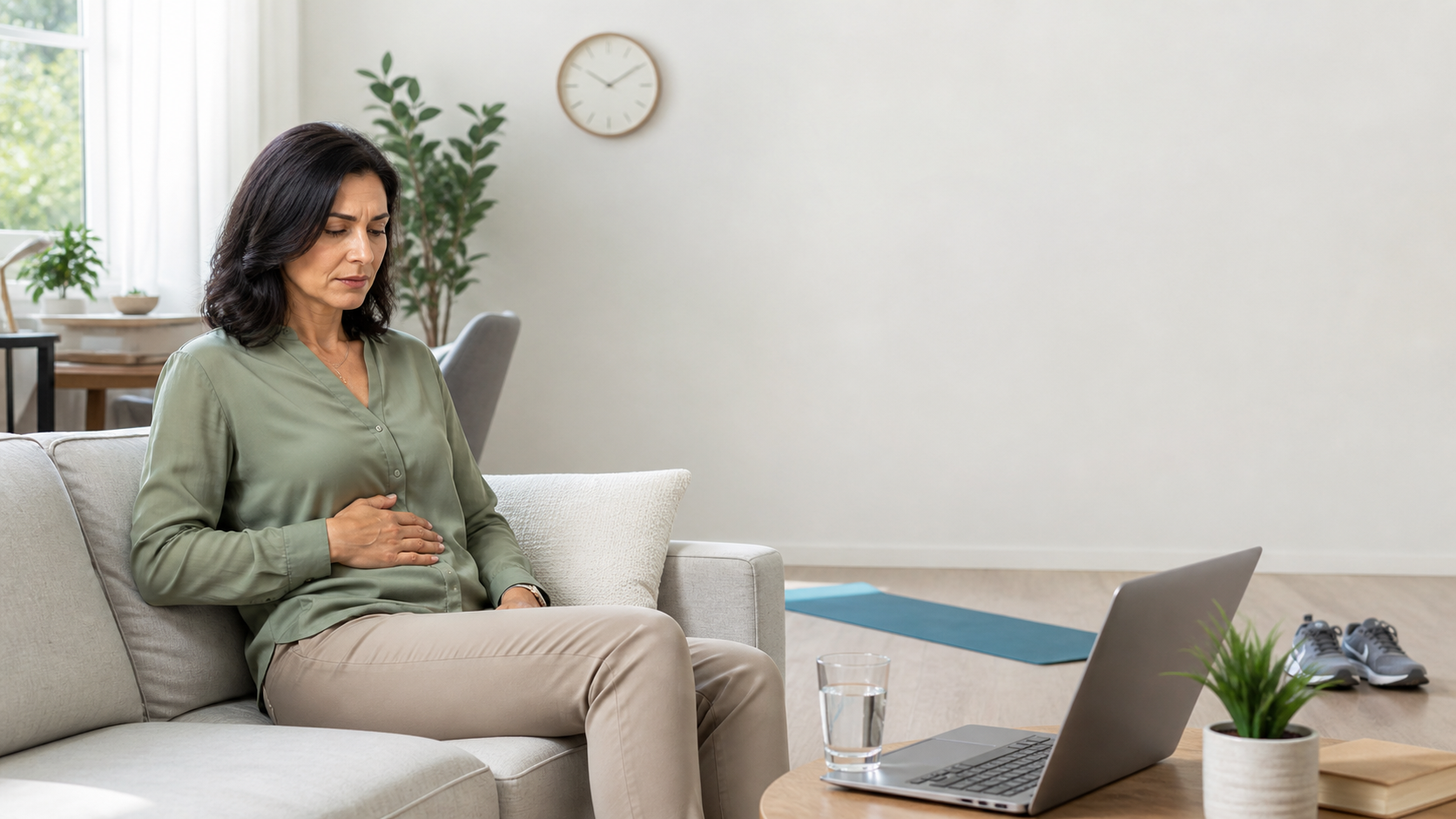

Sitting for long hours can slow digestion, reduce natural movement in the abdomen, and make constipation more likely. Here’s why it happens and what small daily habits can help.
The Quiet Link Between Sitting and Constipation
Most people think about constipation in terms of food first.
Not enough fiber. Not enough water. Too much cheese. A weird travel schedule. Maybe stress. Maybe hormones. All of that can matter.
But there’s another daily habit that often gets ignored because it looks so normal: sitting for most of the day.
A lot of modern life is built around sitting. We sit to work, sit to drive, sit to eat, sit to scroll, sit to relax, and then sometimes wonder why our body feels stiff, heavy, and a little… backed up.
Constipation is not always caused by one dramatic thing. Often, it comes from a stack of small patterns. A low-movement day here, a rushed bathroom break there, a little dehydration, a little stress, and suddenly your digestive system is not exactly moving with enthusiasm.
Sitting for long periods does not automatically mean you will be constipated. Plenty of people sit a lot and still have regular bowel movements. But a sedentary lifestyle can make constipation prevention harder because your gut likes rhythm, pressure changes, hydration, movement, and enough time to respond to signals.
When the whole day is still, your digestion may become still too.
Your Gut Is Not Separate From the Rest of Your Body
It is easy to think of digestion as something happening in a closed system. You eat food, your stomach handles it, your intestines do their job, and eventually your body gets rid of what it does not need.
That is true, but it is not the whole picture.
Your digestive tract is affected by your nervous system, your muscles, your breathing, your posture, your fluid intake, your meal timing, and your daily activity level. It is very much part of the body you use all day.
When you walk, stand, stretch, breathe deeply, and move around, your abdomen is not frozen in one position. Your hips shift. Your core gently engages. Your diaphragm moves. Your pelvic area gets more natural circulation. Even simple movement can support the kind of internal rhythm that helps digestion feel less sluggish.
When you sit for hours, especially in the same curled position, everything gets quieter.
Your belly may feel compressed. Your hips may tighten. Your breathing may become shallow. Your lower back may stiffen. None of this means something is seriously wrong, but it can create the kind of environment where bowel movements become less predictable.
The body is not a machine that performs best when parked all day.
Sitting Reduces the Natural Movement That Helps Digestion
Movement is not just for burning calories. That idea has made many people think activity only “counts” if they are sweating, wearing workout clothes, or closing a fitness ring.
For constipation prevention, ordinary movement matters.
Walking around the house, taking the stairs, standing while making coffee, stretching your hips, cleaning the kitchen, walking to the mailbox, or taking a short loop outside after lunch can all help wake up the body.
The intestines move stool through a process called peristalsis, which is basically a wave-like muscle action. You cannot directly control it the way you control your hand or foot, but your daily habits can support or disturb it.
A day spent mostly sitting tends to be a low-stimulation day for the gut. There is less whole-body motion, less abdominal movement, and fewer posture changes. For some people, that means stool moves more slowly through the colon. The longer stool sits there, the more water can be absorbed from it, making it harder and drier.
That is when bathroom trips can turn into a whole event.
Not fun. Not glamorous. Very human.
Long Sitting Can Make You Ignore Bathroom Signals
This is one of the most practical reasons sitting all day can work against regularity.
Many people feel the urge to go, but they are in the middle of something. A meeting. A commute. A phone call. A task that was supposed to take five minutes but somehow became forty-five.
So they ignore it.
Once or twice is not a disaster. But if it becomes a pattern, the body may stop sending clear signals at convenient times. The urge can fade. Then later, when you finally have time, nothing happens.
This is especially common for people who work at a desk, study for long hours, drive a lot, or feel uncomfortable using bathrooms outside the home.
The gut loves routine more than we give it credit for. Many people naturally feel the urge after breakfast or coffee because eating can trigger movement in the colon. But if that window gets skipped every morning because you are rushing, commuting, or glued to your desk, your body may not cooperate later.
A simple fix is not to force anything. It is to make room.
After breakfast, give yourself a few calm minutes. Do not sit there forever scrolling. Just allow a little bathroom time if your body asks for it. That small habit can be surprisingly helpful.
Posture Can Change How Your Abdomen Feels
Not all sitting is the same.
There is sitting upright with feet on the floor, shoulders relaxed, and space around the abdomen. Then there is the classic laptop shrimp pose: rounded back, compressed belly, chin forward, hips locked, barely breathing.
Most of us know that second one too well.
When you sit hunched for a long time, your abdominal area can feel squeezed. Your diaphragm may not move as freely, and your belly has less room to expand with natural breathing. This does not “block” digestion in a simple mechanical way, but it can contribute to the overall sluggish feeling that often comes with long desk days.
Your pelvic floor can also be affected by posture and tension. Some people hold tension in the lower belly, glutes, or pelvic area without realizing it. If your body is braced all day, relaxing on the toilet may not come easily.
A good bathroom position can help. Many people find it easier to go when their knees are slightly higher than their hips, like when using a small footstool. Leaning forward a bit, resting the elbows on the thighs, and relaxing the belly can make the position feel more natural.
It is not fancy. It just works with the body’s design better than sitting stiffly upright and hoping for the best.
Sitting Often Comes With Other Constipation-Friendly Habits
The sitting itself is only part of the story.
Long sitting often travels with a whole group of habits that can make constipation more likely.
You may drink less water because you do not want to keep getting up. You may snack on convenience foods. You may delay lunch, then eat a huge meal later. You may drink extra coffee but forget actual fluids. You may stay indoors and move less. You may feel mentally drained and skip exercise.
None of these habits are moral failures. They are just what happens when a day becomes too packed and too chair-centered.
Think about a typical work-from-home day.
You sit down with coffee and open your laptop. Three hours pass. You realize you have barely moved. Lunch is quick, maybe something low in fiber because it is easy. You sit again. By late afternoon, your back feels tight and your stomach feels weird. You drink another coffee, maybe not much water. Then evening comes, and the couch looks very persuasive.
That kind of day is common. It is also not very friendly to digestion.
Constipation prevention often improves when you change the shape of the day, not just the food on the plate.
A Short Walk After Meals Can Do More Than You Think
You do not need a dramatic fitness plan to support bowel regularity.
A short walk after meals is one of the easiest habits to start with because it attaches movement to something you already do. After breakfast, lunch, or dinner, walk for five to ten minutes. Around the block. Around the office. Around your living room if the weather is awful.
It does not need to be intense. Actually, gentle is fine.
The point is to give your body a little movement signal after eating. This can help with blood sugar, energy, stiffness, and digestion. It also breaks the pattern of eating and immediately folding back into a chair.
If you are at work, even a small routine helps. Walk to refill your water. Take the longer route to the restroom. Step outside for a few minutes after lunch. Do one lap around the building before getting back to your desk.
Small movement repeated daily often beats one ambitious workout followed by ten hours of sitting.
Your Core and Hips Matter More Than You Might Expect
When people think about constipation, they rarely think, “Maybe my hips are tight.”
Fair enough. It sounds unrelated.
But long sitting can make the hip flexors, glutes, lower back, and abdominal muscles feel stiff or underused. The pelvic area can become tense. The body gets used to one folded position. Then when it is time to relax enough for a bowel movement, everything may feel less cooperative.
You do not need complicated stretches. A few simple movements can help break the pattern.
Try standing up and doing gentle hip circles. Stretch one hip flexor at a time. Take a slow forward fold if your back tolerates it. Do a few bodyweight squats, even shallow ones. Lie on your back and pull one knee toward your chest, then switch sides.
The goal is not to become flexible overnight. The goal is to remind your body that it has more than one position.
Even two minutes can change how your lower body feels after hours in a chair.
Water Helps More When Your Day Has Rhythm
Hydration is a classic constipation tip, but it is often given in a way that sounds too simple: “Drink more water.”
Yes, fluids matter. Stool needs enough water to stay softer and easier to pass. But many people do not need a lecture about water. They need a way to remember it during a busy day.
Long sitting can make water intake strangely easy to forget. If your bottle is not nearby, you may barely drink. If it is nearby, you may sip without noticing how much. Or you may drink mostly coffee and assume that counts enough.
A practical approach is to connect water to movement.
Drink a glass when you wake up. Refill your bottle before sitting down to work. Take a few sips every time you stand. Drink water with meals. If you take a short walk after lunch, have water before or after.
This gives hydration a rhythm instead of making it one more vague thing you are supposed to do.
Also, if you increase fiber, increase fluids too. Adding fiber without enough water can make some people feel more bloated or backed up. Beans, oats, vegetables, fruit, whole grains, nuts, and seeds are helpful foods, but your gut may need time and fluid to adjust.
Fiber Works Better With Movement
Fiber is important, but it is not magic dust.
A high-fiber meal eaten during an otherwise motionless day may not feel as helpful as expected. Fiber adds bulk and can help stool hold water, but the gut still needs motility. Movement helps support that.
This is why a realistic constipation-prevention plan should not be only “eat more salad.” It should include food, fluids, bathroom timing, and movement.
For breakfast, oatmeal with berries may work better than a low-fiber pastry. For lunch, adding beans or vegetables to a bowl may help. For snacks, fruit, nuts, or yogurt with seeds may be better than relying only on crackers or sweets.
But do not overhaul everything at once. A sudden fiber jump can make your stomach complain.
Start with one change. Add a piece of fruit. Add vegetables to lunch. Switch one refined grain to a whole-grain option. Add lentils or beans a few times a week. Give your body a chance to adapt.
And then move a little. A short walk can make the whole plan feel more complete.
Stress, Screens, and the “Frozen Body” Problem
Long sitting is not always relaxed sitting.
Sometimes it is tense sitting. Deadline sitting. Doom-scrolling sitting. Answering emails with your shoulders near your ears sitting.
Stress can affect digestion because the gut and nervous system are closely connected. Some people get loose stools when nervous. Others get constipated. Some get both, depending on the week, because bodies enjoy being confusing.
When you sit for hours under stress, your body may stay in a low-level alert mode. Your breathing gets shallow. Your jaw tightens. Your belly tightens. You may not notice hunger, thirst, or bathroom signals until they become uncomfortable.
This is why small resets matter.
Stand up. Drop your shoulders. Take a slow breath that lets your belly move. Walk for two minutes. Look away from the screen. Stretch your hands and hips. It may feel too simple, but your nervous system often responds to simple things.
You are not trying to become a perfectly calm person. Nobody needs that pressure. You are just giving your body a few chances during the day to stop bracing.
Building a Constipation-Friendlier Sitting Day
You probably cannot avoid sitting completely. Most people cannot. The better goal is to interrupt sitting often enough that your body does not feel trapped in one position all day.
A few realistic habits can help:
Set a gentle reminder to stand every 30 to 60 minutes. You do not have to do a full workout. Stand, stretch, refill water, or walk across the room.
Take a short walk after one meal per day. Start with the easiest meal. For many people, dinner is more realistic than lunch. For others, a quick walk after breakfast works better.
Give yourself bathroom time after breakfast. Not a long, dramatic appointment. Just a few calm minutes without rushing.
Make your chair setup less terrible. Keep both feet supported. Try not to fold into your laptop for hours. Bring the screen closer to eye level if you can.
Add fiber gradually. Choose foods you actually like. A habit you hate will not last long.
Keep water visible. A bottle on the desk is not a personality trait, but it helps.
Move your hips. A few squats, a hip flexor stretch, or a short walk can undo some of the locked-up feeling from sitting.
These are not glamorous habits. That is part of why they work. They fit into normal life.
When Constipation Needs More Attention
Lifestyle changes can help many people, but constipation should not be ignored if it is new, severe, painful, or persistent.
It is a good idea to talk with a healthcare professional if you notice blood in your stool, unexplained weight loss, ongoing abdominal pain, vomiting, severe bloating, anemia, or a sudden major change in bowel habits. Also get medical advice if constipation keeps coming back despite reasonable changes with food, fluids, and movement.
Some medications, supplements, medical conditions, and hormonal changes can affect bowel habits too. Iron supplements, certain pain medications, some antidepressants, thyroid issues, pregnancy, and other factors may play a role.
There is no need to panic. Just do not blame yourself or assume it is only because you sit too much.
A More Helpful Way to Think About It
Sitting is not the villain. Sitting is part of life.
The problem is when sitting becomes the whole day.
Your gut tends to do better when your body has rhythm: meals, water, movement, bathroom time, and enough relaxation to notice signals. Long hours in a chair can blur all of that. The day becomes stiff and rushed, and digestion may follow.
Start small. Stand up a little more. Walk after one meal. Drink water before you get thirsty. Let your bathroom signals matter. Give your body a few chances to move before evening arrives.
Constipation prevention does not have to be a strict lifestyle project. Sometimes it begins with the very ordinary decision to get out of the chair for five minutes and let your body remember it was made to move.

Hi, I’m the creator and editor behind ZestyHabit. I research everyday safety, first aid, and practical wellness topics using official guidance and reliable public sources, then turn that information into clear, realistic steps for daily life.
My goal is to help readers make safer, better-informed choices at home and beyond.


