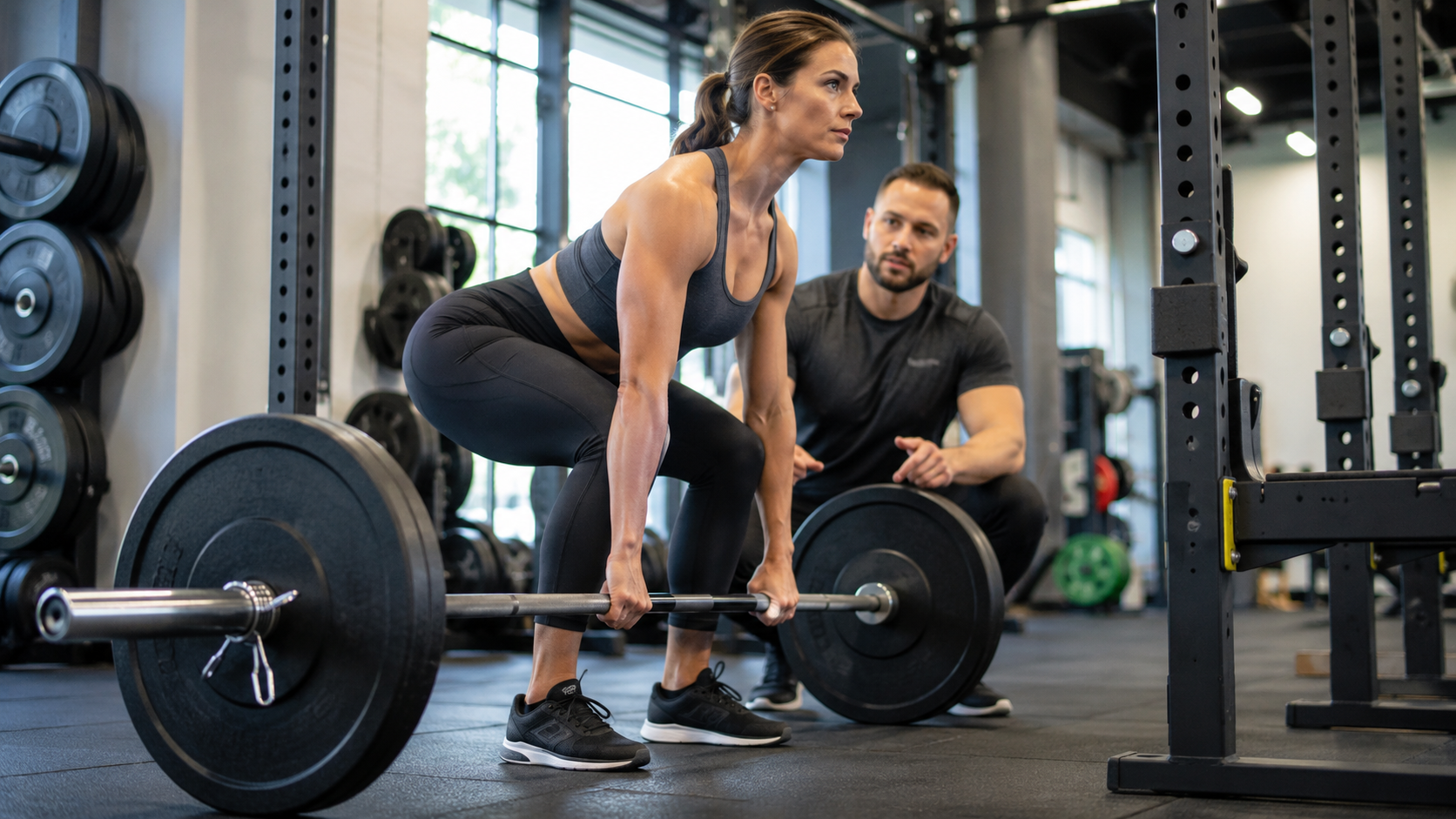
Barbell Workout Precautions: How to Lift More Safely
Minjin Park
·
Barbell workouts can be incredibly effective. A simple barbell can help you train strength, muscle, coordination, balance, and confidence. Squats, deadlifts, bench presses, overhead presses, rows, and hip thrusts are all classic barbell movements for a reason: they let you load the body in a clear, progressive way.
But barbells also deserve respect.
Unlike a machine, a barbell does not guide your path for you. You are responsible for controlling the weight, setting up correctly, keeping your body aligned, and knowing when to stop. That freedom is part of what makes barbell training powerful, but it also means beginners need to be careful.
Lifting safely is not about being scared of the barbell. It is about learning the basics before chasing heavier weights. Good bar control, smart warm-up sets, proper spotting, and clean technique can make your workouts feel smoother and more productive.
If you are new to barbell training, or getting back into it after time away, these precautions can help you lift with more confidence and less unnecessary risk.
One of the biggest mistakes beginners make is adding weight before the movement feels stable. A barbell may look light when there are no plates on it, but even an empty bar requires control.
Before trying to lift heavy, learn the basic pattern of each exercise.
For example:
A squat requires stable feet, controlled knees, hip movement, bracing, and balance. A deadlift requires a strong hip hinge, neutral spine, and bar path close to the body. A bench press requires shoulder control, proper grip, and a safe setup. An overhead press requires core stability, shoulder mobility, and control over the bar path.
Each lift has its own details, but the principle is the same: movement quality comes first.
Do not treat technique as something only beginners care about. Experienced lifters continue refining their form for years. Safe lifting is not about perfect-looking reps every single time, but your basic positions should be repeatable and controlled.
If a weight makes your form fall apart immediately, it is too heavy for that day.
Learn How to Brace
Bracing is one of the most important skills in barbell training. It helps protect your spine, control your torso, and transfer force through your body.
Bracing does not mean sucking in your stomach. It means creating firm pressure around your midsection, almost like preparing to take a gentle punch.
A simple way to practice:
Stand tall. Take a breath into your belly and sides. Keep your ribs from flaring upward. Gently tighten your core all around. Hold that tension as you begin the lift. Exhale after the hardest part of the rep or once the rep is complete.
You do not need an extreme brace for every light warm-up set, but learning the habit early helps when the weight gets heavier.
For squats, deadlifts, overhead presses, and rows, bracing is especially important. Your core is not just there for appearance. It helps keep your torso stable under load.
Use Warm-Up Sets, Not Just a Warm-Up
A few minutes of general warm-up is helpful, but barbell training also needs exercise-specific warm-up sets.
General warm-up gets your body ready. Warm-up sets get your lift ready.
For example, before heavy squats, you might do a few minutes of easy cycling or walking, some hip mobility, and then several lighter squat sets before reaching your working weight.
A basic warm-up set progression might look like:
Empty bar for several controlled reps
Light weight for a few reps
Moderate weight for fewer reps
Working weight once the movement feels ready
Warm-up sets help you practice technique, feel the bar path, check your joints, and prepare your nervous system. They also give you a chance to notice if something feels off before the weight becomes challenging.
Do not skip them just because you are short on time. Rushing straight to heavy sets is one of the easiest ways to make a lift feel worse than it should.
Control the Bar at All Times
Bar control is a major part of safe lifting. The bar should not bounce, swing, drift, or surprise you.
In a squat, the bar should stay balanced over your midfoot. In a deadlift, it should stay close to your body. In a bench press, it should lower under control. In an overhead press, it should travel in a steady path. In a row, it should not yank your torso out of position.
A barbell gives immediate feedback. If the bar path feels messy, your setup or technique may need attention.
Avoid rushing reps. Fast does not always mean strong. A controlled rep is usually better than a sloppy rep that barely gets completed.
This is especially important on the lowering phase. Many lifters focus on lifting the weight up but lose control on the way down. Lowering with control protects your joints, improves technique, and helps you stay ready for the next rep.
Choose the Right Weight for the Day
Not every workout has to be your strongest workout. Sleep, stress, food, hydration, soreness, and previous training all affect performance.
A weight that felt easy last week may feel heavy today. That does not mean you are getting weaker. It means your body is giving you information.
Choose a weight that lets you complete clean reps with control. You should feel challenged, but not reckless.
For beginners, it is usually smart to leave a few reps in reserve. That means ending a set before you reach total failure. Barbell lifts become riskier when you grind every set to the limit, especially without a spotter or safety equipment.
Ask yourself during training:
Can I keep my form? Can I control the bar? Can I complete another rep safely? Am I lifting with focus or just forcing it?
Good training builds over time. You do not need to prove everything in one session.
Use Safety Pins, Spotter Arms, or a Power Rack
If you train alone, safety equipment matters.
For squats and bench presses especially, a power rack or squat rack with safety pins can be very helpful. Safety pins are set at a height that can catch the bar if you cannot complete the rep.
For squats, the pins should be low enough that they do not hit the bar during normal reps, but high enough to catch the bar if you need to bail.
For bench press, the pins should allow the bar to come close to your chest during normal lifting, while still protecting you if you cannot press the weight back up.
Do not assume you will “just manage” if a lift goes wrong. Even strong lifters miss reps. Safety equipment is not embarrassing. It is responsible.
If your gym has adjustable spotter arms, learn how to use them. If you are unsure, ask a staff member or experienced lifter.
Know When You Need a Spotter
A spotter is a person who helps keep you safe during certain lifts, especially when the weight is heavy or close to failure.
The bench press is the most obvious example. If you fail a bench press without safety pins or a spotter, the bar can become dangerous quickly.
A good spotter should know:
When to help
How much help to give
Where to stand
How to communicate
Not to grab the bar too early
Not to distract you during the lift
Before starting the set, be clear. Tell the spotter how many reps you plan to do and whether you want help only if the bar stops moving.
For example, you can say, “I’m going for five reps. Please help only if the bar gets stuck.”
Spotting is not just standing nearby. It requires attention. Choose someone who is focused, not someone distracted by their phone.
Do Not Spot Every Lift the Same Way
Different barbell exercises require different safety approaches.
For bench press, a spotter can stand behind the bench and help guide the bar if needed.
For squats, spotting is more complicated. A single back spotter must know what they are doing, and with heavier weights, side spotters or properly set safety pins are often better.
For deadlifts, spotting is usually not useful in the same way. If the weight is too heavy, the lifter can simply let go of the bar. The focus should be on proper setup, load choice, and clear space around the bar.
For overhead press, a spotter may help in some situations, but it is often better to use a weight you can control and avoid max attempts without experience.
The main point: do not assume spotting works the same for every lift. Learn the safety method for the exercise you are doing.
Keep the Training Area Clear
Barbell workouts need space. Plates, clips, bags, bottles, and phones should not be scattered around your feet.
Before lifting, check your area:
Are the plates secure?
Is the floor clear?
Are collars on the bar if needed?
Is the rack height set correctly?
Are safety pins adjusted?
Is anyone walking too close?
Do you have enough room to step back or rerack?
A messy lifting area can lead to trips, distractions, and poor setup.
This matters even more when lifting in a busy gym. Take a moment to organize the space before your set. It is a small habit that makes training safer and calmer.
Use Collars When Appropriate
Barbell collars help keep plates from sliding. They are especially useful for lifts where the bar may tilt or move unevenly, such as overhead press, hip thrusts, rows, or some deadlift variations.
For many lifts, collars are a smart safety habit. If one plate starts sliding, the bar can become uneven quickly.
There is one special case: some lifters choose not to use collars on bench press when lifting alone without safety pins, because in an emergency they may need to tilt the bar and slide the plates off. However, the better option is not relying on that emergency method. Use safety pins, a spotter, or both.
In most normal training situations, collars are helpful. Just make sure they are secured properly.
Set the Rack Height Correctly
Rack height can affect both safety and technique.
For squats, the bar should be set around upper chest or shoulder height, depending on your squat style and body size. You should not have to calf-raise the bar out of the rack, and you should not have to squat it up from too low.
For bench press, the hooks should let you unrack the bar without losing shoulder position. If the rack is too high, you may have to reach awkwardly. If it is too low, you may waste energy just getting the bar out.
For overhead press, the bar should be around upper chest or shoulder level so you can unrack it smoothly.
Take the time to adjust the rack. Do not force yourself into a bad setup because you are in a hurry.
Pay Attention to Grip
Your grip connects you to the bar. A careless grip can affect control, wrist comfort, and safety.
For most barbell lifts, your grip should feel firm and balanced. Your wrists should not be bent painfully backward, and the bar should sit securely in your hands or on your body depending on the lift.
In bench press, keep your wrists stacked over your forearms as much as possible. Do not let the bar roll too far back into the fingers.
In deadlifts and rows, grip the bar firmly, but do not pull with bent elbows. Your arms should act like strong hooks.
In overhead press, keep the bar close to the base of the palm and avoid letting the wrists collapse.
If your grip is slipping, reduce the weight, use chalk if allowed, or work on grip strength. Straps can be useful for some pulling exercises, but beginners should still develop basic grip control.
Respect Your Joints
Barbell training should feel challenging in the muscles, but sharp joint pain is not something to ignore.
Shoulder pain during bench press or overhead press
Wrist pain from poor bar position
Elbow pain from too much pressing or pulling
Hip pinching during squats
Sometimes discomfort comes from technique. Sometimes it comes from mobility, load, fatigue, or exercise selection. Either way, do not keep forcing the exact same movement if it repeatedly causes pain.
Modify the lift. Reduce the weight. Adjust your stance. Use a different range of motion. Ask for help. Choose a variation that suits your body better.
Lifting safely does not mean ignoring pain. It means responding to it intelligently.
Learn How to Bail Safely
Bailing means safely getting out of a failed lift. This is a skill, not something you want to figure out during a panic moment.
For squats, the safest option is usually using properly set safety pins. If you train without pins, you need to know how to drop or release the bar safely, but this should be practiced under supervision and only in an appropriate environment.
For bench press, safety pins or a spotter are the best options. Do not rely on rolling a heavy bar down your body.
For deadlifts, if you cannot complete the lift, set the bar down or let it drop only if your gym allows it and the floor is appropriate.
For overhead press, if a rep fails, bring the bar back down under control if possible. Avoid leaning back aggressively to save the lift.
The safest lifters are not the ones who never miss a rep. They are the ones who know what to do when a rep does not go as planned.
Avoid Ego Lifting
Ego lifting means choosing weight based on how you want to look rather than what you can safely control.
It often leads to:
Shortened range of motion
Sloppy technique
Rushed reps
Poor bracing
Painful grinding
Needing unnecessary help
Higher injury risk
There is nothing wrong with wanting to get stronger. But strength is built through consistent, quality training, not random max attempts.
A clean set with a moderate weight is more valuable than a messy set with a weight that is too heavy.
The barbell does not care about ego. It only responds to physics, technique, and control.
Use Progressive Overload Slowly
Progressive overload means gradually making training harder over time. This may involve adding weight, reps, sets, or improving technique.
The key word is gradually.
Do not add weight every workout just because you feel pressured to progress. Some days, progress may mean better depth, smoother reps, stronger bracing, or improved bar speed with the same weight.
For beginners, small increases are enough. Adding too much too soon can overwhelm your joints, tendons, and technique.
A smart progression might look like:
Master the empty bar
Add small amounts of weight
Keep reps clean
Repeat until the weight feels stable
Increase again only when control remains good
Progress that lasts is usually slower than people expect, but safer and more reliable.
Do Not Train Heavy When Distracted
Barbell lifting requires attention. If you are distracted, upset, rushed, or constantly checking your phone, your setup may suffer.
Before a set, take a few seconds to focus.
Check your feet. Set your grip. Brace. Control your breathing. Know how many reps you plan to do. Lift with intention.
This simple routine helps reduce careless mistakes.
Heavy lifting is not the best time to multitask. Save texting, music changes, and conversations for between sets.
Rest Enough Between Sets
Barbell exercises can be demanding. If you rush rest periods, your next set may feel unstable or sloppy.
Rest depends on your goal, the lift, and the load. Light technique work may need shorter rest. Heavy squats or deadlifts may need longer rest.
The point is not to sit around forever. The point is to start the next set ready enough to move well.
If your breathing is still out of control, your grip feels weak, or your legs are shaking, give yourself more time.
Good reps require enough recovery.
Keep Your Program Balanced
Many people love certain lifts and ignore others. But a balanced program helps reduce overuse and supports better movement.
A good barbell routine usually includes a mix of:
Squatting patterns
Hip hinge movements
Horizontal pressing
Vertical pressing
Pulling movements
Core stability
Mobility or accessory work
If you only bench press and never train your back, your shoulders may not feel great over time. If you only deadlift heavy and skip core or hip work, your technique may suffer. If you only squat and never address mobility, depth and comfort may become limited.
Balance does not mean doing every exercise every day. It means your weekly training should support the whole body.
Ask for Coaching When Needed
Barbell training has a learning curve. There is no shame in asking for help.
A qualified trainer, coach, or experienced lifter can help you with:
Setup
Bar path
Bracing
Depth
Grip
Rack height
Spotting
Exercise variations
Safe progression
Even one good coaching session can make a big difference. Video feedback can also help if you train alone. Recording a set from the side can show things you may not feel, such as bar drift, rounded posture, uneven movement, or rushed reps.
Just make sure advice comes from someone who understands safe technique, not someone who only cares about lifting heavy.
Know When to Stop
Some days, the safest choice is to stop a set early.
Stopping early is not weakness. It is good judgment.
One missed rep is not a big deal. One careless rep can set back your training for weeks.
Final Thoughts
Barbell workouts can be one of the most rewarding ways to build strength, but they work best when you respect the basics. Safe lifting is not complicated, but it does require attention.
Start with technique. Use warm-up sets. Control the bar. Choose weights you can handle. Set up safety pins when needed. Ask for a spotter for risky lifts. Keep your training area clear, brace properly, and stop before your form breaks down.
The goal is not just to lift more today. The goal is to keep lifting well for months and years.
When you train with patience and control, the barbell becomes more than a heavy piece of equipment. It becomes a tool for building strength, confidence, and better body awareness one clean rep at a time.
Hi, I’m the creator and editor behind ZestyHabit. I research everyday safety, first aid, and practical wellness topics using official guidance and reliable public sources, then turn that information into clear, realistic steps for daily life.
My goal is to help readers make safer, better-informed choices at home and beyond.