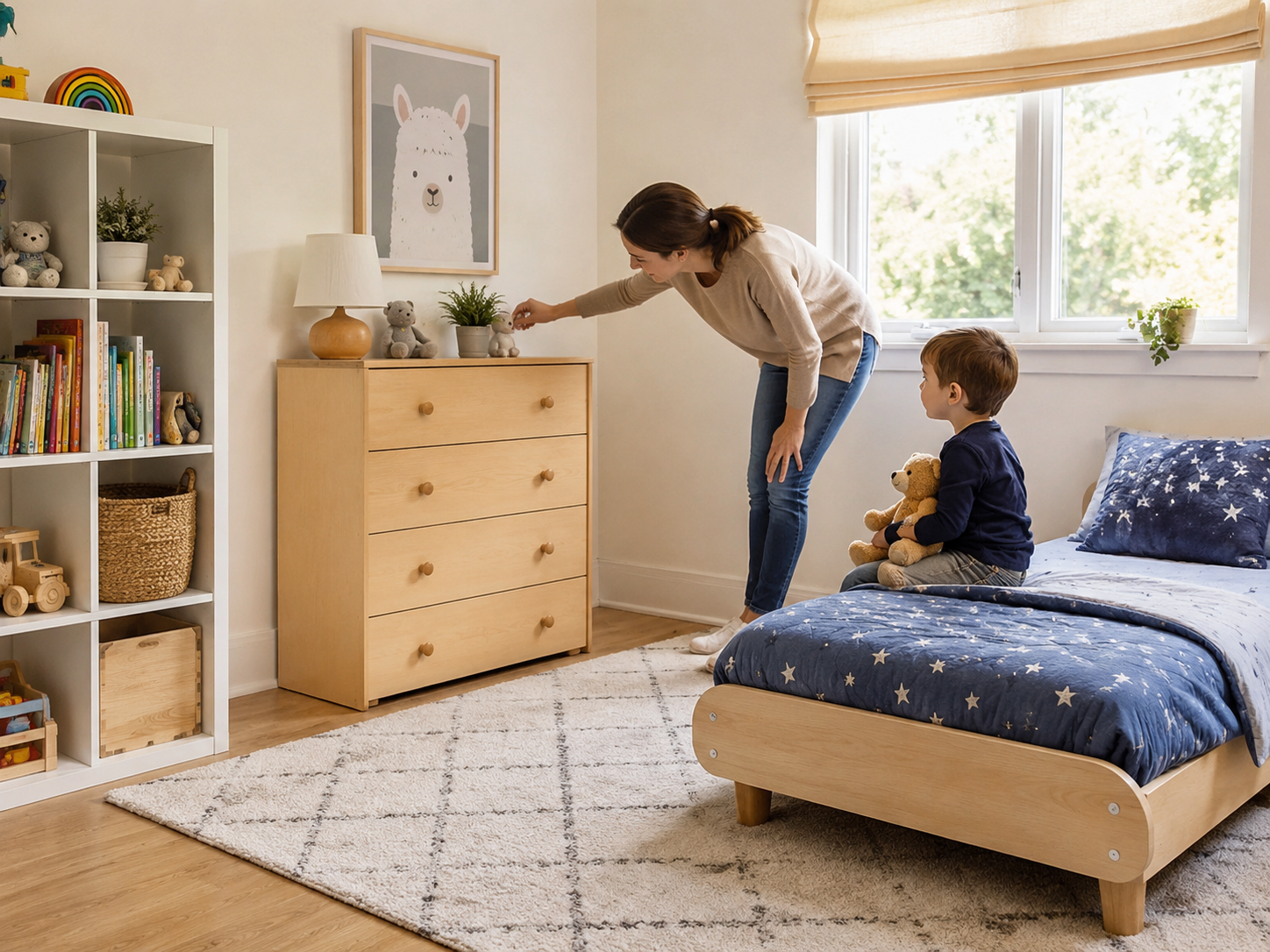
Child Bedroom Furniture Safety: What to Watch for When Arranging a Kid’s Room
Minjin Park
·
A child’s bedroom should feel cozy and practical, but furniture placement can affect safety more than many parents realize. Learn simple tips for arranging beds, dressers, shelves, cords, and play areas with fewer everyday risks.
It is a sleeping space, a play area, a reading corner, a storage zone, a dressing room, and sometimes a homework station all in one. Toys move around. Clothes pile up. Books migrate from shelves to the floor. Kids climb, jump, hide, reach, and rearrange things in ways adults do not always expect.
That is why furniture placement matters so much.
A dresser that looks fine in an adult room may become a climbing hazard in a child’s room. A bed under a window may look cozy, but it can make the window easier to reach. A toy shelf placed too close to the door may block a clear path at night. A lamp cord stretched across the floor may become a tripping point. A tall bookcase that is not anchored may tip if a child pulls on it.
The goal is not to create a bare, joyless room. A child’s room should still feel warm, personal, and fun. The key is arranging furniture so the room works with a child’s natural behavior instead of assuming they will always use every item exactly as intended.
Kids are curious. Good room design expects that.
Start With the Main Question: How Does Your Child Actually Use the Room?
Before moving furniture around, watch how the room is used in real life.
Where does your child run first? Where do toys usually end up? Does your child climb onto the bed to reach something? Do they pull books from a shelf? Do they play on the floor near the door? Do they wake up at night and walk to the bathroom? Do pets go into the room too?
A room can look safe in a photo but feel awkward in daily life. The safest layout is usually the one that gives children clear walking space, keeps heavy furniture stable, limits climbing opportunities, and keeps important items within easy reach.
Think of the room from a child’s height, not just an adult’s. Get down low and look around. What looks tempting? What can be pulled? What can be climbed? What could fall?
That simple change in perspective can reveal a lot.
Anchor Tall and Heavy Furniture
One of the most important safety steps in a child’s room is anchoring tall furniture to the wall.
Dressers, bookcases, wardrobes, storage cabinets, cube shelves, and changing tables can become unstable if a child climbs, pulls out drawers, or leans on them. Even furniture that feels heavy can tip if weight shifts forward.
Why dressers are a common concern
Dressers can be especially tempting because drawers look like steps. A child may pull out lower drawers and climb to reach a toy, book, or decoration on top.
The risk increases if the dresser is tall, narrow, placed on carpet, overloaded in the top drawers, or not anchored.
A safer setup includes anchoring the dresser, keeping heavy items in lower drawers, and avoiding tempting objects on top.
Bookcases and cube shelves need attention too
Low cube shelves may seem safer than tall bookcases, but they can still tip if a child climbs on them. Tall bookcases should always be secured, and even shorter units may need anchoring depending on their height, weight, and use.
Avoid placing favorite toys, piggy banks, collectibles, or bright decorations on high shelves where a child might climb to reach them.
Do not rely on weight alone
A heavy piece of furniture is not automatically safe. In fact, heavier furniture can be more dangerous if it tips. Anchoring helps keep the furniture attached to the wall so it cannot fall forward as easily.
Follow the manufacturer’s anchoring instructions when possible. Use hardware appropriate for your wall type, and ask for help if you are not sure how to install it securely.
Be Careful With Beds Near Windows
A bed by the window can look charming. It gives natural light, a nice view, and a cozy place to read. But in a child’s room, bed placement near windows needs extra thought.
A bed can act like a step or platform, making it easier for a child to reach the window, blinds, curtains, or window screen.
Window screens are not safety barriers
A screen may keep insects out, but it is not designed to prevent a fall. Children may lean against it, push on it, or try to look outside.
If a bed, chair, toy chest, or desk is placed under a window, it may make climbing or leaning more likely.
Keep climbable furniture away from windows
Whenever possible, keep beds, chairs, stools, dressers, toy chests, and shelves away from windows. If the room layout makes that difficult, consider additional window safety measures appropriate for your home, such as window stops or guards that meet safety standards.
Also keep cords from blinds and shades out of reach. Long dangling cords can create serious hazards for young children.
Think about nighttime movement
A bed near a window may also feel colder in winter or hotter in summer. Drafts, condensation, and curtains near bedding can create comfort and maintenance issues too.
Safety and comfort often point to the same solution: give the bed a little distance from the window when you can.
Keep a Clear Path From Bed to Door
Children may get up at night to use the bathroom, find a parent, get water, or respond to a noise. A clear path from the bed to the door is important.
This path should be free of toys, boxes, laundry baskets, cords, rugs that slide, and furniture corners.
Nighttime visibility matters
At night, even a familiar room becomes harder to navigate. A toy on the floor can disappear in the shadows. A storage bin that was easy to avoid during the day can become a trip hazard at 2 a.m.
A small night light can help, especially for younger children or kids who wake often.
Avoid furniture that blocks the door
The door should open and close easily. Do not place a toy chest, chair, hamper, or shelf where it blocks the doorway or makes the entrance narrow.
In a real emergency, a clear exit path matters. In everyday life, it also makes the room feel less cramped and easier to clean.
Choose Low, Stable Storage When Possible
Children’s rooms need storage, but the way storage is arranged can either reduce clutter or create new hazards.
Low, stable storage is often better than tall, narrow storage because children can reach what they need without climbing.
Put everyday items within reach
Books, pajamas, favorite toys, school bags, and stuffed animals should be easy for the child to access safely.
If something is used every day, do not store it high up. High storage encourages climbing, pulling, and stretching.
Keep heavy items low
Heavy books, bins, puzzles, building blocks, and toy sets should be stored on lower shelves or inside low cabinets. This helps prevent shelves from becoming top-heavy and reduces the chance of a heavy object falling from above.
Avoid overloaded shelves
A shelf packed too tightly can cause items to fall when a child pulls one thing out. Leave some room so toys and books can be removed without tugging hard.
Open bins can be helpful, but they should not be stacked so high that a child has to climb or pull them down.
Watch Out for Toy Chests and Storage Benches
Toy chests are useful, but they need careful placement and design.
A heavy lid can pinch fingers or fall suddenly. A child may climb inside, sit on top, or use the chest as a step. If the chest is near a window, dresser, or shelf, it can become part of a climbing route.
Look for soft-close or lidless options
For younger children, open bins, cubbies, or lidless baskets are often easier and safer than a heavy-lidded toy chest. If you use a chest with a lid, make sure it has safety hinges that prevent the lid from slamming shut.
Do not place toy chests under windows
A toy chest under a window creates a bench-like climbing surface. It may look neat, but it can make the window easier to access.
Place storage along a wall away from windows when possible.
Be Thoughtful About Desks and Chairs
As children grow, desks become part of the room. A study space is helpful, but chairs and desks can create climbing and tipping hazards if poorly placed.
Keep chairs away from windows and tall shelves
A chair is one of the easiest objects for a child to move. If it is near a window, dresser, or bookcase, it can become a step.
If your child is young or especially curious, avoid placing a chair where it helps them reach unsafe areas.
Choose a stable chair
Wobbly chairs, rolling chairs, or lightweight stools may not be the best choice for younger kids. A stable chair with good footing is safer for homework, drawing, and crafts.
Rolling desk chairs can be fun, but they may slide when a child tries to sit, stand, or climb.
Manage school supplies
Scissors, small craft items, charging cords, and heavy books should have a clear place. A cluttered desk often spills onto the floor, creating tripping hazards.
Keep Cords Out of the Way
Cords are easy to forget because they blend into the room. But in a child’s bedroom, cords can cause trips, pulling hazards, and electrical concerns.
A cord stretched from a wall outlet to a desk, bed, or nightstand can catch a foot. Keep cords along walls and secured where appropriate.
Do not run cords under rugs, where they can be damaged or become hard to inspect.
Keep cords away from beds
A charging cord near a bed may wrap around bedding or get pulled during sleep. Devices charging on soft bedding can also become warm, depending on the device and charger.
Create a safe charging station away from pillows, blankets, and walking paths.
Be careful with extension cords
Extension cords should not become permanent wiring. If the room does not have enough outlets, avoid creating a tangle of cords across the floor. Consider safer outlet placement solutions with a qualified professional if needed.
Avoid Sharp Corners in High-Movement Areas
Children’s rooms are full of movement. Kids jump out of bed, run to grab toys, sit on the floor, crawl under desks, and play near furniture.
Sharp furniture corners near play areas can lead to bumps and bruises.
Watch bed frames, desks, and low tables
Low furniture corners are often right at head or face height for young children. Metal bed frames, wooden desks, nightstands, and toy tables may need corner guards if they sit near active play zones.
Leave space around furniture
A room packed with furniture creates more chances to bump into corners. Keep the layout simple. Children need open floor space more than they need a lot of furniture.
Think Twice About Bunk Beds
Bunk beds can save space and feel exciting, but they are not the right choice for every child or every room.
They create height, ladder use, and fall risk. They can also make it harder to change bedding or supervise younger children.
Follow age and manufacturer guidance
Bunk beds should be used according to the manufacturer’s instructions, including age recommendations, weight limits, guardrail requirements, and mattress size.
A mattress that is too thick can reduce the height of the guardrail and make the top bunk less safe.
Keep ceiling fans and lights in mind
Do not place a bunk bed too close to a ceiling fan, light fixture, window, or hanging decoration. Children sitting up or playing on the top bunk may be closer to these items than you realize.
Keep the area around the ladder clear
The ladder should not be blocked by toys, rugs, backpacks, or storage bins. Climbing down half-awake at night is already tricky enough.
Place Lamps and Nightstands Carefully
A bedside lamp makes a room cozy, but it should be stable and easy to reach without stretching.
Avoid top-heavy lamps
A tall, lightweight lamp can tip if a child pulls the cord, bumps the table, or reaches for it in the dark. Choose stable lamps and keep cords managed.
Keep nightstands simple
Nightstands often become clutter magnets. Books, cups, toys, chargers, tissues, and small items can fall onto the floor.
A small, stable nightstand with limited items is usually better than a crowded one.
Be careful with glass items
Glass lamps, picture frames, jars, or decorations may break if knocked over. In younger children’s rooms, choose durable materials.
Keep Heating and Airflow in Mind
Furniture placement can affect heating, cooling, and air circulation.
Do not block vents with beds, dressers, rugs, or toy bins. Blocked vents can make the room uncomfortable and may cause people to use space heaters or fans in awkward places.
If a child uses a fan, keep it stable, clean, and away from curtains, bedding, and loose papers. If a humidifier is used, place it where mist does not land directly on furniture, bedding, walls, or electronics.
Avoid placing beds too close to radiators, baseboard heaters, or space heaters. Bedding, curtains, and stuffed animals should stay away from heat sources.
Watch for Climbing Routes
One of the best ways to assess a child’s room is to look for “climbing routes.”
A climbing route is any arrangement that lets a child move from one object to another:
Chair to desk Bed to windowsill Toy chest to window Dresser drawer to top surface Bookshelf to closet shelf Storage bin to bunk bed
Children are good at finding these paths. Adults need to interrupt them.
Keep tempting objects low
If a special toy, trophy, snack, tablet, or decoration is placed high, a child may try to reach it. Store tempting items at a safe height or outside the room.
Avoid stair-step furniture layouts
Do not place low furniture beside taller furniture in a way that creates steps. Even if the pieces are not dangerous alone, the combination may be.
Make the Floor Easy to Walk and Play On
The floor is where children spend a lot of time. It should be clear enough for safe movement.
Use rugs carefully
A soft rug can make a room comfortable, but it should not slide or curl at the edges. Use non-slip backing or a rug pad if needed.
Avoid small loose rugs in paths between the bed, door, closet, and bathroom.
Keep storage bins out of walkways
Bins are helpful, but not if they sit in the middle of the floor. Put them against walls, under beds, or inside cubbies.
Do a nightly floor reset
Before bedtime, clear the main path from bed to door. Pick up blocks, toy cars, dolls, books, and clothes. This helps prevent nighttime trips.
A room does not have to be spotless. The walking path just needs to be clear.
Common Furniture Placement Mistakes
Mistake 1: Putting the bed under a window
It may look nice, but it can make the window easier to reach and may expose the bed to drafts or dangling cords.
Mistake 2: Leaving dressers unanchored
Any tall or heavy furniture in a child’s room should be secured according to instructions.
Mistake 3: Storing favorite toys too high
If a child wants it badly enough, they may climb for it.
Mistake 4: Crowding the room
Too much furniture means less play space, more sharp corners, and more tripping hazards.
Mistake 5: Using adult furniture without adjusting for kids
Adult furniture may be too tall, too heavy, too sharp, or too unstable for a child’s room.
Mistake 6: Forgetting the room changes as the child grows
A layout that worked for a toddler may not work for a climbing preschooler. A room that worked for a young child may need a different desk, storage, and cord setup for an older child.
Warning Signs the Room Needs a Safety Reset
It may be time to rearrange the room if:
Your child climbs furniture often. Toys or books are stored too high. The bed is close to a window. A dresser or shelf is not anchored. The floor is hard to walk through at night. Cords stretch across the room. A chair can be moved to reach unsafe areas. Furniture blocks the door or vent. The rug slides or curls. Heavy items sit on high shelves. The child has had frequent bumps, trips, or near-falls.
These signs do not mean the room is terrible. They simply show where small changes can help.
A Simple Child Bedroom Safety Checklist
Use this quick checklist when arranging or refreshing the room:
Tall furniture is anchored. Heavy items are stored low. The bed is away from windows when possible. Blind cords are out of reach. There is a clear path from bed to door. Chairs are not placed near windows or tall shelves. Cords are secured away from walkways. Rugs have non-slip backing. Toy storage is low and easy to access. Sharp corners are softened in play areas. Heat sources are clear of bedding and curtains. The room is not overcrowded.
This kind of check takes only a few minutes, but it can make the room much easier and safer to use.
Final Thoughts: A Safer Kid’s Room Starts With Smart Placement
A child’s bedroom should feel comfortable, personal, and fun. But furniture placement can quietly shape how safe the room is every day.
The biggest things to watch are climbable furniture, windows, unstable storage, cords, cluttered floors, blocked paths, sharp corners, and heavy items stored too high. These are ordinary details, but they matter because children do not use rooms like adults do. They climb, reach, run, crawl, drag chairs, pull drawers, and turn furniture into part of their play.
The safest room is not the most empty room. It is the room arranged with real child behavior in mind.
Anchor tall furniture. Keep beds and chairs away from windows. Store everyday items low. Clear the nighttime walking path. Manage cords. Use stable storage. Leave open floor space for play.
Small changes in furniture placement can make a child’s room feel calmer, easier to clean, and safer for sleep, play, and everyday life.
Hi, I’m the creator and editor behind ZestyHabit. I research everyday safety, first aid, and practical wellness topics using official guidance and reliable public sources, then turn that information into clear, realistic steps for daily life.
My goal is to help readers make safer, better-informed choices at home and beyond.