Why Furniture Near Windows Can Be Dangerous for Young Children
Minjin Park
·
Children can use beds, chairs, sofas, and shelves as climbing steps near windows, creating a serious fall risk. Learn why this happens, what warning signs to look for, and simple ways to make window areas safer.
To us, a chair near a window is just a chair. A low dresser is storage. A bed under a window may look cozy. A toy box beside the wall may seem like a smart way to save space.
To a young child, those same pieces of furniture can look like steps.
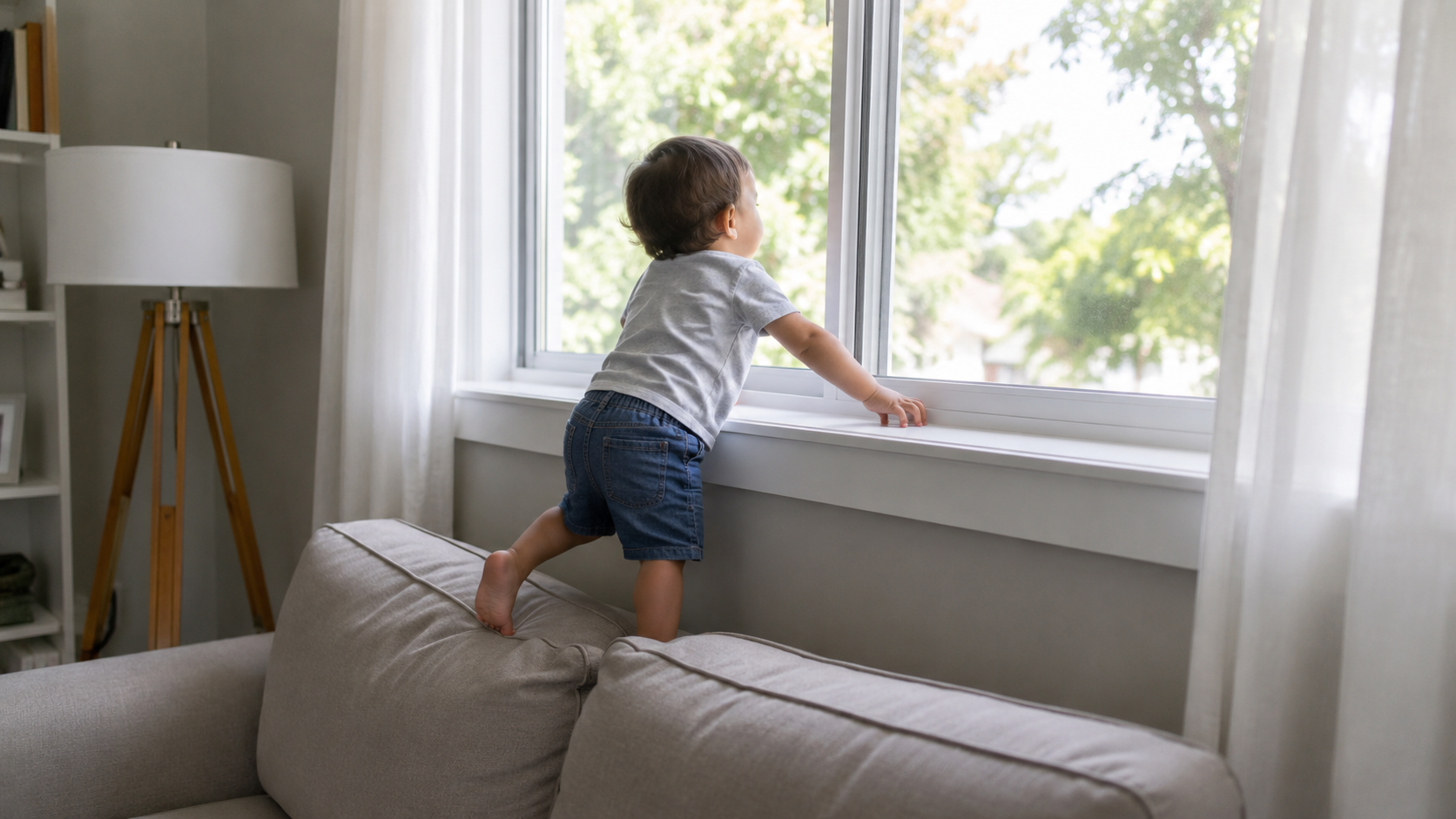
They can climb onto the bed, then kneel on the windowsill. They can step from a chair to a low table. They can pull themselves up on a dresser to see a bird outside, wave at a neighbor, look for a parent, or simply explore.
That is where the risk begins.
When children climb on furniture near windows, they can lose balance, lean too far, push against a screen, or fall from a height. Window screens may keep bugs out, but they are not designed to hold a child’s weight. A screen can pop out or tear, even when it looks secure.
This is not about blaming children for being curious. Curiosity is normal. Climbing is normal. Wanting to look outside is normal.
The safer approach is to arrange the room so a child’s normal curiosity does not turn into a dangerous moment.
Why Children Climb Near Windows
Children climb because they are learning about their bodies and their environment.
They want to see what is outside. They want to reach light, movement, sounds, pets, passing cars, trees, snow, birds, delivery trucks, or people walking by. A window is naturally interesting because it connects the inside of the home with the outside world.
For toddlers and preschoolers especially, the risk is not always obvious to them. They may not understand height, balance, or the difference between a solid wall and a screen. They may think the screen is a barrier because it looks like one.
Children also act quickly. A child who was playing quietly a minute ago can suddenly decide to climb. It may happen while an adult is cooking, folding laundry, taking a phone call, helping another child, or using the bathroom.
That is why prevention matters. Supervision is important, but home setup should not depend on an adult noticing every movement every second.
A child may climb onto a sofa, bed, chair, toy chest, dresser, or low shelf, then reach the window. If the window is open or partially open, the child may lean out to look down. If they press against the screen, it may give way.
Falls from windows can happen from homes, apartments, townhouses, and even first-floor windows. The higher the window, the greater the risk, but even a lower window can cause injury if a child lands badly.
The tricky part is that many window falls happen during ordinary routines. A parent may have opened the window for fresh air. A bed may have been placed under the window because the room is small. A child may have climbed onto a chair that was moved there temporarily.
Nothing has to look unusual for the risk to exist.
Window Screens Are Not Safety Barriers
This is one of the most important points for parents, grandparents, babysitters, and anyone caring for children.
A screen is not a safety guard.
Screens are usually made to keep insects out and allow airflow. They are not built to support body weight. A child leaning or pushing against a screen can cause it to pop out.
Because screens look like they “close” the window, they can create a false sense of security. Adults may see a screen and feel that the window is covered. A child may see the same thing and feel safe leaning on it.
The safer mindset is simple: if the window is open, assume the screen will not protect a child from falling.
Furniture Becomes a Climbing Ladder
Many window accidents begin with furniture that makes the window easy to reach.
Common climbing items include:
Beds
Cribs
Sofas
Chairs
Stools
Dressers
Toy chests
Bookshelves
Desks
Storage cubes
Window benches
Laundry baskets
Step stools
Play tables
Some of these items are not dangerous by themselves. The issue is placement.
A bed under a window may be convenient in a small bedroom, but it also gives a child direct access to the sill. A chair left near a window may become a step. A toy box placed under a window may invite climbing during play.
Children do not need a tall piece of furniture. Even a low stool or toy bin can give them enough height to reach the window.
Why This Happens So Fast
Adults often imagine accidents as something that happens after a long period of unsupervised play. In reality, climbing can happen in seconds.
A child may:
Notice something outside.
Push a chair closer.
Climb up.
Kneel on the sill.
Lean forward.
Press on the screen.
That whole sequence can happen while an adult is in the next room.
This is why “I only looked away for a moment” is such a common phrase after household accidents. Children move fast, and they do not always announce what they are about to do.
A safer room layout reduces the need for perfect timing.
Common Household Situations That Increase Risk
A Bed Under a Window
This is common in children’s rooms because beds often fit naturally along a wall with a window. But a bed gives a child a soft, inviting platform to climb, jump, and look outside.
If the window opens, the bed can put the child at sill height.
A Sofa Against a Window Wall
Living rooms often have sofas under windows. A toddler may climb onto the couch, stand on the cushions, and reach the window easily.
Sofa cushions can also be unstable. A child may lose balance while standing or jumping.
A Chair Left Near the Window
A dining chair, desk chair, rocking chair, or small play chair can become a climbing tool. Even if it was only placed there temporarily, a child may use it before anyone moves it back.
A Toy Chest or Storage Bin Below the Window
Storage furniture near windows can look harmless. But if it has a flat top, children may stand on it.
Toy storage under a window is especially tempting because children are already playing in that area.
A Window Open for Fresh Air
Fresh air is nice, especially in spring and fall. But an open window near climbable furniture creates risk quickly.
If children are in the room, open windows should be managed carefully.
Warning Signs in a Child’s Room or Play Area
Walk into the room and look at it from a child’s height.
Ask yourself:
Can my child climb onto anything near the window?
Is there a bed, chair, sofa, dresser, or toy box under the window?
Can the window open wide enough for a child to fit through?
Is the window screen the only thing between the child and outside?
Are there toys, books, or pets that attract the child to the window?
Does the child already like climbing?
Are there blind cords or curtain cords nearby?
Could a child move lightweight furniture toward the window?
Is the window lock easy for a child to reach?
Does the room get used while adults are distracted?
These questions are not meant to make you anxious. They are meant to help you spot simple changes before a problem happens.
Simple Ways to Reduce the Risk
Move Furniture Away From Windows
The most practical step is to move climbable furniture away from windows whenever possible.
Beds, cribs, chairs, dressers, toy chests, desks, and shelves should not create an easy path to an open window.
In small rooms, this can be tricky. But even moving furniture a few feet away or changing the room layout can reduce the temptation to climb.
Use Window Guards or Stops
Window guards and window stops can help limit how far a window opens. These are different from insect screens.
A window stop may prevent the window from opening more than a few inches. A window guard can provide a stronger barrier when properly installed. Make sure any product you use is designed for child safety and appropriate for the window type.
For bedrooms, be careful to choose options that still allow emergency escape as required in your area. Follow local rules and manufacturer instructions.
Keep Windows Locked When Not in Use
If you are not actively using a window for ventilation, keep it closed and locked.
Do not assume a child cannot open it. Some children figure out locks faster than expected, especially if they have watched adults use them.
Open Windows From the Top When Possible
If you have double-hung windows that can open from the top, this may be safer than opening from the bottom. Still, this is not a replacement for supervision or proper guards, but it can reduce easy access.
Make sure the window is secure and cannot slide unexpectedly.
Keep Climbable Items Out of Reach
Lightweight chairs, stools, storage bins, and small tables can be moved by children. Keep them away from windows, especially in bedrooms and playrooms.
If a child is determined to climb, they may drag furniture into position. That is why window locks, stops, and guards may still be needed.
Anchor Heavy Furniture
Furniture tipping is a separate but related risk. If a child climbs on a dresser, bookshelf, or cabinet near a window, the furniture itself may tip over.
Anchor dressers, bookshelves, and other tall furniture to the wall according to manufacturer instructions. This is especially important in children’s rooms.
Create a Safer Viewing Spot
Children often climb because they want to see outside. Instead of simply saying “don’t climb,” give them a safer option.
You might create a supervised window-viewing routine: “We look outside together from this chair when an adult is with you.” Or you might place a child-safe step stool in a different area away from open windows for supervised use only.
The goal is to satisfy curiosity without giving constant access to a risky spot.
Teaching Children Without Relying Only on Rules
It is helpful to teach children that windows are not for climbing or leaning. Use simple language:
“Windows are for looking, not leaning.”
“Screens are not strong.”
“We keep our feet on the floor near windows.”
“You need a grown-up to open the window.”
These rules matter, but young children cannot be expected to follow them perfectly. Their impulse control is still developing. A child may understand the rule in the morning and forget it in the afternoon when they see a squirrel outside.
So teach the rule, but also change the environment.
Safety works best when the room does not invite the behavior in the first place.
Grandparents’ and Visitors’ Homes Need Attention Too
A child may be safer at home because you have already childproofed the rooms. But what about a grandparent’s house, a vacation rental, a hotel, or a friend’s apartment?
When visiting, do a quick room check before settling in. Move chairs, close and lock windows, and watch how easily a child can access window areas.
This is especially important during holidays or family gatherings, when adults may assume someone else is watching.
Apartments and Upper Floors Need Extra Care
If you live in an apartment, townhouse, or multi-story home, window safety becomes even more important.
Children do not always understand height. A second-story or third-story window may not look dangerous to them from inside the room. If there is a screen, they may assume it is solid.
Upper-floor windows should have extra layers of protection: locked windows, stops, guards where appropriate, and furniture kept away.
Do not place beds, desks, or play furniture under upper-floor windows if you can avoid it.
Do Not Forget Balcony Doors and Patio Doors
While this article focuses on windows, similar risks can happen with balcony doors, sliding doors, and patio access.
A child may climb furniture near a balcony door, unlock a sliding door, or push against a screen door. Screen doors, like window screens, are not child safety barriers.
Use locks, child-resistant latches, and supervision around balcony and patio areas. Keep furniture away from balcony railings as well, since chairs and tables can become climbing platforms.
A Practical Window Safety Checklist
Use this checklist room by room:
Move beds, cribs, sofas, and chairs away from windows.
Keep toy boxes and storage bins away from window areas.
Make sure safety devices allow emergency escape when required.
Keep lightweight stools and chairs away from windows.
Anchor dressers and bookshelves.
Teach children not to lean on windows or screens.
Check window areas at grandparents’ homes and rentals.
Watch for blind cords or curtain cords near windows.
Recheck rooms after rearranging furniture.
Childproofing is not a one-time task. Rooms change. Children grow. Furniture moves. A window that was not reachable last month may become reachable after a growth spurt or a new climbing phase.
Common Mistakes Parents and Caregivers Make
Assuming the Screen Is Enough
This is the big one. A screen may look like a barrier, but it is not designed to stop a fall.
Thinking “My Child Does Not Climb”
Some children start climbing suddenly. Others climb only when motivated by something interesting outside.
Plan for what a child could do, not only what they usually do.
Opening a Window Just a Little
A small opening can still be risky if a child can push the window wider or lean against the screen. Use proper window stops if you want limited ventilation.
Forgetting About Temporary Furniture
A chair moved near a window during cleaning or a stool left after hanging curtains can create a temporary hazard.
Placing Cute Decor on the Windowsill
Toys, plants, nightlights, stuffed animals, or decorations on a windowsill may attract a child to climb.
Keep windowsills boring in children’s rooms.
Final Thoughts: Make the Window Area Boring and Hard to Climb
Children are curious, fast, and creative. A window with furniture nearby can look like an invitation: climb up, look out, lean forward, touch the screen.
That is why the safest setup is one that does not make climbing easy.
Move furniture away from windows. Keep windows locked when not in use. Use window stops or guards where appropriate. Remember that screens are not safety barriers. Anchor heavy furniture, and recheck rooms as your child grows.
You do not need to make your home feel tense or restrictive. The goal is simple: create a space where normal childhood curiosity has fewer chances to turn into a dangerous fall.
A safer window area usually starts with one small change: move the furniture first.
Hi, I’m the creator and editor behind ZestyHabit. I research everyday safety, first aid, and practical wellness topics using official guidance and reliable public sources, then turn that information into clear, realistic steps for daily life.
My goal is to help readers make safer, better-informed choices at home and beyond.