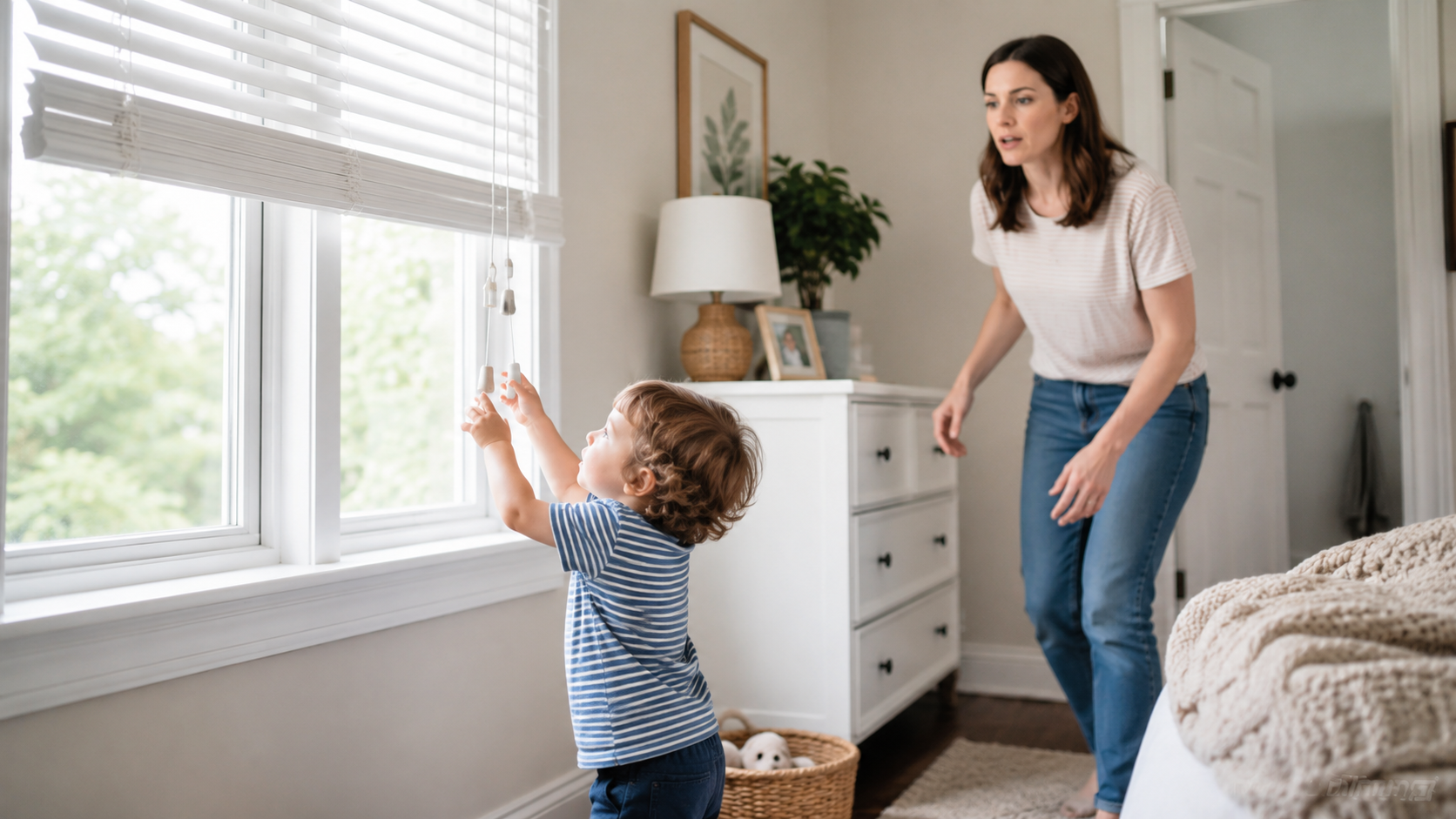
Blind cords can look harmless, but dangling or looped cords may create a strangulation and entanglement risk for young children. Learn why cordless window coverings are safer and how to reduce risks at home.
Window blinds are such a normal part of a home that most of us barely notice them.
You open them in the morning, close them at night, adjust the light, and move on. The pull cord, loop, chain, or inner cord becomes part of the background. It may hang beside a window, behind a couch, near a crib, beside a bed, or next to a play area.
To an adult, it is just a cord.
To a young child, it may look like something to pull, wrap, swing, tug, or play with.
That difference matters.
Corded window coverings can create a serious entanglement and strangulation hazard for infants and young children. The U.S. Consumer Product Safety Commission warns that children have died after becoming entangled in window covering cords, and it says the safest option when young children are present is to use cordless window coverings.
This is not about making parents afraid of every object in the house. It is about recognizing one hidden hazard that is easy to miss because it looks so ordinary.
A blind cord may seem harmless when it is hanging quietly. The concern is what can happen when a child can reach it.
Why Blind Cords Are So Risky for Young Children
Young children are curious, quick, and not always aware of danger. They explore with their hands. They pull things. They climb. They put objects around their bodies. They copy what adults do.
A dangling cord can invite all of that.
The hazard becomes especially serious when a cord forms a loop or can wrap around a child’s neck. This can happen with pull cords, continuous loop cords, chains, inner cords, or cords that become tangled. CPSC describes corded window coverings as one of the top hidden hazards in American homes, and the Window Covering Safety Council also emphasizes that infants and children can become accidentally entangled in blind cords.
The most difficult part is how quickly it can happen. A child may be playing quietly near a window, climbing onto a nearby bed or couch, or reaching for the cord while an adult is in another room for a short moment.
That is why cord safety depends on the room setup, not just reminders.
The Problem With “Out of Reach”
Many families try to make cords safer by tying them up high. That is better than leaving them dangling, but it is not always enough.
Children grow. They climb. They move furniture. They stand on toys, beds, chairs, and window ledges. A cord that was out of reach last month may become reachable today.
Loose cords can also slip down again. A cord wrapped casually around the top of the blinds may unwind. A knot may loosen. A loop can still form. A chain can hang behind a curtain where adults do not see it.
This is why safety organizations often point to cordless window coverings as the preferred option in homes with young children. CPSC’s guidance is direct: when young children are present, the safest option is to go cordless.
If replacing every window covering at once is not realistic, start with the rooms where children sleep, play, or spend the most time.
Furniture Near Windows Makes the Risk Higher
Blind cords become more dangerous when furniture gives children access to them.
A crib near a window is a concern. So is a bed, chair, sofa, toy box, dresser, bookshelf, or storage bench placed under or beside a window. A child may climb up to look outside, reach the cord, or lean against the window covering.
Even if the cord looks high, nearby furniture can change the situation.
Common risky setups include:
A crib next to corded blinds
A toddler bed under a window
A couch below a window with dangling cords
A toy chest directly under blinds
A chair near a window in a playroom
A dresser beside a window in a child’s bedroom
A window seat with corded shades above it
The child may not be trying to do anything dangerous. They may simply want to see a dog outside, watch a delivery truck, look at rain, or reach a toy on the sill.
A safe room setup should assume children will climb sometimes.
Why Window Screens and Blinds Can Give False Confidence
Window areas can create several hidden risks at once.
A screen may look like a barrier, but it is not designed to hold a child’s weight. Blinds may look like a solid covering, but cords can still be accessible behind or beside them. Curtains may hide cords, but hiding a cord from adult view does not mean it is out of a child’s reach.
This is why a quick window check matters.
Look at the whole area, not only the blinds. Ask yourself: Can a child climb here? Can they reach any cord? Could a loop form? Could the cord fall lower? Could furniture be pushed closer?
If the answer is yes, the setup needs improvement.
Older Blinds May Be More Concerning
Older window coverings are often more likely to have long, exposed, or looped cords. Some may lack modern safety features or warning labels. Others may have broken cord stops, missing tension devices, or tangled pull cords.
A blind that came with the apartment, was installed years ago, or was bought secondhand should be checked carefully.
Newer safety standards have pushed many products toward cordless designs or inaccessible cords. The Window Covering Safety Council reported that a revised safety standard effective June 1, 2024 means more window covering products sold in the United States will be cordless or have inaccessible or short helper cords.
That does not automatically make every window covering in every home safe. Plenty of older products are still in use. Rentals, grandparents’ homes, vacation homes, and secondhand furniture setups may still have corded blinds.
If a child spends time there, check the windows.
Common Types of Cord Hazards
Long Pull Cords
Traditional blinds often have pull cords that hang down the side. If the cord is long enough for a child to reach, it is a hazard.
Even when the cord is tied up, it can slip, unwind, or become accessible if furniture is nearby.
Continuous Loop Cords or Chains
Some shades use a continuous loop cord or bead chain. These should have a proper tension device installed to keep the loop taut and secured.
A loose loop is especially concerning because it can create an opening large enough for entanglement.
Inner Cords
Some window coverings have inner cords that run through the blinds or shades. If the covering is damaged, improperly adjusted, or manipulated, inner cords can become accessible.
This is one reason simply cutting or tying one visible cord may not solve every safety problem.
Knotted or Tangled Cords
Cords that are knotted together can form loops. Tangles may create unexpected openings. The Blindman’s child safety guidance warns not to tie cords together and to make sure cords do not twist and create a loop.
A tidy cord is not automatically a safe cord if it still creates a loop a child can reach.
Warning Signs to Look For in Your Home
Walk through your home and check every window covering. Pay extra attention to children’s bedrooms, nurseries, playrooms, living rooms, and any room where a child may nap.
Look for:
Dangling cords within a child’s reach
Looped cords or chains
Cords near cribs, beds, couches, or chairs
Furniture under windows
Broken or missing tension devices
Cords tied together
Cords hidden behind curtains but still reachable
Blinds that are old, damaged, or secondhand
Cord stops that are missing or not working
A child showing interest in pulling cords
Do not wait for a child to play with the cord before taking it seriously. If they can reach it, assume they may eventually touch it.
The Safest Option: Cordless Window Coverings
The simplest and safest long-term fix is to replace corded blinds and shades with cordless window coverings, especially in homes with young children.
Cordless options are widely available now. Many can be lifted by hand, adjusted with a wand, motorized, or designed so cords are inaccessible. CPSC encourages consumers to buy and install cordless window coverings and says to look for products described as cordless when shopping online.
Cordless does not have to mean expensive or complicated. Basic cordless blinds are available at many home improvement stores and online retailers.
Start with the highest-risk rooms:
Nursery
Child’s bedroom
Playroom
Living room
Grandparents’ guest room
Any room where children nap or play
If budget is a concern, replacing one room at a time is better than doing nothing.
What If You Cannot Replace the Blinds Right Away?
Replacing corded blinds is the best solution, but sometimes it takes time. Maybe you rent. Maybe you need landlord approval. Maybe you cannot replace every window covering at once.
In the meantime, reduce the risk as much as possible.
Move Furniture Away From Windows
Move cribs, beds, couches, chairs, toy boxes, dressers, and shelves away from corded windows. This limits a child’s ability to climb and reach cords.
Do not place a crib or bed near a window with cords.
Keep Cords Short and High
Use proper cord cleats or safety devices to wrap cords high and out of reach. Do not just toss cords over the top of the blinds or tie them loosely.
A cord cleat should be installed securely and used every time the blinds are raised or lowered.
Secure Continuous Loops
Continuous loop cords and chains should be secured with a tension device according to the manufacturer’s instructions. If the tension device is missing or broken, stop using that window covering until it is repaired or replaced.
Do Not Tie Cords Together
Tying cords together can create a dangerous loop. Keep cords separated and follow the product’s safety instructions.
Check Often
Temporary fixes need regular checking. Cords can slip down. Cleats can loosen. Children can grow taller. Furniture can move.
Make cord checks part of your regular childproofing routine.
Room-by-Room Blind Cord Safety Check
Nursery
The nursery should be the first place to check. Replace corded window coverings with cordless ones whenever possible.
Keep the crib, changing table, rocking chair, and storage furniture away from windows. Babies become mobile faster than it feels like they will.
Child’s Bedroom
A child’s bedroom may seem safe at bedtime, but children can wake up early, climb, or play quietly before adults enter.
Cordless coverings are strongly preferred. Keep beds and dressers away from windows.
Living Room
Living rooms often have sofas, chairs, and window coverings close together. Children may climb the couch to look outside and reach cords.
Move seating away from corded windows or replace the coverings.
Playroom
Playrooms invite movement. Children climb, build, jump, and explore. Any cord in a playroom should be treated as high risk.
Use cordless window coverings and keep furniture low and stable.
Grandparents’ Homes
Grandparents may have older blinds that were installed long before current safety standards. If children visit, inspect every window.
This is not about criticizing someone’s home. It is a practical safety update.
Rentals and Vacation Homes
When traveling, check windows as soon as you arrive. Move furniture away from windows if you can, tie up cords using proper methods if available, and keep children away from corded areas.
A vacation rental may look beautiful but still have older corded blinds.
Teaching Children About Blind Cords
Children should be taught not to play with blind cords, but this should never be the only safety measure.
Use simple language:
“Blind cords are not toys.”
“We do not put cords around our neck.”
“Ask an adult if you want the blinds opened.”
“We do not climb near windows.”
These rules help, especially as children get older. But toddlers and preschoolers are impulsive. They may forget, experiment, or play when adults are not looking.
That is why the physical setup matters more than verbal warnings alone.
Blind Cord Safety for Babies
Babies may not seem able to reach cords at first, but their abilities change quickly.
A baby who only rolls today may crawl soon. A baby who pulls up on furniture may soon stand in a crib. A crib placed near a window can become risky as soon as the child can reach through the slats or stand.
Do not wait until your baby is walking to address blind cords.
Set up the room safely before mobility begins.
Blind Cord Safety for Toddlers
Toddlers are curious and fast. They climb furniture, open drawers, pull cords, and explore cause and effect.
They may enjoy watching blinds move up and down. A cord can become a toy simply because it changes something in the room.
This age group benefits most from cordless window coverings and furniture kept away from windows.
Blind Cord Safety for Older Children
Older children may understand rules, but they may still play with cords absentmindedly. They may wrap cords around toys, use them in pretend play, or tug them too hard.
Continue to check corded window coverings even after the toddler years, especially in bedrooms and play areas.
The Federal Register notice for a CPSC safety standard describes accessible operating cords longer than 8 inches on custom window coverings as posing an unreasonable strangulation risk to children 8 years old and younger.
That age range is a useful reminder: this is not only an infant issue.
Common Mistakes Parents and Caregivers Make
Assuming “My Child Knows Better”
Even careful children make impulsive choices. A new sound outside, a toy stuck near the window, or a moment of boredom can change behavior.
Forgetting About Hidden Cords
Cords behind curtains, furniture, or blinds may still be reachable. Check from a child’s height.
Thinking a Cord Cleat Solves Everything
Cord cleats help only if installed correctly and used every time. They do not make corded blinds as safe as cordless ones.
Leaving Old Blinds in Guest Rooms
Guest rooms may become nap rooms when relatives visit. If children might sleep there, check the blinds.
Moving Furniture Back Near the Window
A room may be childproofed once, then rearranged later. Every furniture change should include a window cord check.
Ignoring Rentals
Renters sometimes assume they cannot change anything. But you can often request safer coverings, use approved temporary solutions, or rearrange furniture. Talk with your landlord if needed.
A Simple Blind Cord Safety Checklist
Use this checklist today:
Check every window covering in the home.
Replace corded blinds with cordless options where children sleep or play.
Move cribs, beds, couches, chairs, and toy boxes away from windows.
Keep all cords out of reach.
Secure looped cords with proper tension devices.
Install and use cord cleats if replacement is not immediate.
Do not tie cords together.
Check older blinds for exposed inner cords.
Inspect grandparents’ homes and rentals.
Keep cords away from children even during short visits.
Recheck after moving furniture.
Teach children that cords are not toys.
Start with one room if the whole home feels overwhelming. The nursery, child’s bedroom, or living room is usually the best place to begin.
Final Thoughts: The Safest Cord Is No Cord
Blind cords can be easy to overlook because they are part of everyday home life. But for young children, dangling or looped cords can create a serious hidden hazard.
The safest option is to use cordless window coverings in homes where children live, sleep, visit, or play. If replacement takes time, move furniture away from windows, keep cords high and secured with proper devices, and check every room regularly.
This is not about making the home feel scary. It is about removing a risk that children cannot fully understand and adults may stop noticing.
A window should bring in light, fresh air, and a view of the outside world. It should not have a cord hanging where a child can reach it.
Take a few minutes today to look at your windows from a child’s height. That small check can make your home meaningfully safer.
Hi, I’m the creator and editor behind ZestyHabit. I research everyday safety, first aid, and practical wellness topics using official guidance and reliable public sources, then turn that information into clear, realistic steps for daily life.
My goal is to help readers make safer, better-informed choices at home and beyond.