Kitchen Foods That Can Be Dangerous for Pets: What Every Home Should Keep Out of Reach
Minjin Park
·
Many everyday kitchen foods can be unsafe for dogs and cats. Learn which foods to keep away from pets, common feeding mistakes, warning signs to watch for, and simple prevention habits for a safer home.
Most pets are curious. Dogs sniff the floor after dinner. Cats jump onto counters when no one is watching. A dropped snack, an open trash can, or a plate left on the coffee table can become very interesting very quickly.
That is part of life with animals.
But some foods that are completely normal for people can be risky for pets. A small piece of chocolate, a raisin from a lunchbox, an onion-filled meatball, or a piece of sugar-free gum can turn into a serious problem depending on the pet, the amount, and the ingredient.
This does not mean you need to be afraid of every meal you cook. It simply means your kitchen needs a few pet-safe habits.
The goal is not panic. The goal is prevention.
When you know which foods should stay away from pets, it becomes much easier to protect them during busy breakfasts, family dinners, holiday cooking, and everyday snack time.
Pets Are Not Tiny Humans
One of the biggest mistakes pet owners make is assuming that if a food is safe for people, it must be safe for dogs or cats.
Pets process some ingredients very differently from humans. Their bodies are smaller, their digestive systems are different, and certain compounds that people tolerate can be harmful to them.
A few bites of a rich dessert may only give a person a stomachache. For a dog or cat, the same food could contain chocolate, caffeine, xylitol, raisins, or other ingredients that create a much bigger concern.
Even “healthy” human foods are not always pet-safe. Grapes, onions, garlic, and some nuts are ordinary kitchen ingredients, but they are not good choices for pets.
That is why it helps to think of human food as something pets should not automatically share.
Chocolate and Cocoa Products
Chocolate is one of the best-known foods to keep away from pets, especially dogs.
Chocolate contains compounds that pets do not handle well. Dark chocolate, baking chocolate, cocoa powder, and espresso-flavored chocolate desserts are usually more concerning than a small amount of milk chocolate, but all chocolate should be kept out of reach.
Everyday Ways Pets Find Chocolate
Pets often get into chocolate during holidays. Halloween candy bowls, Christmas stockings, Valentine’s Day boxes, Easter baskets, and birthday party leftovers are common trouble spots.
Chocolate is also hidden in foods people may not think about right away, such as brownies, chocolate chip cookies, protein bars, chocolate-covered espresso beans, cocoa-dusted desserts, and baking ingredients.
Simple Prevention Tip
Keep chocolate in closed cabinets, not on counters or coffee tables. During parties or holidays, remind guests not to leave candy bags or dessert plates where pets can reach them.
Xylitol and Sugar-Free Products
Xylitol is a sugar substitute found in some sugar-free and low-sugar products. It is especially dangerous for dogs.
The tricky part is that xylitol may show up in items that do not look like “food” at first glance. Sugar-free gum, mints, candies, some peanut butters, baked goods, drink mixes, and certain dental products may contain it.
Why This One Is Easy to Miss
Many people check chocolate labels but forget to check peanut butter, gum, or sugar-free snacks. A dog may grab gum from a purse, backpack, nightstand, or car cup holder.
That makes xylitol a household storage issue, not just a kitchen issue.
Simple Prevention Tip
Before giving peanut butter or any sweetened food to a dog, read the ingredient label. Keep gum, mints, and sugar-free candy inside zipped bags, closed drawers, or high cabinets.
Grapes and Raisins
Grapes and raisins may look harmless, but they can be dangerous for dogs. The same caution is often extended to cats, even though cats are less likely to eat them.
The difficult part is that grapes and raisins are common in healthy snacks. They show up in trail mix, oatmeal cookies, granola, cereal, fruit salad, lunchboxes, and baked goods.
Everyday Example
A child drops a few raisins from a snack box. A dog eats them before anyone notices. Or a bowl of grapes sits on the coffee table while the family watches TV.
These situations are ordinary, which is exactly why awareness matters.
Simple Prevention Tip
Treat grapes and raisins like chocolate when it comes to pets. Keep them off low tables, pick up dropped pieces right away, and check trail mix before leaving it out.
Onions, Garlic, Chives, and Leeks
Onions, garlic, chives, and leeks belong to the allium family. These ingredients are common in home cooking, but they can be harmful to dogs and cats.
They may be raw, cooked, powdered, dried, or mixed into other foods. That means the risk is not limited to a chunk of onion on the floor.
Hidden Sources in the Kitchen
Onion and garlic can be found in soups, stews, sauces, meatballs, casseroles, stuffing, gravies, marinades, rotisserie chicken seasoning, baby food, and many leftovers.
Garlic powder and onion powder are especially easy to overlook because they are mixed into seasoning blends.
Simple Prevention Tip
Do not give pets table scraps unless you know every ingredient. Plain cooked meat may seem safe, but if it was seasoned with garlic or onion powder, it is not a good pet treat.
Alcohol and Fermented Foods
Alcohol should never be given to pets. It can appear in obvious places like wine, beer, cocktails, and liquor, but it can also show up in desserts, sauces, and fermented foods.
Pets may be attracted to sweet drinks, creamy cocktails, or spilled beverages.
Common Situations
A dog licks a spilled cocktail during a party. A cat walks across a counter and tastes a glass of wine. A pet gets into rum cake, alcohol-soaked fruit, or a dessert with liqueur.
These are not everyday feeding choices, but they can happen when guests are over or food is left unattended.
Simple Prevention Tip
During gatherings, keep drinks on higher surfaces and clean spills right away. Empty glasses before going to bed, especially if pets roam the house at night.
Coffee, Tea, Energy Drinks, and Caffeine
Caffeine can be unsafe for pets. Coffee, tea, energy drinks, espresso beans, caffeine pills, and some flavored desserts all deserve caution.
Pets do not need much encouragement to investigate a coffee mug with cream, a sweet tea glass, or a dropped energy drink can.
Hidden Sources
Caffeine can appear in coffee grounds, cold brew, tea bags, chocolate-covered coffee beans, pre-workout powders, and certain snack products.
Used coffee grounds in the trash can also attract curious pets.
Simple Prevention Tip
Do not leave coffee cups on the floor, low tables, or bedside stands. Throw away used coffee grounds and tea bags in a trash can pets cannot open.
Macadamia Nuts and Nut Mixes
Macadamia nuts are unsafe for dogs. They are often found in cookies, trail mix, white chocolate desserts, and gift tins.
Even if a nut mix does not contain macadamias, many nut mixes are salty, fatty, or seasoned, which can still upset a pet’s stomach.
Why Nut Mixes Are Risky
A bowl of mixed nuts may include macadamias, raisins, chocolate pieces, garlic seasoning, or heavy salt. That is a lot of possible problems in one snack bowl.
Simple Prevention Tip
Keep nut bowls away from pets during parties. If guests are snacking, use tables pets cannot reach and clean up dropped pieces quickly.
Raw Yeast Dough
Raw yeast dough can be dangerous for pets. If a dog eats rising dough, the dough can expand in the stomach. Fermentation can also produce alcohol.
This is most likely to happen when homemade bread, pizza dough, rolls, or cinnamon rolls are left rising on a counter.
Everyday Example
You cover dough with a towel and leave it on the counter. A large dog pulls it down while you are in another room. Because dough smells interesting and is easy to swallow, the pet may eat more than expected.
Simple Prevention Tip
Let dough rise in a microwave that is turned off, a closed oven that is not warm, or another secure space pets cannot access.
Fatty, Fried, and Greasy Foods
Not every unsafe food is poisonous in the classic sense. Some foods are simply too rich, greasy, or salty for pets.
Bacon, sausage, fried chicken skin, buttery leftovers, gravy, cheese-heavy foods, and fatty meat scraps can cause digestive upset and other health concerns.
Common Mistake
A pet owner thinks, “It is just a little piece of bacon,” or “The dog deserves a holiday treat.” The problem is that rich foods often come with salt, seasoning, fat, garlic, onion, or cooked bones.
One small piece may not always cause a crisis, but making it a habit is not wise.
Simple Prevention Tip
If you want to give your pet a treat, use pet-safe treats or ask your veterinarian what human foods are appropriate for your specific animal.
Cooked Bones and Leftover Meat Scraps
Many people picture dogs chewing bones, but cooked bones can splinter and cause choking or internal injury.
Chicken bones, rib bones, pork chop bones, turkey bones, and fish bones should not be tossed to pets after dinner.
Why Leftovers Are Tricky
Leftover meat may also contain onion, garlic, salt, sauces, butter, or marinades. A plain-looking piece of meat may not be plain at all.
Simple Prevention Tip
Put bones and meat scraps directly into a secure trash can. Do not leave plates on low tables after meals, especially during barbecues, holidays, or game-day gatherings.
Avocado, Pits, and Guacamole
Avocado is more complicated than some other foods. It can be more dangerous for certain animals, and the pit can be a choking or blockage risk. Guacamole may also contain onion, garlic, lime, salt, or spicy ingredients.
For dogs and cats, it is best to avoid offering avocado as a casual treat, especially when it is mixed with other ingredients.
Simple Prevention Tip
Keep guacamole bowls, avocado pits, and avocado skins away from pets. Do not let dogs chew on avocado pits.
Dairy, Milk, and Creamy Foods
Milk and dairy are not usually listed in the same category as chocolate or xylitol, but they can still cause problems for many pets. Some dogs and cats do not digest lactose well.
Ice cream, whipped cream, creamy sauces, cheese dips, and milk-based desserts may also contain sugar, fat, chocolate, coffee, or artificial sweeteners.
Simple Prevention Tip
Do not assume a “small lick” is harmless for every pet. If your pet has a sensitive stomach, avoid sharing dairy-based foods.
Spoiled, Moldy, or Trash Food
Pets are often less picky than people. A dog may eat spoiled leftovers, moldy bread, old meat packaging, or food from the trash.
Spoiled food can make pets sick, and some moldy foods may contain toxins. Trash also contains wrappers, bones, string, foil, plastic, and other hazards.
Simple Prevention Tip
Use a trash can with a secure lid. Take out food trash after cooking meat, fish, or strong-smelling foods. Do not leave garbage bags sitting on the floor before taking them outside.
Warning Signs After a Pet Eats Something Questionable
Signs of a problem can vary depending on the food, the pet, and the amount eaten. Some signs may appear quickly, while others may take longer.
Watch for vomiting, diarrhea, drooling, unusual tiredness, weakness, stumbling, shaking, restlessness, loss of appetite, pale gums, unusual thirst, repeated urination, or behavior that seems very different from normal.
These signs do not always mean poisoning, but they are reasons to take the situation seriously.
If you think your pet ate something toxic, contact your veterinarian or an animal poison control service for guidance. Try to keep the package, ingredient label, or a photo of the food so you can describe exactly what was eaten.
Common Feeding Mistakes to Avoid
Many pet food accidents happen because people are trying to be kind.
A guest slips the dog a bite from the dinner table. A child shares raisins. Someone gives peanut butter without checking the label. A plate of leftovers is left on the couch. A cat licks sauce from a pan in the sink.
These are normal household moments, not signs of bad pet ownership. But they are preventable.
The easiest rule is this: do not feed pets from your plate unless you are completely sure the food is safe for that animal.
How to Make Your Kitchen Safer for Pets
Pet-proofing the kitchen does not need to be complicated.
Keep risky foods in cabinets or containers pets cannot open. Store chocolate, gum, candy, raisins, and snacks away from counter edges. Use a secure trash can. Teach children not to share food with pets without asking. Put pets in another room during heavy cooking if they tend to hover underfoot.
After meals, clear plates quickly. Do not leave bones, wrappers, or dessert plates on low tables. Wipe up spills right away. Check under the table after guests leave.
These small habits are especially helpful during holidays, parties, and family gatherings when food is everywhere and routines are different.
A Simple Pet-Safe Kitchen Routine
Before cooking, move risky snacks and ingredients away from counter edges.
While cooking, keep pets away from raw dough, meat scraps, hot pans, and dropped food.
Before serving, remind guests not to feed the pet from the table.
After eating, clear plates, secure bones and scraps, and take out trash if it contains tempting food.
Before bed, check coffee cups, dessert plates, snack bowls, and bags that pets could reach overnight.
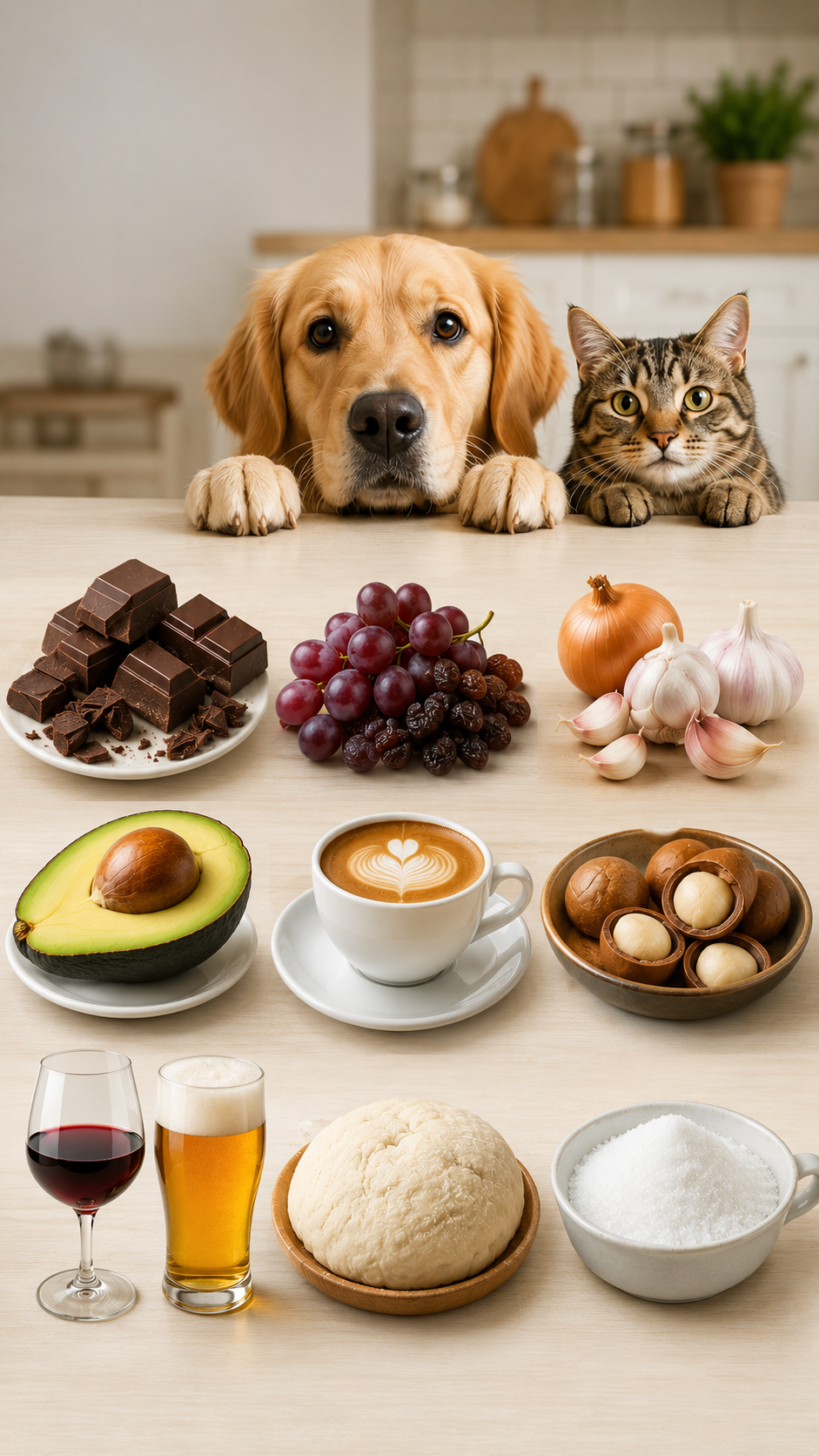
Many everyday kitchen foods are fine for people but risky for pets. Chocolate, xylitol, grapes, raisins, onions, garlic, alcohol, caffeine, macadamia nuts, raw yeast dough, cooked bones, and greasy leftovers are all worth keeping out of reach.
The goal is not to make your kitchen feel stressful. It is to build simple habits that make accidents less likely.
Store risky foods securely. Keep trash closed. Clean up dropped food. Avoid sharing seasoned leftovers. Teach kids and guests not to feed pets without checking first.
Pets do not understand ingredient labels, hidden seasonings, or why a raisin is different from a blueberry. That part is up to us.
With a little awareness and a few practical kitchen routines, you can keep your home welcoming, your meals relaxed, and your pets much safer around everyday food.
Hi, I’m the creator and editor behind ZestyHabit. I research everyday safety, first aid, and practical wellness topics using official guidance and reliable public sources, then turn that information into clear, realistic steps for daily life.
My goal is to help readers make safer, better-informed choices at home and beyond.