
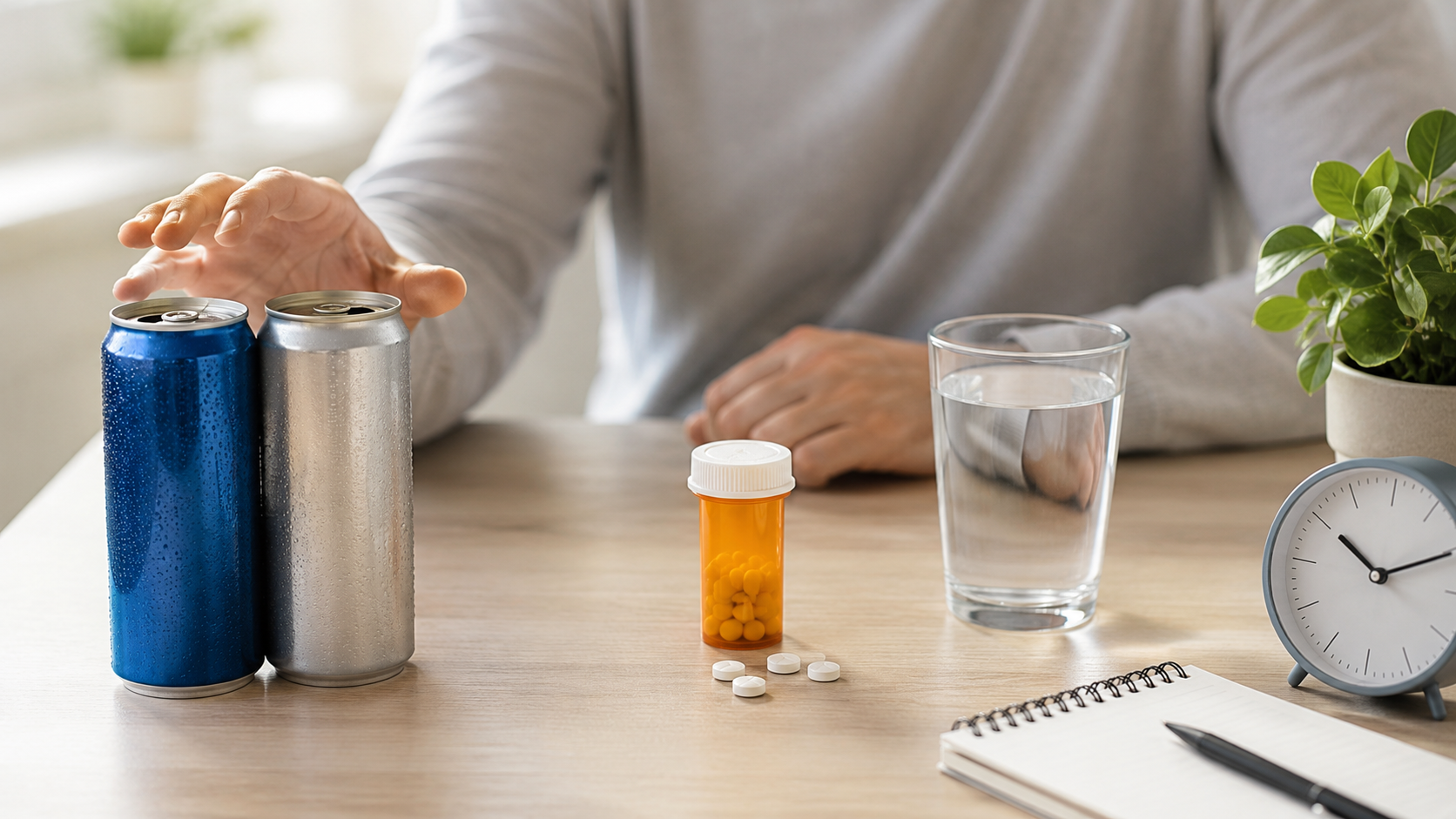

Energy drinks and ADHD medication can both affect alertness, sleep, heart rate, and anxiety. Here’s what to check before combining them, without making your day feel more complicated than it already is.
That “I Just Need More Focus” Moment
There is a very normal moment that happens on busy days.
You took your ADHD medication in the morning. It helped, mostly. But now it is 2:30 p.m., your inbox is multiplying, your brain feels like it is buffering, and there is an energy drink sitting in the fridge like it has answers.
It is easy to think, “It’s just caffeine. People drink coffee all day.”
And for some people, a small amount of caffeine may not feel like a big deal. But energy drinks are a little different from a casual cup of coffee. They can contain high caffeine levels, sugar or sugar substitutes, and other stimulant-like ingredients. ADHD medications, especially stimulant medications, can also affect alertness, heart rate, blood pressure, appetite, anxiety, and sleep.
So the question is not, “Is this always dangerous?”
A better question is, “What is this combination doing to my body today?”
That answer can depend on your medication, your dose, your caffeine sensitivity, your sleep, your heart health, your anxiety level, and even whether you remembered to eat lunch.

Why Energy Drinks Feel Different From Coffee
Energy drinks are marketed like they are just a sharper version of coffee, but they often hit differently.
Coffee usually has one main active ingredient people are thinking about: caffeine. Energy drinks can also contain caffeine, but sometimes they include ingredients like guarana, taurine, ginseng, B vitamins, or other “energy blend” components. Guarana itself can add more caffeine, which makes the label a little less obvious if you are not used to reading it closely.
Large amounts of caffeine can raise heart rate and blood pressure and may be linked with anxiety, sleep problems, digestive discomfort, and dehydration, according to the National Center for Complementary and Integrative Health.
That does not mean one energy drink automatically causes a crisis. Plenty of adults drink them and feel fine. But when you add ADHD medication to the picture, especially stimulant medication, it is worth paying closer attention.
Your body may not care whether stimulation came from a prescription bottle, a can, or both. It just feels the total load.
ADHD Medication Is Already Doing a Job
Many ADHD medications are designed to improve attention, reduce impulsivity, and help with daily functioning. For many people, they are life-changing in a very practical way: fewer lost keys, less mental fog, more ability to start and finish tasks.
But stimulant ADHD medications can also increase heart rate and blood pressure in some people. That is one reason healthcare providers may ask about heart history, blood pressure, sleep, appetite, and anxiety symptoms.
When an energy drink enters the same day, you may be stacking stimulation on top of stimulation.
This does not mean you should stop your prescribed medication or panic about caffeine. Please do not make medication changes on your own. It simply means the combination deserves more thought than “I’m tired, so I’ll drink this.”
Especially if “this” is a large can with 200 to 300 milligrams of caffeine.
Check the Caffeine Amount First
The first thing to check is boring but useful: the caffeine content.
Energy drinks vary wildly. Some have about the same caffeine as a cup of coffee. Others have much more. Some cans look like one serving but are actually two servings. Some “energy shots” are tiny but strong. Some drinks also contain guarana, which can add to the total stimulant effect.
The U.S. Food and Drug Administration has stated that, for most adults, up to 400 milligrams of caffeine per day is not generally associated with dangerous negative effects, though people vary in sensitivity.
That number is not a personal target. It is not a challenge. And it may not apply well if you are sensitive to caffeine, pregnant, have heart issues, have anxiety or panic symptoms, take certain medications, or are a teenager.
It also includes all caffeine sources.
Coffee counts.
Tea counts.
Soda counts.
Pre-workout counts.
Chocolate counts a little.
Some headache medicines count.
That “just one energy drink” may not be just one source of caffeine in your day.
A practical habit: before drinking it, look at the label and ask, “How much caffeine have I already had today?”
Not in a perfect spreadsheet way. Just honestly.
Watch Your Heart Rate and Blood Pressure Clues
Some people can feel when caffeine is too much.
Their heart beats faster. Their hands feel shaky. Their chest feels fluttery. They get sweaty, tense, or oddly restless. They may feel wired but not focused, which is a deeply annoying combination.
Energy drinks can increase blood pressure, heart rate, and breathing, and the CDC notes that they can also cause nervousness, jitteriness, and insomnia.
When ADHD medication is already active, those effects may feel stronger for some people.
Pay attention to signs like:
A racing or pounding heartbeat
Feeling shaky or jittery
Chest discomfort
Shortness of breath
Dizziness
A sudden anxious feeling
Feeling overstimulated but unable to settle
Headache that shows up after caffeine
Trouble sleeping later that night
If symptoms feel intense, unusual, or scary, it is worth getting medical advice promptly. Chest pain, fainting, severe shortness of breath, or a very irregular heartbeat should not be brushed off as “just caffeine.”
For everyday use, it may help to notice patterns. If every time you combine your medication with an energy drink you feel wired, irritable, or physically tense, that is useful information. Your body is giving feedback, even if the can looked harmless.
Anxiety Can Get Louder
Caffeine can be tricky for people with anxiety.
It can mimic anxiety symptoms: faster heartbeat, restlessness, tightness, sweating, stomach discomfort, shaky hands. If you already deal with anxiety, those body sensations can make your brain start checking for danger.
ADHD medication can also feel activating, especially when the dose is new, too strong, taken without food, or paired with poor sleep.
Add an energy drink, and suddenly you may not feel focused. You may feel like you need to reorganize your entire life immediately, answer twelve emails at once, and possibly clean the fridge.
That is not the kind of productivity anyone needs.
A helpful question is: “Does this make me calmly alert, or does it make me tense?”
Those are not the same.
Calm alertness helps you work. Tension makes you rush, overthink, interrupt yourself, and burn out faster.
If energy drinks make you anxious while taking ADHD medication, that does not mean you are weak or dramatic. It may simply mean your nervous system does not enjoy that mix.
Sleep Is Part of the Medication Conversation
Sleep and ADHD already have a complicated relationship.
Poor sleep can make attention worse. Worse attention can make the day more chaotic. A chaotic day can push tasks later. Late tasks can push bedtime later. Then the next morning, caffeine starts looking less like a choice and more like survival equipment.
Energy drinks can keep that loop going.
Caffeine can interfere with sleep, especially when consumed later in the day. Even if you technically fall asleep, the quality of sleep may not be great. Then the next day you feel foggier and reach for more caffeine.
This is where people often blame the wrong thing.
They think, “My medication is not working well enough.”
Sometimes the medication really does need adjustment, and that conversation belongs with a prescriber. But sometimes the medication is trying to work in a body that slept five hours, skipped breakfast, and got hit with a 3 p.m. energy drink.
That is not a fair test.
A simple experiment can be useful: avoid energy drinks after late morning or early afternoon and see whether sleep improves. Some people need an even earlier cutoff. Caffeine sensitivity is annoyingly personal.
Do Not Use Energy Drinks to Cover a Bad Medication Fit
This is a big one.
If your ADHD medication wears off too early, feels too weak, causes a crash, or leaves you exhausted every afternoon, it may be tempting to patch the problem with caffeine.
Once in a while, people do what they have to do. Life is life.
But if energy drinks become the daily bridge between “my medication stopped helping” and “I still have four hours of work,” that is worth discussing with your prescriber.
There may be options: adjusting timing, changing formulation, reviewing dose, adding behavioral strategies, improving sleep, checking meals, or looking at whether another health issue is contributing to fatigue.
Energy drinks are not a treatment plan. They are a stimulant drink.
That sounds obvious, but it is easy to forget when you are tired and trying to function.
Food Matters More Than People Expect
ADHD medication can reduce appetite for some people. Energy drinks can also blunt hunger for a while, especially if they are caffeinated and sweet.
That can lead to a very common pattern:
Medication in the morning.
Coffee or energy drink.
No real breakfast.
Barely any lunch.
Sudden irritability.
Headache.
Evening hunger that arrives like a legal notice.
When your body is underfed, caffeine can feel harsher. You may get shakier, more anxious, more headachy, or more likely to crash later.
You do not need a perfect meal. But something steady can help.
Toast with eggs.
Greek yogurt and fruit.
A turkey sandwich.
Rice and chicken.
Peanut butter on toast.
A smoothie with protein.
Leftovers that require no personality to prepare.
If appetite is low, smaller meals or snacks may work better than forcing a big lunch. The point is not to eat beautifully. It is to avoid running your brain on medication, caffeine, and vibes.
Teens and Young Adults Need Extra Caution
Energy drinks are especially popular with students, gamers, night-shift workers, and people trying to survive exam weeks. They are also heavily marketed in ways that make them feel casual.
But younger people may be more vulnerable to overdoing it, especially if they are also taking ADHD medication.
The CDC notes that energy drinks can have harmful effects on the nervous system in children, adolescents, and young adults, including anxiety and insomnia.
For teens taking ADHD medication, this is a conversation that should involve a parent or guardian and the prescribing clinician. Not as a lecture. More like basic safety planning.
How much caffeine is in the drink?
How often is it being used?
Is sleep getting worse?
Are there heart symptoms?
Is anxiety increasing?
Is the drink being used to compensate for skipped meals or late-night studying?
Those questions matter more than whether the can looks trendy.
Be Careful With “Pre-Workout” Too
Energy drinks are not the only issue.
Pre-workout powders can contain high caffeine levels and other stimulating ingredients. Some people take ADHD medication, have coffee, then use pre-workout before the gym. That can add up quickly.
Exercise already raises heart rate. Stimulant medication and caffeine can raise it too. For some people, the combination may feel unpleasant or risky, especially during intense workouts.
A lighter approach may be better: water, food, a lower-caffeine option, or simply working out without trying to electrify your nervous system first.
If you notice palpitations, dizziness, chest tightness, or unusual shortness of breath during exercise, do not just push through because “pre-workout does that.” Talk to a healthcare professional.
Read the Label Like a Real Person, Not a Chemist
You do not need to understand every ingredient in an energy drink. But a few label checks are worth making.
Look for:
Caffeine per can, not just per serving
Serving size
Guarana or yerba mate, which may add caffeine
High sugar content, if blood sugar crashes affect you
Other stimulants or “energy blend” ingredients
Warnings for children, pregnancy, heart conditions, or caffeine sensitivity
The serving size part is sneaky. A can may look like one drink because, emotionally, it is one drink. But the label may list caffeine per serving, and the can may contain more than one serving.
Rude, but legal.
Also, avoid mixing energy drinks with alcohol. That combination can make people feel less impaired than they are and may encourage risky drinking. It is a separate topic, but worth saying plainly.
What to Ask Your Prescriber or Pharmacist
You do not need to confess your entire beverage history with shame. Just ask directly.
“Is caffeine okay with my ADHD medication?”
“How much is too much for me?”
“Should I avoid energy drinks completely?”
“Does my medication affect blood pressure or heart rate?”
“What should I do if I feel jittery or anxious?”
“Could my afternoon crash mean my medication timing needs adjusting?”
These are normal questions.
It is especially important to ask if you have high blood pressure, heart rhythm problems, chest pain history, panic attacks, significant anxiety, sleep problems, or if you take other medications that can affect stimulation, blood pressure, or mood.
Your medication plan should fit your real life, including the fact that you may be tired at 3 p.m. and tempted by a cold can of something neon.
A Practical Middle Ground
For many adults, the safest everyday approach is not dramatic.
Do not stack large amounts of caffeine on top of stimulant medication without thinking. Start smaller if you use caffeine at all. Avoid energy drinks late in the day. Eat real food. Notice your heart rate, anxiety, and sleep. Keep your prescriber in the loop if you are relying on caffeine to get through the day.
And maybe separate “I need energy” from “I need stimulation.”
Sometimes you need sleep.
Sometimes you need lunch.
Sometimes you need water.
Sometimes you need a walk outside.
Sometimes you need a medication adjustment.
Sometimes you are simply bored, overwhelmed, or under-rested.
An energy drink may make you feel more awake, but it does not always solve the thing that made you tired.
That is the part worth checking.
A Calm Way to Decide
Before you drink an energy drink on ADHD medication, pause for ten seconds.
Ask yourself:
How much caffeine is in this?
Have I already had coffee or tea today?
Have I eaten?
Is it too late in the day for my sleep?
Am I already anxious, shaky, or tense?
Am I using this because my medication is not lasting well?
Those questions are not meant to make caffeine scary. They are meant to keep it from becoming automatic.
Energy drinks and ADHD medication are not a combination to treat casually, but they are also not a reason to panic over every sip. The useful place is somewhere in the middle: informed, observant, and honest about how your body responds.
Some days, the better choice may be water and food.
Some days, it may be a smaller caffeine amount earlier in the day.
And some days, it may be time to ask your clinician why you feel like you need an energy drink just to make it to dinner.

Hi, I’m the creator and editor behind ZestyHabit. I research everyday safety, first aid, and practical wellness topics using official guidance and reliable public sources, then turn that information into clear, realistic steps for daily life.
My goal is to help readers make safer, better-informed choices at home and beyond.


