Why You Should Never Ignore Wildlife Warning Signs
Minjin Park
·
Wildlife warning signs are easy to overlook, but they exist for a reason. Learn why they matter, what mistakes travelers make, and how to stay safer around wild animals.
A wildlife warning sign might seem like a small detail on the side of the road, at a campground entrance, or along a hiking trail. Maybe it shows a deer crossing. Maybe it warns about bears, alligators, snakes, mountain lions, or nesting birds. At first glance, it can feel like background information — something you notice for a second and then forget.
But these signs are not decorative.
Wildlife warning signs are usually placed in areas where animal activity is common, seasonal, or potentially dangerous. They may be based on repeated sightings, past incidents, migration routes, feeding areas, breeding grounds, or road crossing patterns. In other words, someone put that sign there because people have a real chance of encountering wildlife in that location.
Ignoring the sign does not mean the risk disappears. It simply means you are less prepared for it.
For everyday travelers, hikers, campers, drivers, parents, and pet owners, paying attention to these signs is one of the simplest safety habits you can build. It does not require special gear or expert knowledge. It starts with slowing down, looking around, and respecting that wild animals behave differently from pets or zoo animals.
Why Wildlife Encounters Matter in Everyday Life
Many people think wildlife safety only matters in remote national parks or deep wilderness areas. But animal encounters can happen much closer to normal life than expected.
Deer can cross suburban roads at dusk. Raccoons may get into trash near vacation rentals. Bears can wander through campgrounds looking for food. Alligators may rest near ponds in warm states. Snakes can hide near trails, wood piles, or tall grass. Elk, moose, and bison can appear calm but still injure people who get too close.
The issue is not that animals are “bad” or always aggressive. Most wild animals would rather avoid people. Problems usually happen when humans get too close, surprise an animal, leave food unsecured, drive too fast, or assume an animal is harmless because it looks calm.
Wildlife warning signs are meant to interrupt those assumptions.
They remind us that we are entering an animal’s habitat, crossing through its movement area, or sharing a space where normal human habits may need to change.
Common Types of Wildlife Warning Signs
Animal Crossing Signs
These signs are often seen on roads where deer, elk, moose, bears, or other animals frequently cross. They are especially important around dawn, dusk, wooded areas, wetlands, and rural highways.
A deer crossing sign does not mean a deer will cross exactly at that signpost. It means the surrounding stretch of road has a higher chance of animal movement. Drivers should reduce speed, scan both sides of the road, and avoid assuming the road is clear just because traffic is light.
Bear, Cougar, or Large Predator Warnings
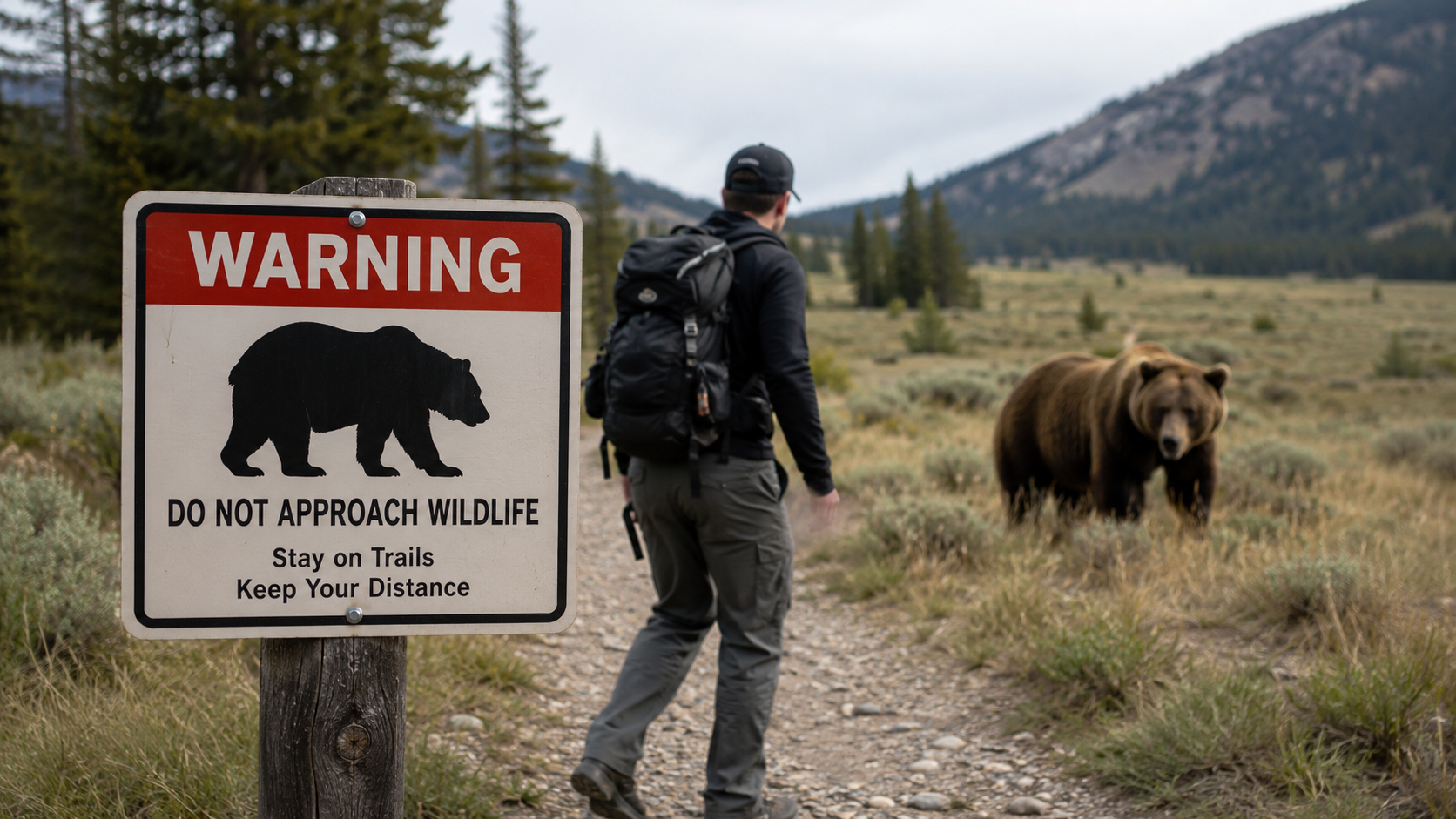
In parks and forested areas, signs may warn about bears, mountain lions, coyotes, or wolves. These signs often appear near trailheads, campgrounds, picnic areas, or places where recent sightings have occurred.
The main point is not to panic. It is to behave differently. That may mean making noise on the trail, keeping children close, storing food properly, and avoiding solo wandering in low-visibility areas.
Alligator or Crocodile Warning Signs
In parts of the southern United States, especially Florida and nearby states, signs may warn visitors not to swim, wade, or let pets near the water. These signs matter because alligators can be difficult to see when they are floating low in ponds, lakes, marshes, or canals.
A calm-looking body of water is not always safe for people or pets.
Snake Warning Signs
Snake signs may appear in deserts, wetlands, rocky trails, or warm grassy areas. Most snakes avoid people, but bites can happen when someone steps too close, reaches into hidden spaces, or tries to move or kill the snake.
The safest response is simple: watch where you step, stay on marked paths, avoid tall grass when possible, and never put your hands where you cannot see.
Nesting or Breeding Area Signs
Some signs warn about nesting birds, sea turtles, seals, or other protected wildlife. These warnings are often about giving animals enough space during sensitive seasons.
Even if an animal looks still or harmless, getting too close can cause stress, disrupt nesting, or create unsafe situations for both people and wildlife.
Why People Ignore Wildlife Signs
“I Don’t See Any Animals Right Now”
This is one of the most common mistakes. People assume that if they cannot see wildlife, there is no risk.
But wild animals often blend into their surroundings. Deer can stand silently near trees. Snakes can be hidden in leaves or rocks. Alligators can look like floating logs. Bears may be nearby but out of sight behind brush.
A sign is not warning you about what is visible at that exact second. It is warning you about what is likely in that area.
“I’m Only Stopping for a Quick Photo”
A quick photo can still put someone too close to a wild animal. This is especially true with large animals that seem calm, such as bison, elk, moose, or deer.
Wild animals do not follow human social rules. They may tolerate distance for a while and then suddenly charge, kick, bite, or run. The problem often starts when people move closer for a better picture or turn their back for a selfie.
A good rule is simple: if your presence changes the animal’s behavior, you are too close.
“It Looks Friendly”
Wild animals can look cute, relaxed, sleepy, or even curious. That does not make them safe to approach.
A raccoon may look playful but can bite. A young deer may seem helpless, but its mother may be nearby. A seal resting on a beach may look peaceful, but it still needs space. A squirrel or chipmunk may approach people because it has learned to expect food, not because it is tame.
Friendly-looking wildlife is still wildlife.
“Other People Are Doing It”
Crowds can create a false sense of safety. If several people are taking photos close to an animal, it may seem acceptable. But one person’s risky behavior does not make the situation safe.
In fact, crowds can make wildlife encounters more unpredictable. Animals may feel surrounded, blocked from escape, or stressed by noise and movement.
You do not have to copy what other visitors are doing. The safer choice is often to step back.
Practical Examples of Wildlife Signs People Often Underestimate
Deer Crossing on a Quiet Road
A driver sees a deer crossing sign but keeps going at normal speed because the road looks empty. A few minutes later, one deer runs across. The driver brakes hard, but a second deer follows behind.
This is common because deer often travel in groups. If you see one, expect more.
Bear Warning at a Campground
A family sees a bear warning sign but leaves snacks in a cooler outside the tent because they plan to eat them later. During the night, an animal smells the food and approaches the campsite.
Even if the animal is not seen, the habit creates risk. Food, trash, scented products, and pet food can attract wildlife.
Alligator Warning Near a Pond
Someone lets a dog walk close to the edge of a pond because the water looks calm. The sign is ignored because there are no visible animals.
In alligator areas, pets should be kept away from the water’s edge. Small animals can attract attention, and alligators are often hard to spot.
Trail Sign Warning About Moose
A hiker sees a moose from a distance and walks closer for a photo. The moose is standing still, so it seems safe. But moose can move fast and may become defensive, especially during certain seasons or when calves are nearby.
Stillness is not the same as safety.
Warning Signs That an Animal Needs More Space
Even without a posted sign, animal behavior can tell you when you are too close.
Watch for signs such as:
The animal stops eating or moving and stares at you
It changes direction because of your presence
It raises its head, ears, tail, or body posture
It huffs, snorts, growls, stomps, or makes repeated sounds
It moves toward you instead of away
It appears to be guarding young, food, or territory
Birds dive, call loudly, or circle overhead
These behaviors do not always mean an attack is about to happen. But they are clear signals to back away calmly and give the animal more room.
Simple Ways to Respond When You See a Wildlife Warning Sign
Slow Down and Pay Attention
On roads, reducing speed gives you more time to react. Scan the shoulders, tree lines, ditches, and reflective eye shine at night. Be extra careful at dawn and dusk, when many animals are more active.
In parks or trails, slow down mentally too. Put the phone away for a moment, look around, and notice your surroundings.
Keep a Safe Distance
Distance is one of the best safety tools. Use binoculars, a zoom lens, or your phone’s zoom instead of walking closer.
A photo is not worth getting too near an animal. The best wildlife photos are often taken from a respectful distance, where the animal continues its normal behavior.
Secure Food and Trash
In wildlife areas, food smells can create problems quickly. Store food, trash, coolers, toiletries, and pet food according to local rules. At campgrounds, use bear-resistant lockers or vehicle storage when appropriate.
Never feed wild animals. Feeding teaches animals to approach people, which can lead to future conflicts.
Keep Children Close
Children may not understand how quickly an animal can move or why a cute animal should not be touched. When signs warn about wildlife, keep children near you and explain the situation in simple terms.
For example: “This is the animal’s home, so we are going to give it space.”
Keep Pets Leashed and Away from Wildlife
Pets can trigger wildlife reactions, and wildlife can injure pets. Dogs may bark, chase, or approach animals without understanding the risk.
A leash helps you stay in control, especially near water, trails, campgrounds, and picnic areas.
Stay on Marked Paths
Marked trails are usually designed to reduce risk and protect both visitors and wildlife. Leaving the path may bring you closer to hidden animals, nesting areas, unstable ground, or thick vegetation.
A shortcut is rarely worth the risk.
What Not to Do Around Wildlife
Do Not Feed Animals
Feeding wildlife may feel harmless, but it can cause long-term problems. Animals that associate people with food may become bold, aggressive, or dependent. They may also gather near roads, campsites, and parking lots.
Even small snacks can create big issues.
Do Not Try to Touch or Move an Animal
This includes injured, young, or slow-moving animals. A baby animal alone is not always abandoned. A resting animal may simply be resting. Touching wildlife can stress the animal and put you at risk.
If an animal appears injured or in danger, contact local park staff, animal control, or wildlife authorities when appropriate. Do not handle it yourself.
Do Not Surround the Animal
When several people gather around wildlife, the animal may feel trapped. Always leave an escape route. If you are in a group, spread out less and move back rather than crowding closer.
Do Not Assume a Car Makes You Fully Safe
A vehicle offers some protection, but risky driving or stopping suddenly can create new hazards. Do not block traffic, stop in blind curves, or step into the road for photos.
If you pull over to view wildlife, choose a safe, legal place to stop.
Wildlife Signs and Road Safety
Animal-related crashes are a practical reason to take wildlife signs seriously. Deer, elk, moose, and other large animals can cause serious vehicle damage and injuries. Even smaller animals can cause drivers to swerve, brake suddenly, or lose control.
The safest approach is usually to slow down and stay alert rather than making a sudden, extreme maneuver. Give yourself enough following distance so you are not forced into a sharp reaction.
At night, use headlights properly, watch for eye reflection, and remember that animals can freeze in the road instead of running away.
Seasonal Times When Wildlife Signs Matter Even More
Wildlife movement changes throughout the year. Some signs are especially important during certain seasons.
In spring, animals may be raising young and can become protective. In fall, deer and elk may be more active during mating season. In hot weather, snakes and reptiles may be more visible near trails, rocks, and warm surfaces. In tourist seasons, animals near parks and campgrounds may become more exposed to human food and crowds.
Even if you have visited the same place before, conditions can change from month to month.
Teaching Kids to Respect Wildlife Signs
Wildlife signs can be a great teaching moment for families. Instead of making children afraid, teach them to be observant and respectful.
You can say things like:
“Animals need space just like people do.”
“We can watch from here, but we do not walk closer.”
“That sign tells us how to be good visitors.”
This helps children understand that safety and kindness go together. Respecting wildlife is not just about avoiding danger. It is also about protecting animals from stress, harm, and unhealthy contact with people.
A Simple Wildlife Safety Habit Checklist
Before you drive, hike, camp, or visit a park, keep these habits in mind:
Notice wildlife signs instead of treating them as background scenery
Slow down in animal crossing areas
Watch carefully at dawn, dusk, and night
Keep food, trash, and scented items secured
Keep children close and pets leashed
Use zoom instead of approaching animals
Stay on marked trails and obey closure signs
Give animals a clear path to move away
Leave young, injured, or resting animals alone
Report unusual or unsafe wildlife situations to local staff when available
These steps are simple, but they can make a real difference.
Final Thoughts
Wildlife warning signs are easy to pass by without much thought, especially when you are busy driving, excited to start a hike, or focused on enjoying a trip. But those signs are there to help you notice risks before they become problems.
You do not need to be afraid of wildlife to respect it. Most animals are simply trying to eat, rest, travel, protect their young, or avoid people. The safest thing we can do is give them space, avoid attracting them with food, and stay alert in areas where encounters are more likely.
The next time you see a wildlife warning sign, treat it as useful information. Slow down. Look around. Keep your distance. Make the calm, practical choice.
A little attention can protect you, your family, your pets, other visitors, and the animals that call that place home.
Hi, I’m the creator and editor behind ZestyHabit. I research everyday safety, first aid, and practical wellness topics using official guidance and reliable public sources, then turn that information into clear, realistic steps for daily life.
My goal is to help readers make safer, better-informed choices at home and beyond.
[…] cans receive the most attention, but they are not the only warning sign. Glass jars, plastic pouches, cartons, vacuum-sealed packages, and bottled foods can also show […]
Loading...
Discover more from
Subscribe now to keep reading and get access to the full archive.



[…] cans receive the most attention, but they are not the only warning sign. Glass jars, plastic pouches, cartons, vacuum-sealed packages, and bottled foods can also show […]