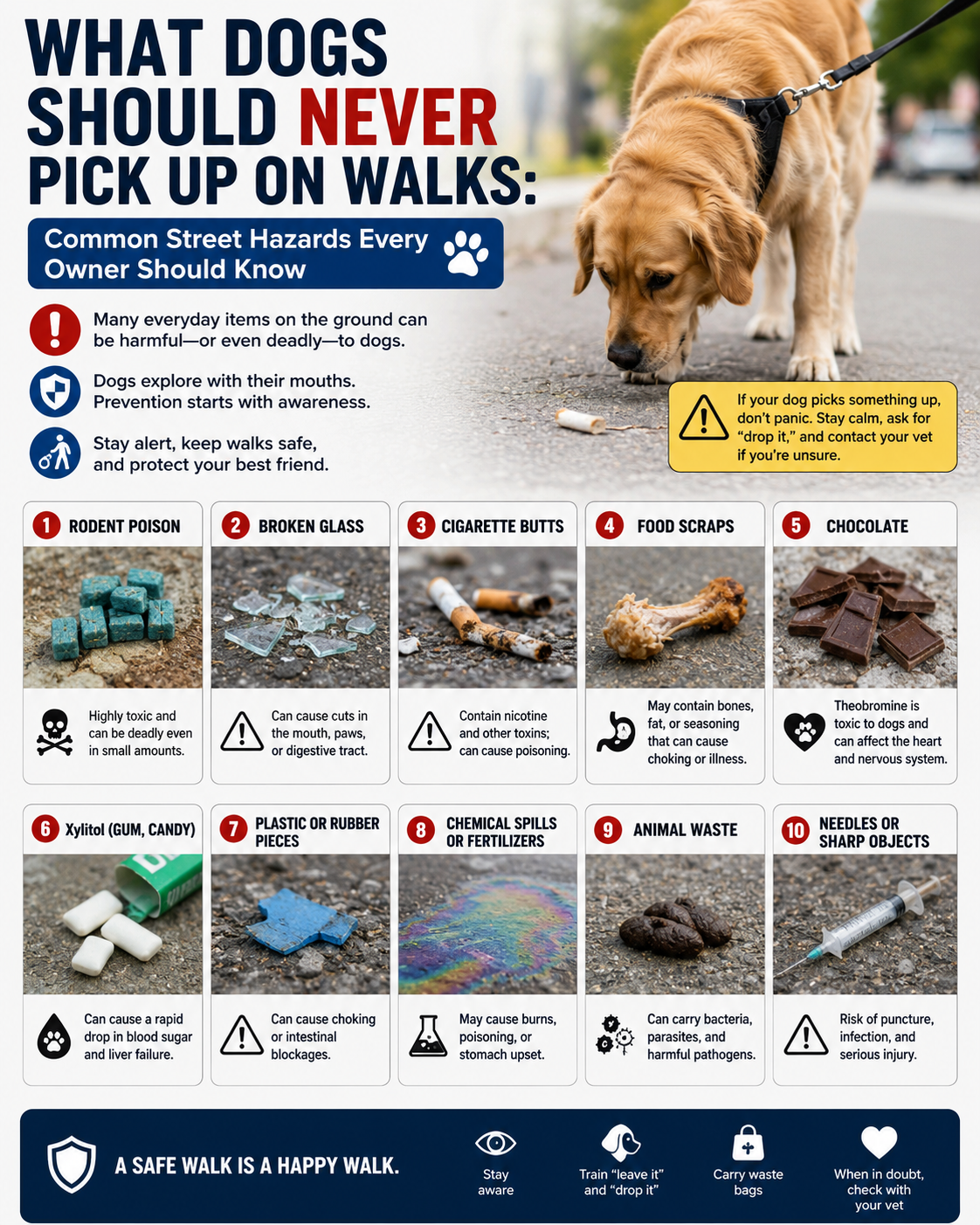
What Dogs Should Never Pick Up on Walks: Common Street Hazards Every Owner Should Know
Minjin Park
·
Learn which foods, trash, plants, chemicals, and other street hazards can be dangerous when dogs pick them up during walks—and how to prevent it.
A walk is one of the best parts of a dog’s day. There are trees to sniff, neighbors to greet, and hundreds of interesting smells along the sidewalk.
Unfortunately, there may also be half-eaten food, discarded gum, cigarette butts, bones, mushrooms, medication, and other objects hiding in the grass.
Dogs experience much of the world through their noses and mouths. By the time you notice that your dog has found something, it may already be between their teeth—or swallowed.
Not every mystery item will cause a serious problem. Still, some everyday objects can be toxic, sharp, spoiled, or large enough to become lodged in the digestive tract. Knowing what to watch for can help you react calmly and prevent many avoidable incidents.
Picking up food and other objects is not necessarily a sign that a dog is badly behaved.
Dogs are natural scavengers. Smells that seem unpleasant to us may be extremely interesting to them. A greasy food wrapper, old chicken bone, or pile of animal droppings can carry layers of scent that attract a curious dog.
Puppies are especially likely to explore with their mouths, but adult dogs may also scavenge because of habit, hunger, excitement, boredom, or simple opportunity.
Some dogs grab objects and swallow them quickly because they have learned that their owner will immediately try to take the item away. Turning every discovery into a dramatic chase can unintentionally encourage faster swallowing.
The goal is not to stop your dog from sniffing. Sniffing is a normal and enjoyable part of walking. The goal is to notice hazards early and teach your dog to leave unsafe items alone.
1. Sugar-Free Gum and Candy
Discarded chewing gum may look harmless, but some sugar-free products contain xylitol.
Xylitol is a sweetener found in certain gums, candies, baked goods, toothpaste, mouthwash, cough syrup, and other low-sugar products. In dogs, it can cause a rapid release of insulin and a dangerous drop in blood sugar. The FDA notes that effects may begin within a relatively short period after ingestion.
Because you usually cannot tell what ingredients are in gum found on the ground, it is safest to prevent your dog from eating any of it.
Candy wrappers can also create a separate choking or intestinal blockage risk, even when the candy itself is gone.
2. Chocolate, Grapes, Raisins, Onions, and Other Food Scraps
Picnic areas, school grounds, outdoor restaurant seating, and apartment sidewalks often contain dropped food.
Some common human foods are unsafe for dogs. These include chocolate, grapes, raisins, onions, garlic, macadamia nuts, alcohol, caffeine, and products containing xylitol. Grapes and raisins have been associated with kidney damage in dogs, while onions, garlic, and related vegetables can damage red blood cells when enough is eaten.
The difficulty is that dangerous ingredients are not always obvious.
A piece of bread may contain raisins. A cookie may contain chocolate or macadamia nuts. A meatball may have onion or garlic seasoning. A discarded protein bar may contain chocolate, raisins, caffeine, or a sugar substitute.
Instead of trying to identify every piece of food on the sidewalk, teach your dog that food found outdoors is off-limits.
3. Chicken Bones, Rib Bones, and Corn Cobs
Bones are among the most tempting street finds for many dogs.
A dog may grab a chicken wing or rib bone near a trash can and try to swallow it before the owner can react. Bones can become stuck in the throat, stomach, or intestines, while sharp fragments may injure tissue.
Corn cobs, fruit pits, and similar dense food waste can also become lodged in the digestive tract. The FDA specifically identifies bones, corn cobs, and certain fruit pits as possible causes of gastrointestinal obstruction.
Do not assume that a large dog can safely swallow an object simply because it fits in the mouth. The item still has to pass through the rest of the digestive system.
4. Moldy or Spoiled Food
A slice of pizza lying beside a trash can may have been outdoors for hours or days.
Spoiled leftovers can contain mold, bacteria, grease, bones, packaging, or ingredients that are already unsafe for dogs. Food from compost piles can present similar concerns.
Even food that is not technically toxic may cause vomiting, diarrhea, or significant digestive upset if it is rotten or unusually fatty.
Watch carefully near overflowing trash cans, public parks after busy weekends, outdoor festivals, campsites, and apartment dumpster areas.
5. Wild Mushrooms and Unfamiliar Plants
Mushrooms can appear quickly in lawns, parks, wooded trails, and damp areas after rain.
Some mushrooms are harmless, while others can be dangerous. It is extremely difficult for the average person to identify a mushroom accurately while walking a dog, especially after it has been chewed.
The same caution applies to berries, bulbs, leaves, seeds, and unfamiliar plants. The ASPCA maintains a large database of plants associated with toxic or serious gastrointestinal effects in animals and notes that even non-toxic plant material can sometimes cause stomach upset.
Do not let your dog sample a plant simply because birds or wild animals appear to eat it. Different species can react very differently to the same substance.
When walking in an unfamiliar area, keep your dog close enough that you can see what they are sniffing.
6. Rat Poison, Slug Bait, and Pesticides
Rodent bait may be placed near buildings, alleys, dumpsters, garages, landscaping, and restaurant service areas.
Some bait is designed to smell or taste appealing, which means a curious dog may also be interested in it. Pellets, blocks, granules, powders, or food-like material should never be treated as harmless simply because the product is outdoors.
Pesticides, weed killers, fertilizers, insecticides, and ice-melting products may also be present on lawns and sidewalks. The FDA lists rat and mouse bait, pesticides, lawn chemicals, antifreeze, and ice-melting products among potentially dangerous non-food items for pets.
Pay attention to warning signs posted near treated lawns. When possible, walk around visibly treated areas rather than allowing your dog to cross them.
7. Antifreeze and Unknown Puddles
Not every puddle contains ordinary rainwater.
Fluids can leak from parked vehicles in driveways, parking lots, garages, gas stations, and roadside areas. Antifreeze may contain ethylene glycol, a substance that can damage the nervous system and kidneys after significant exposure.
You do not need to identify a fluid by its color. Automotive liquids can change appearance after mixing with water, dirt, or other substances.
Carry clean water for your dog, especially during warm weather or long walks. A dog that is very thirsty may be more likely to drink from a gutter, puddle, or drainage area.
8. Cigarette Butts, Nicotine Pouches, and Vape Products
Cigarette butts are common around sidewalks, parking lots, bus stops, and public entrances.
Nicotine products can be dangerous to pets, including cigarettes, nicotine pouches, e-cigarettes, disposable vapes, and refill liquids. Vape devices may also contain batteries, metal, glass, and plastic that can cause burns, blockages, or sharp injuries when chewed or swallowed.
A discarded vape may still contain nicotine or other substances even when it looks empty.
Do not allow your dog to play with a vape device as though it were a stick or toy. Move away and leave it where it is unless it can be disposed of safely without direct contact with leaking material.
9. Pills, Cannabis Products, and Unknown Substances
Medication can fall from pockets, purses, backpacks, or trash bags.
A single pill on the sidewalk may be difficult to see, especially in gravel or grass. Human medications should never be assumed safe for dogs, even when they are common over-the-counter products.
Cannabis products can also be found near parks, trails, parking lots, and outdoor gathering spaces. Edibles may contain additional hazards such as chocolate, raisins, or xylitol.
The FDA includes human medication, marijuana, tobacco products, caffeine, and alcohol among items that may be dangerous to pets.
Treat unidentified pills, powders, baked goods, and food packages cautiously. Do not wait for your dog to show symptoms before seeking professional advice if you know something potentially harmful was swallowed.
10. Plastic, String, Fishing Line, and Sharp Trash
Dogs do not only swallow food.
A wrapper that smells like meat may be just as appealing as the meat itself. Plastic bags, foil, food containers, bottle caps, rubber bands, string, napkins, and pieces of toys can all be picked up during a walk.
Fishing areas require extra attention. Hooks, bait, line, and fish remains may be hidden in grass or sand.
Sharp objects such as broken plastic, glass, needles, and metal fragments can injure the mouth or digestive tract. Long objects such as string or fishing line can also cause serious internal damage. Merck Veterinary Manual advises against pulling visible string or fishing line from an animal’s mouth because the material may be caught internally.
Do not reach blindly into bushes, trash, or your dog’s mouth when a sharp object may be present.
11. Animal Droppings and Dead Wildlife
Many dogs are strongly attracted to animal feces, dead birds, rodents, fish, and other remains.
Feces may expose dogs to harmful bacteria or parasites. Animal remains may also be spoiled, contain sharp bones, or have been exposed to poison. A dead rodent found near a building, for example, may have consumed rodent bait before it died.
Eating feces does not always lead to illness, but it is still a habit worth discouraging. Dogs may encounter organisms that can affect them or potentially be carried into the household.
Keep your dog on a shorter leash around dead animals and do not let them sniff closely enough to grab the remains.
Warning Signs After a Dog Swallows Something
The signs of a problem depend on what was eaten, how much was swallowed, the size of the dog, and the amount of time that has passed.
A dog may initially look normal after swallowing something harmful. Certain substances can cause delayed effects, so the absence of immediate symptoms does not always mean the item was safe.
What to Do If Your Dog Picks Up Something Dangerous
First, remain as calm as possible.
If the object is still loosely held and can be removed without risking a bite or pushing it farther into the mouth, use your dog’s trained “drop it” cue and offer a high-value treat in exchange.
Avoid chasing, shouting, or wrestling unless there is an immediate physical danger. These reactions may cause some dogs to swallow faster.
If the item has already been swallowed, note what it was, how much may have been eaten, and when it happened. Save the wrapper, label, photograph, or a sample of the plant when this can be done safely.
Contact your veterinarian, an emergency animal hospital, or an animal poison control service promptly for guidance. The FDA lists the ASPCA Animal Poison Control Center at 888-426-4435 and Pet Poison Helpline at 855-764-7661 as U.S. resources; fees may apply.
Do not give medication, induce vomiting, or try a home remedy unless a veterinary professional specifically instructs you to do so. The correct response depends on the substance and the dog’s condition.
Common Mistakes Owners Make
Pulling Hard on the Leash After the Dog Grabs Food
Sudden tension can turn the situation into a struggle. Some dogs respond by gulping the object down.
Practice trading items for treats before you need the skill outdoors.
Trying to Pry the Mouth Open Every Time
Repeatedly forcing the mouth open can be stressful and may increase the risk of a bite. It can also push a sharp object deeper.
A reliable verbal cue is safer than relying entirely on physical removal.
Assuming a Small Amount Cannot Matter
The importance of an exposure depends on the substance, concentration, and size of the dog.
A small item for a person may represent a much larger exposure for a small dog.
Waiting for Symptoms
Some owners wait because the dog seems normal. However, early professional guidance may be important, particularly after possible exposure to xylitol, medication, nicotine, pesticides, antifreeze, or rodent bait.
Letting the Dog Roam on a Retractable Leash
A dog several yards ahead may swallow something before the owner can even see it.
Retractable leashes can be useful in open, clean spaces, but a standard leash generally provides more control near trash, restaurant areas, parking lots, and busy sidewalks.
How to Prevent Scavenging During Walks
Teach “Leave It” and “Drop It”
“Leave it” means the dog should move away before picking something up.
“Drop it” means releasing an object already in the mouth.
Practice indoors with low-value objects, then gradually work around greater distractions. Reward generously so giving up an item feels worthwhile.
Scan the Ground Ahead
Look several feet in front of your dog instead of only watching their body.
Trash piles, takeout containers, mushrooms, bones, and dead wildlife are easier to avoid when you see them first.
Use the Right Leash Length
Keep the leash shorter in high-risk areas while still allowing comfortable movement.
You can give your dog more freedom in clean, open spaces where visibility is good.
Bring High-Value Treats
Carry treats that are more appealing than ordinary sidewalk discoveries.
A strong trade can help your dog release an item without turning the moment into a confrontation.
Choose Cleaner Routes
Notice where problems appear regularly.
The sidewalk behind restaurants may contain bones and greasy scraps. A park after a holiday weekend may be covered with picnic waste. An alley may contain rodent bait or spilled trash.
Changing one block of your route can sometimes prevent repeated problems.
Consider Basket Muzzle Training
For dogs that repeatedly swallow dangerous objects, a properly fitted basket muzzle may provide an additional layer of protection while still allowing panting, drinking, and reward delivery.
It should be introduced gradually and positively rather than placed on the dog only after a stressful incident. A veterinarian or qualified trainer can help with fit and conditioning.
Enjoy the Walk Without Watching the Ground in Fear
Dogs should be allowed to sniff, explore, and enjoy their surroundings. Safe walking does not mean pulling them away from every leaf or patch of grass.
It means knowing which items deserve extra caution.
Watch closely around discarded food, gum, bones, mushrooms, chemicals, pills, nicotine products, animal remains, and sharp trash. Carry treats, practice “leave it” and “drop it,” and keep your dog close in cluttered areas.
Most walks will end without any problem at all.
A little preparation simply makes it easier to handle the unexpected—and lets both you and your dog enjoy the walk with more confidence.
Hi, I’m the creator and editor behind ZestyHabit. I research everyday safety, first aid, and practical wellness topics using official guidance and reliable public sources, then turn that information into clear, realistic steps for daily life.
My goal is to help readers make safer, better-informed choices at home and beyond.