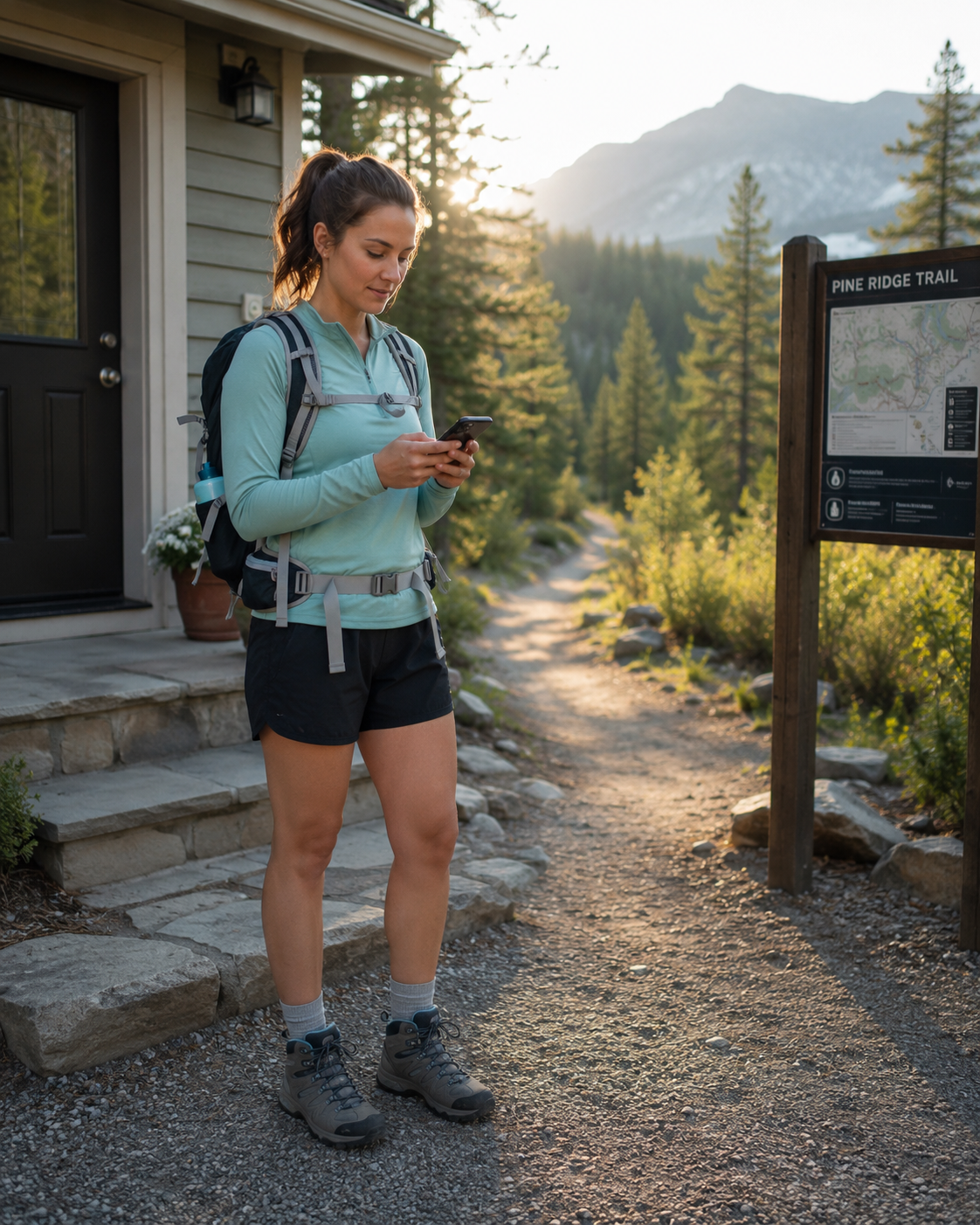
Why You Should Tell Family Your Route Before Hiking Alone
Minjin Park
·
Hiking alone can be peaceful, but sharing your route with family before you go is a simple safety habit. Learn what details to share, common mistakes to avoid, and how a quick check-in plan can make solo trail walks safer.
Walking a trail alone can be one of the most calming ways to spend time outdoors.
There is no group schedule to manage. No one is rushing you. You can stop for photos, listen to birds, take a break near a viewpoint, or simply enjoy the quiet. For many people, solo hiking is not about being adventurous. It is about clearing the mind.
But even a simple solo trail walk deserves a little planning.
When you hike with other people, someone usually notices if you twist an ankle, miss a turn, get tired, or take longer than expected. When you hike alone, there is no one beside you to help make decisions or speak up if something feels off.
That is why telling a family member or trusted friend your route is one of the easiest and most practical safety habits you can build.
It does not mean you expect something bad to happen. It simply means someone knows where to start looking if you do not return when expected.
The Main Reason: Someone Needs to Know Where You Are
If you are late from a solo hike, your family may know you went hiking, but that is not enough.
Which park did you visit? Which trailhead did you use? Did you plan a short loop or a longer out-and-back route? Were you going to the waterfall trail, the ridge trail, the lake trail, or a connector trail? Did you park at the main visitor center or a smaller side entrance?
Without those details, even a caring family member may not know what to do.
Sharing your route gives them a useful starting point. It turns a vague worry into clear information: where you planned to go, when you started, when you expected to return, and when they should check in.
That simple plan can save time and reduce confusion.
“It’s Just a Short Trail” Is a Common Mistake
Many solo hikers skip route-sharing because the trail feels easy.
It may be only two miles. It may be in a popular park. It may be a trail you have walked before. You may expect to be back before lunch.
But small problems can still happen on short trails.
You could take a wrong turn at a junction. Your phone battery could die. Cell service could disappear. Weather could change. You could slip on loose gravel, feel unwell, or spend extra time helping another hiker. A trail closure or detour could make the route longer than expected.
Most of these situations are not dramatic. They are ordinary outdoor inconveniences. But when you are alone, a small delay can become harder for your family to understand if they do not know your plan.
Telling someone your route takes less than a minute. It is worth doing even for a familiar trail.
Why Cell Phones Are Helpful but Not Enough
It is easy to think, “I have my phone. I’ll call if I need help.”
Phones are useful, and you should bring one. But a phone should not be your only safety plan.
Many trail areas have weak or no service, especially in mountains, canyons, forests, desert parks, and rural areas. A phone may also lose battery faster in cold weather or when it keeps searching for signal. A fall, water damage, cracked screen, or forgotten charger can make the phone less useful.
Even if your phone works, you may not be able to explain your location clearly if you do not know the trail name or nearest landmark.
Sharing your route before you leave gives you a backup. If your phone fails, someone still has basic information about where you intended to be.
What to Tell Your Family Before a Solo Hike
You do not need to write a formal report. A simple text message is enough for most day hikes.
Include the park or trail area, trail name, starting point, planned route, expected start time, expected return time, and what time they should check in if they have not heard from you.
For example:
“I’m hiking the Lakeside Loop at Pine Ridge Park. Starting around 9:30 a.m. from the north trailhead. It should take about two hours. I’ll text when I’m back at the car. If you haven’t heard from me by 1:00 p.m., please call me.”
That message is short, calm, and useful.
If you are hiking in a national park, large state park, or backcountry area, add more detail. Include your parking location, planned turnaround point, and whether you might take any side trails.
Share a Screenshot or Map Link
A written message is helpful, but a screenshot can be even better.
Before heading out, send a screenshot of the trail map with your planned route marked or circled. If you are using a hiking app, send the trail name and route link while you still have service.
This helps family members who may not be familiar with the area. Instead of trying to remember trail names, they can simply look at the map you sent.
It is also a good idea to take a screenshot for yourself. If service drops, you may still be able to view the map on your phone.
Do not assume the trail map will load later. Download or save what you need before you start walking.
Set a Realistic Check-In Time
One mistake hikers make is giving an overly optimistic return time.
They say they will be back by 11:00, but they forget to include time for parking, using the restroom, taking photos, eating a snack, waiting at a viewpoint, or walking more slowly than planned.
Then, when they are simply enjoying the trail longer than expected, family starts to worry too soon.
A good check-in time should include a cushion. If the hike usually takes two hours, maybe tell your family to expect a message in three or three and a half hours. That gives you room for normal delays while still creating a clear point when someone should pay attention.
The goal is not to make your family nervous. It is to make the plan realistic.
Have a “What If I Don’t Check In?” Plan
This part matters.
If you only say, “I’m going hiking,” your family may not know when to worry or what to do. One person might panic after 30 minutes. Another might wait too long because they assume you lost service.
A better approach is to agree on a simple check-in plan.
You might say, “If I don’t text by 2:00, call me. If you still can’t reach me by 3:00, call the park office or local authorities and share my route.”
This gives your family a calm sequence to follow.
For a short local trail, the plan may be very simple. For a remote hike, longer trail, or unfamiliar park, it should be more specific.
Why Route Changes Should Be Shared Too
Sometimes plans change.
You arrive at the trailhead and the parking lot is full. A ranger recommends a different route. A trail is closed. The weather looks better on another side of the park. You decide to add a scenic spur because you feel good.
Changing plans is normal, but your family should know if the route changes significantly.
Before you leave service, send an update: “Change of plan. I’m doing the Creek Trail instead of the Ridge Trail. Starting from the east lot. I’ll check in by 4.”
This is especially important for solo hiking. If someone only knows your original route, they may look in the wrong place if you are overdue.
A route plan is useful only if it matches what you actually do.
Common Reasons Solo Hikers Become Hard to Locate
They Use a Different Trailhead
Many parks have multiple access points. A family member may know the trail name but not where you parked. If a trail has several entrances, that detail matters.
Always include your starting point or parking area.
They Take a Side Trail Without Telling Anyone
Side trails can be tempting. A short overlook spur may look harmless, but it can add time or lead to another junction. If you take an unplanned side trail, your expected return time may no longer make sense.
They Rely on Vague Descriptions
“I’m hiking near the lake” may not be enough if there are several lake trails. Use actual trail names when possible.
They Forget to Check In After Finishing
This happens all the time. You finish the hike, toss your gear in the car, drive home, and forget to send the “I’m back” message.
Make the final check-in part of your routine. Before you start the car, send the text.
What Family Members Should Know
The person you tell should be someone reliable.
They do not need to be an outdoor expert, but they should understand the plan and be willing to act if you are overdue.
Give them enough information to be useful: your route, timing, car description, license plate if appropriate, clothing color, and whether you are hiking alone. For longer or more remote hikes, this information can help if they need to contact park staff.
It may feel like too much detail at first, but it becomes normal once you do it a few times.
You can keep a simple note template on your phone to make it easier.
A Simple Solo Hike Message Template
You can copy and adjust this before each hike:
“Hi, I’m hiking alone today at [park name]. I’m starting from [trailhead/parking lot] and taking [trail name/route]. I plan to start around [time] and expect to be back by [time]. I’ll text you when I’m back at the car. If you don’t hear from me by [check-in deadline], please call me first. If you still can’t reach me, contact [park office/local help] and share this route.”
This message takes less than a minute to send.
It gives your family clarity without making the hike feel stressful.
Don’t Forget the Basics Along With Route Sharing
Telling someone your route is important, but it works best with other simple habits.
Bring enough water. Carry a snack. Wear shoes that match the trail. Check the weather. Bring a light layer. Charge your phone. Download offline maps. Carry a small flashlight or headlamp, even if you plan to return before dark.
Stay on marked trails when possible. Pause at junctions. Turn around earlier than you think you need to if the weather changes, daylight is fading, or the trail feels more difficult than expected.
A route plan helps others know where you are. Good trail habits help you avoid needing that backup in the first place.
If you lose the trail, feel unusually tired, notice dark clouds, run low on water, lose phone battery, or realize the hike is taking much longer than expected, do not ignore it.
If you still have service, send an update. If you do not have service, think carefully before continuing farther. Turning back early is often the wisest choice.
There is no prize for pushing through a hike that no longer feels right.
A safe solo hike is one where you return with energy, clarity, and a story you enjoyed—not one where you barely made it back.
Privacy Concerns Are Understandable
Some people do not like sharing their location. They may feel independent, private, or uncomfortable being monitored.
That is understandable.
But telling a trusted person your hiking route is not the same as giving up privacy. You are not asking someone to track every step. You are simply leaving a plan in case you do not check in.
You can choose one reliable person. You can share only the necessary details. You can set a clear time for when they should act.
Think of it like wearing a seat belt. Most days, nothing happens. But the habit is there for the day it matters.
Make It a Routine, Not a Big Event
The easiest safety habits are the ones you do automatically.
Before every solo hike, send the route. After every hike, send the “I’m back” message.
That is it.
You do not need to make a dramatic announcement. You do not need to worry your family. You can keep it simple and casual.
Over time, it becomes part of the hiking routine, just like tying your shoes, filling your water bottle, and checking the weather.
Calm Takeaways for Solo Trail Walks
Solo hiking can be peaceful, healthy, and deeply enjoyable. You do not need to give it up just because you want to be careful.
The key is to make sure someone knows your plan.
Tell a family member or trusted friend where you are going, which trail you plan to take, when you expect to start, and when you expect to return. Send a map screenshot if you can. Set a realistic check-in time. Update them if your plan changes. Text them when you are safely back.
These steps are small, but they create a safety net.
Most solo hikes end exactly as planned: a good walk, a clear head, and a safe return home. Sharing your route simply helps make sure that if something unexpected happens, someone who cares about you knows where to begin.
Hi, I’m the creator and editor behind ZestyHabit. I research everyday safety, first aid, and practical wellness topics using official guidance and reliable public sources, then turn that information into clear, realistic steps for daily life.
My goal is to help readers make safer, better-informed choices at home and beyond.